

A Helical Heat Exchanger is a highly efficient device used to transfer heat between two fluids. Its unique spiral shape makes it very different from standard straight tubes. This coiled design allows engineers to pack a very large surface area into a small, compact space, which is perfect for factories where room is limited. More importantly, the curved path forces the fluid to move in a swirling pattern. This secondary motion, known as “Dean vortices,” dramatically improves how fast heat moves and helps prevent dirt from building up on the walls.
This project is a Helical Heat Exchanger CFD simulation designed to study these thermal benefits. It is important to clarify that this is a CFD simulation, not a validation study. We use ANSYS Fluent to visualize the flow and measure the efficiency of the coil. For more learning resources on thermal systems, please visit our Heat transfer tutorials. Our work is guided by the research of Abu-Hamdeh et al. [1] and Kuvadiya et al. [2].
- Reference [1]: Abu-Hamdeh, Nidal H., et al. “A detailed hydrothermal investigation of a helical micro double-tube heat exchanger for a wide range of helix pitch length.” Case Studies in Thermal Engineering 28 (2021): 101413.
- Reference [2]: Kuvadiya, Manish N., et al. “Parametric analysis of tube in tube helical coil heat exchanger at constant wall temperature.” International Journal of Engineering Research & Technology 1.10 (2015): 279-285.
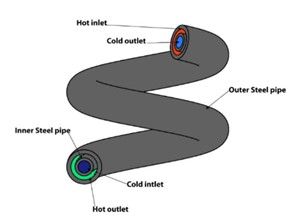
Figure 1: Schematic diagram of the double-tube Helical Heat Exchanger geometry.
Simulation Process: Structured Meshing in ANSYS
To begin this Helical Heat Exchanger Fluent tutorial, the most critical step was creating a high-quality mesh. The spiral shape is complex, so we could not just use a simple automatic mesh. Instead, we carefully divided the geometry into small sections, or “blocks.” This manual blocking strategy allowed us to generate a fully structured grid consisting of 1,302,912 hexagonal cells. Using hexagonal cells is the best choice for this Helical Heat Exchanger ANSYS fluent simulation because they align perfectly with the flow direction. This high-quality mesh ensures that the calculation of the flow physics is extremely accurate and stable.
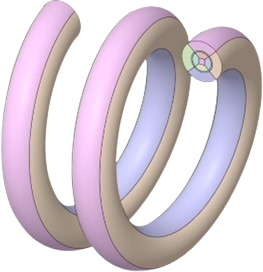
Figure 2: Helical heat exchanger geometry divided into blocks for structured grid generation.
Post-processing: Analysis of Dean Vortices and Thermal Efficiency
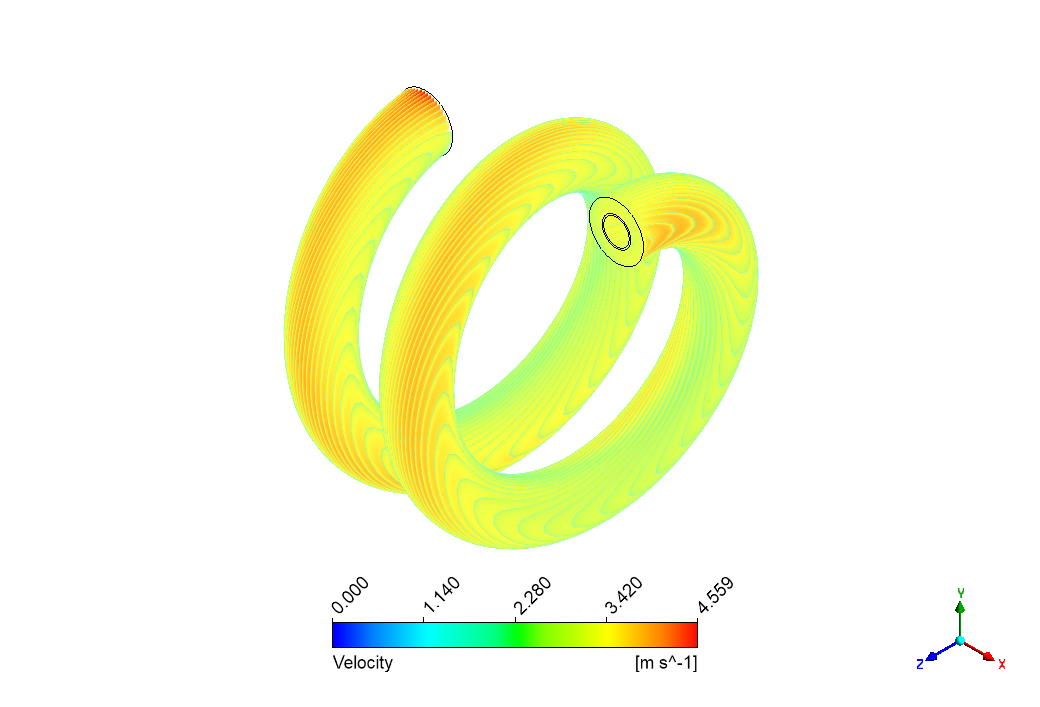
A real analysis of the simulation results, based on the provided contours and data, reveals exactly why the helical design is so effective. The velocity data gives us the first clue. As the cold water travels through the spiral coil, its velocity actually increases slightly from 3.19 m/s at the inlet to 3.25 m/s at the outlet. This change is not random; it is evidence of the intense fluid dynamics happening inside. As the fluid moves around the curve, centrifugal forces push the faster fluid to the outside of the turn and the slower fluid to the inside. This creates a secondary swirling motion called Dean vortices. These vortices act like a mixer. They constantly churn the fluid, disrupting the stagnant “boundary layer” that usually sits against the tube wall.
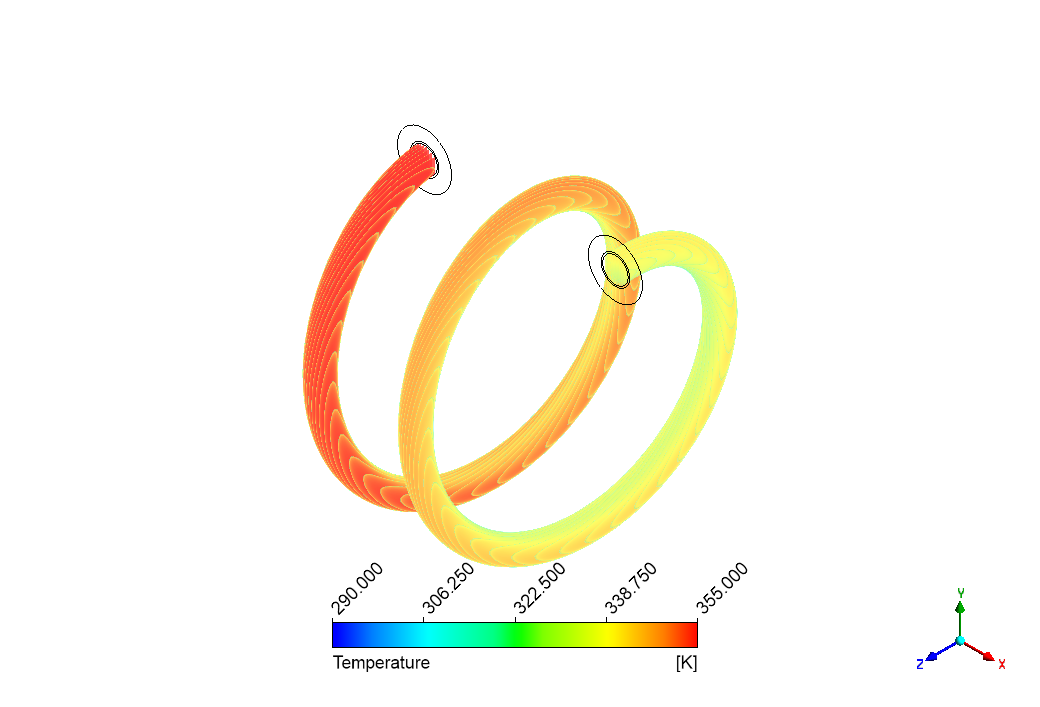
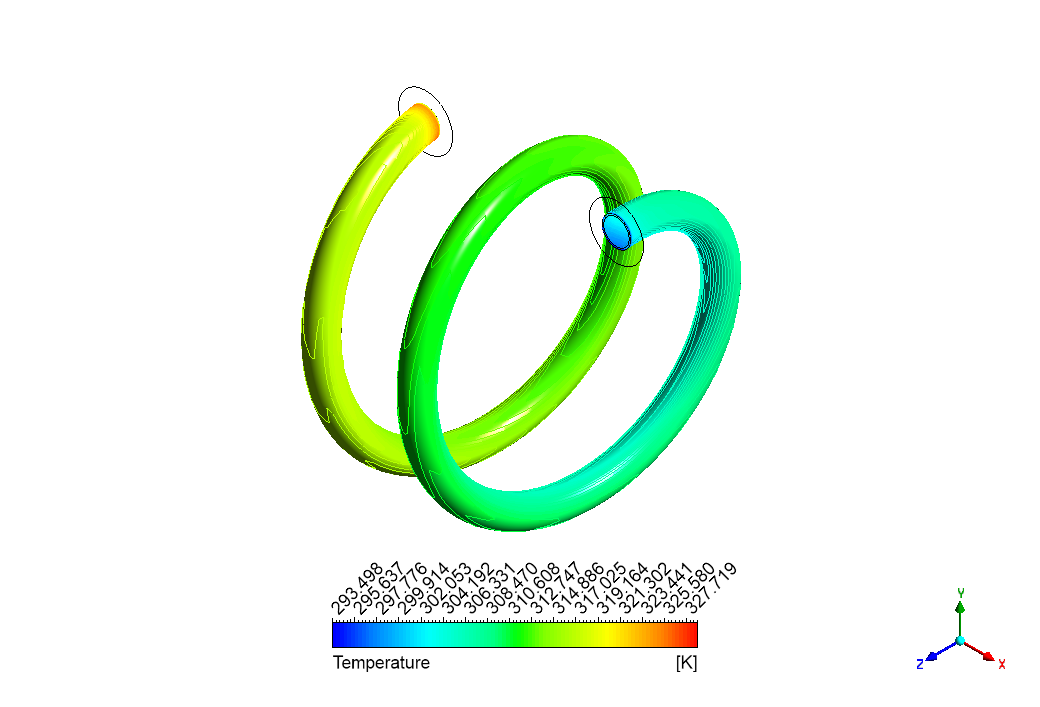
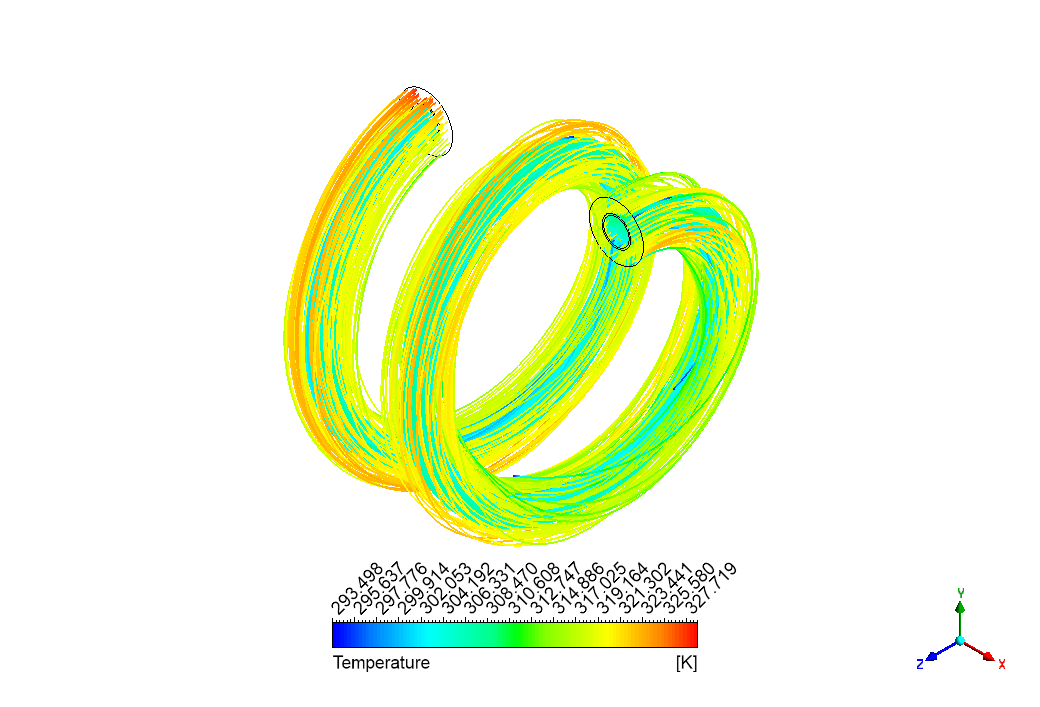
The temperature contours confirm that this mixing leads to superior heat transfer performance. We can see a smooth, continuous color change along the coil as the energy moves through the copper wall. The cold fluid absorbs heat rapidly, while the hot fluid cools down. The most significant result of this Helical Heat Exchanger CFD study is the Mean Temperature Difference. The simulation calculated a value of 49.63 K across the system. This is a very large number, proving that the device is exchanging a massive amount of heat relative to its size. The combination of the compact spiral shape and the turbulence generated by the Dean vortices ensures that every drop of fluid comes into contact with the hot wall, making this design far more efficient than a straight tube.
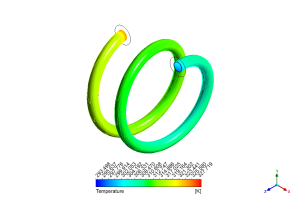
Figure 3: Temperature contours along the coil showing effective heat transfer.
Key Takeaways & FAQ
- Q: What are Dean vortices in a Helical Heat Exchanger?
- A: Dean vortices are a secondary flow pattern caused by centrifugal force as fluid moves around a curve. In this Helical Heat Exchanger CFD simulation, these vortices mix the fluid, which prevents hot spots and significantly increases heat transfer.
- Q: Why use a structured hexagonal mesh?
- A: A structured mesh with 1,302,912 cells was used because it provides better accuracy and convergence than a random tetrahedral mesh. It aligns the grid lines with the flow direction, which is crucial for capturing the detailed physics of the spiral flow.
- Q: What does the 49.63 K temperature difference tell us?
- A: The Mean Temperature Difference of 49.63 K is a direct measure of efficiency. It shows that the heat exchanger is successfully moving a large amount of thermal energy from the hot fluid to the cold fluid.







Reviews
There are no reviews yet.