


Traditional wind turbines have a problem: they need strong wind to work, and they require huge blades that can be dangerous or noisy. The Invelox system is a smart solution to this. It uses a large funnel on the ground to catch wind from any direction and squeeze it into a small pipe. This squeezing makes the wind go much faster, allowing us to use smaller, safer turbines.
This project is an Invelox CFD simulation designed to show you how this technology amplifies wind speed. We are using ANSYS Fluent to model the airflow and calculate the energy potential. By simulating this system, we can see exactly how the shape of the funnel changes the wind speed and pressure. For more projects on green technology, please visit our Renewable Energy tutorials. Our geometry and simulation goals are based on the innovative concepts described by Allaei and Andreopoulos [1].
- Reference [1]: Allaei, Daryoush, and Yiannis Andreopoulos. “INVELOX: Description of a new concept in wind power and its performance evaluation.” Energy69 (2014): 336-344.
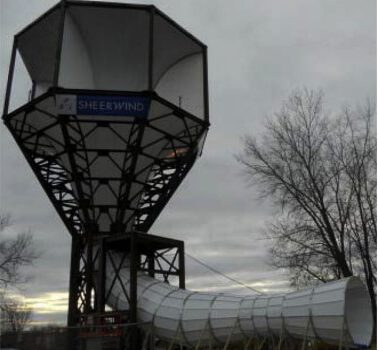
Figure 1: The Invelox system design used for the Wind Power CFD analysis.
Simulation Process: Modeling the Venturi Effect in Fluent
To start this Invelox Simulation, we first created a 3D model of the omnidirectional intake. This means the top of the tower is designed to catch wind coming from North, South, East, or West. We then imported this model into the ANSYS meshing tool. As shown in Figure 2, we created a mesh that fills the air domain around and inside the tower.
In the Invelox ANSYS fluent setup, we selected the k-epsilon turbulence model. This model is the industry standard for outdoor airflow because it predicts how wind behaves around buildings and structures very well. For the boundary conditions, we set the inlet wind speed to a moderate 6.7 m/s (about 15 mph). This is a typical wind speed for many locations. The goal is to see if the Invelox fluent system can turn this gentle breeze into a powerful jet of air.
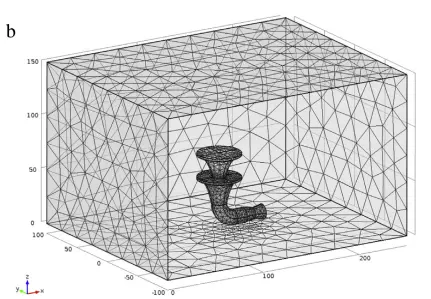
Figure 2: Mesh generation for the Invelox system simulation.
Post-processing: Analysis of Velocity and Power Generation
A real analysis of the simulation results, based on the provided contours and data, proves that the Invelox system works by using the Venturi Effect. The velocity contour in Figure 3 tells the whole story. We can see the wind entering the large top opening at the standard speed of 6.7 m/s (shown in green). As the air travels down the funnel, the path gets narrower. Physics tells us that when a fluid is forced through a smaller space, it must speed up. The simulation results confirm this dramatically. By the time the air reaches the narrow throat section at the bottom, the velocity has shot up to over 18.5 m/s (shown in bright red). This is an increase of nearly 3 times the original speed.
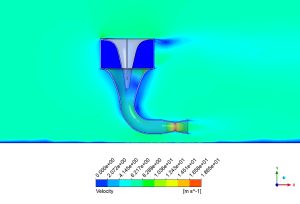
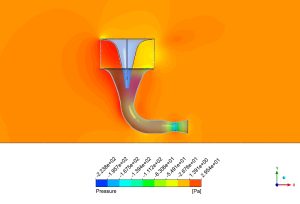
Figure 3: Velocity and Pressure contours showing the acceleration at the throat.
The pressure contour explains why this happens. According to Bernoulli’s principle, as speed goes up, pressure goes down. The data shows that the pressure at the wide intake is high, around 0.29 Pa, while the pressure in the fast-moving throat drops significantly to -2.38 Pa. This pressure difference acts like a vacuum, pulling the air through the system rapidly. This result is critical for energy generation because the power available in the wind is calculated by the cube of the speed (Velocity3). Since we increased the speed by roughly 3 times, the power potential increases by 3×3×3, which is 27 times. This Invelox CFD simulation analytically demonstrates that even with a low inlet wind of 6.7 m/s, the system concentrates the energy enough to generate significant power, making wind energy possible in places where traditional turbines would fail.
Key Takeaways & FAQ
- Q: How does Invelox increase wind speed?
- A: It uses the Venturi effect. By capturing a large volume of air at the top and funneling it into a narrow section (the throat), the air is forced to accelerate. In this Invelox CFD simulation, the speed increased from 6.7 m/s to 18.5 m/s.
- Q: Why is the pressure negative in the throat?
- A: According to Bernoulli’s principle, high velocity creates low static pressure. The simulation shows the pressure dropping to -2.38 Pa in the throat, which helps pull more air into the intake.
- Q: Why is the “cube” of velocity important?
- A: Wind power is proportional to the cube of the wind speed. A 3x increase in speed (as seen in this Invelox fluent study) theoretically results in a 27x increase in available power density.









Reviews
There are no reviews yet.