
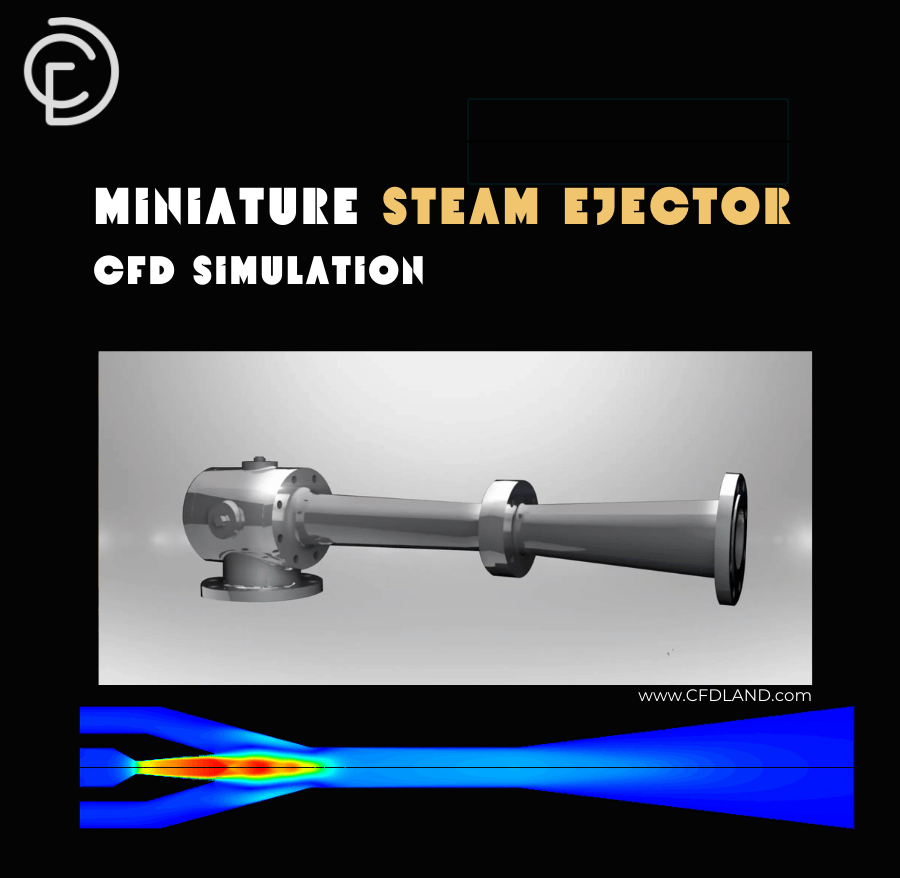
As our electronic gadgets get smaller and more powerful, they also get very hot. Keeping them cool is a big challenge. A Miniature Steam Ejector is a clever solution that works like a tiny cooling engine with no moving parts. It uses hot steam that moves incredibly fast to create a very cold spot, which then pulls heat away from the sensitive electronics. This process is very complex and happens inside a very small space, making it hard to study. By using Computational Fluid Dynamics (CFD), we can create a computer simulation to see exactly what is happening inside. This Miniature Steam Ejector CFD study helps engineers design better and more efficient cooling systems. We check our results against a research paper [1] to make sure our simulation is accurate.
- Reference [1]: Dong, Jing-Ming, et al. “Numerical investigation of miniature ejector refrigeration system embedded with a capillary pump loop.” Micromachines8 (2017): 235.
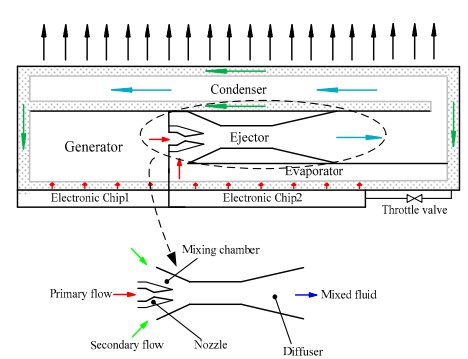
Figure 1: Schematic of the Steam Ejector CFD cooling system investigated in this study, based on the reference paper [1].
Simulation Process: Modeling a High-Speed, Round Ejector with Fluent
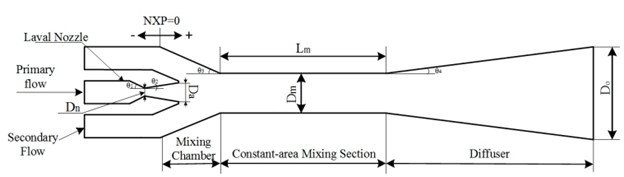
To build the Miniature Steam Ejector Fluent model, we first drew the special shape of the ejector, copying the dimensions from the reference paper [1]. We then filled this shape with 57,088 small, neat, structured boxes using ANSYS Meshing. A neat grid is very important for getting good results. Because the ejector is perfectly round like a tube, we used a special setting called Axisymmetric Swirl. This trick lets the computer solve the problem as if it were a flat 2D slice, which saves a lot of time while still giving the correct 3D answer for the swirling flow. We told the computer that the water vapor (steam) inside would act as an ideal gas, which allows it to be squeezed and change density, a key behavior in this high-speed system.
Figure 2: The axisymmetric geometry used for the Miniature Steam Ejector Fluent simulation.
Post-processing: The Journey from Hot Steam to Supersonic Chill
The simulation results reveal an amazing transformation happening inside the tiny ejector. The temperature map in Figure 3 tells a story of extreme change. Hot steam enters the device at a warm ~300K. As this steam is forced through the narrowest part of the ejector, called the throat, it expands and gets incredibly cold, with the temperature dropping to a freezing 163K. This happens because the steam’s heat energy is turned into speed energy. After this cold spot, as the flow enters the wider section, it slows down and the temperature recovers, heating back up to 340-362K. Our simulation perfectly captured this dramatic cooling and reheating process, which is the heart of how this refrigeration system works.
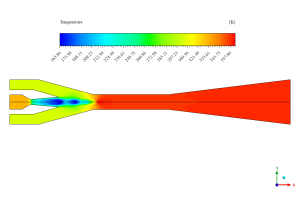
Figure 3: Temperature contour showing the dramatic cooling effect created by supersonic expansion in the Steam Ejector CFD analysis.
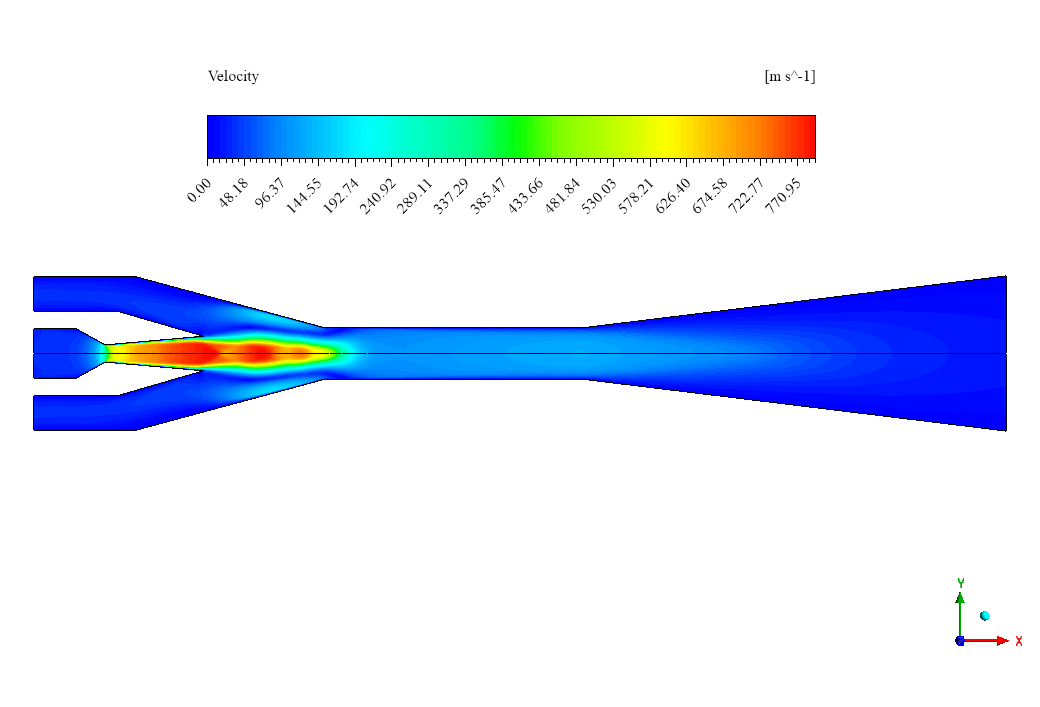
Figure 4 shows us the speed story, which goes hand-in-hand with the temperature changes. We can see that where the steam was coldest, it was also moving the fastest. The flow becomes a powerful jet, reaching a top speed of 787.75 m/s—faster than the speed of sound. This super-fast jet creates the low-pressure area needed to suck in more steam from a second pipe, which is how it pulls heat away from the electronics. In the final section, the flow slows down significantly to around 150-200 m/s, allowing the pressure to rise again. The most important achievement of this Steam Ejector CFD simulation is the precise prediction of the supersonic jet and the resulting low-temperature zone, which validates our model as a reliable tool for designing these complex, miniature cooling systems without expensive physical prototypes.
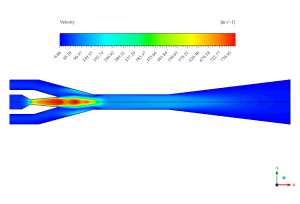
Figure 4: Velocity contour highlighting the generation of a supersonic jet, a key feature of the Miniature Steam Ejector Fluent simulation.







Reviews
There are no reviews yet.