


An ejector is a special kind of pump with a magical ability: it mixes two different streams of fluid together without any moving parts. It works by using a very fast “primary” jet of fluid to pull in and combine with a slower “secondary” fluid. The real action happens in the space where these two streams meet, a place called the shear layer. How well the fluids mix in this zone determines how good the ejector is at its job, whether it’s for a refrigerator or a vacuum pump. Understanding this Mixing In Ejector Flow Field CFD is key to building better, more efficient machines. This CFD study aims to see this complex mixing process up close, checking our results against a trusted research paper [1] to make sure our simulation is telling the truth.
- Reference [1]: Little, Adrienne B., Yann Bartosiewicz, and Srinivas Garimella. “Visualization and validation of ejector flow field with computational and first-principles analysis.” Journal of Fluids Engineering5 (2015): 051107.
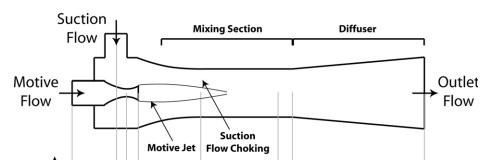
Figure 1: A schematic showing the different sections of the ejector, used for the Mixing In Ejector CFD study [1].
Simulation Process: Modeling the Axisymmetric Ejector with Fluent
To perform our Mixing In Ejector Flow Field Fluent simulation, we first built a 2D model of the ejector, carefully following the dimensions provided in the research paper [1]. Because the ejector is perfectly round, we used a smart trick called an axisymmetric model. This lets us solve the problem on a flat slice, which saves a huge amount of computer power. We then filled this shape with a very neat grid of 200,200 cells to ensure our results are accurate. Since the fluid is a gas that gets squeezed and expands at high speeds, we used the ideal-gas model, which is perfect for capturing this compressible flow behavior.
Figure 2: The dimensioned drawing used to create the geometry for the Ejector Mixing CFD analysis [1].
Post-processing: CFD Analysis of the Supersonic Jet and Mixing Zone
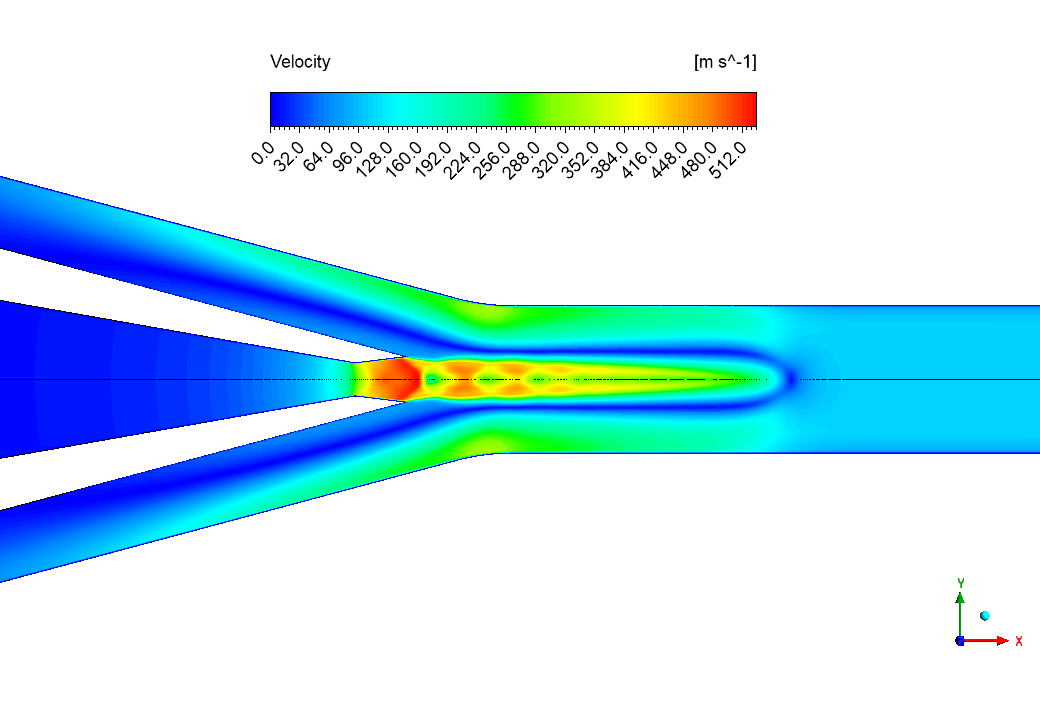
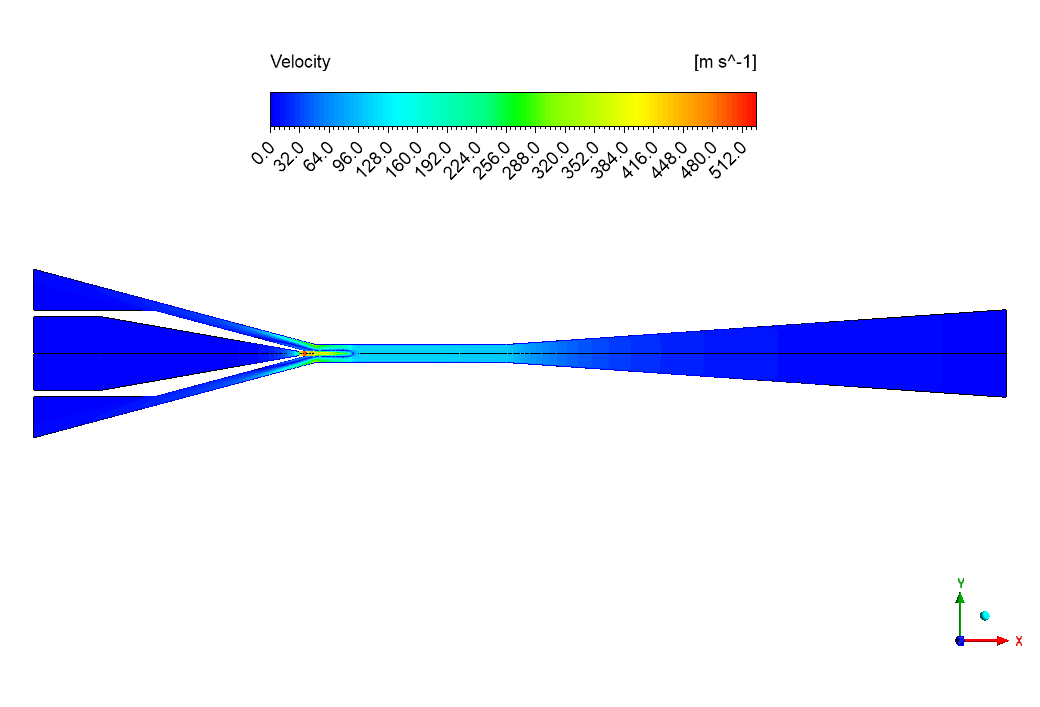
The simulation results bring the invisible dance of fluids inside the ejector to life. Figure 3 shows a powerful jet of primary fluid, colored bright red, screaming through the center of the device. This jet is the engine of the whole system, reaching incredible speeds of up to 512 m/s. This super-fast flow creates a suction effect that pulls the slower secondary fluid (shown in dark blue at speeds near 0-64 m/s) in from the sides. The most beautiful part of this picture is the green and light blue region that forms between the red jet and the blue fluid. This is the shear layer—the exact spot where the two fluids are violently mixing and swapping energy.
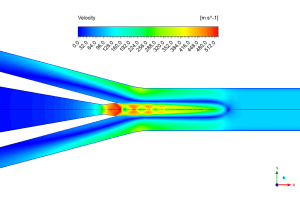
Figure 3: Velocity contour from the Mixing Fluent simulation, clearly showing the high-speed primary jet and the surrounding mixing layer.
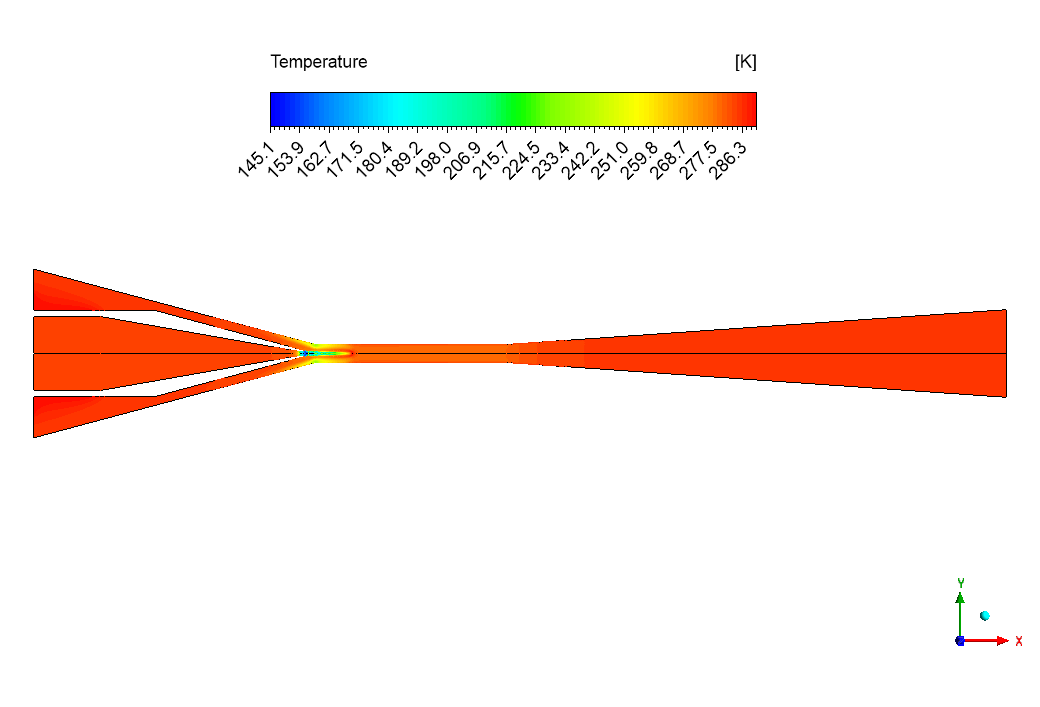
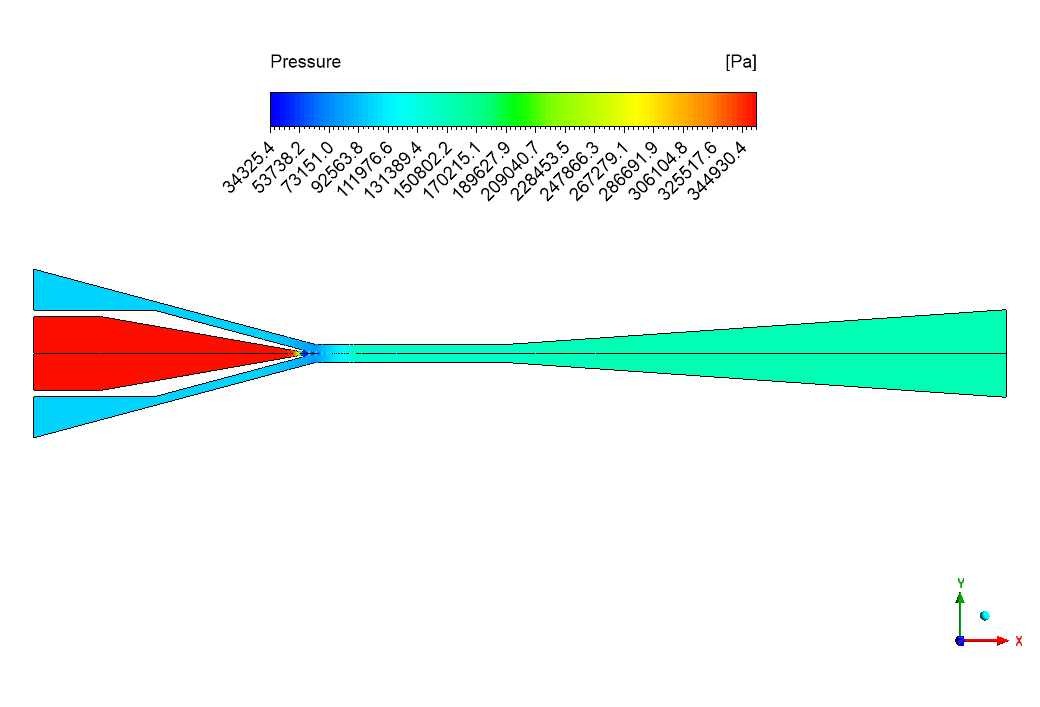
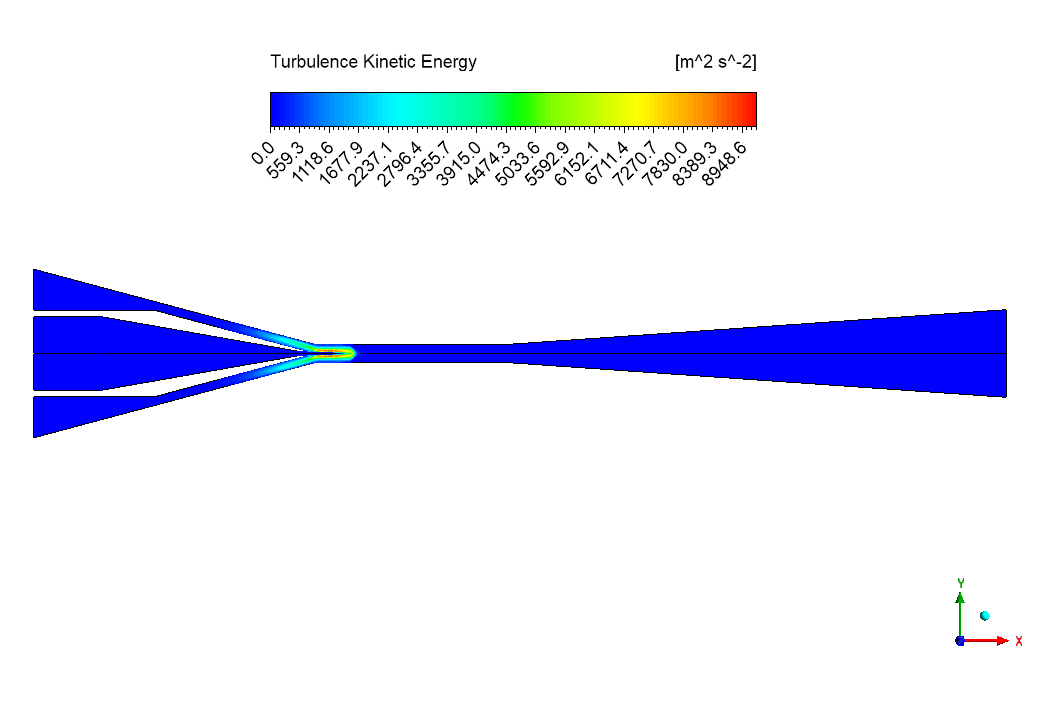
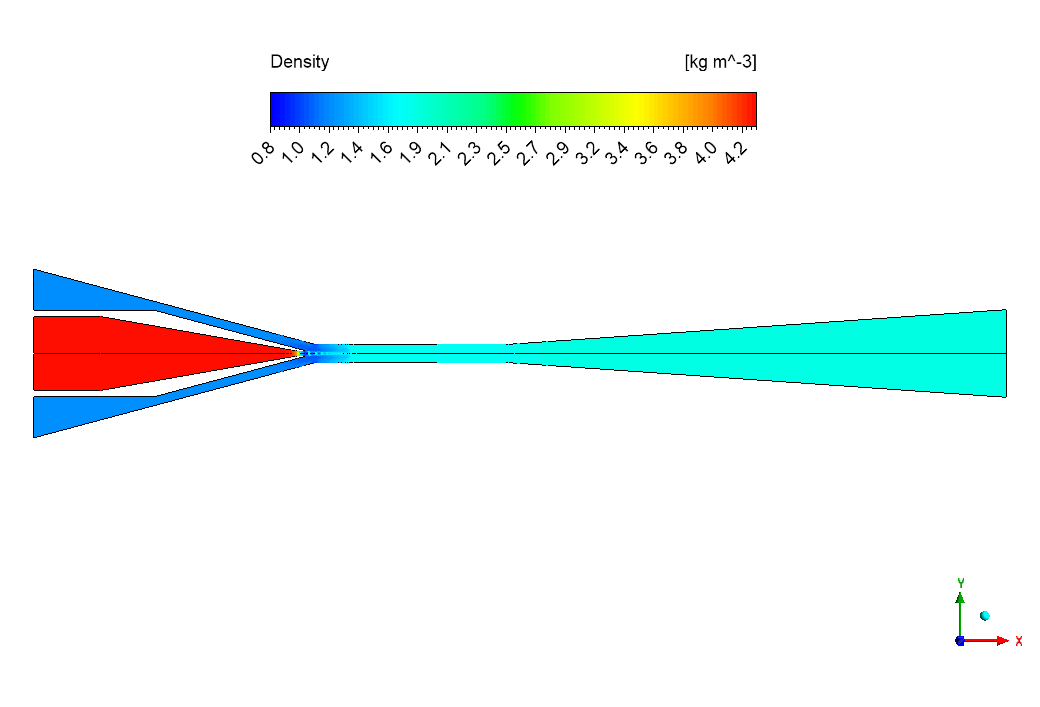
The pressure and density maps in Figures 4 tell the rest of the story, explaining why this mixing happens so powerfully. At the inlet on the left, the pressure is very high (around 344,590 Pa), but as the fluid is squeezed through the narrow throat, the pressure drops dramatically to almost a vacuum (down to 34,525 Pa). This massive pressure drop is what drives the suction. The density follows the same path, starting high at 4.2 kg/m³ and thinning out to 0.8 kg/m³ as the gas expands and speeds up. The most important achievement of this Mixing In Ejector CFD analysis is the precise visualization and validation of the entire mixing zone’s structure, from the high-speed core to the turbulent shear layer where the energy exchange occurs. This confirms our model can accurately capture the complex compressible flow physics, providing a reliable tool for designing more efficient ejectors.
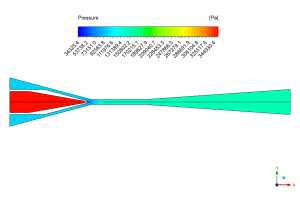
Figure 4: Density variation from the Mixing In Ejector Fluent simulation, showing how the fluid expands as it accelerates.







Reviews
There are no reviews yet.