
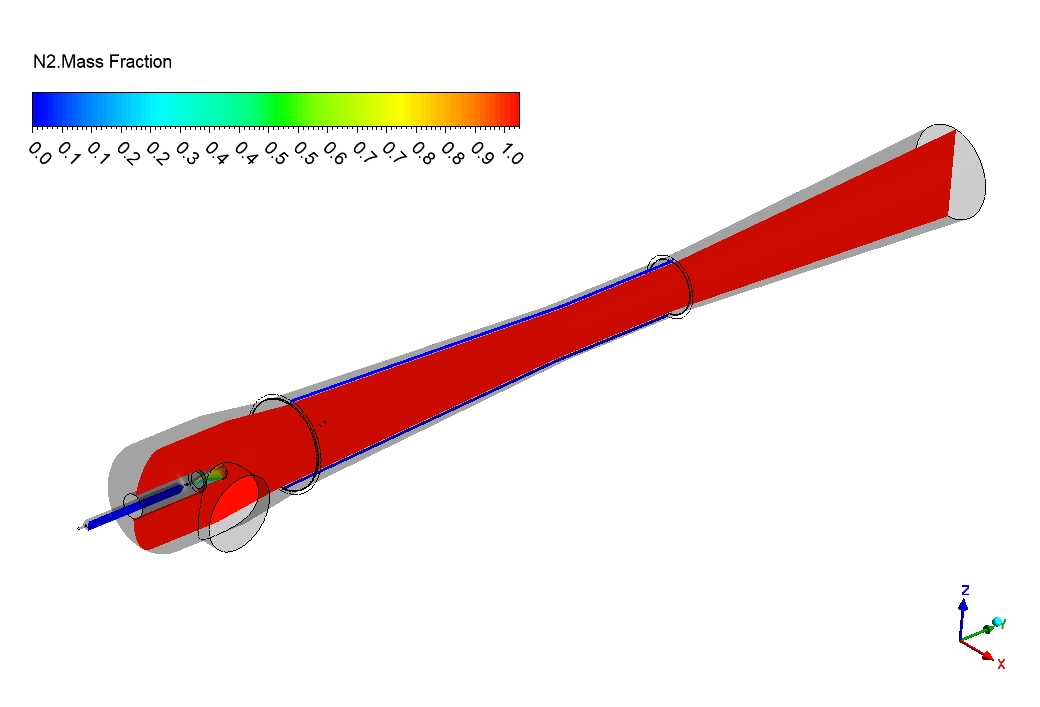
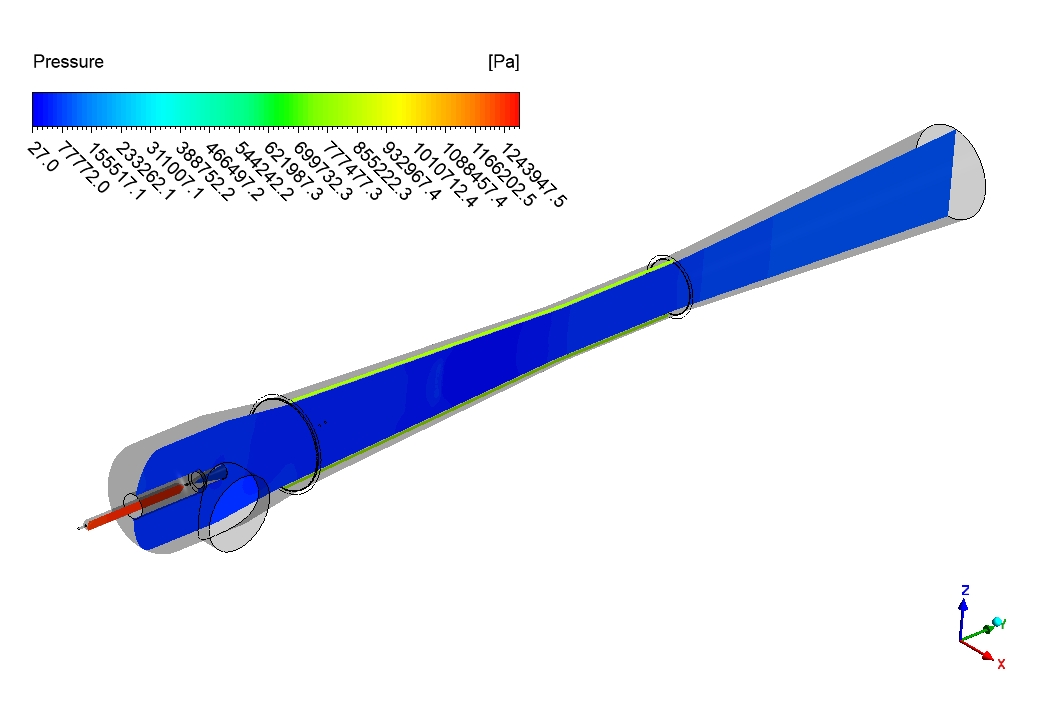
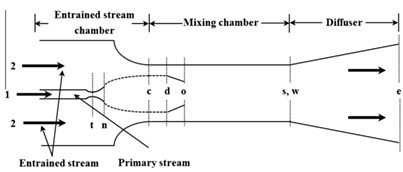

A single-stage ejector-diffuser works like a magical pump with no moving parts. This amazing device uses a very fast stream of fluid to pull in a second, slower stream. The fast fluid creates a low-pressure area, like a vacuum cleaner, that sucks in the other fluid. They then mix together inside a special chamber before flowing into a widening tube called a diffuser. In the diffuser, the fluid slows down and its pressure goes up. This pressure recovery makes ejectors very useful in cooling systems and factories where we need to move fluids efficiently. The special shape of the ejector creates amazing flow patterns. Our study uses Computational Fluid Dynamics (CFD) to see exactly what happens inside, based on the work in a reference paper [1].
- Reference [1]: Kong, Fanshi, and H. D. Kim. “Analytical and computational studies on the performance of a two-stage ejector–diffuser system.” International Journal of Heat and Mass Transfer85 (2015): 71-87.
Figure 1: Schematic of the Single-stage Ejector-diffuser from the reference paper [1].
Simulation Process: Fluent Setup for a Compressible Ejector-Diffuser Simulation
To study the Single-stage Ejector-diffuser Fluent system, we began with a 2D axisymmetric model, which is a smart way to simulate a round tube. We then created a high-quality mesh of 586,192 polyhedral cells to ensure our results are very accurate. Inside ANSYS Fluent, we used the Species Transport model because we were working with a mix of air, nitrogen, and water vapor. Since the gas is moving so fast, it gets squeezed and its density changes. To handle this, we turned on the ideal-gas model, which is essential for any Ejector-diffuser CFD simulation involving compressible flow.
Figure 2: The axisymmetric geometry and mesh used for the Ejector-diffuser Fluent simulation.
Post-processing: CFD Analysis, Deconstructing the Supersonic Flow Field
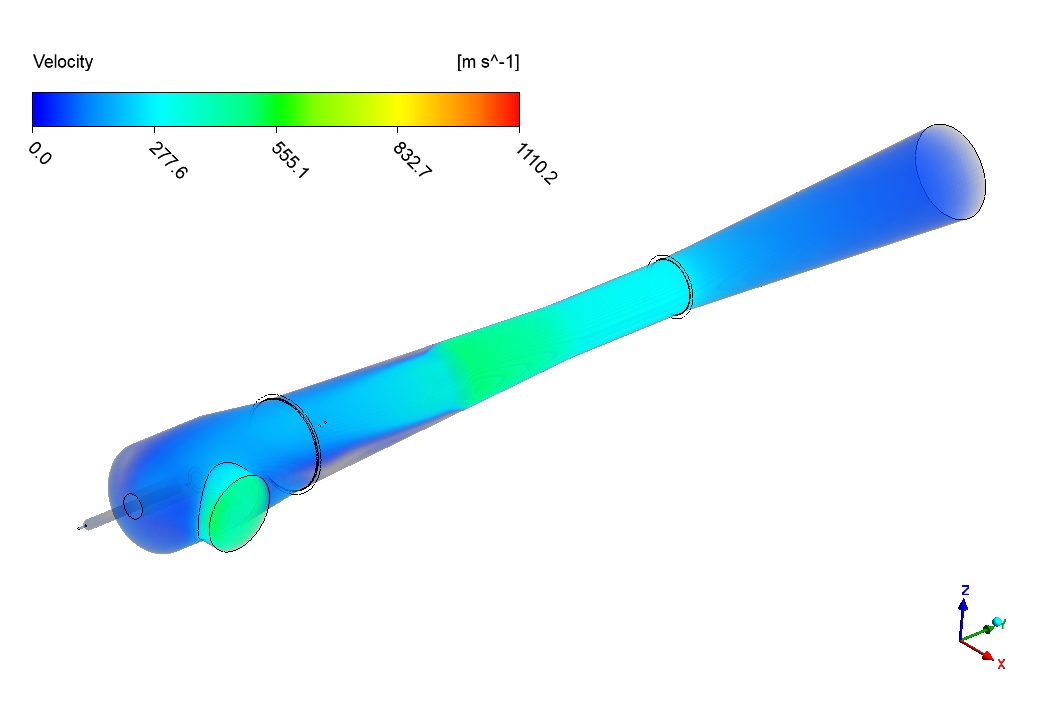
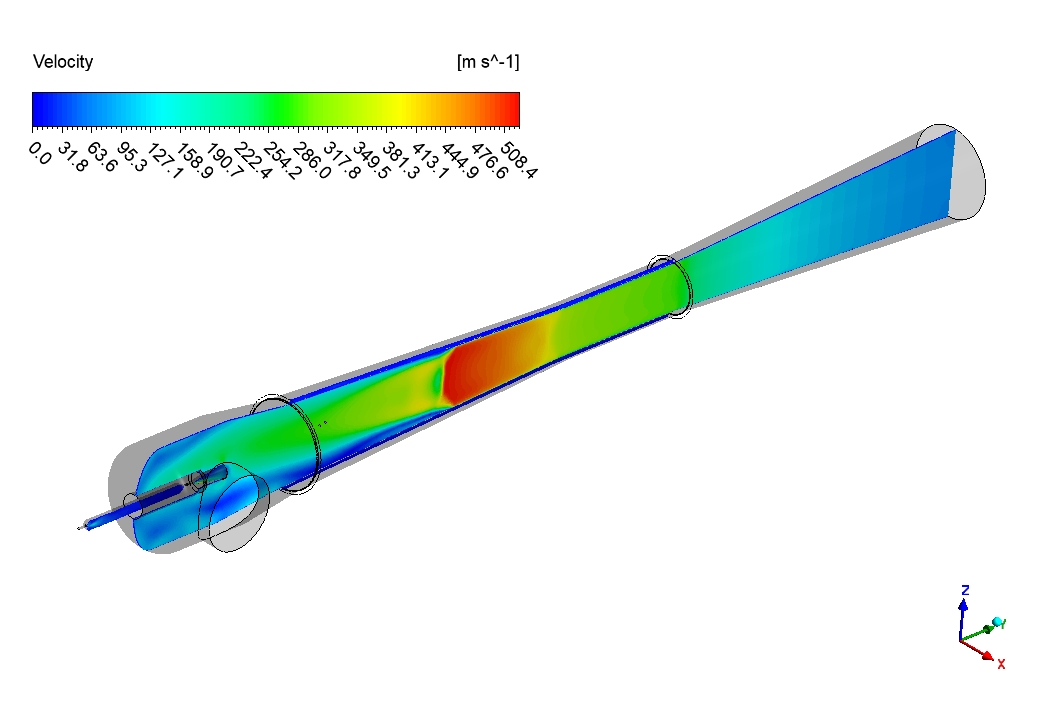
The simulation results paint a vivid picture of the powerful physics at play inside the ejector. The velocity map below reveals the heart of the machine: a powerful jet of fluid, shown in bright red, rocketing through the narrowest part of the tube. This jet reaches an incredible top speed of 508.4 m/s, which is faster than the speed of sound! This supersonic speed creates the intense vacuum that pulls the secondary fluid into the system. As the mixed fluids travel into the wider diffuser section, you can see the colors gracefully change from red to yellow and green, showing how the flow safely slows down. This controlled deceleration is the key to recovering pressure efficiently.
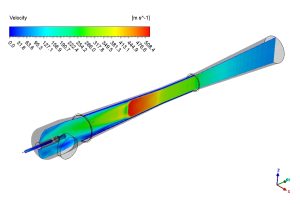
Figure 3: Velocity contour from the Ejector-diffuser CFD analysis, showing the supersonic jet core and flow deceleration in the diffuser.
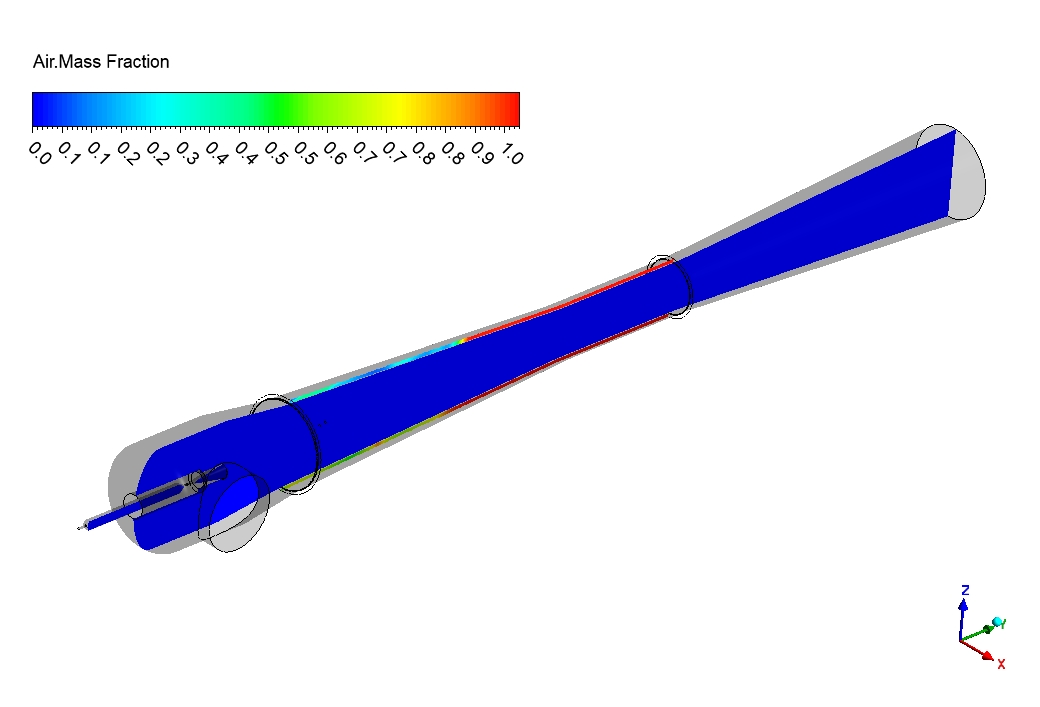
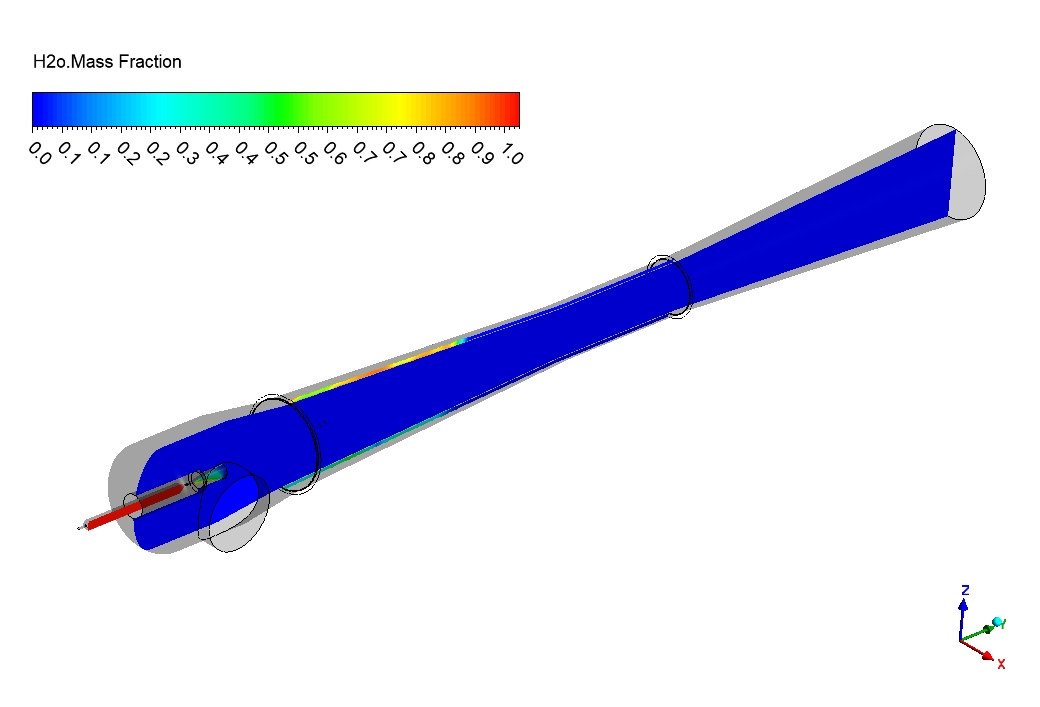
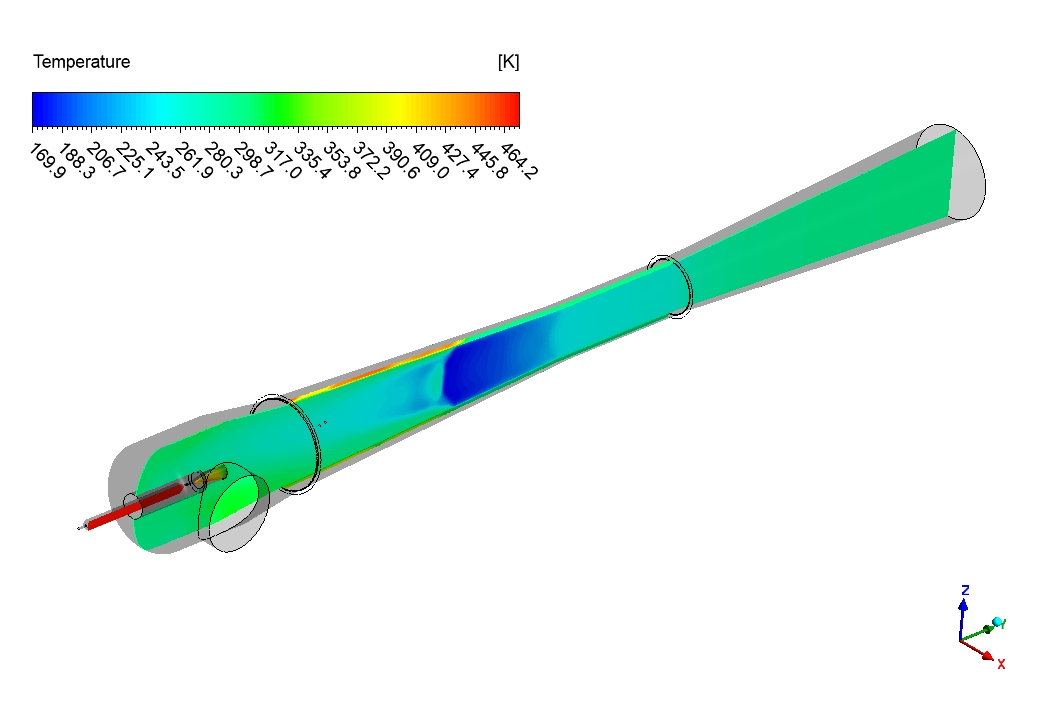
But speed is only half the story; the temperature changes are just as dramatic. Where the fluid moves the fastest, it also gets incredibly cold. The temperature plunges to a freezing 169.9 K (or -103°C) in the expansion region. This extreme cooling happens because the fluid’s heat energy is converted into speed. This is the same principle that makes refrigerators work, and our simulation captured it perfectly. The final proof of our model’s success is seen in how well the fluids mix. The energy from the fast primary stream is transferred to the slower secondary stream, blending them together. The most important achievement of this Single-stage Ejector-diffuser CFD simulation is the successful and accurate capture of the entire energy conversion process—from generating a stable supersonic jet and its associated cooling effect to the efficient mixing and pressure recovery in the diffuser. This validates our model as a powerful tool for designing these complex, energy-saving devices.
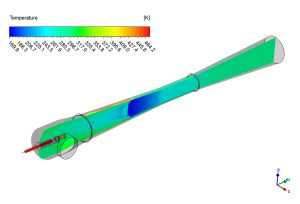
Figure 4: Temperature map in the Single-stage Ejector-diffuser CFD simulation, highlighting the extreme cooling effect caused by rapid gas expansion.








Reviews
There are no reviews yet.