
A suction slot on an airfoil acts like a tiny, smart vacuum cleaner that makes airplane wings work much better. These small gaps on the wing’s surface help control the air flowing over it. This control is very important for flight. The slots pull in the slow-moving air right next to the wing, which helps the main airflow stay smooth and attached. As a result, the wing can create more lift without adding extra drag, which helps planes save fuel. This is especially useful when a plane is tilted up at a high angle, like during takeoff or landing. Without this suction, the air can become messy and separate from the wing, which ruins its performance. This Airfoil suction slot CFD study uses powerful computer simulation to see exactly how this effect works, getting credit from the reference paper [1].
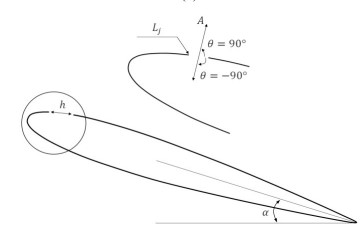
- Reference [1]: Yousefi, Kianoosh, Reza Saleh, and Peyman Zahedi. “Numerical study of blowing and suction slot geometry optimization on NACA 0012 airfoil.” Journal of Mechanical Science and Technology28 (2014): 1297-1310.
Figure 1: Schematic of the Suction Slot on 3D Airfoil leading edge, as shown in the reference paper [1].
Simulation Process: CFD Setup, Meshing the Airfoil and Modeling Turbulence
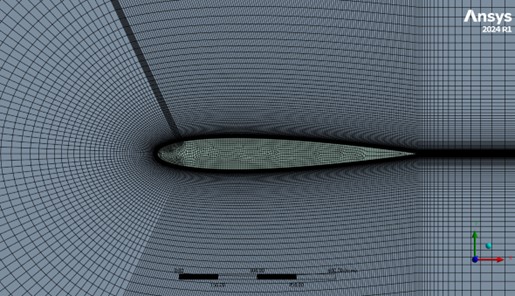
To build our Suction Slot On 3D Airfoil Fluent model, we started with a standard NACA 0012 airfoil shape with a 1-meter chord length. The suction slot was placed near the front of the wing on its top surface. We then created a very careful grid around the airfoil with 3,746,500 cells, making the grid extra fine near the wing surface and the slot itself, as these are the most important areas. Since the airfoil is tilted at a high 14-degree angle of attack, we expected messy, swirling air (a wake) to form behind it. To accurately capture this behavior, we used a powerful 3-equation Transition k-kl-omega turbulence model, which is excellent for predicting when airflow changes from smooth to turbulent.
Figure 2: The multizonal structured grid used for the Airfoil Suction CFD analysis, showing fine mesh concentration near the slot.
Post-processing: CFD Analysis, How the Suction Slot Improves Lift and Controls Flow
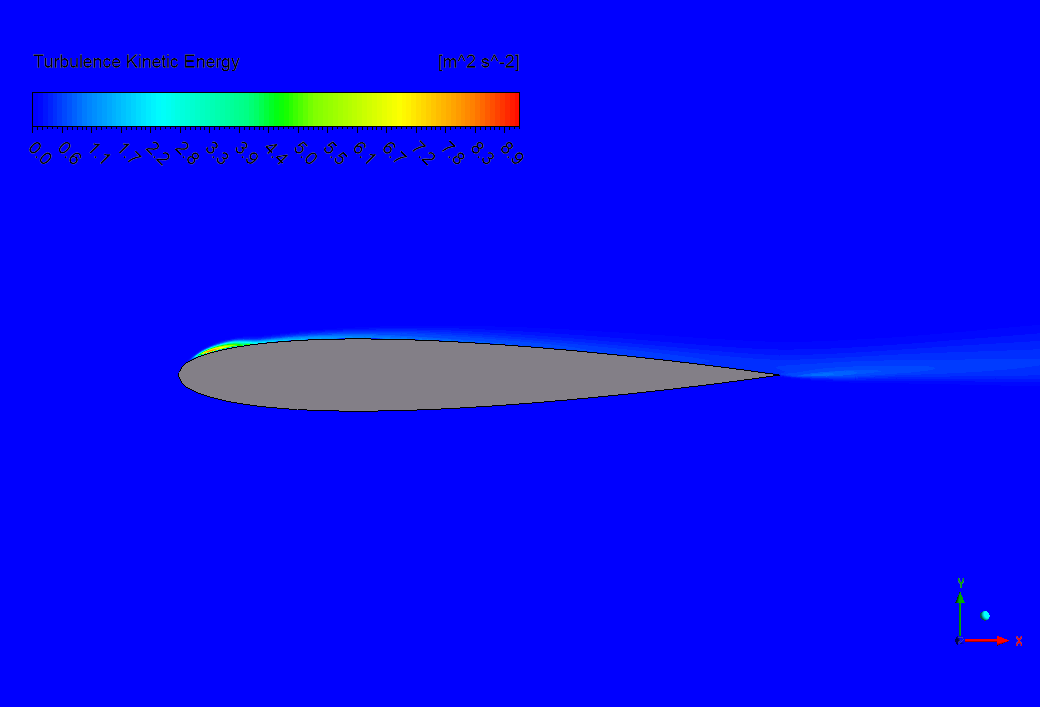
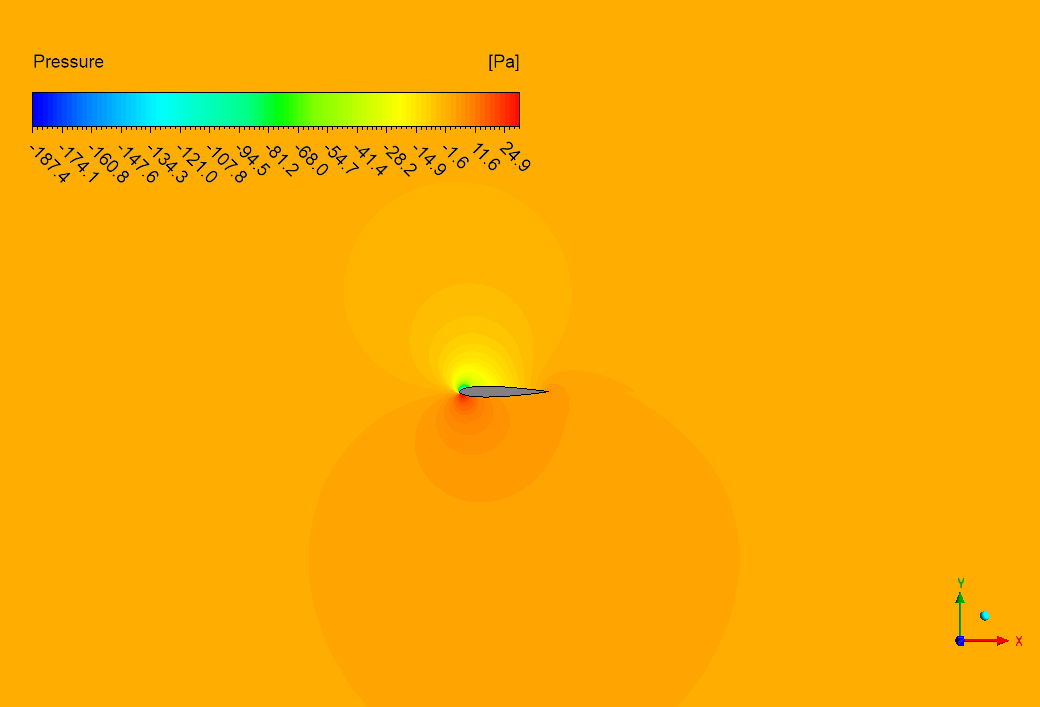
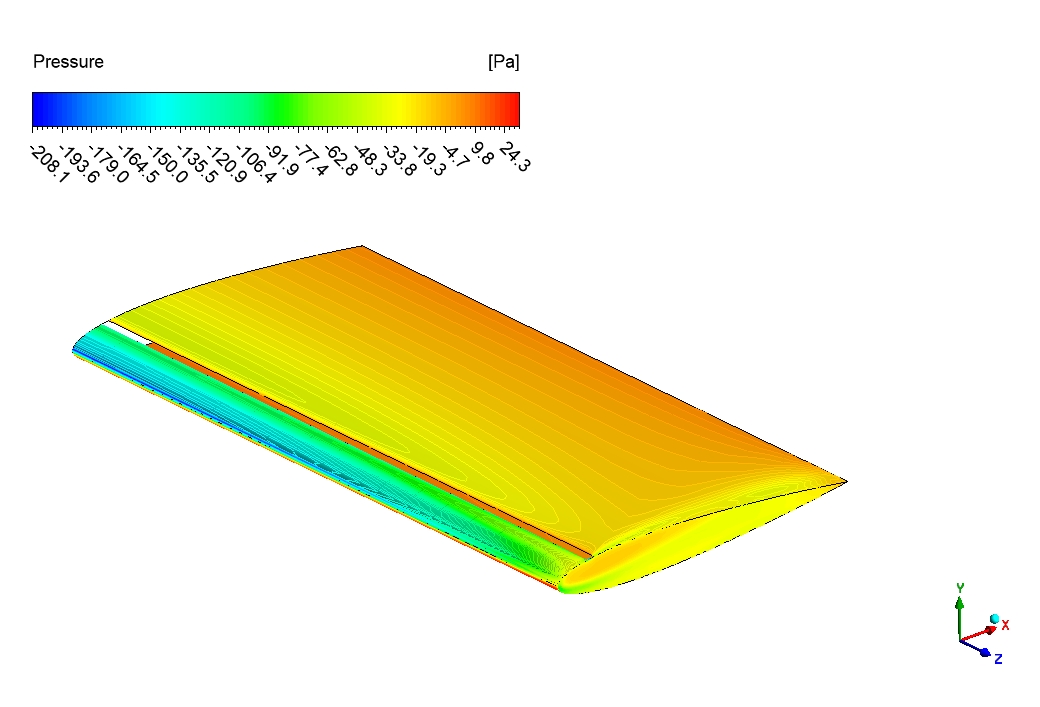
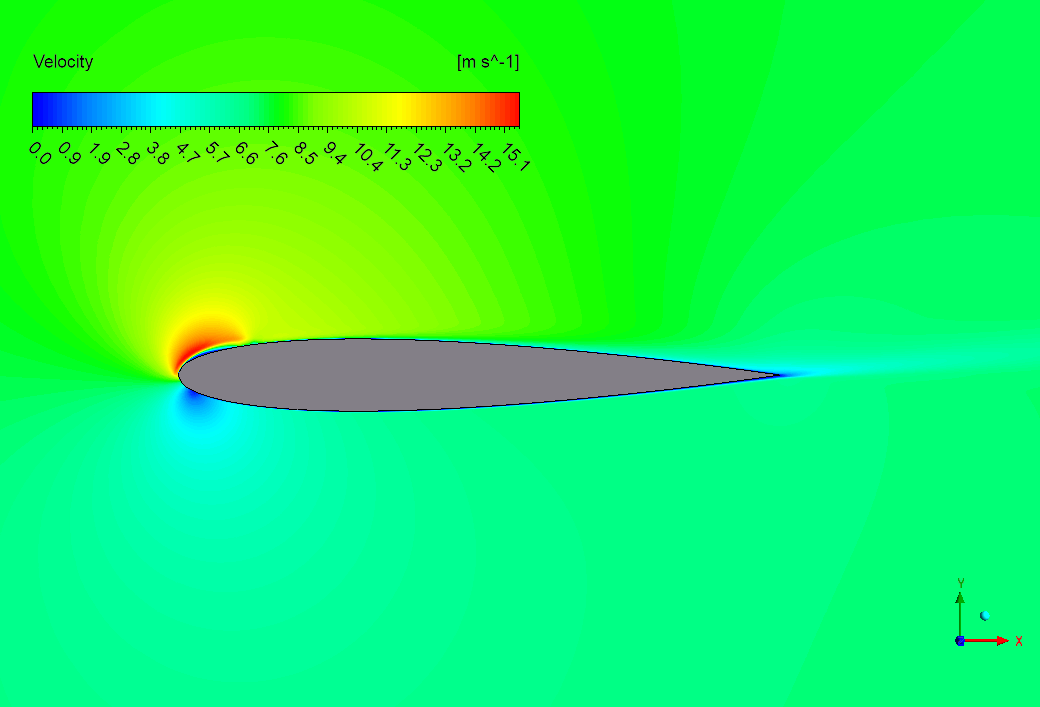
The simulation results tell a wonderful story of improved performance. The numbers show that our wing achieved a lift coefficient of 0.5308, which is a very strong lifting force for an airfoil at such a steep angle. At the same time, the drag coefficient was kept low at just 0.0907, showing a great balance between lift and resistance. This excellent performance is a direct result of the suction slot. The slot works by pulling in the slow, lazy layer of air right next to the wing’s skin (the boundary layer), giving it new energy and keeping it stuck to the surface.
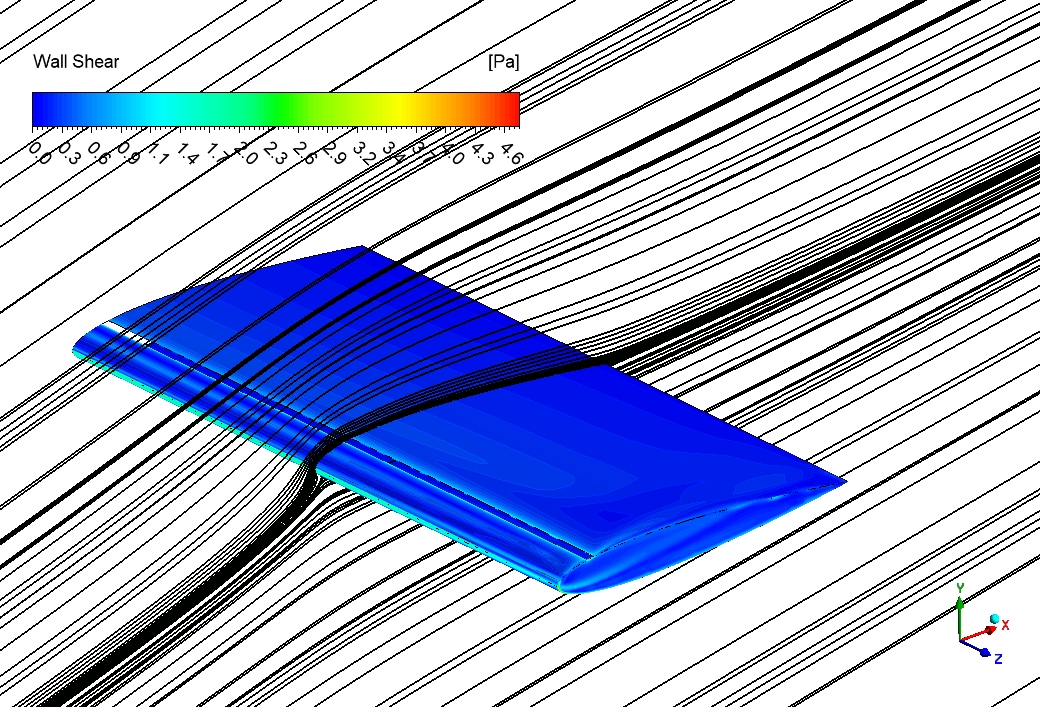
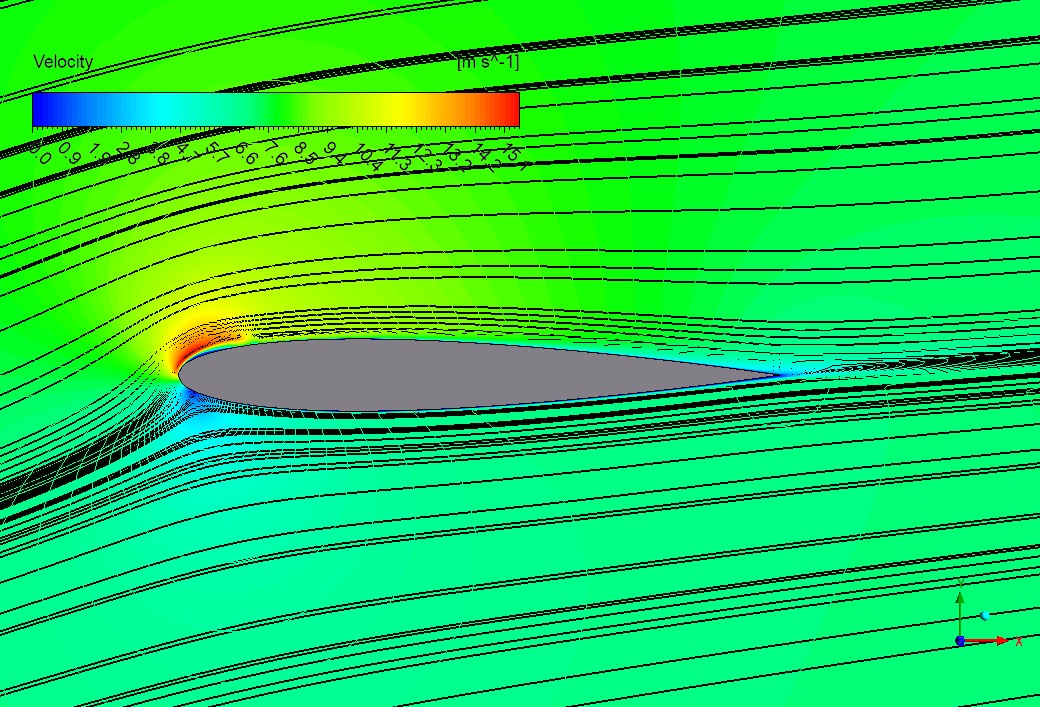
The picture below shows this magic in action. The colorful lines (streamlines) show the path of the air. Instead of breaking away and becoming a swirly mess, the air follows the curve of the wing perfectly, even at this high angle. You can see the air being gently pulled into the slot, which keeps the entire flow smooth and attached. Without the suction, this wing would have “stalled,” meaning the airflow would have separated and the wing would lose its lift. The most important achievement of this simulation is the clear demonstration of how a small, well-placed suction slot can completely prevent flow separation at a high angle of attack, leading to a significant and stable increase in aerodynamic lift. This validated model proves that CFD is a reliable tool for designing advanced, high-performance wings.
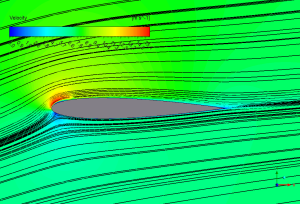
Figure 3: Streamline visualization from the Suction Slot Fluent simulation, demonstrating how boundary layer suction prevents flow separation.





Reviews
There are no reviews yet.