
An Upwind Power Plant CFD simulation is a computer model of a large renewable energy system. These plants, also called Solar Chimney power plants, use the sun’s energy in a very clever way. An Upwind Power Plant Fluent simulation shows how air is heated under a large glass roof (collector) and then flows up a very tall chimney. This movement of hot air, called the stack effect, is a type of buoyancy-driven flow. This analysis is very important for understanding how to get the most power from the design. Using ANSYS Fluent, engineers can perform a Solar Updraft Tower Simulation to see the air speed and temperature everywhere in the plant. This helps to predict the turbine inlet velocity to calculate how much electricity can be made. For more solar chimney and heat transfer CFD simulations, visit our comprehensive collection at CFDLand Heat Transfer Simulations.
- Reference [1]: Nia, Ehsan Shabahang, and Mohsen Ghazikhani. “Numerical investigation on heat transfer characteristics amelioration of a solar chimney power plant through passive flow control approach.” Energy conversion and management105 (2015): 588-595.
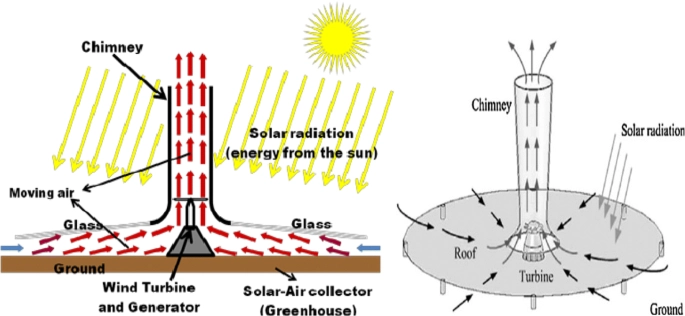
Figure 1: A simple schematic of the Upwind Power Plant, showing the collector, chimney, and air and soil domains
Simulation process: Fluent CHT Setup, Axisymmetric Buoyancy-Driven Flow Modeling
To perform this Upwind Power Plant Chimney CFD study, we created a 2D axisymmetric model. This is a smart and efficient method because the entire power plant is symmetrical around its central chimney. We then used ANSYS Meshing to build a high-quality structured grid, which is shown in Figure 2. In the ANSYS Fluent solver, we set up the physics to model the buoyancy-driven flow. For the boundary conditions, we modeled the effect of solar heating by applying natural convection conditions on the glass collector surface. The thermal energy that the ground stores from the sun, acting as a steady heat source for the air. This entire process, where heat moves through both the solid ground and the moving air, is a Conjugate Heat Transfer (CHT) simulation.
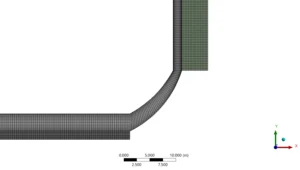
Figure 2: A zoomed-in view of the high-quality structured mesh used for the Power plant chimney CFD simulation
Post-processing: CFD Analysis, Correlating Thermal Gradient with Updraft Velocity Generation
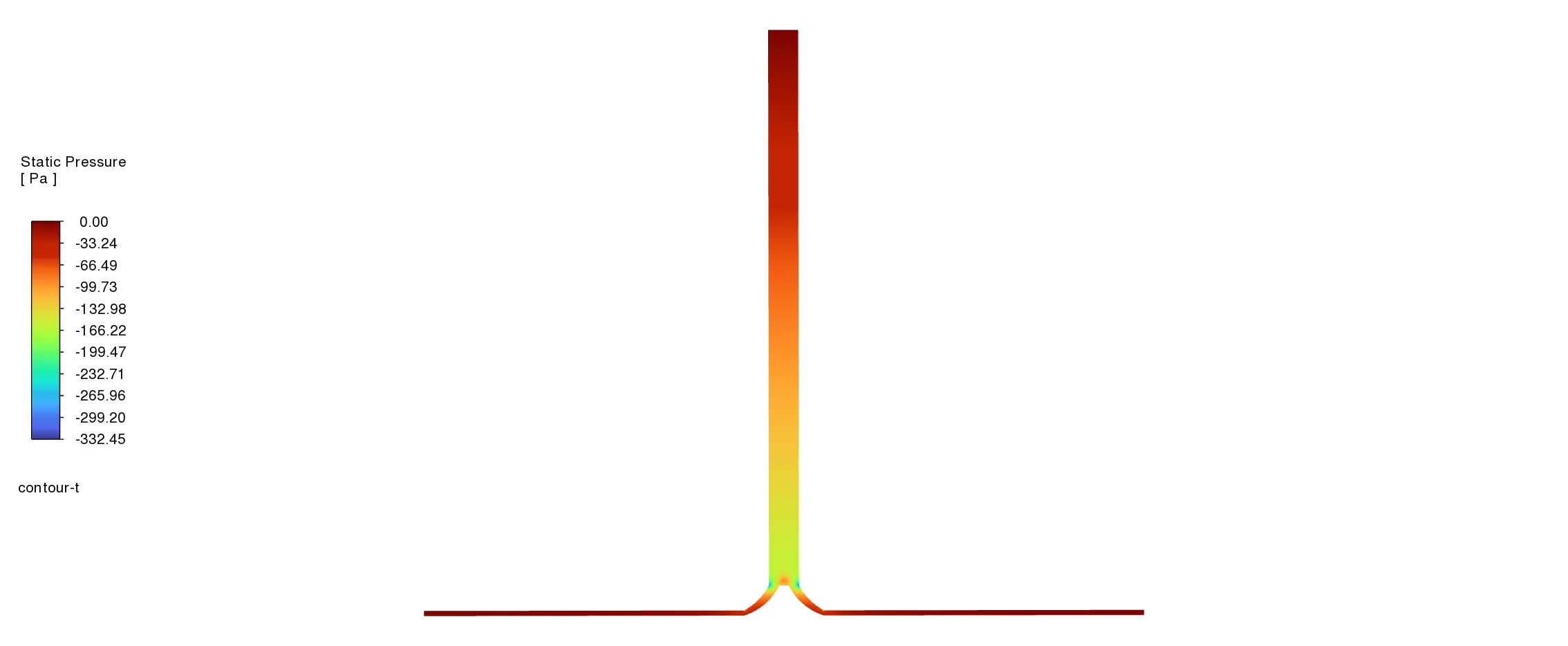
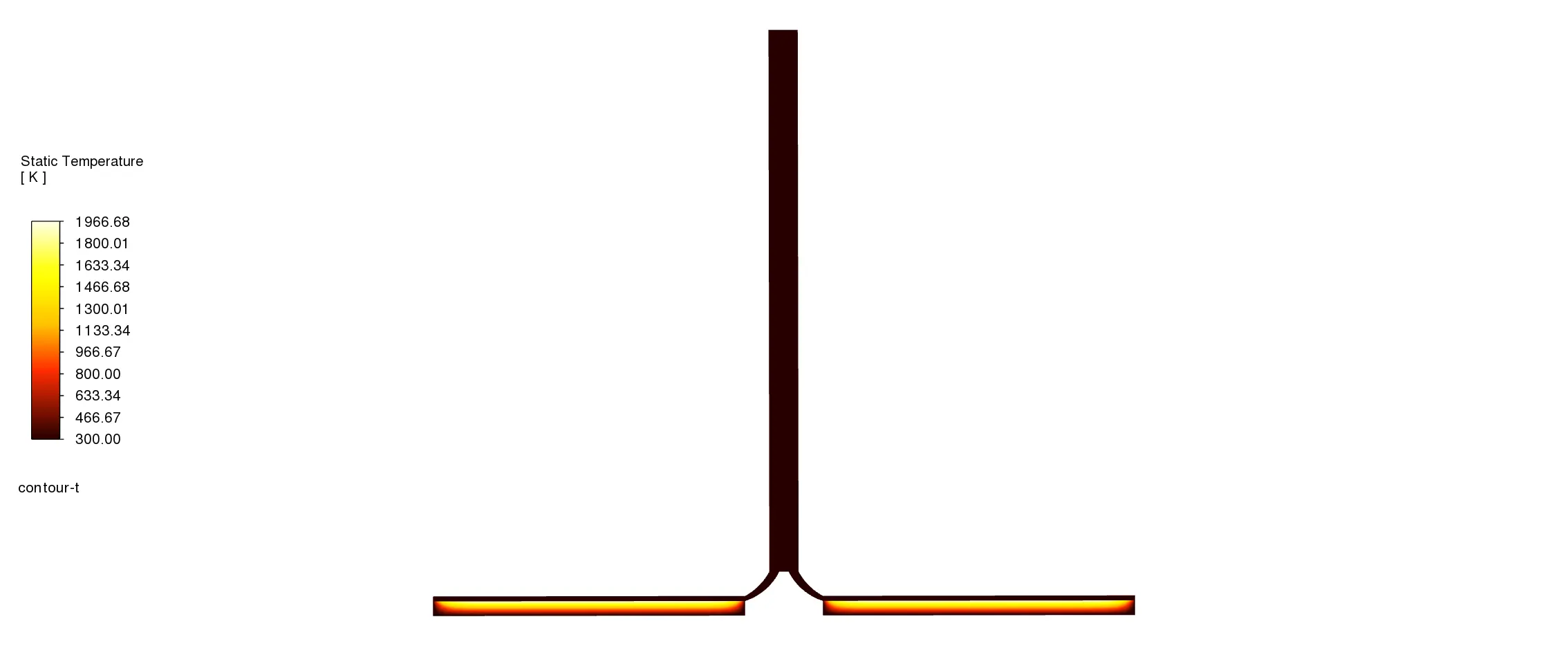
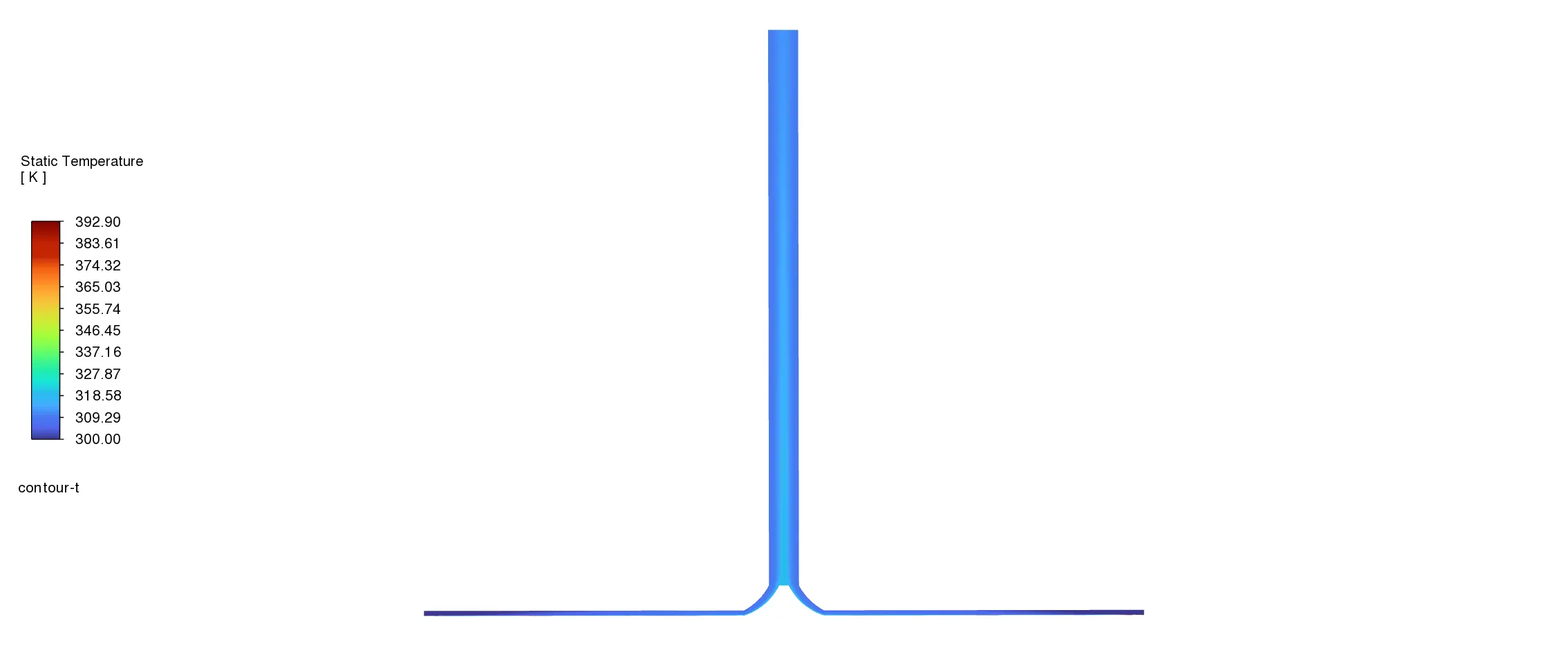
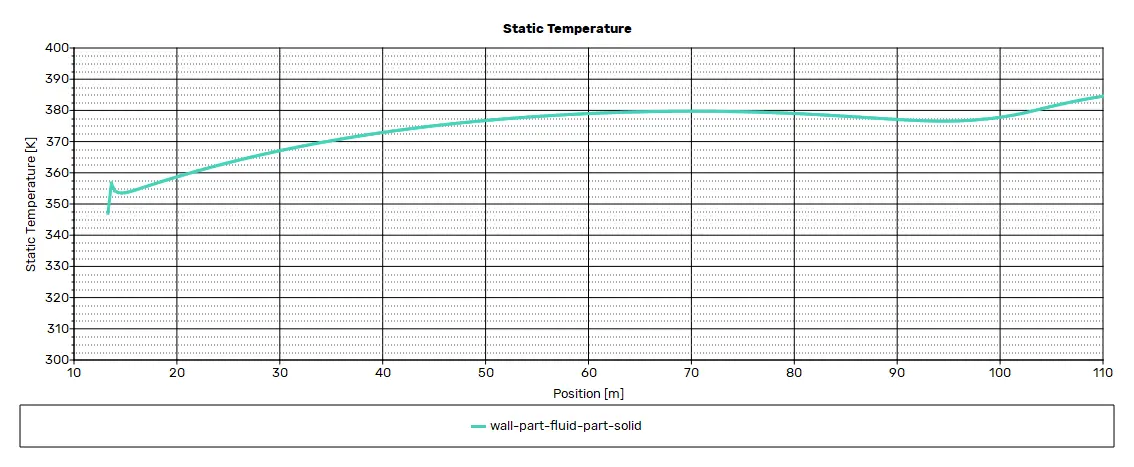
The simulation results provide a complete engineering picture of how the solar chimney turns heat into air motion. The fundamental driving force is the temperature difference, which is clearly shown in the temperature contours. The air temperature contours in Figure 3 show a temperature range from 300 K at the cool air inlet to 392.9 K in the hottest region. This large temperature difference makes the air less dense and lighter, causing it to rise. This is the buoyancy effect. The solid temperature contour in Figure 4 shows the ground acting as the heat source, reaching very high temperatures up to 1966.68 K where solar energy is stored. This powerful heat source provides the energy needed to create the strong updraft.
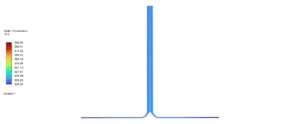
Figure 3: Static Temperature Contours in Air Domain Showing Thermal Gradient
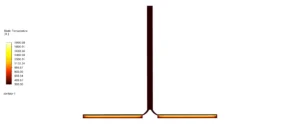
Figure 4: Static Temperature Distribution in Solid Domain Revealing Heat Storage
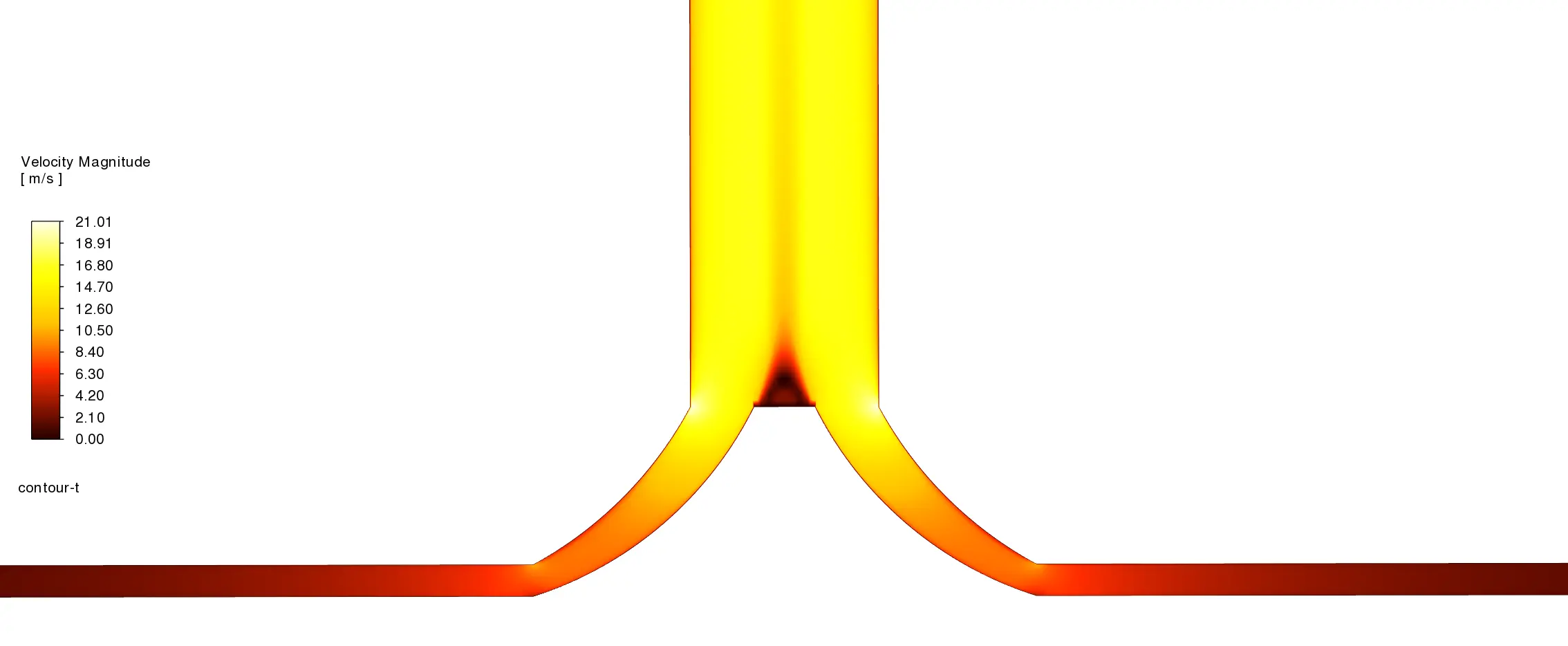
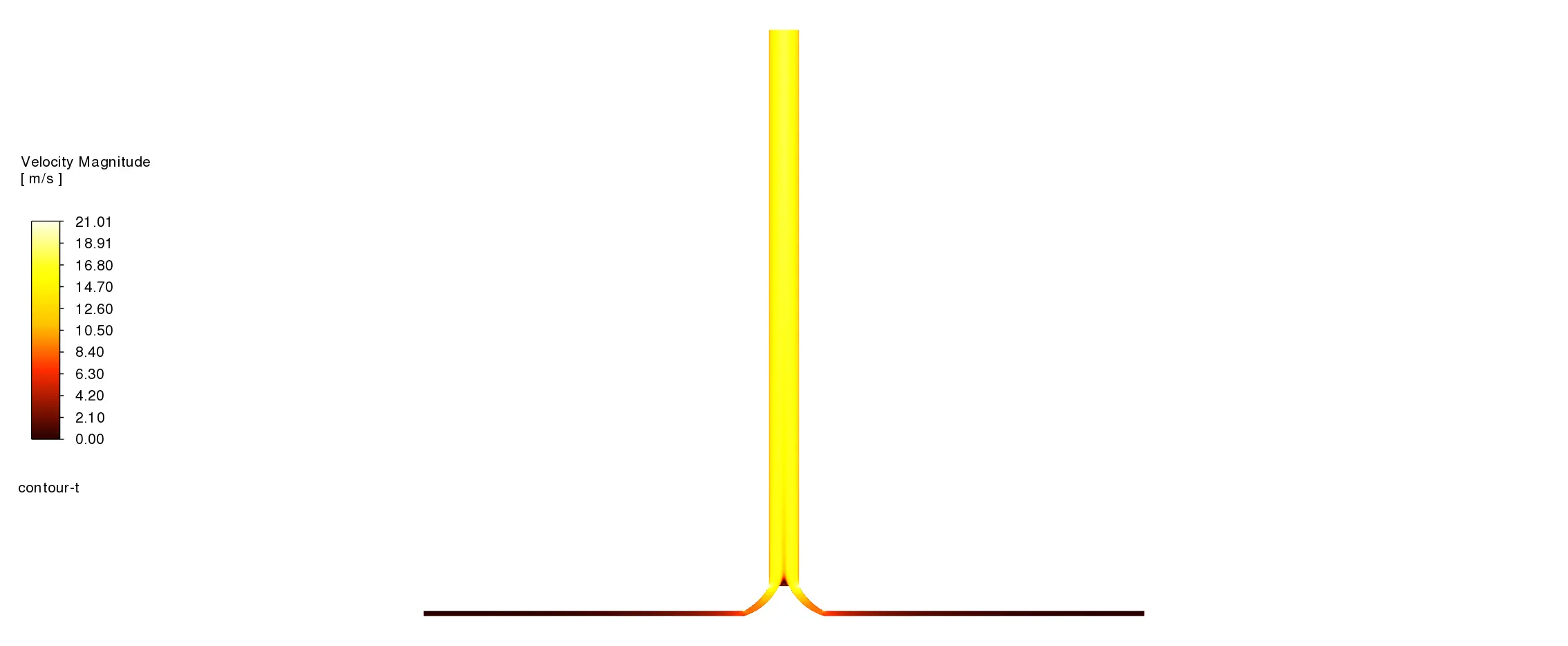
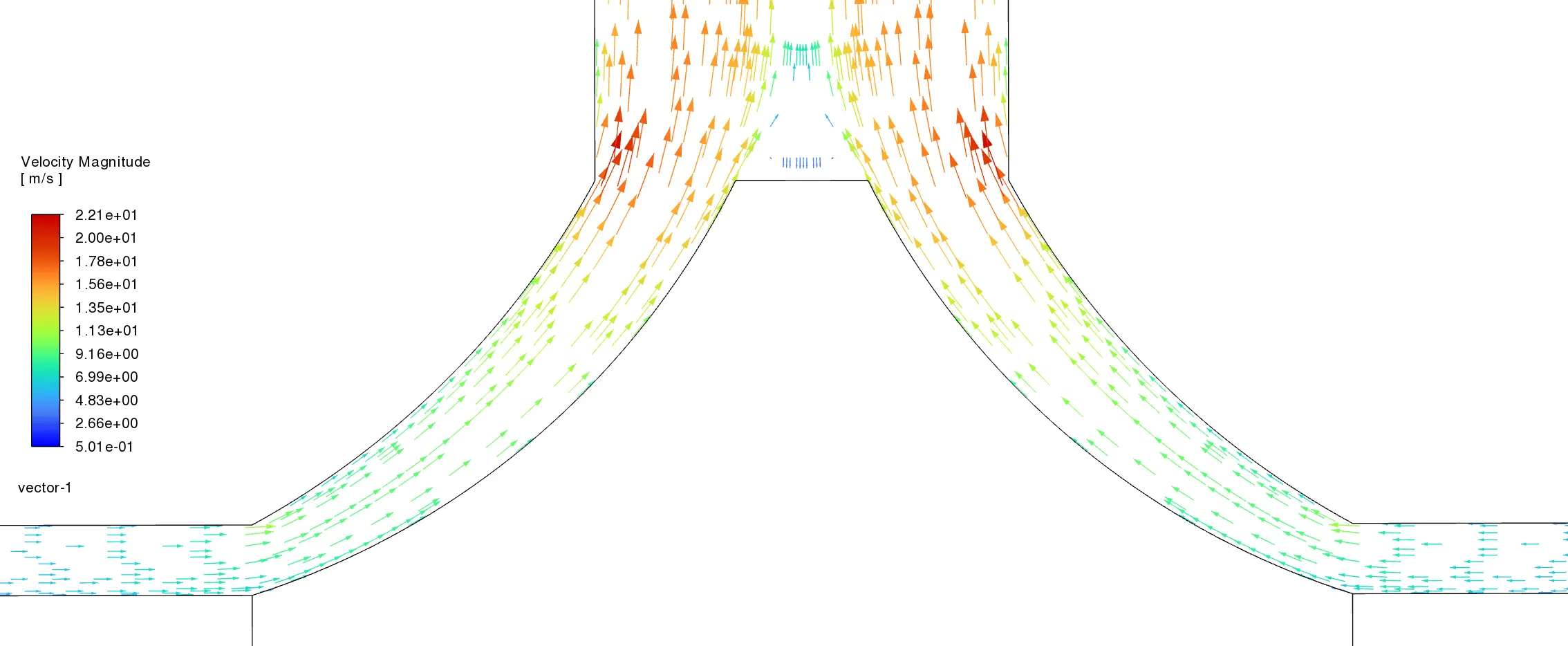
The velocity results in Figures 5 and 6 show the direct result of this heating. The velocity vectors in Figure 5 perfectly illustrate the flow path: cool air is drawn in horizontally at the collector entrance, it speeds up as it gets heated, and then it turns to flow vertically up the chimney. Importantly, the vectors show a smooth flow without any recirculation or separation zones, which means the design is very efficient at directing the flow. The velocity magnitude contours in Figure 6 quantify this motion, showing the flow accelerating to a maximum speed of 21.01 m/s inside the chimney.
The most important achievement of this simulation is the direct correlation between the thermal input and the kinetic energy output. The model proves that a modest average temperature rise of 14.52 K is capable of generating a powerful and consistent average outlet velocity of 15.47 m/s. This result provides the critical engineering data needed to select and place a turbine for maximum power generation, validating the CFD model as an essential tool for designing and optimizing Upwind Power Plants.
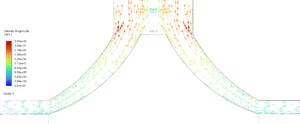
Figure 5: Velocity Vectors Showing Air Flow Direction and Circulation
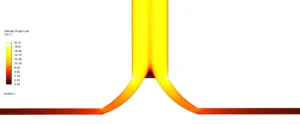
Figure 6: Velocity Magnitude Contours Displaying Updraft Flow Pattern









Reviews
There are no reviews yet.