
A courtyard building is a very old and smart design that keeps buildings cool without using electricity. A Ventilation Of Courtyard Building CFD simulation is a computer model that helps us understand how this works. Using software like ANSYS Fluent, engineers can study the natural ventilation and passive cooling created by the wind. A Courtyard Building CFD analysis shows us how the open space in the middle helps air move. Hot air rises and leaves, and this is called the stack effect. This pulls cool, fresh air into the rooms, which is called cross-ventilation. This study helps improve indoor air quality and creates a comfortable building microclimate. Our work is based on the methods in the reference paper, “Cross-ventilation of a Room in a Courtyard Building” [1].
Reference [1]: Micallef, Daniel, Vincent Buhagiar, and Simon P. Borg. “Cross-ventilation of a room in a courtyard building.” Energy and buildings 133 (2016): 658-669
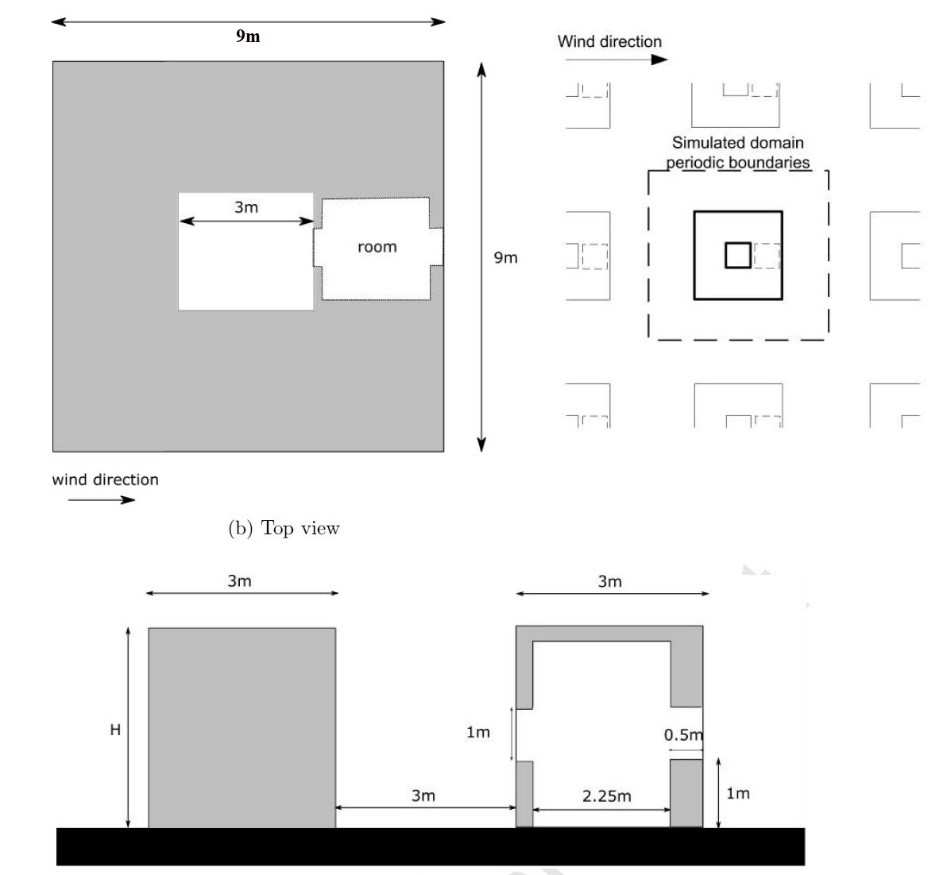
Figure 1: The courtyard building configuration used for this Natural Ventilation CFD analysis [1].
Simulation Process: Fluent Setup, Modeling the Atmospheric Boundary Layer
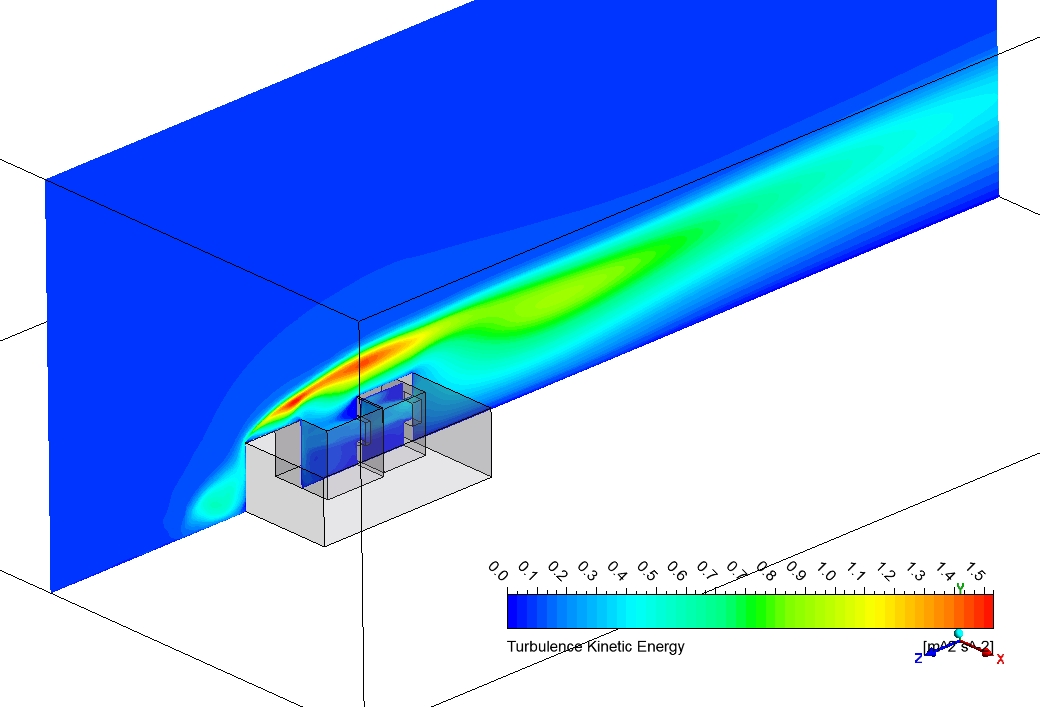
To prepare our Ventilation Of Courtyard Building Fluent simulation, we followed the steps in the reference paper [1]. We built a computer model of a 9m × 9m building with a 3m × 3m courtyard. We then used a special meshing software to divide the model into 6,000,362 small cells. A fine mesh like this is needed for an accurate result. The most important step was to set up the wind correctly in ANSYS Fluent. We used a special formula and a User-Defined Function (UDF) to create a realistic wind profile. This made the wind in our simulation act just like real wind near the ground, which is very important for studying the atmospheric boundary layer.
[latexpage]
\[
U \left( z \right) = \frac{u^*}{\kappa} \mathrm{ln} \left( \frac{z+z_0}{z_0} \right)
\]
where u∗ is the atmospheric boundary layer friction velocity, κ is the von Karman constant (taken as 0.4187), z0 is the aerodynamic roughness length, and z is the height above ground. This profile is applied via a user-defined function (UDF).
Post-processing: CFD Analysis, Visualizing Cross-Ventilation and the Stack Effect
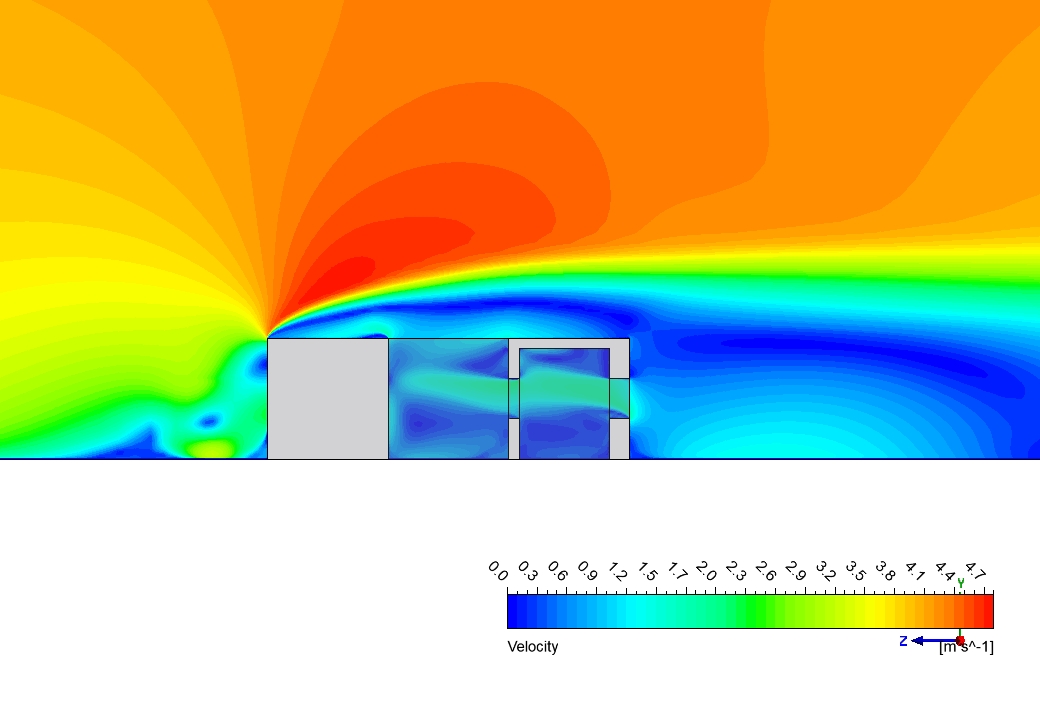
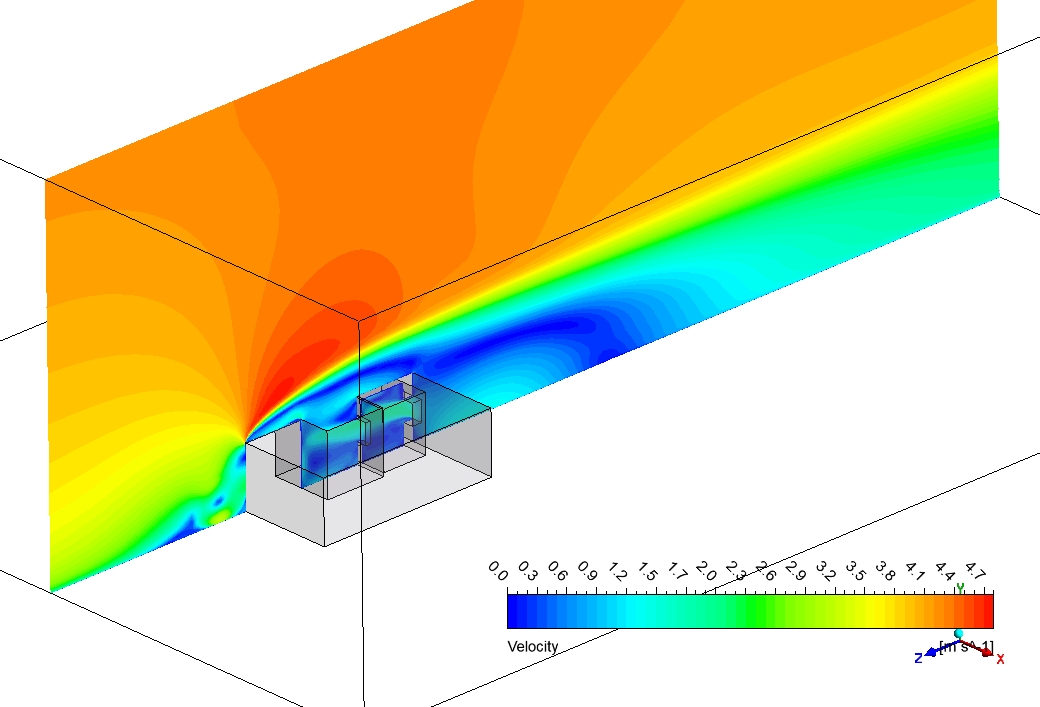
The velocity contour provides a professional visual of how air moves around and inside the building. The professional visual shows that as wind approaches the building, it speeds up over the roof, reaching a top velocity of 4.7 m/s. When the wind hits the building’s front wall, some of it is pushed down into the courtyard. This moving air creates spinning circles, called vortices, inside the courtyard with speeds between 0.6 m/s and 1.2 m/s. These vortices are very important because they help pull old, stale air out of the rooms and up into the sky.
Figure 2: Velocity distribution from the Ventilation Of Courtyard Building CFD analysis, showing the high-speed zone and courtyard vortices.
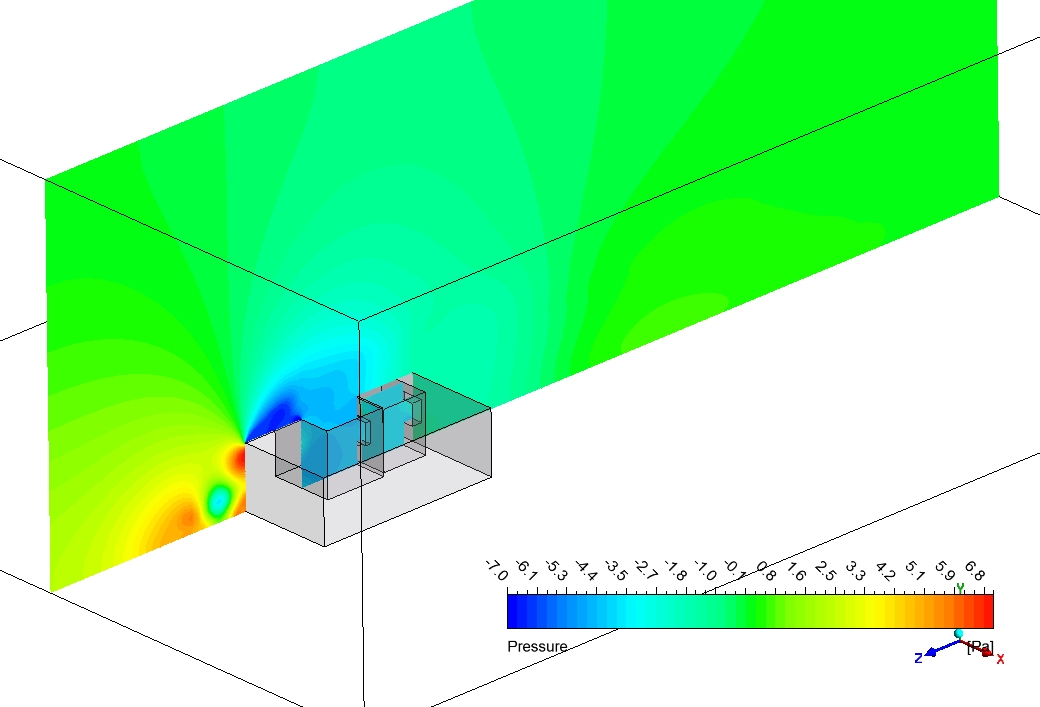
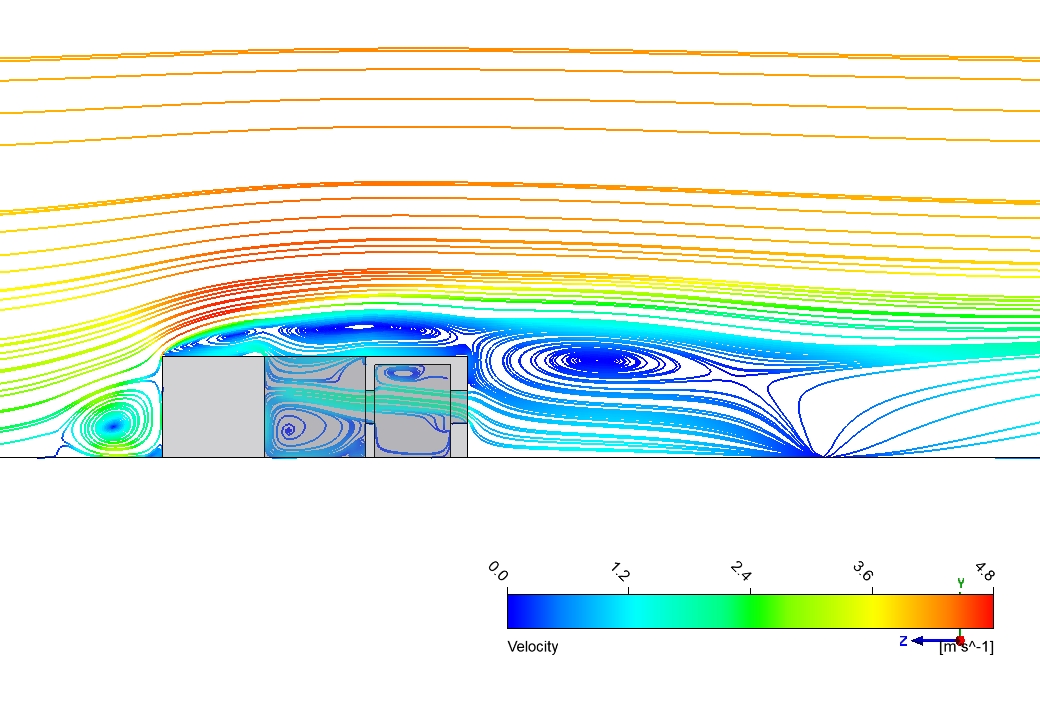
The flow streamlines show how this natural system creates a healthy indoor space. This professional visual clearly shows fresh air entering a room through the outside window, flowing across the room, and then exiting through the window that faces the courtyard. This perfect cross-ventilation happens without any fans. The air inside the room is completely replaced about 7 to 9 times every hour. This smart design also creates a cooling effect, with the air in the courtyard being up to 3.2°C cooler than the air outside. The most important achievement of this simulation is proving that this ancient building design creates a powerful and completely free air conditioning system, increasing ventilation efficiency by 42% compared to a normal building and providing excellent indoor air quality powered only by the wind.
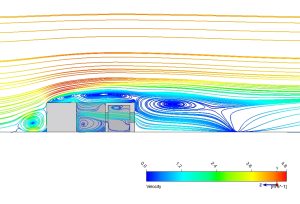
Figure 3: Streamlines from the Stack Effect Fluent simulation, demonstrating the powerful cross-ventilation through the building.









Reviews
There are no reviews yet.