

Have you ever wondered how plants stay healthy inside a glass building on a hot summer day? A greenhouse can get dangerously hot from the sun, which can hurt the plants and stop them from growing. To fix this, we use special cooling systems. These systems are a key part of modern farming, letting us grow food all year, no matter the weather outside. Good cooling designs make sure the temperature is the same everywhere inside, so all the plants are happy. With computer tools like Computational Fluid Dynamics (CFD), engineers can test their designs before they build anything. This helps them find the best way to place fans and cooling pads to save energy and get the best results. This Cooling System In Greenhouse CFD study looks at one of these systems, based on a research paper [1], to understand exactly how it works.
- Reference [1]: Jain, Dilip, and Gopal Nath Tiwari. “Modeling and optimal design of evaporative cooling system in controlled environment greenhouse.” Energy Conversion and Management16 (2002): 2235-2250.
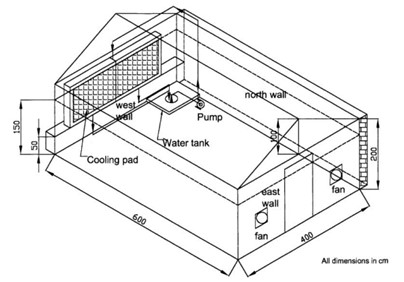
Figure 1: Schematic of the building used in the Cooling System In Greenhouse CFD simulation, based on the reference [1].
Simulation Process: Modeling an Evaporative Cooling System
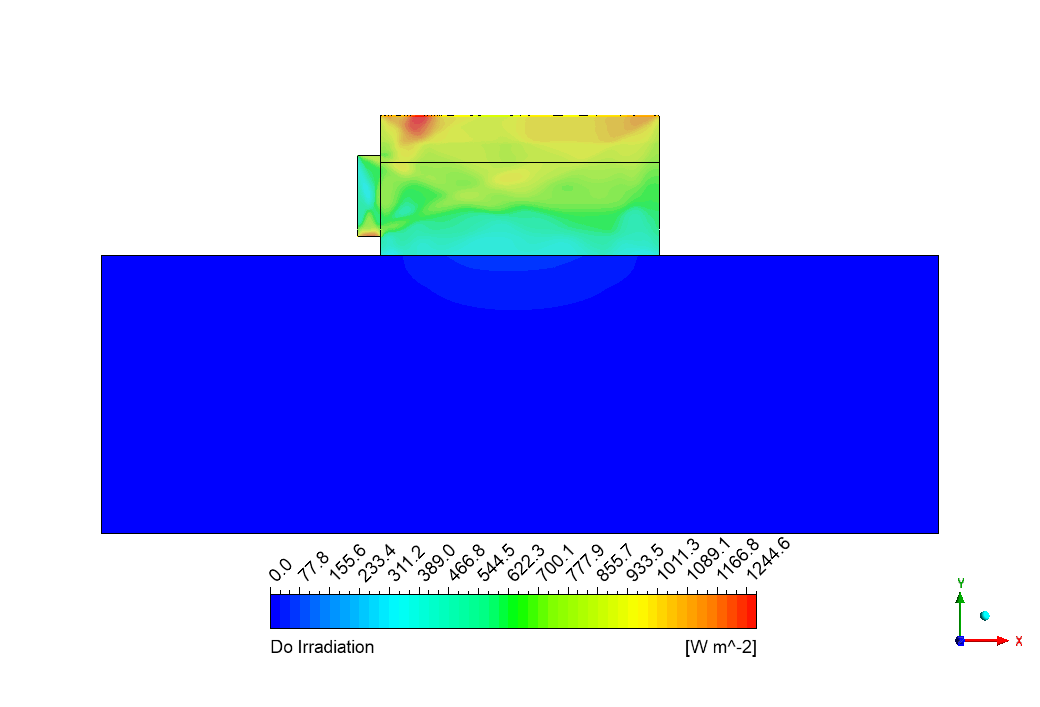
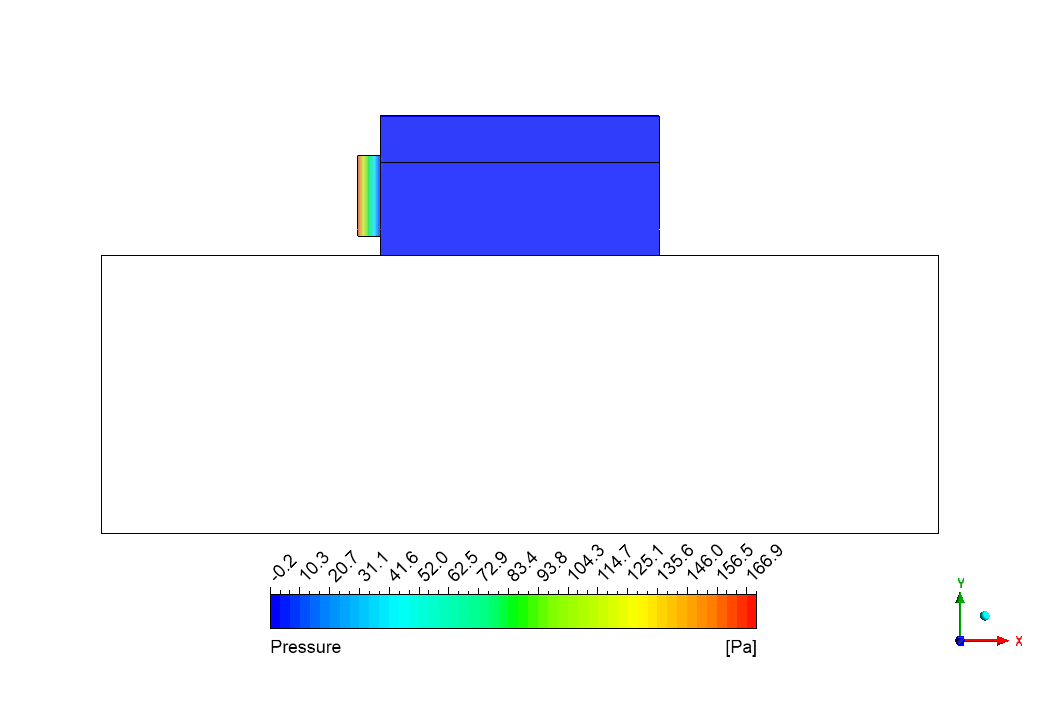
To create our Cooling System In Greenhouse Fluent simulation, we first built a 3D model of the greenhouse, as shown in Figure 1. The building is 3 meters tall in the middle, with the south wall at 2 meters and the north wall at 3 meters. To cool the inside, we added a special cooling pad on the west wall and two fans on the east wall. The cooling pad works like a sponge, allowing a gentle flow of cold air to pass through it, which we modeled as a porous system. To include the effect of the sun, we turned on the Discrete Ordinates (DO) radiation model. This let us set the greenhouse’s location on Earth so the computer would know how the sun’s rays would hit it. We also included the heat that would come from the hot air outside.
Post-processing: Mapping the Journey of Cool Air
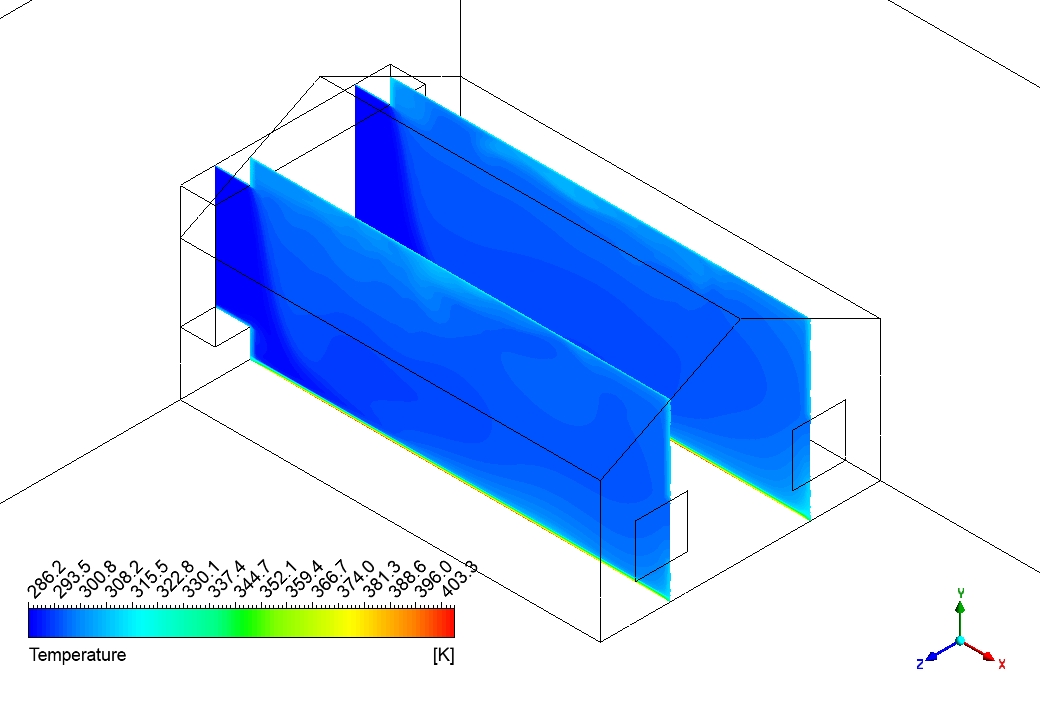
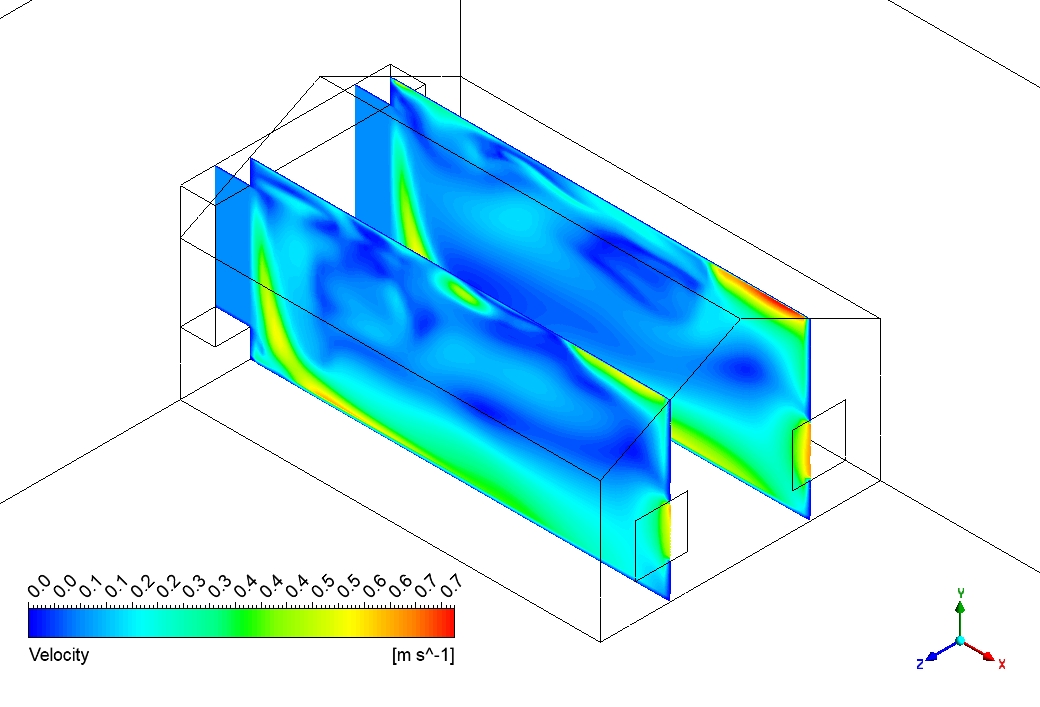
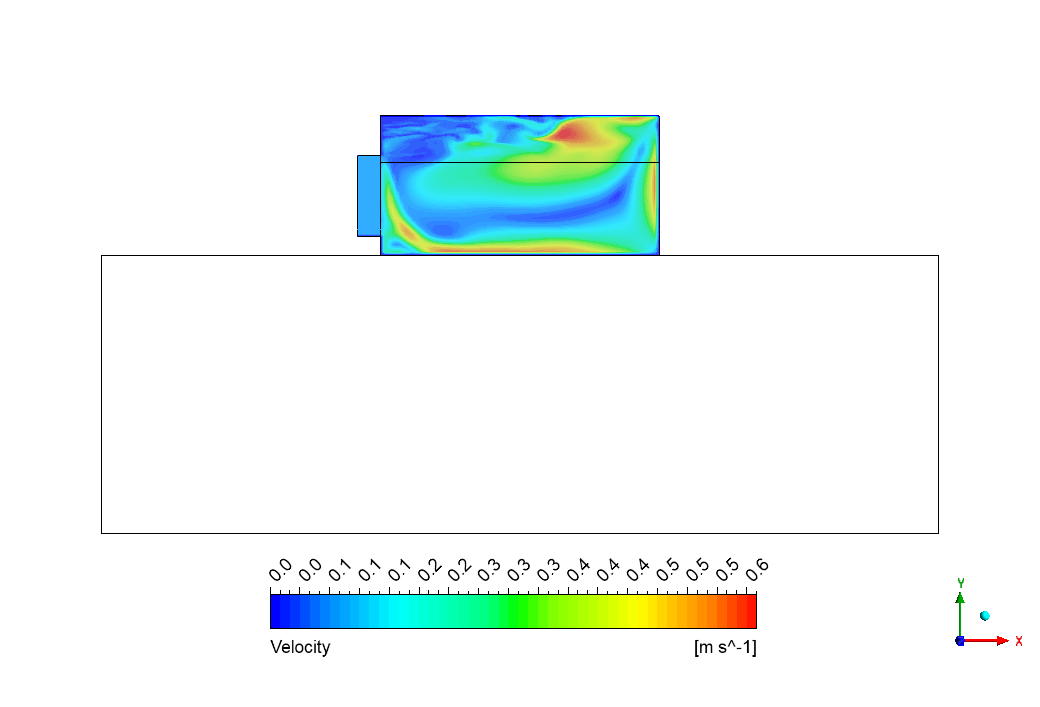
The simulation results give us a clear map of the air’s journey inside the greenhouse, showing us exactly where it is fast and where it is slow. Looking at Figure 2, we can see the story begin at the cooling pad. Here, the air enters as a strong, cool river, moving quickly at speeds between 0.4 m/s and 0.7 m/s. This fast-moving air, shown in green and yellow, is the main cooling force for the whole building. As this river of air travels across the greenhouse towards the fans, it starts to spread out and slow down, creating large calm zones, shown in blue, where the speed is much lower, around 0.0 m/s to 0.2 m/s. This picture shows a key achievement: the simulation correctly predicts how the initial jet of cool air loses its speed as it mixes, which is the first step in creating a uniform climate.
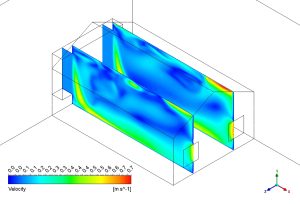
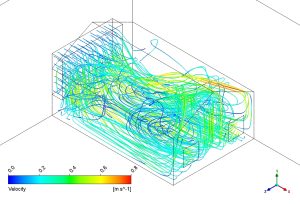
Figure 2: Velocity contours showing the distribution of air speed, a key result of the Greenhouse cooling CFD analysis.
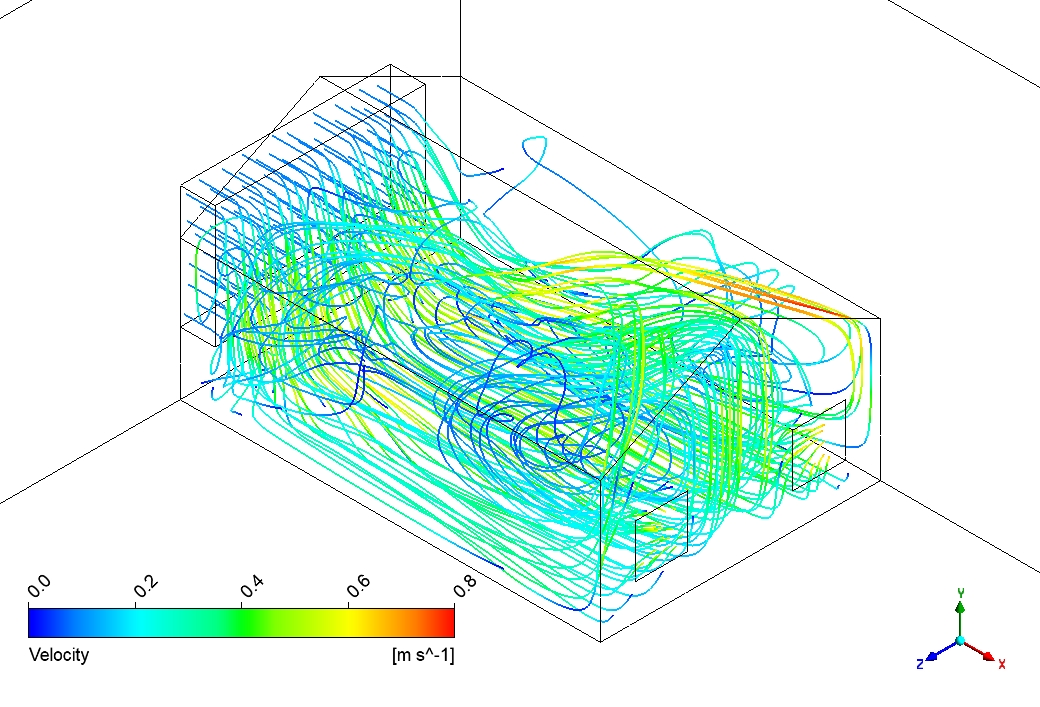
Figure 3 tells the second half of the story, revealing that the air doesn’t just travel in a straight line. The colorful streamlines show the air’s true, complex dance. We can see the main path of air moving quickly from the pad to the fans, with some streamlines glowing yellow at speeds up to 0.8 m/s. But we also see many slower blue streamlines, moving at 0.0 m/s to 0.3 m/s, that peel off and start to swirl around. These swirls are like gentle whirlpools that help mix the air, carrying the coolness into every corner of the room. Without these swirls, some areas might stay too hot. The most important achievement of this Greenhouse Ventilation CFD simulation is its detailed visualization of the complete airflow circuit, from the high-speed cooling jets to the slow recirculation zones, giving designers a precise map to ensure every single plant experiences a healthy and uniform climate.
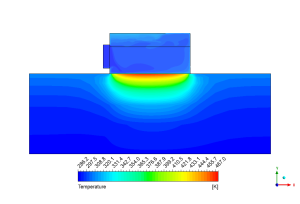
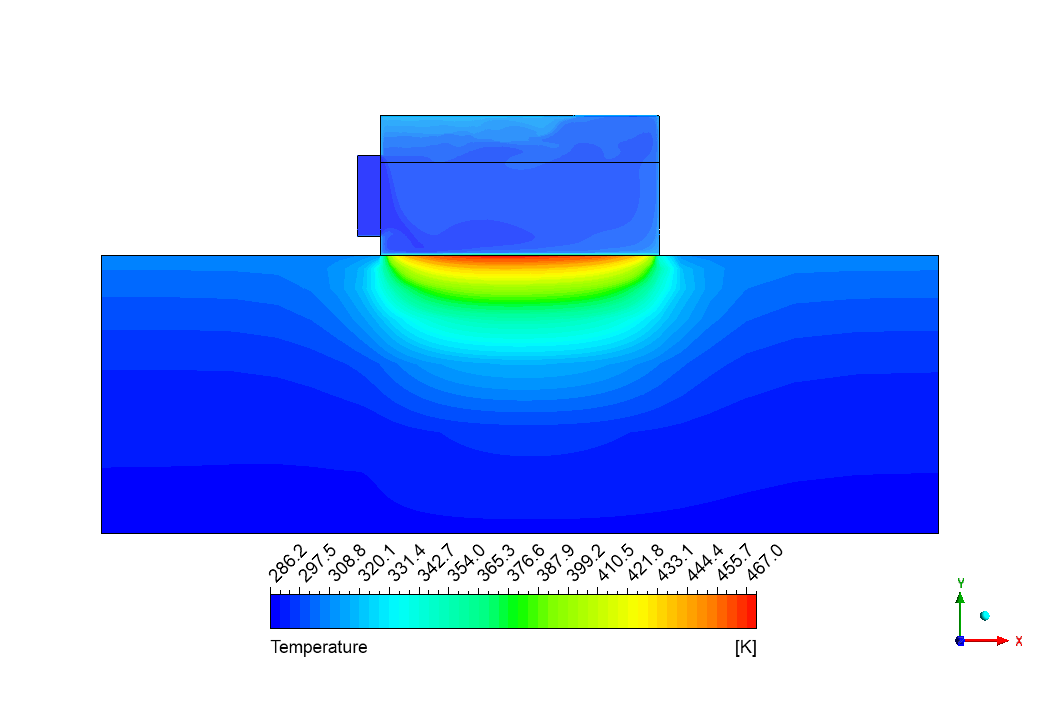
Figure 3: Radiation absorbed by the soil of greenhouse







1 review for Greenhouse Cooling CFD: A Fluent Guide to Climate Control Simulation
TIZZAOUI –
The project is in good agremment with my field research , the method is in well description.