
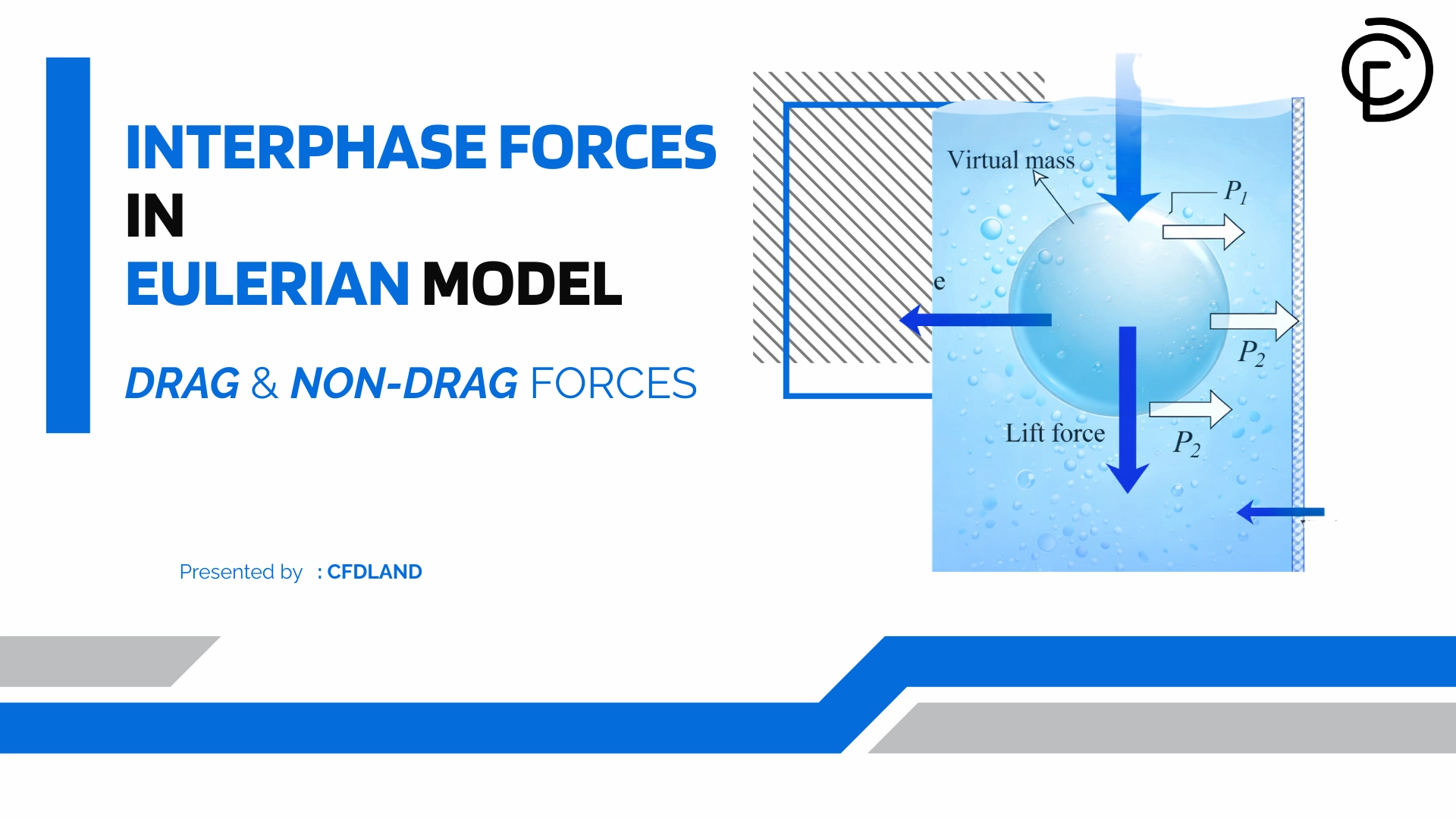
In our previous guide, Introduction to Eulerian Multiphase Model in ANSYS Fluent, we explained how the software uses conservation equations for different phases. Now, we need to understand how these phases physically push and pull each other.
When gas bubbles rise in water, or solid particles move in air, they touch the surrounding fluid. The fluid and the particles share speed and energy. This connection is called interphase momentum exchange. In this framework, the software calculates the specific forces acting on the secondary phase. If you choose the wrong force models, your multiphase flow simulation will fail. These forces control the bubble movement, the gas holdup, and the final physical results. If you want to see how we apply these settings in realistic industrial projects, you can review our professional multiphase CFD simulation tutorials.
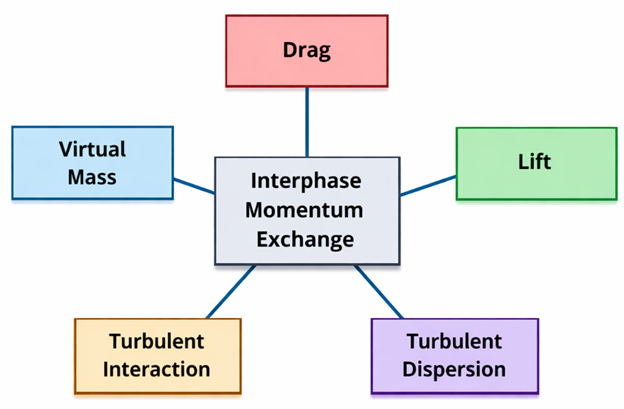
Figure 1: Block diagram showing the main components of interphase momentum exchange
Overview of Interphase Forces
In the Forces tab ANSYS Fluent setups, we divide the interphase momentum exchange into two main groups. We have the primary drag model ANSYS Fluent options, and we have several important non-drag forces CFD.
Important Note: The forces discussed here apply to continuous interpenetrating phases in multiphase flows. This is fundamentally different from external aerodynamic drag (like air flowing over a car) or discrete particle tracking (DPM drag).
Here is a simple overview of the hydrodynamic forces we will explain in this blog:
- Drag Force: This is the main hydrodynamic friction between the continuous liquid and the dispersed bubbles. It is the most critical force in any gas-liquid flow simulation.
- Lift Force: When the liquid velocity changes, this force pushes bubbles sideways.
- Wall Lubrication Force: This is a special force that prevents bubbles from touching the solid walls of a pipe or tank.
- Virtual Mass Force: When a bubble suddenly speeds up, it has to push the heavy liquid around it. This creates an extra resistance force.
- Turbulent Dispersion Force: This force happens when turbulent eddies hit the bubbles. It mixes the bubbles and spreads them out evenly.

Figure 2: All forces acting on a bubble in a water column
Gravity: The First Setting
Before we look at advanced drag and non-drag forces, we need to talk about gravity. In any multiphase flow simulation, gravity pulls all fluids down. Air bubbles go up because of density differences. Water is much heavier than air, so gravity pulls the water down strongly, which in turn pushes the light air bubbles up. You can read more about how this physical principle works in our detailed buoyancy in CFD guide. If you want correct phase interaction results, you should always turn on the gravity setting. Otherwise, the bubbles will not rise, and your calculation will fail.

Figure 3: Schematic of Hydrostatic pressure
Drag Force: Fundamentals
The drag force is the most basic hydrodynamic resistance. When a bubble moves through water, the water pushes back against it. You need to always include it in your solver setup. To calculate the drag force CFD value, the software uses a number called the drag coefficient (Cd). This number changes depending on the shape and size of the bubble. It also depends on the slip velocity, which is the speed difference between the moving water and the moving bubble. A fast, large bubble will have a different drag coefficient than a slow, small bubble.
If you have only one bubble in a tank, you calculate the single bubble drag. However, in industrial pipes or reactors, you have thousands of bubbles moving together, known as a bubble swarm. When bubbles move in a group, they affect the water around each other. Because of this, ANSYS Fluent calculates a special bubble swarm drag.
Interfacial Area Density: To find the total drag force in a computational cell, the software requires the total surface area of all the bubbles inside that cell. We call this the interfacial area density. For simple spherical bubbles, the solver calculates it using the volume fraction and the bubble diameter ( (A_i = 6\alpha/d_p) ). To track how bubbles break or merge to change this area dynamically, engineers rely on the population balance model for bubble size distribution.

Figure 4: Diagram showing the basic concept of drag force acting as hydrodynamic resistance

Figure 4: Diagram showing the basic concept of drag force acting as hydrodynamic resistance on a single bubble.
Bubble Shape Regimes: Eotvos, Morton, and Reynolds Numbers
To calculate the correct drag force, we need to know the shape of the bubbles. Bubble shapes change depending on their size, speed, and the fluid around them. We use three dimensionless numbers to find the correct bubble shape regime:
- Eotvos number (Eo): This number compares the buoyancy force with the surface tension force. It tells us the volume and shape of the bubble.
- Morton number (Mo): This number looks at the physical properties of the fluids using the formula Mo = \frac{g\mu_c^4 \Delta\rho}{\rho_c^2 \sigma^3} . It is constant for a specific fluid pair. For example, the Morton number for air and water is always 7.5e-11.
- Reynolds number for bubbles: This number compares the inertial forces with the viscous (friction) forces.
We use the Eotvos, Morton, and Reynolds numbers to draw a bubble regime map. This map shows three main bubble shape regimes:
- Viscous (Spherical bubbles): When bubbles are small (around 1 mm in water), they are perfect spheres. They rise in a straight or zig-zag path.
- Distorted (Ellipsoidal bubbles): When bubbles grow bigger, they become flat like an egg.
- Cap (Spherical cap bubbles): When bubbles are very large (around 18 mm in water), they look like a mushroom cap or an umbrella.
The drag coefficient changes completely when a bubble moves from the viscous regime to the cap regime. In the cap regime, the drag coefficient reaches a constant value.

Figure 5: Bubble regime map showing spherical, ellipsoidal, and spherical cap bubble shapes
Note: In ANSYS Fluent, the automatic flow regime detection tool calculates the drag for all shapes and automatically chooses the correct one for your flow.
Drag Models for Gas-Liquid Flows
In ANSYS Fluent, you cannot use one simple number for the drag coefficient. You have to choose a specific mathematical model.

Figure 6: Drag laws available in Forces tab of ANSYS Fluent
Schiller-Naumann model
This is the oldest and most basic model. It assumes the bubble is a perfect hard sphere. The governing equation is:
C_D = \frac{24}{Re} (1 + 0.15 Re^{0.687})
when the Reynolds number (Re) is less than 1000. If the Reynolds number is higher than 1000, the drag coefficient becomes a constant value of 0.44. You should use the Schiller Naumann drag model when you have small, constant, and perfect spherical bubbles that are smaller than 1 millimeter.
C_D = \frac{24}{Re}.
Morsi-Alexander and Symmetric Models
The Morsi-Alexander model is similar to Schiller-Naumann, but it applies to a much larger range of Reynolds numbers. Another option is the Symmetric drag model. It uses the Schiller-Naumann equation but calculates the fluid properties from the volume-averaged mixture. You need to use the Symmetric model when the phases mix so much that the liquid becomes the secondary phase and the gas becomes the primary phase (phase inversion).
Grace drag law
When bubbles grow, they are not perfect spheres. They become flat or look like a mushroom. For these cases, you should use the Grace drag law. The Grace model calculates the drag for three different shapes using the Eotvos and Morton numbers. For very large cap bubbles, the drag coefficient becomes C_D = \frac{8}{3} . The Grace model accurately calculates the terminal rise velocity for large, non-spherical bubbles in tall columns.
Tomiyama drag model
Another smart choice is the Tomiyama drag model. This model looks at the actual shape of the bubble to find the correct drag force. Its governing equation calculates the drag for all three shapes at the same time and mathematically selects the correct one:
C_D = \max(\min(C_{D,viscous}, C_{D,distorted}), C_{D,cap})
You should use this model when you have many different bubble shapes in the same tank.
Universal drag law / Ishii-Zuber model
In very dense flows, bubbles hit each other and pack together. For these dense conditions, you need to use the Universal drag law (also known as the Ishii-Zuber model). Their governing equations use the gas volume fraction to change the drag coefficient, showing that the fluid acts thicker.
Lift Force
When the liquid flow is not uniform or has rotation, bubbles feel a strong side push. This side push is called the lift force. For example, in a vertical pipe with water moving up, the lift force pushes small bubbles toward the wall. The governing equation for the basic lift force is:
F_{lift} = -C_{L} \rho_q \alpha_p (v_q - v_p) \times (\nabla \times v_q)
To solve this, the solver uses the lift coefficient (CL). For a realistic lift force CFD project, you have to choose a specific mathematical lift model.

Figure 7: Lift coefficient models available in Forces tab
Saffman Lift Force and Moraga Models
The Saffman-Mei model and the Moraga model calculate the lift coefficient by combining classical aerodynamic lift with the lateral force caused by wake vortices. You should use the Saffman lift force models when your simulation mostly has rigid spherical bubbles or drops.
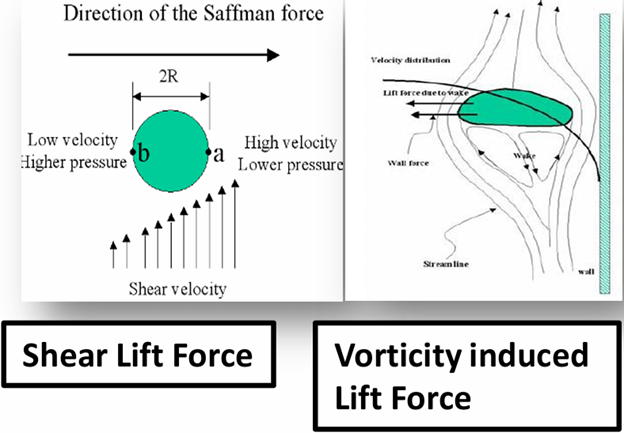
Figure 8: Saffman-Mei model and the Moraga model calculate the lift coefficient by combining two different physical effects.
Legendre-Magnaudet Model
This model includes the effect of internal gas circulation by combining the bubble Reynolds number with the dimensionless shear rate of the liquid. It works best for small, perfect spherical bubbles.

Figure 9: Gas circulation inside the bubble as it moves
Antal et al. model
The Antal et al. model is the most basic choice for wall lubrication. The governing equation for the Antal coefficient mathematically compares the bubble diameter (Dh) to the physical distance to the wall (Yw) using the formula
C_{WL} = \max (0, \frac{-0.01}{d_b} + \frac{0.05}{y_w})
You must use the Antal model when your simulation only has very small bubbles. Because this mathematical formula is only active in a very thin region close to the wall, you must create a very fine mesh near your boundaries, or the software will not calculate the force correctly.
Tomiyama Lift Model
When bubbles grow very large and form a cap shape, the lift force actually changes direction. The fluid pushes large cap bubbles toward the center of the pipe. The Tomiyama model uses a modified Eotvos number to calculate this bubble deformation and mathematically accounts for this sign change.
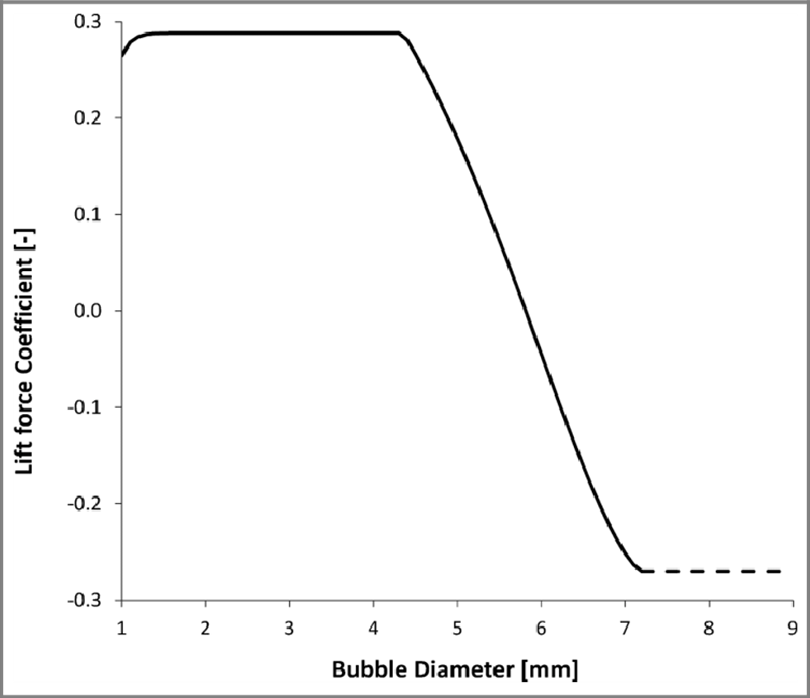
Figure 10: Dependence of lift force coefficient on bubble diameter

Figures 11: Lift force diagrams and bubble circulation
Frank model
The Frank model is a very smart upgrade to the Tomiyama model. The Tomiyama model needs the exact pipe diameter, which is a big problem if you are simulating a complex tank instead of a simple pipe. The governing equation for the Frank model removes the pipe diameter completely and instead uses a mathematical cut-off distance based on the bubble diameter to make the formula geometry independent. You must always use the Frank model when you have complex geometries that are not simple pipes, but you still need to accurately model viscous fluids and all variable bubble shapes.
Hosokawa model
The Hosokawa model is another excellent choice that looks at the physical fluid properties using the Morton number. The governing equation for the Hosokawa coefficient directly compares the Eotvos number () and the bubble Reynolds number (Re) using the mathematical formula
C_{WL} = \max (\frac{7}{Re^{1.9}}, 0.0217Eo)
You must use the Hosokawa model when you want the software to accurately include the physical effects of the relative Reynolds number for all bubble sizes and shapes in low-velocity flows.
Wall Lubrication Force
When bubbles move near a solid wall, they naturally experience a force that pushes them away from the surface. This physical push is called the wall lubrication force.
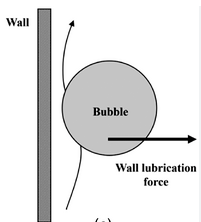
The general governing equation for the wall lubrication force (FWL) is defined by the wall lubrication coefficient (CWL), the continuous liquid density, the gas volume fraction, the square of the slip velocity parallel to the wall, and the wall normal vector.
F_{WL} = C_{WL} \alpha_p \rho_q | \vec{v}_p - \vec{v}_q |_{||} \vec{n}_w

Figure 12: Wall lubrication force models available in Forces tab
- Antal et al. model: The most basic choice. It relies heavily on a fine mesh near the boundaries.
- Tomiyama Model: A modification made specifically for pipe flows. It accounts for bubble deformation using the Eotvos number.
- Frank model: An upgrade to the Tomiyama model that removes the pipe diameter requirement, making it ideal for complex tanks.
- Hosokawa model: An excellent choice that looks at physical fluid properties using the Morton number and bubble Reynolds number in low-velocity flows.
Virtual Mass Force
When a bubble suddenly speeds up or slows down in a liquid, it has to push the heavy fluid around it. This creates an extra resistance called the virtual mass force.

The governing equation depends on the relative acceleration between the phases:
F_{vm} = C_{vm} \alpha_p \rho_q (\frac{D_q v_q}{Dt} - \frac{D_p v_p}{Dt})
For most bubbly flows, the virtual mass coefficient (Cvm) is set to a constant value of 0.5.
You need to use the virtual mass force when the continuous primary phase density is much larger than the dispersed secondary phase density (like air-water flows). It is crucial to activate this force for transient flows where bubbles vibrate, or in strongly accelerating flows like a narrow pipe constriction.
Turbulent Dispersion Force
In highly turbulent flows, chaotic fluid eddies hit the bubbles and mix them into the continuous phase. This mixing process is called the turbulent dispersion force. It pushes bubbles away from crowded areas to make the gas distribution more uniform. To learn about the underlying eddy behaviors, refer to our Eulerian turbulence guide.


Figure 13 & 14: Turbulent dispersion diagrams and fluent models
- Lopez de Bertodano model: Uses the turbulent kinetic energy of the continuous phase. Use a coefficient between 0.1 and 0.5 for medium bubbles, or higher for tiny bubbles.

- Burns et al. model: A more advanced option based on Favre averaging and specific turbulent diffusivities.
- Simonin model: Uses the same mathematical formulation and rules as the Burns model.
- Diffusion in VOF: Adds a turbulent diffusion term directly into the mass continuity equation instead of adding a momentum force.
Summary & Recommendations
Simulating gas-liquid flows in the Eulerian multiphase model requires a careful selection of phase interaction settings. We recommend starting your CFD project by choosing the correct multiphase drag model based on your exact bubble size and bubble shape regime. By specifying liquid-gas interactions, you ensure the solver does not confuse these forces with aerodynamic drag or DPM particle drag.
If your liquid rotates or changes speed, you need to add the lift force to push bubbles in the correct radial direction. When bubbles move near solid boundaries, turning on the wall lubrication force prevents them from touching the vertical walls. Finally, it is better to add the virtual mass force for rapidly accelerating bubbles and the turbulent dispersion force to mix the bubbles smoothly in turbulent flows. Always evaluate your physics first to choose the right multiphase model, because adding unnecessary forces will make your solver slow and unstable.
Frequently Asked Questions (FAQ)
- What is the difference between multiphase drag and non-drag forces in ANSYS Fluent? The multiphase drag force acts in the exact opposite direction of the bubble movement to create direct hydrodynamic resistance. Non-drag forces act in different directions or only under special conditions. For example, the Saffman lift force pushes bubbles sideways across the pipe, the wall lubrication force pushes them away from solid metal boundaries, and the virtual mass force only acts when bubbles suddenly change their speed.
- When should I activate the virtual mass force in my simulation? You need to activate the virtual mass force when your continuous primary fluid is much heavier than your dispersed secondary bubbles. If you are simulating light air bubbles accelerating inside heavy liquid water, this force is strictly required to calculate the extra effort needed to move the surrounding heavy fluid. You do not need to use this force for heavy solid particles falling in light air.
- Which drag model should I choose for gas-liquid flows? For basic flows with tiny, perfect spherical bubbles, the Schiller Naumann drag model is the standard choice. If your bubbles are larger and change shape, the Grace or Tomiyama models are better because they account for bubble deformation. To ensure you apply the correct phase interactions without mixing them up with discrete phase (DPM) drag laws, you can check our CFD consultation and project ordering page for tailored guidance.