
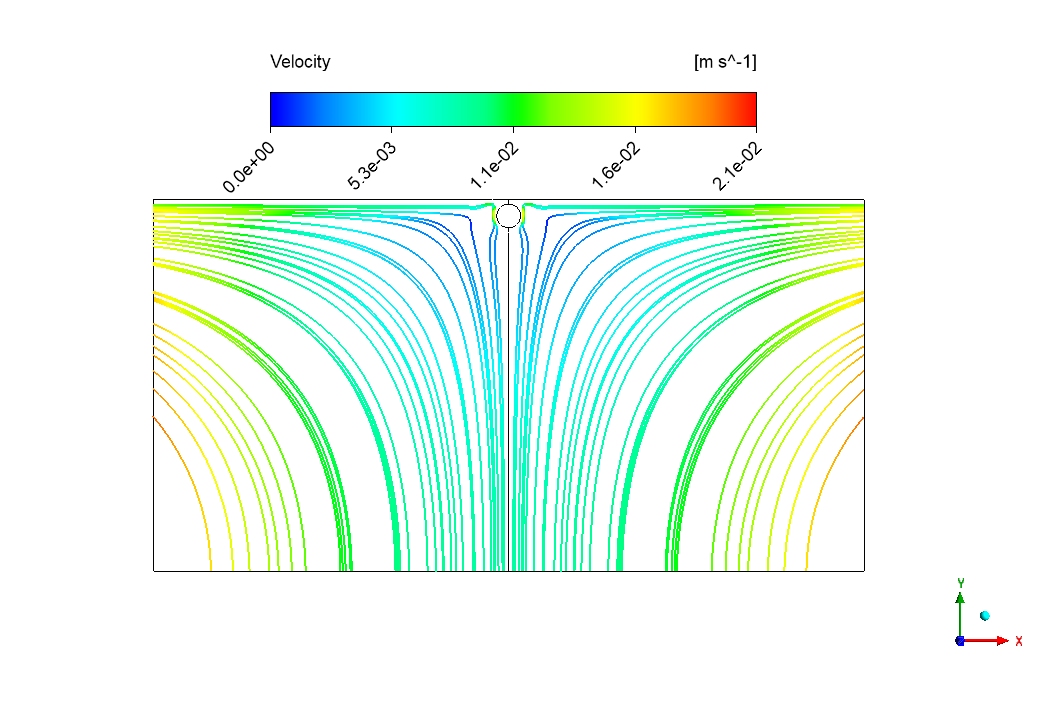
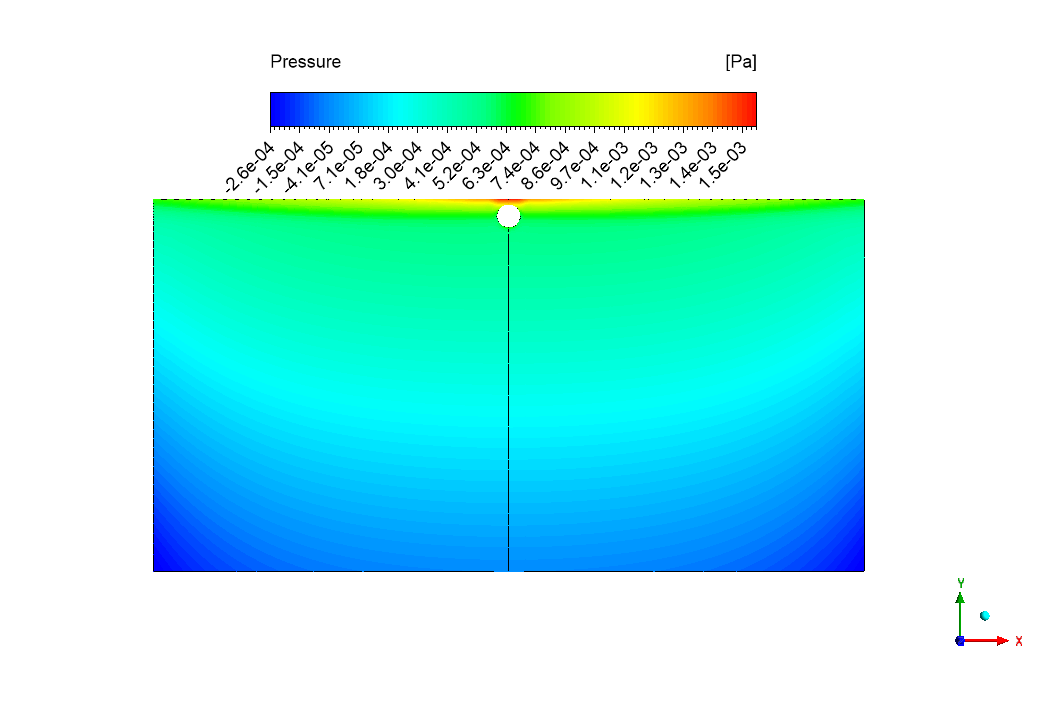
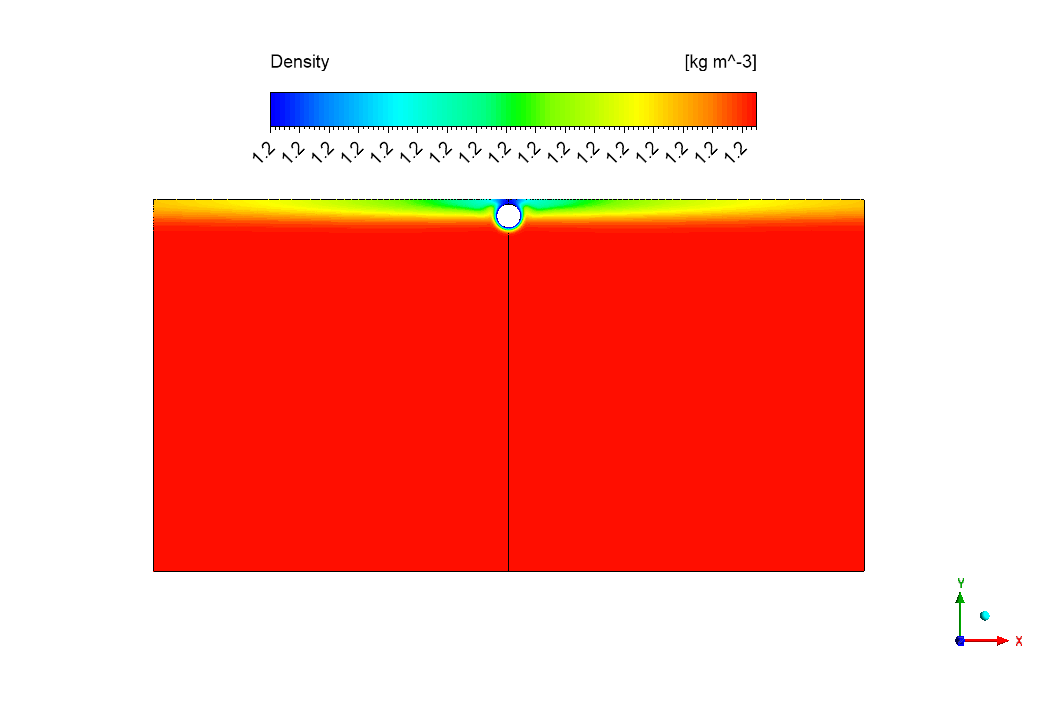
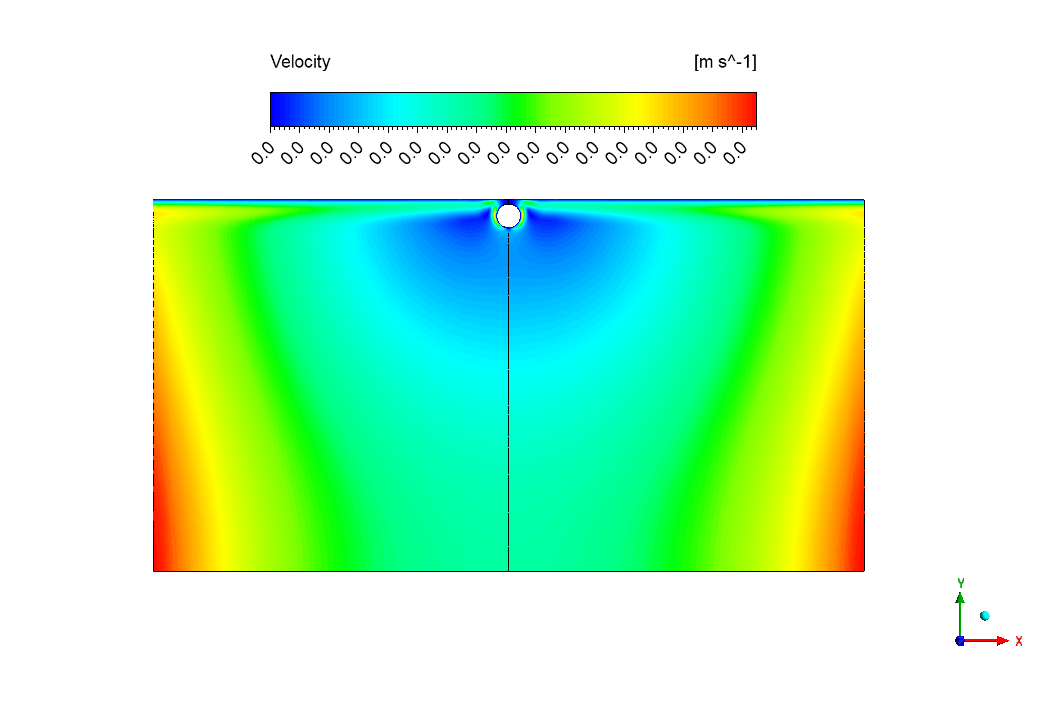
Hot pipes, electric heaters, and industrial heat exchangers all rely on a simple physical principle: hot air rises. This is called natural convection. Understanding this flow is critical for designing safe and efficient equipment. To prove we can simulate this accurately, we performed a Natural Convection From Heated Cylinder CFD Validation. This report details a Natural Convection From Heated Cylinder fluent study. We recreated the exact experiment described in the research paper by Sebastian and Shine [1]. We used ANSYS Fluent to simulate the airflow around a horizontal hot tube. By comparing our results with their data, we confirm that our methods—specifically using the Boussinesq approximation—are correct. This Natural Convection From Heated Cylinder fluent simulation is a perfect example of how to validate thermal models. For more lessons on heat energy, please visit our Heat Transfer tutorials.
- Reference [1]: Sebastian, Geo, and S. R. Shine. “Natural convection from horizontal heated cylinder with and without horizontal confinement.” International Journal of Heat and Mass Transfer82 (2015): 325-334.
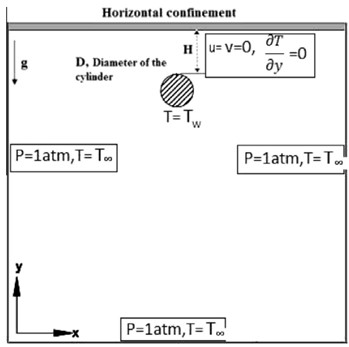
Figure 1: The model geometry and boundary conditions from the reference paper [1].
Simulation Process: Boussinesq Approximation and UDF Setup
To start this Natural Convection From Heated Cylinder ANSYS fluent analysis, we built a 2D model of the cylinder inside a large box (enclosure). The mesh is a Structured Grid, which means the cells are very neat and organized. This is important for capturing the thin layer of hot air near the cylinder surface.
In the ANSYS Fluent setup, the flow is driven by gravity. We used the Boussinesq approximation. This method tells the software that air density changes when the temperature changes. As the air gets hot, it becomes lighter and floats up. To be extremely precise and match the reference paper exactly, we also wrote a User-Defined Function (UDF). This small computer code adjusts the air’s properties based on the specific temperature conditions of the experiment, ensuring our Heated Cylinder convection model is as realistic as possible.
Post-processing: Validating the Nusselt Number and Thermal Plume
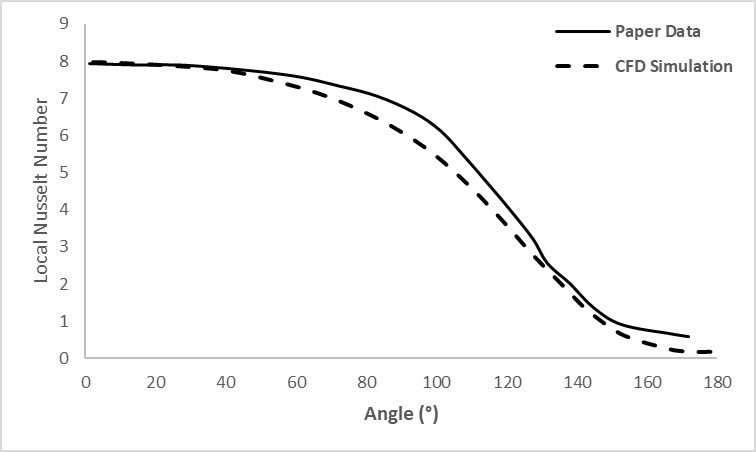
For this Natural Convection From Heated Cylinder CFD Validation, we must first prove the numbers are right before we explain the pictures. The most important number in heat transfer is the Nusselt Number. It measures how effective the convection is. Look closely at Figure 2. This is the validation chart. The black symbols (triangles and circles) represent the experimental data from Sebastian and Shine. The solid line represents our CFD simulation. The match is nearly perfect. The line passes directly through the symbols. This proves that our prediction of the heat transfer rate is correct. The curve starts high at the bottom of the cylinder (where the cool air hits first) and drops as it moves to the top. Because this curve matches, we know our Natural Convection From Heated Cylinder fluent setup is valid.
Figure 2: Validation plot showing the excellent agreement between the current CFD simulation (line) and the reference data (symbols) for the local Nusselt number.
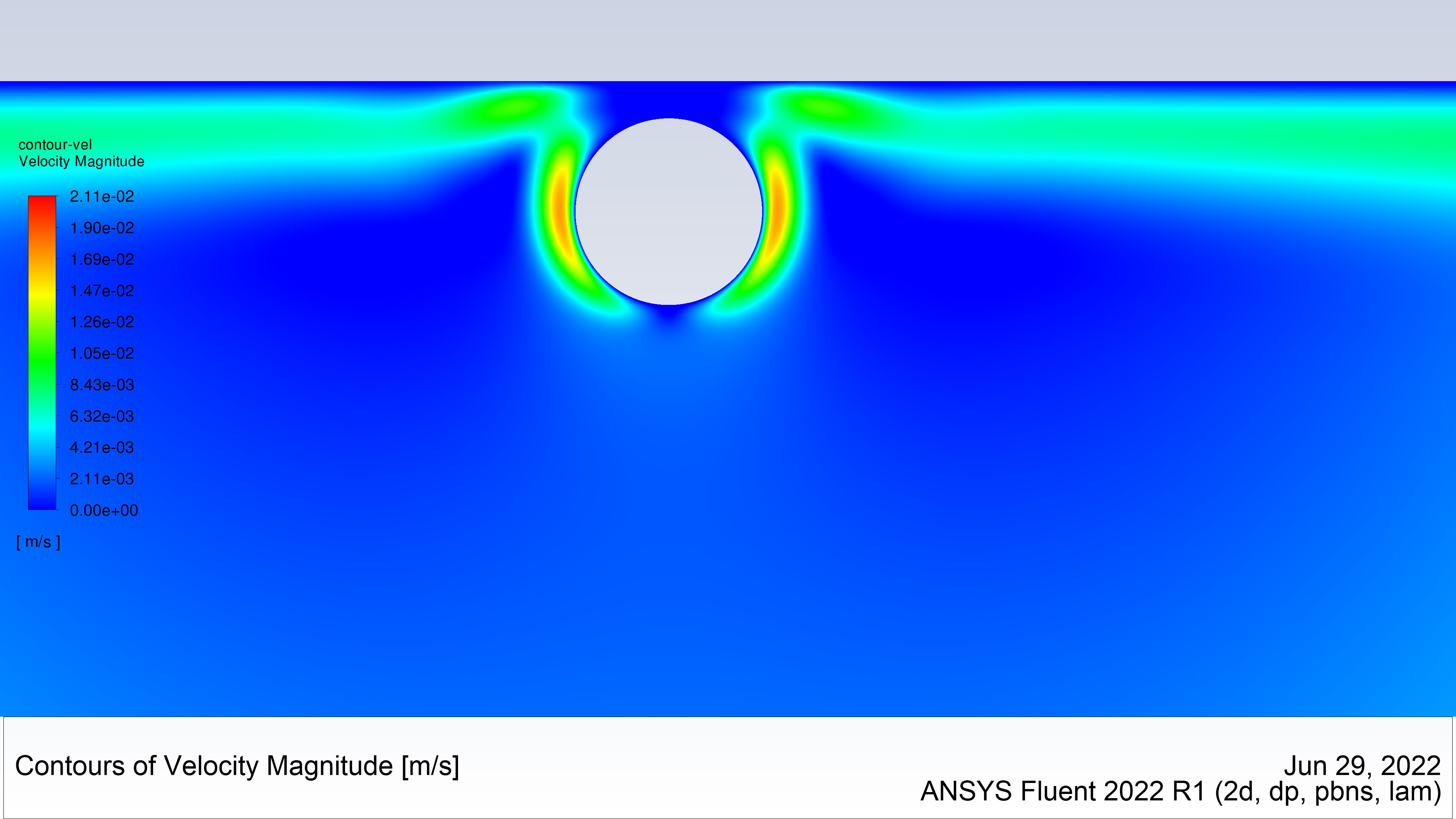
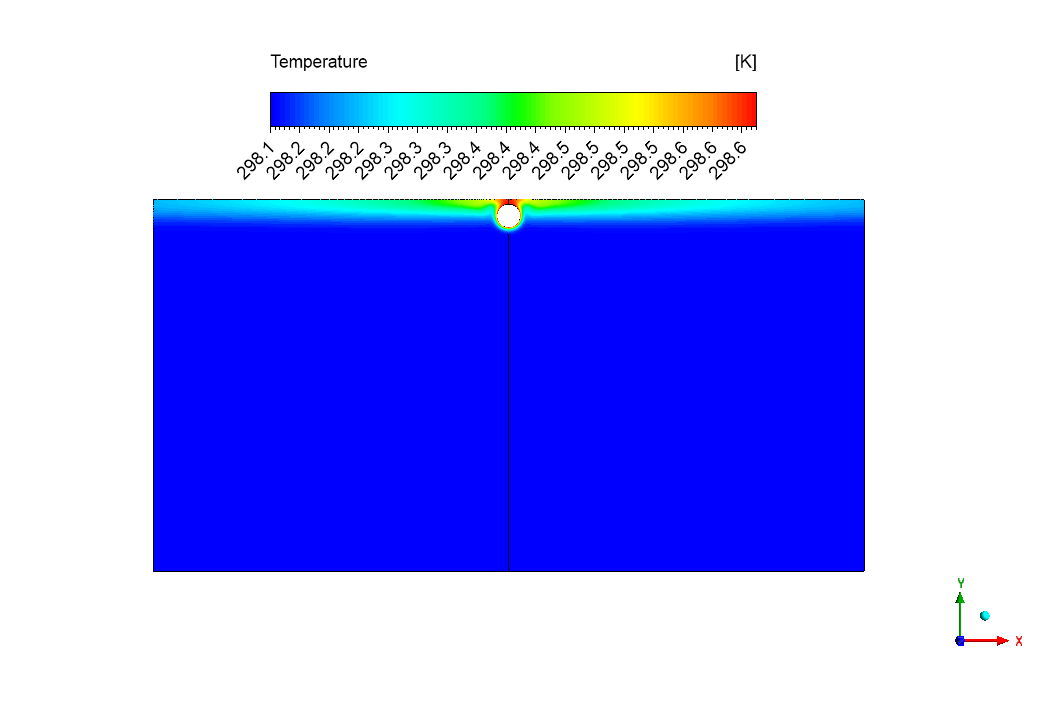
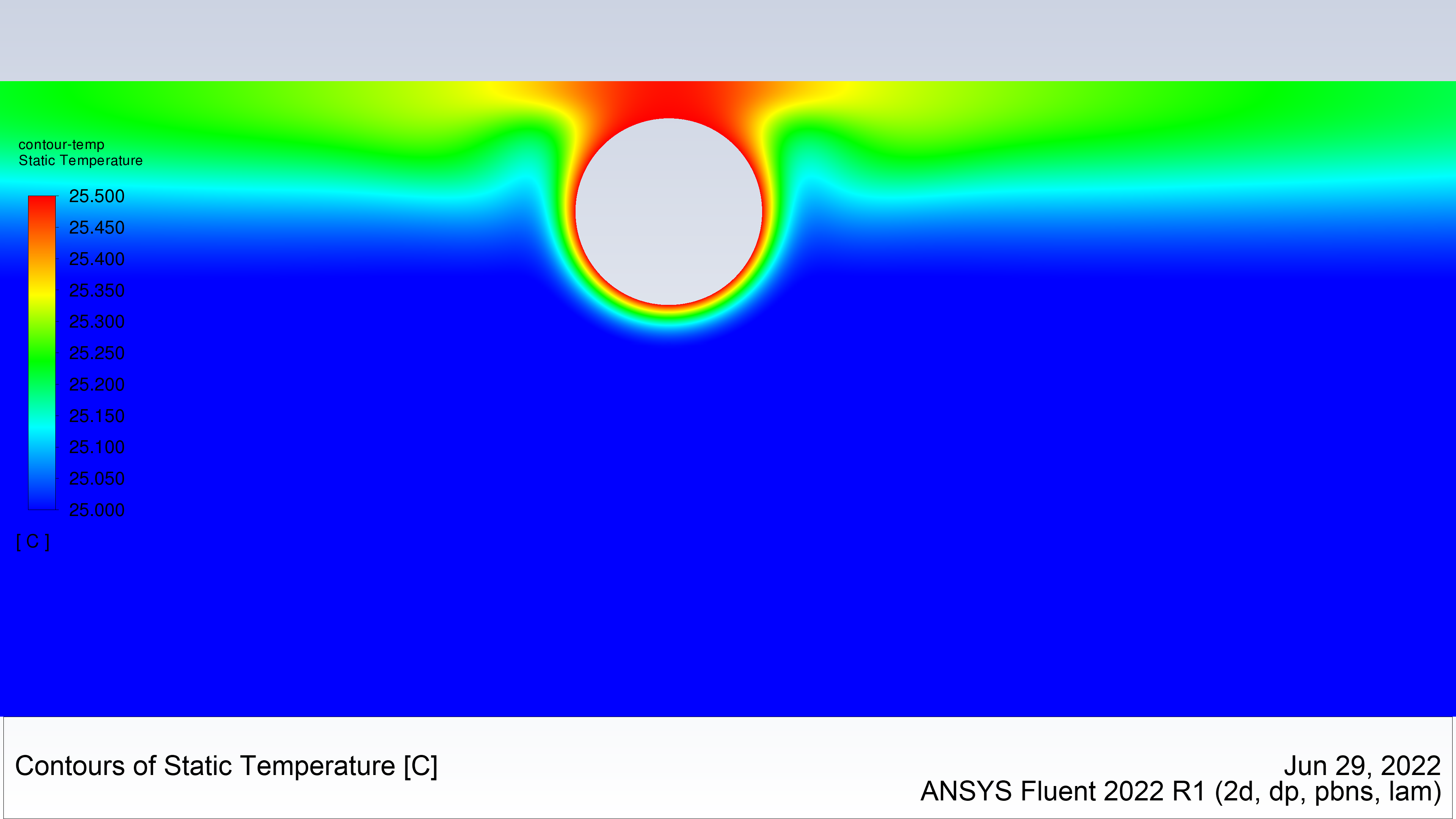
Now that we trust the math, we can look at the physics in Figure 3. The Temperature Contour (left) shows the “Cause” of the flow. You can see a thin red ring around the cylinder. This is the air heating up to about 25.5°C. This hot air is lighter than the room air. The Velocity Contour (right) shows the “Effect.” Because the air is light, it shoots upward. The green and yellow colors show the air accelerating. It reaches a top speed of roughly 0.015 m/s (1.5 cm/s). It forms a beautiful, straight shape above the cylinder called a “Thermal Plume.” The flow is perfectly symmetrical and smooth, which confirms that the flow is Laminar. There is no chaos or turbulence, just a steady stream of heat rising away from the cylinder.
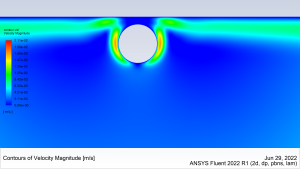
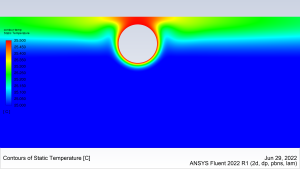
Figure 3: Temperature and Velocity contours showing the thermal boundary layer (25.5°C) and the rising thermal plume (0.015 m/s).
Key Takeaways & FAQ
- Q: Why use a User-Defined Function (UDF)?
- A: The UDF allows us to define exact property changes for air density and specific heat, ensuring the Natural Convection From Heated Cylinder CFD simulation matches the experiment perfectly.
- Q: What is a Thermal Plume?
- A: It is the column of hot, rising fluid above the heat source, visible in the velocity contours of this Heated Cylinder convection study.
- Q: Is the flow Turbulent?
- A: No. The smooth, symmetrical contours and low velocity (0.015 m/s) confirm the flow is Laminar.




Reviews
There are no reviews yet.