


Solar panels (Photovoltaics or PV) have a big problem. When they work in the sun, they get very hot. This heat makes them produce less electricity. To solve this, engineers place Phase Change Materials (PCM) behind the panel to absorb the heat. However, PCM melts slowly. To make it work faster, we add a layer of Metal Foam. This creates a Photovoltaic System with Metal-foam PCM. We need to prove this works using computer simulation.
This project is a Photovoltaic System with Metal-foam PCM CFD simulation designed to teach you how to validate this technology. It is important to note that this is a Validation Study. We use ANSYS Fluent to simulate the melting process and compare our results with the research paper by Mahdi et al. [1]. By performing this Photovoltaic System CFD Validation, we confirm that our settings are correct. For more examples of green technology, please visit our Renewable Energy tutorials.
- Reference [1]: Mahdi, Jasim M., et al. “Efficient thermal management of the photovoltaic/phase change material system with innovative exterior metal-foam layer.” Solar Energy216 (2021): 411-427.

Figure 1: The schematic diagram of the PV-PCM assembly used for the analysis [1].
Simulation Process: Solidification and Melting Setup
To start this Photovoltaic System with Metal-foam PCM fluent tutorial, we built a 2D model of the system. The model includes the glass, the silicon panel, and the PCM container filled with metal foam. We set the entire system at a tilt angle of 30 degrees. This angle is important because it affects how the liquid PCM moves inside the container. We created a high-quality “structured grid” with exactly 22,134 elements. We used this specific mesh density to match the reference paper and ensure our CFD Validation was accurate.
In the ANSYS Fluent setup, the most critical step was activating the Solidification and Melting model. This physics model calculates how the solid PCM turns into liquid when it gets hot. We also had to define the properties of the Metal-foam PCM. The metal foam is a porous material, so we treated it as a solid zone that allows fluid to flow through it. We ran the simulation in “Transient” mode. This means we calculated the temperature change over time, minute by minute, just like the real experiment in the paper.

Figure 2: A detailed view of the PV-PCM system integrated with the exterior metal-foam layer [1].
Post-processing: Analysis of Heat Transfer and Validation
To truly understand the success of this Photovoltaic System with Metal-foam PCM CFD simulation, we must follow the path of the heat. The story begins at the surface of the panel. The sun heats the PV cells, raising the temperature. In a normal system, this heat stays at the top, creating a “hot spot.” However, in our simulation, the Metal-foam PCM changes the physics. The metal foam has extremely high thermal conductivity. It acts like a “heat highway.” It grabs the heat from the surface and pulls it deep into the PCM container. The temperature contour in Figure 4 shows this clearly. The red zone at the top shows a temperature of around 320K. Instead of staying there, the heat spreads evenly downwards.
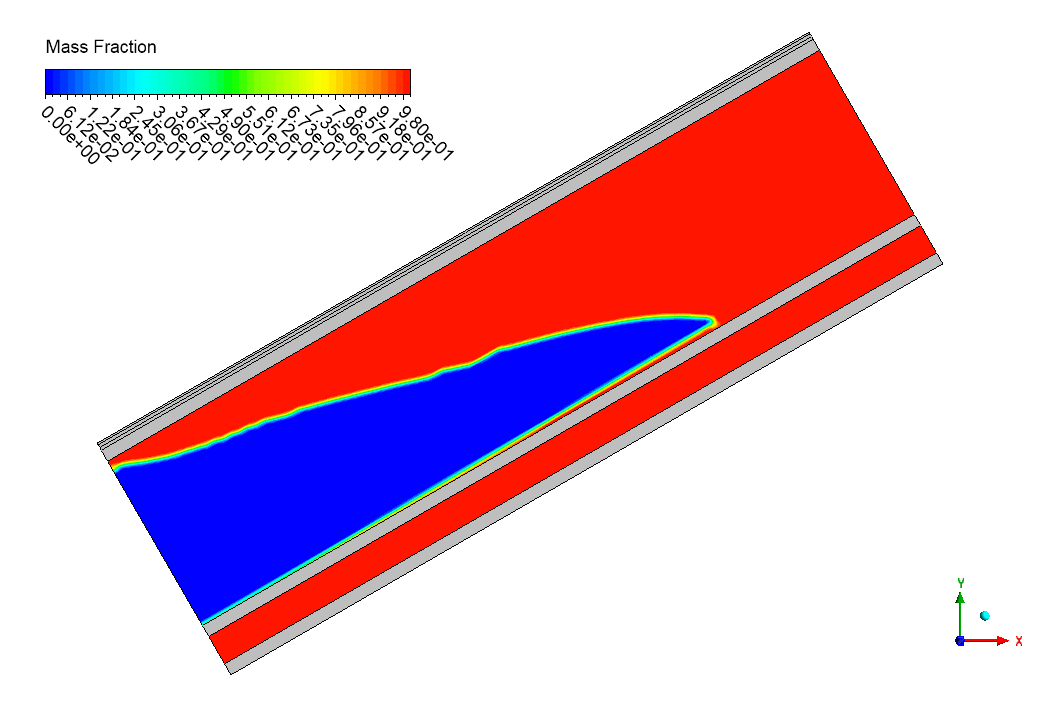
This uniform spreading of heat leads to the second part of the process: efficient melting. Because the metal foam distributes the energy, the PCM melts in a smooth, diagonal pattern. This is visible in the Liquid Fraction contours. If there were no foam, only the top layer of PCM would melt. But with the foam, a large volume of PCM melts at the same time. This phase change absorbs a massive amount of energy. The result is that the PV panel on top stays much cooler. The simulation data shows that this specific design reduces the panel temperature by 6-8°C compared to a system without metal foam. This proves that the Metal-foam PCM is working as an effective heat sink.

Figure 3: The Photovoltaic System with Metal-foam Layer Using PCM CFD Simulation validation graph.
The final and most important part of this validation study is proving the numbers are correct. We do this by comparing our CFD results with the experimental data from the paper. Figure 3 shows a graph of the PV panel temperature over time. The solid line represents our ANSYS Fluent simulation, and the dots represent the reference data. The two lines sit almost perfectly on top of each other. The calculated error between our simulation and the paper is less than 1.8%. This “excellent agreement” confirms that our mesh of 22,134 elements and our physics setup were correct. It validates that the Photovoltaic System with Metal-foam PCM fluent simulation can accurately predict real-world thermal performance.


Figure 4: The PCM melting contour showing the uniform temperature gradient.
Key Takeaways & FAQ
- Q: Why use Metal Foam with PCM?
- A: PCM melts slowly because it conducts heat poorly. Adding Metal Foam increases the thermal conductivity. In this Photovoltaic System with Metal-foam PCM study, the foam helps spread the heat deep into the container.
- Q: What does the validation graph show?
- A: The graph compares our CFD simulation results with the reference paper. The error is <1.8%, which proves our Photovoltaic System CFD Validation is successful.
- Q: How much does the system cool the panel?
- A: The analysis shows that using Metal-foam PCM reduces the panel temperature by 6-8°C, which improves the electrical efficiency of the solar panel.





Reviews
There are no reviews yet.