
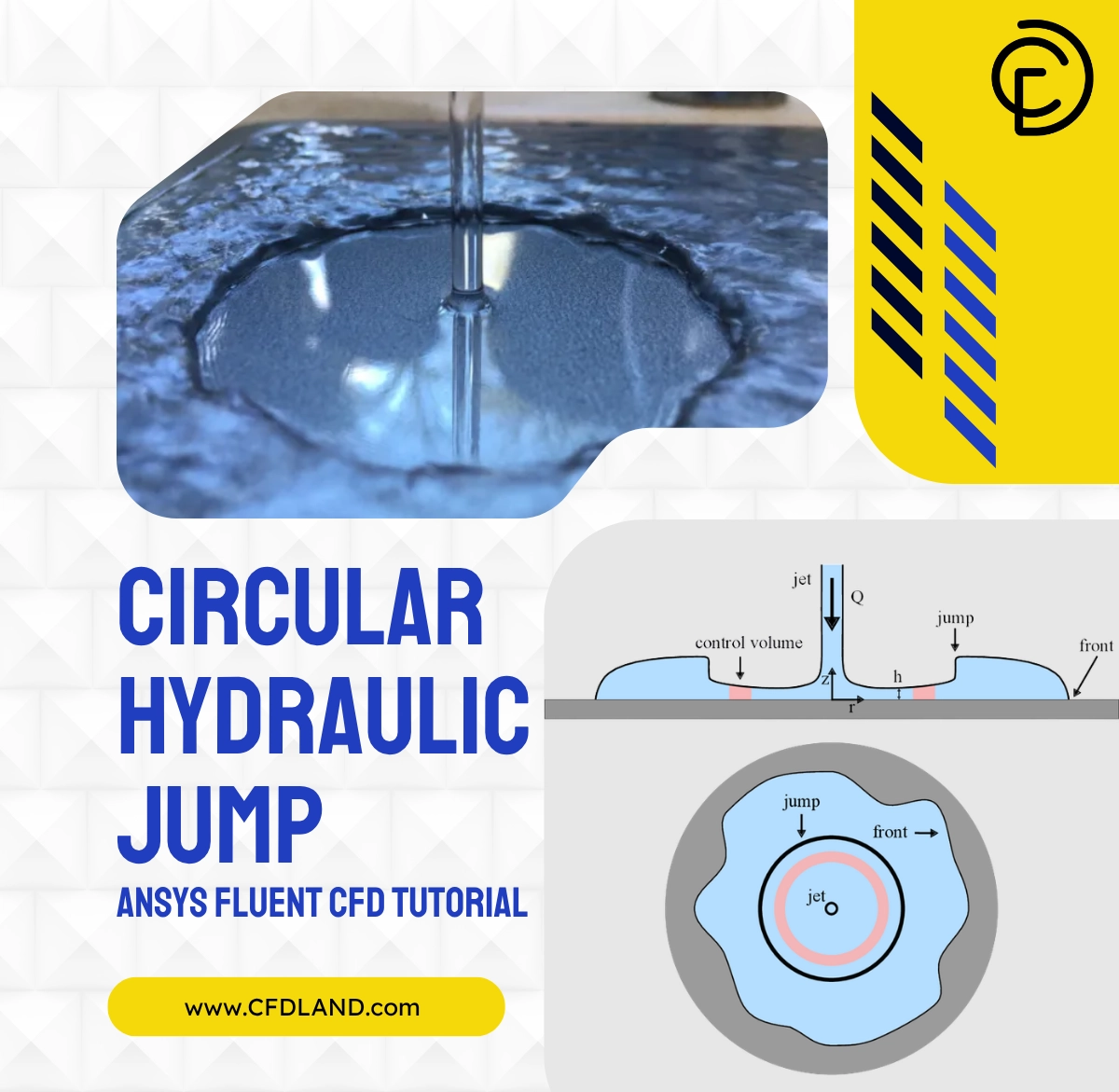
When a liquid jet strikes a flat solid surface, it spreads outward as a very thin, fast-moving film. Suddenly, the fluid thickness increases sharply. The fluid speed drops instantly. Engineers call this severe transition a circular hydraulic jump. Predicting the exact radius of this jump is a critical engineering challenge. If the jump happens too early, industrial cooling systems and chemical reactors will fail to remove heat properly.
Observing this phenomenon inside closed machinery is physically impossible. Therefore, engineers use ANSYS Fluent software. We utilize the Volume of Fluid (VOF) multiphase solver to capture the exact free-surface behavior. If you want to master complex liquid-gas interactions, exploring our Multiphase CFD tutorials is your best next step. Today, you will analyze exactly how inertia and surface tension dictate fluid depth in a radial flow domain.
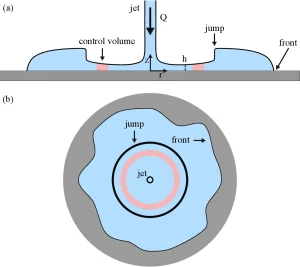
Figure 1: The fluid dynamics schematic defining the supercritical inner film and the subcritical outer jump region.
Simulation Process: Multiphase Flow Parameters
To capture the sharp fluid interface, we utilize a 2D axisymmetric domain. This topology perfectly represents the radial expansion of the liquid jet. We discretize the domain using a fully structured mesh containing exactly 27,150 quad cells. The mesh density increases significantly near the impinging jet zone and the expected jump location. This high resolution is strictly required to capture the steep velocity gradients and the severe free-surface deformation.
We set a water axial injection as velocity inlet. We define the surrounding atmosphere using pressure outlet boundaries. This permits unrestricted air entrainment above the liquid film.
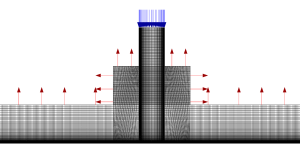
Figure 2: The structured 27,150 cell grid prioritizing high resolution at the liquid-air interface and jet impingement zone.
Post-processing: Physics of the Hydraulic Jump
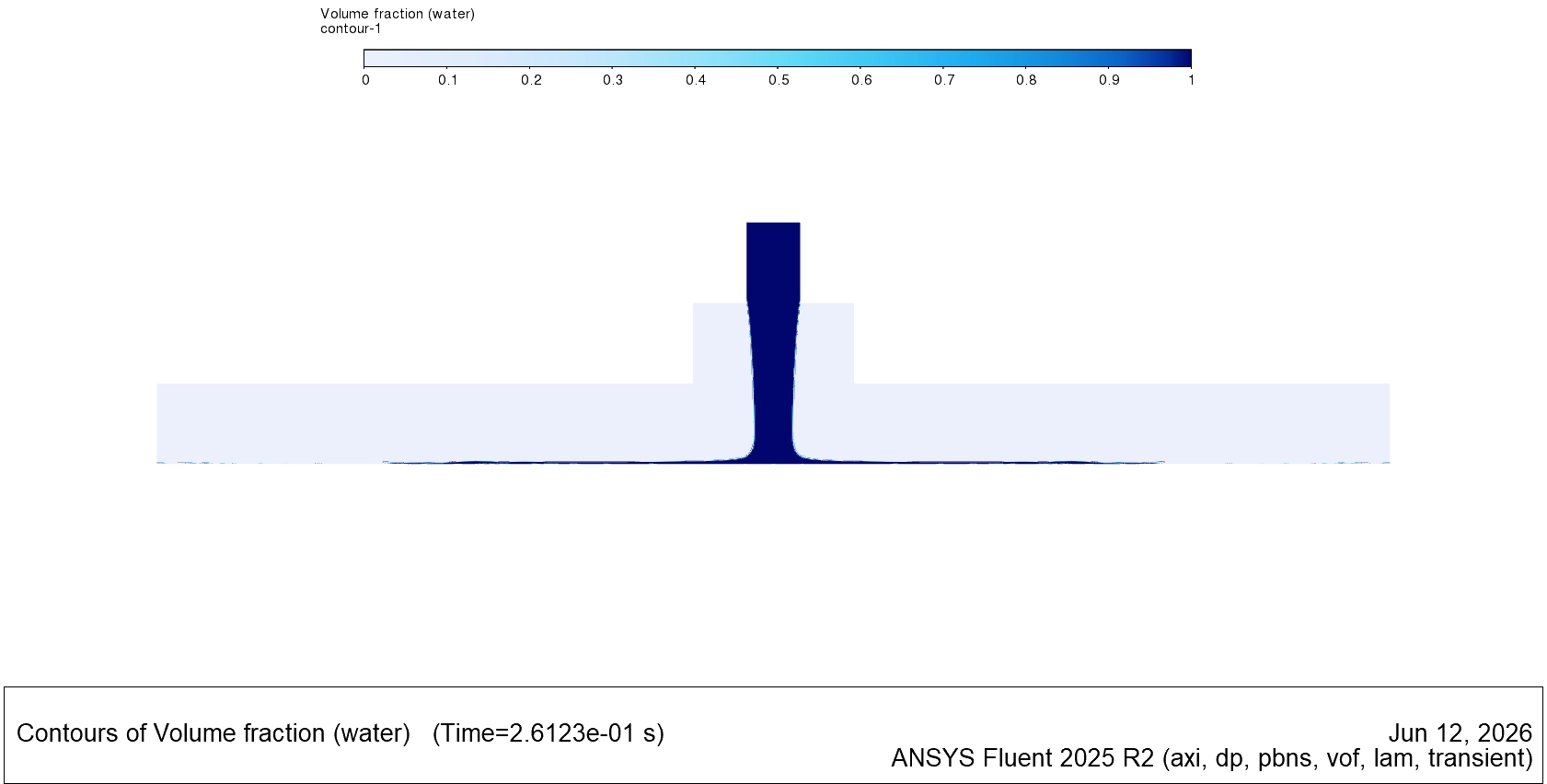
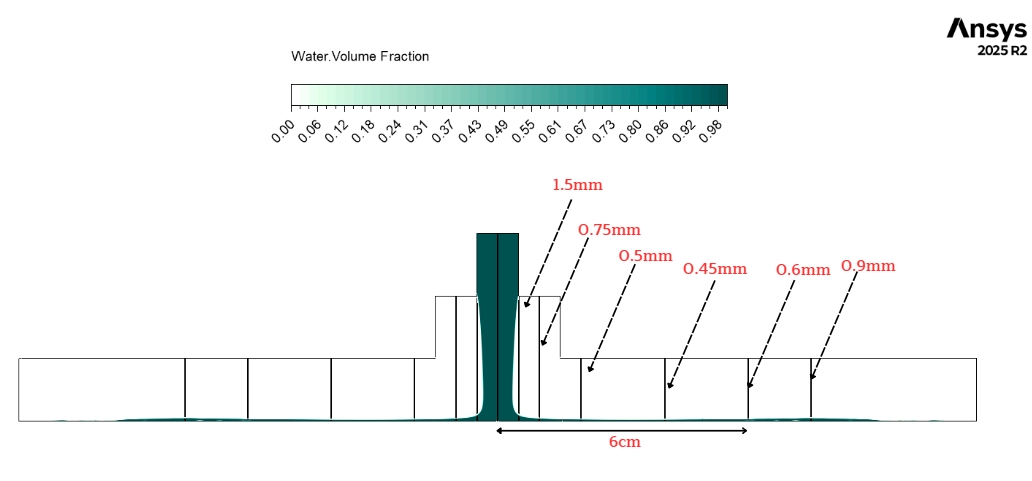
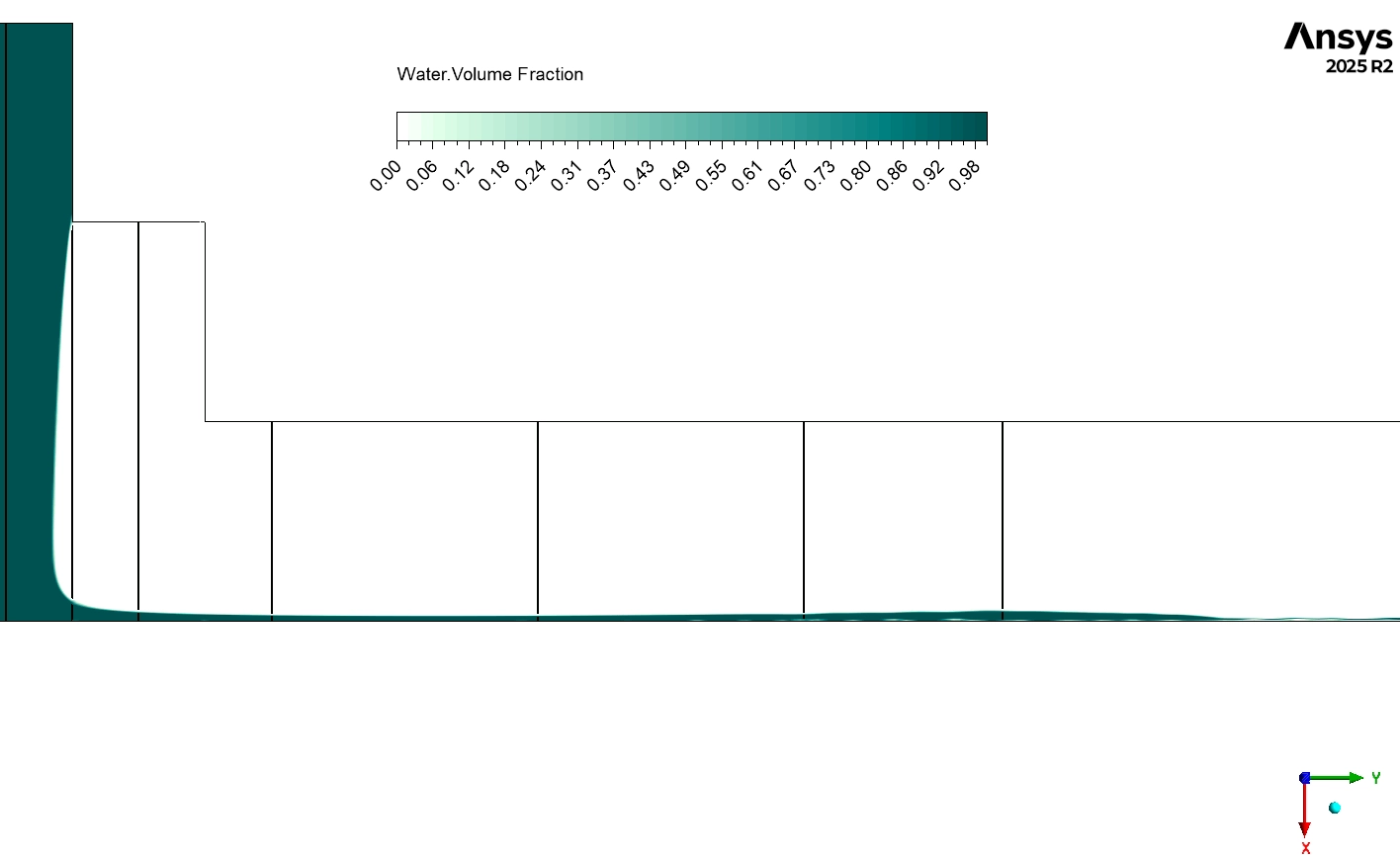
We must now perform a strict engineering analysis of the visual data extracted from ANSYS Fluent. We will evaluate the volume fraction boundaries, the precise thickness profile, and the transient velocity deceleration continuously. Looking at the full two-dimensional axisymmetric domain, the water volume fraction contour reveals the exact physical profile of the spreading liquid. The sharp vertical water column at the center represents the impinging jet zone displaying a pure water phase of exactly 1. As the fluid strikes the solid plate, it redirects horizontally and transitions cleanly into a thin radial spreading film. Across the exact 6 cm radial span, the fluid thickness drops from 1.5 mm near the injection nozzle to an absolute minimum of 0.45 mm. This extreme thinning occurs because the fluid inertia completely dominates the flow. However, the fluid suddenly thickens to 0.6 mm and then reaches 0.9 mm as it moves further outward. This abrupt thickening is the exact physical location of the circular hydraulic jump. The flow undergoes a severe physical transition from a fast supercritical state to a slow subcritical state.
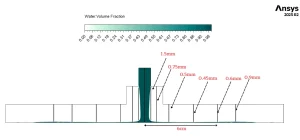
Figure 3: The full domain Volume of Fluid contour proving the pure water jet redirects cleanly into a thin spreading radial film.
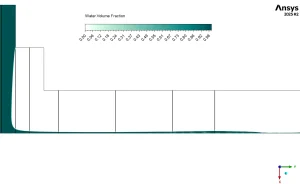
Figure 4: The precise thickness profile proving the fluid thins to exactly 0.45 mm before jumping rapidly to 0.9 mm.
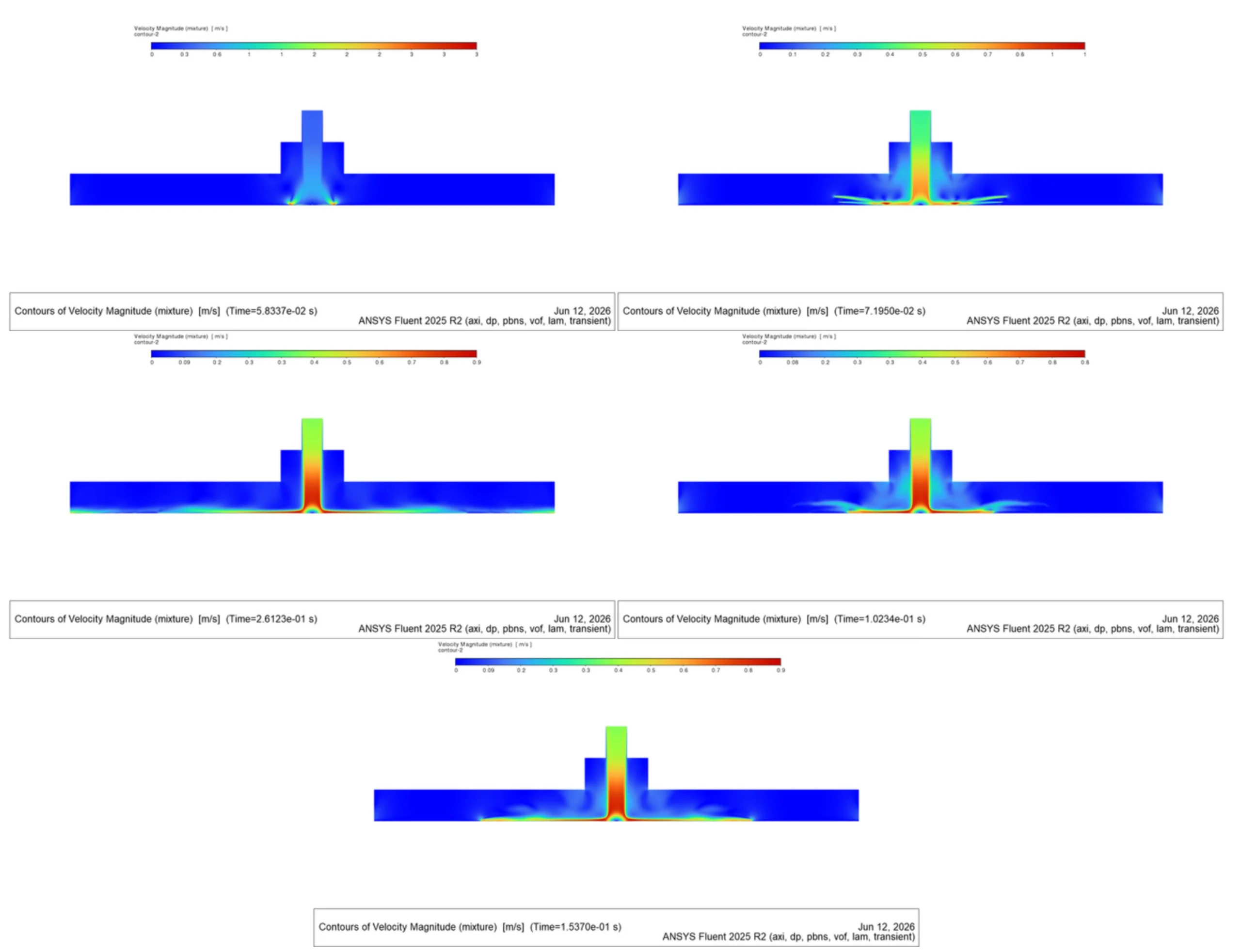
We can observe this deceleration perfectly in the transient velocity contours. At the earliest time step of exactly 0.058 s, the high-speed jet impacts the wall at velocities reaching exactly 4 m/s. As the simulation progresses between 0.058 s and 0.102 s, the velocity field reorganizes entirely. A high-speed core forms near the nozzle exit maintaining speeds between 0.4 m/s and 0.9 m/s. Suddenly, a sharp velocity drop occurs precisely at the hydraulic jump front. The fluid behind the jump loses its kinetic energy rapidly and drops to a near-zero velocity. The physical momentum dissipates instantly as the water piles up against the slow-moving outer pool.
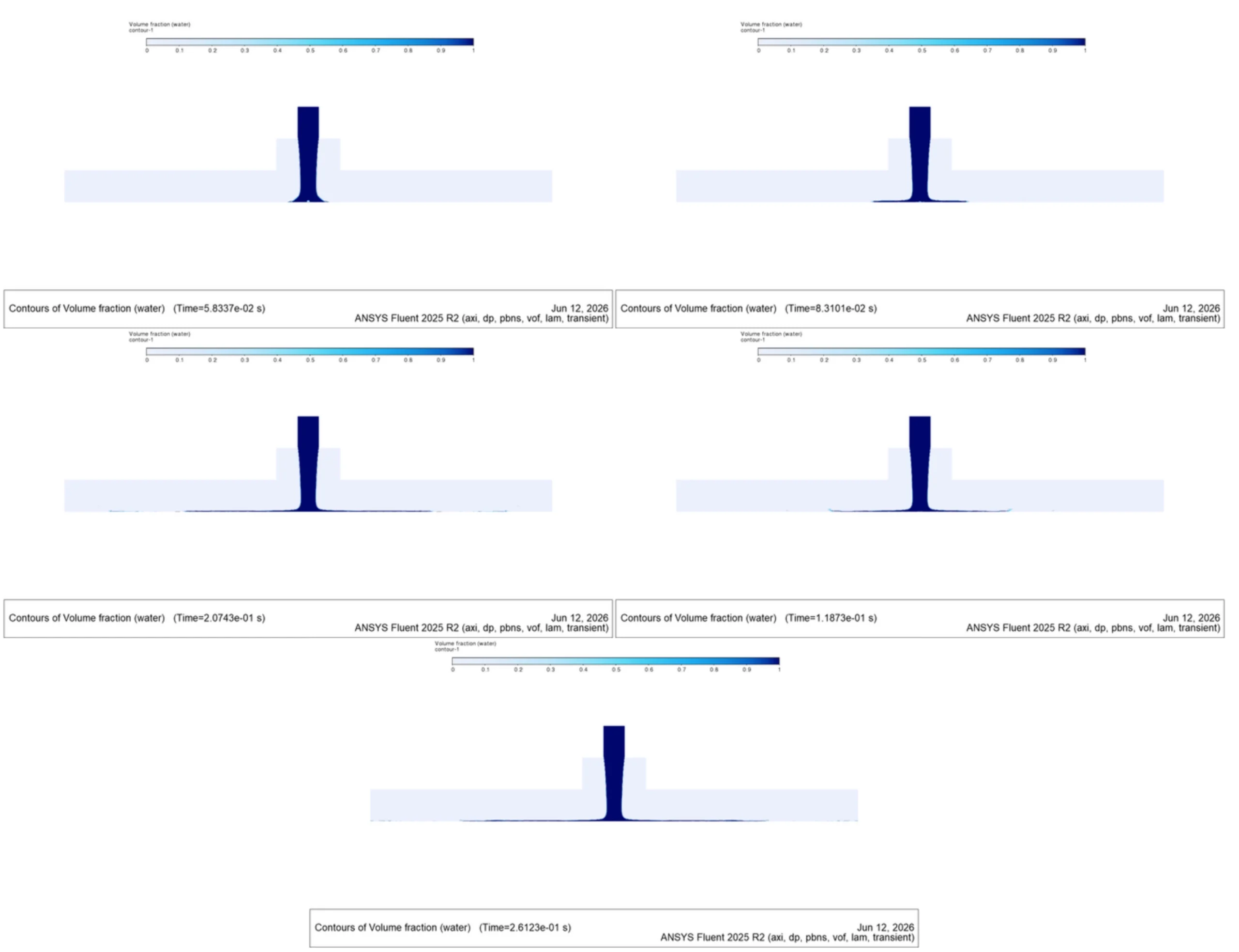
Tracking the transient water volume fraction series proves how this dynamic fluid event stabilizes over time. During the early physical stages between 0.058 s and 0.083 s, the water front advances radially while the surrounding domain remains fully occupied by air. The Volume of Fluid solver maintains a perfectly sharp interface without any numerical diffusion. From the exact time of 0.119 s onward, the water film reaches the outer boundary and the free surface shape stops moving. By the final recorded time of exactly 0.261 s, the fluid mechanics reach a steady state. The thin inner film and thick outer pool profile become permanent. This visual evidence proves that the inertia driving the water outward and the hydrostatic forces pushing back have reached a perfect physical equilibrium.
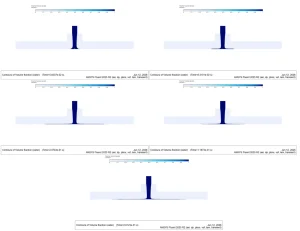
Figure 5: The transient interface evolution proving the moving fluid locks into a permanent physical shape by exactly 0.261 s.
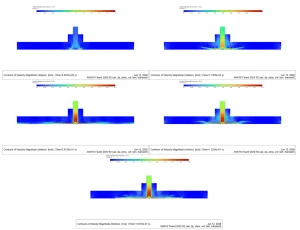
Figure 6: The transient velocity physics proving the high-speed fluid decelerates instantly upon reaching the subcritical jump radius.
Frequently Asked Questions (FAQ)
- What causes a circular hydraulic jump?
- When a fast liquid jet hits a flat surface, it spreads out very thinly. As it spreads, friction from the floor and the surrounding fluid slows it down. Eventually, the fluid loses so much kinetic energy that it can no longer push forward thinly. It suddenly piles up upon itself, creating a sudden jump in depth.
- Why is predicting the jump radius important for engineering?
- In industrial cooling, only the fast-moving thin film removes heat effectively. Once the fluid jumps and becomes deep and slow, the heat transfer efficiency drops massively. Engineers must design systems where the jump happens far away from the hot components.
- How does the Volume of Fluid method capture the free surface?
- The Volume of Fluid solver calculates the exact percentage of water and air inside every single mesh cell. By tracking where the cells are perfectly full of water and where they are full of air, ANSYS Fluent draws a strict mathematical line representing the physical liquid surface.





Reviews
There are no reviews yet.