

Vehicle aerodynamics is the study of how air flows around a car. A Flow Around a Vehicle Aerodynamics CFD simulation is a key tool engineers use to make cars better. The way air moves directly affects a car’s fuel use and how stable it feels at high speed. A Flow Around a Vehicle Aerodynamics Fluent analysis helps to lower the drag force that slows cars down. Even small changes to a car’s shape, guided by automotive CFD, can make a big difference. The main goal is to get a low drag coefficient, which is a number that shows how easily the car slips through the air. This study helps create cars that are more efficient, quieter, and safer to drive.

Figure 1: The KIA Optima model used for this Vehicle Aerodynamics CFD analysis.
Simulation Process: Fluent Setup, Poly-Hexcore Meshing for External Aerodynamics
For this Vehicle Aerodynamics Fluent simulation, we started with the 3D model of the car. We then used ANSYS Fluent Meshing to create the computational grid. We used a smart mix of mesh types called poly-hexcore. This method uses very small, detailed cells close to the car and larger, simpler cells farther away. This gives us accurate results without making the simulation too slow. The final mesh has 2,696,284 cells. For the simulation setup, we set the incoming wind speed at the front of our virtual wind tunnel to 90 km/h.
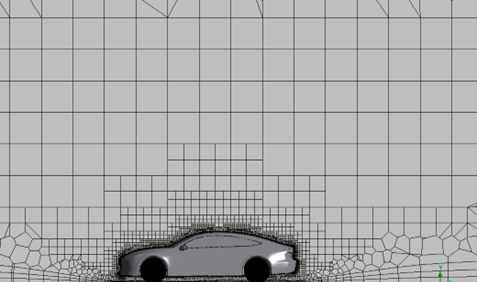
Figure 2: The combination of polyhedral and cut-cell mesh used for the Flow Around a Vehicle Aerodynamics CFD simulation.
Post-processing: CFD Analysis, Visualizing Aerodynamic Forces and Flow Patterns
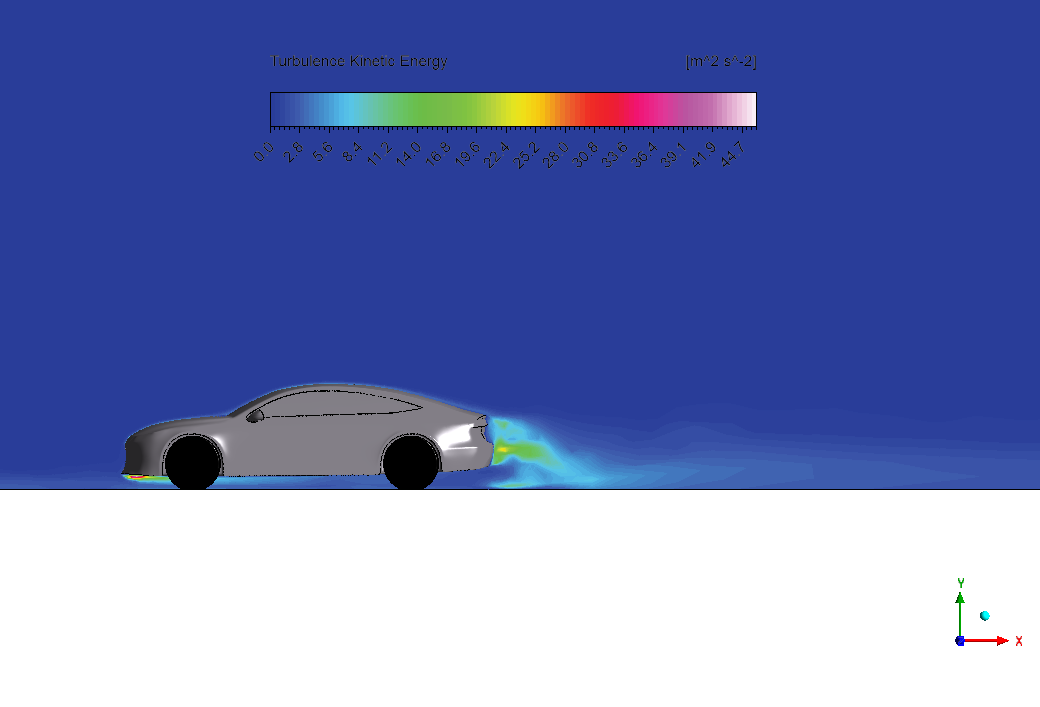
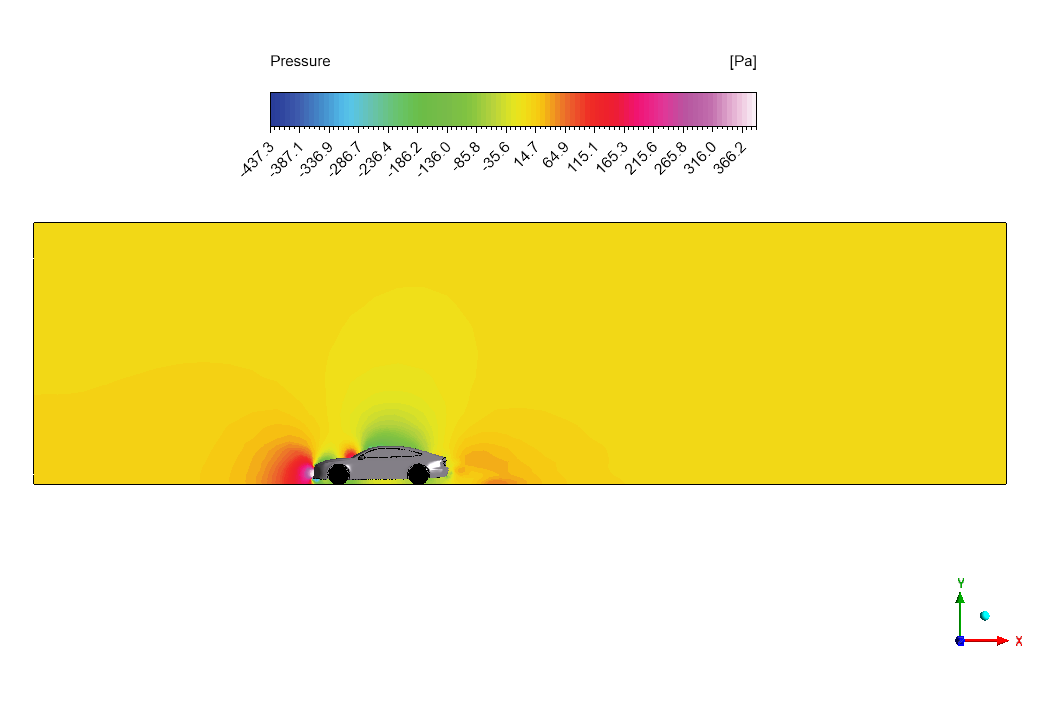
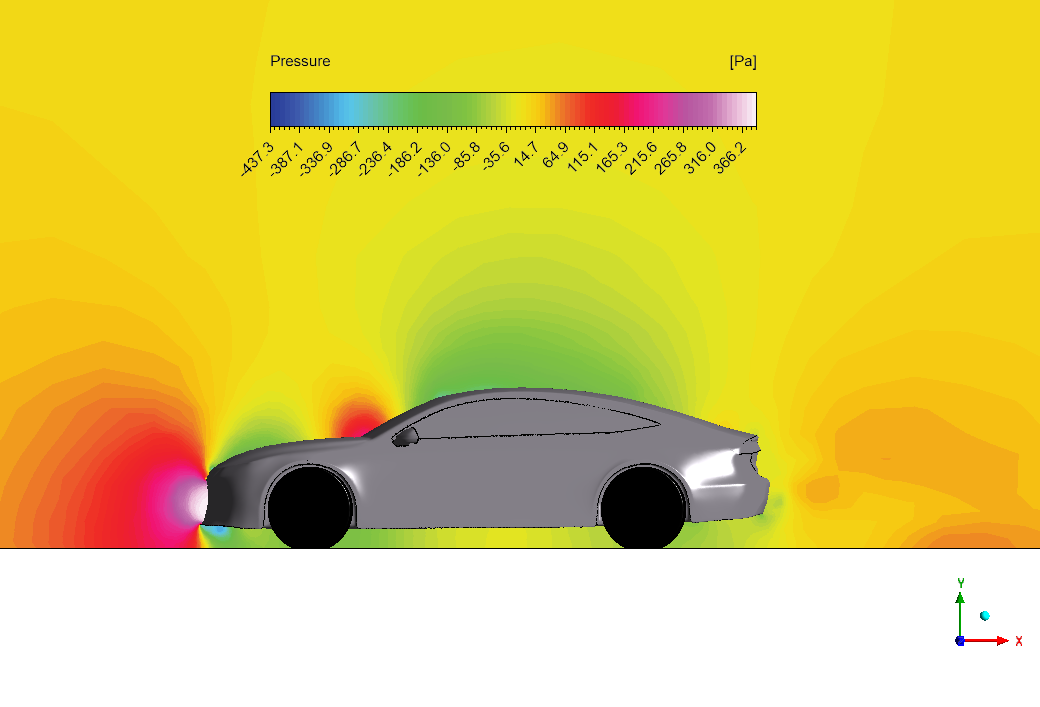
The pressure contour gives us a professional visual of the forces acting on the car. This professional visual shows a zone of high pressure on the front bumper, reaching up to 362.2 Pascals. This is the main force that pushes against the car. As air flows over the curved hood and roof, the pressure drops very low, down to -437.3 Pascals behind the car. This low-pressure area, called the wake region, pulls the car backward. The goal of a good design is to make this wake region as small as possible. The simulation calculated a drag coefficient of 0.29 and a lift coefficient of 0.17. A low drag number like this is excellent for a family car, and the low lift number means the car stays pressed firmly to the road.
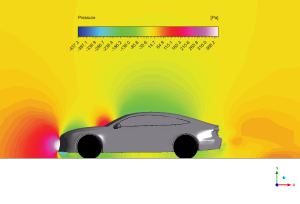
Figure 3: Pressure distribution from the Vehicle Aerodynamics Fluent analysis, showing high-pressure and low-pressure zones.
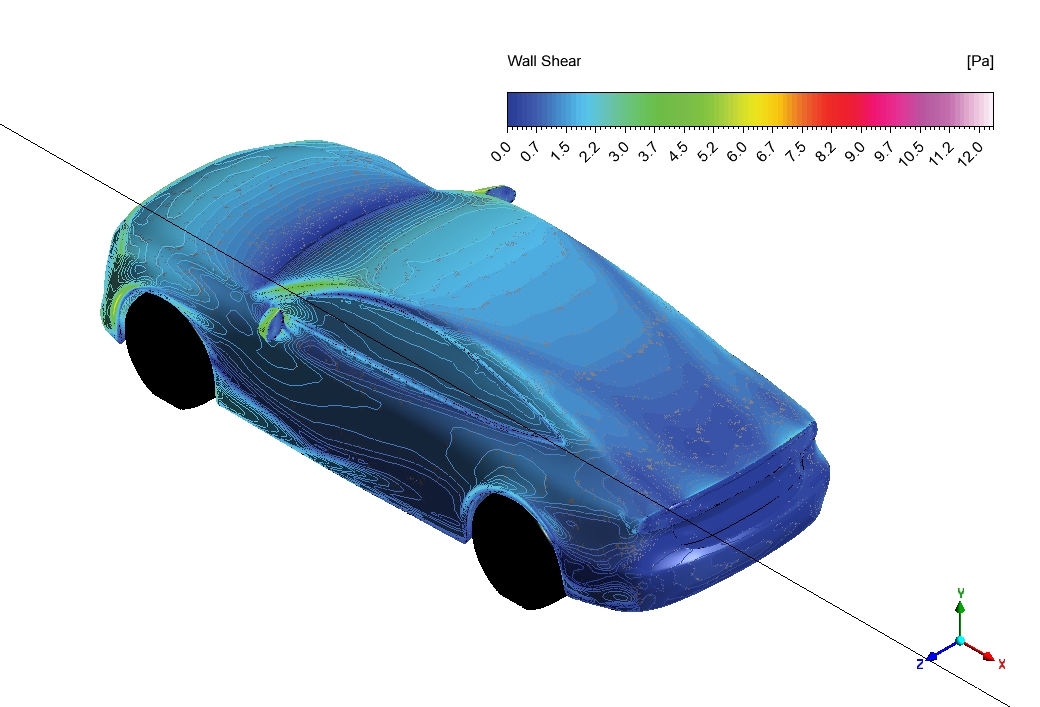
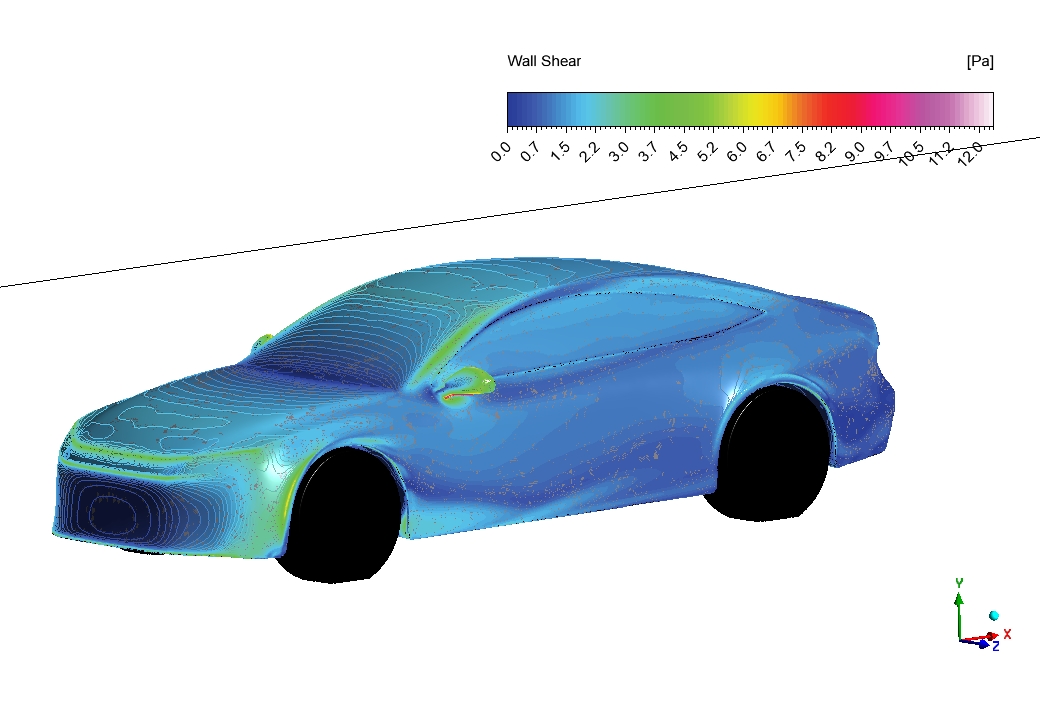
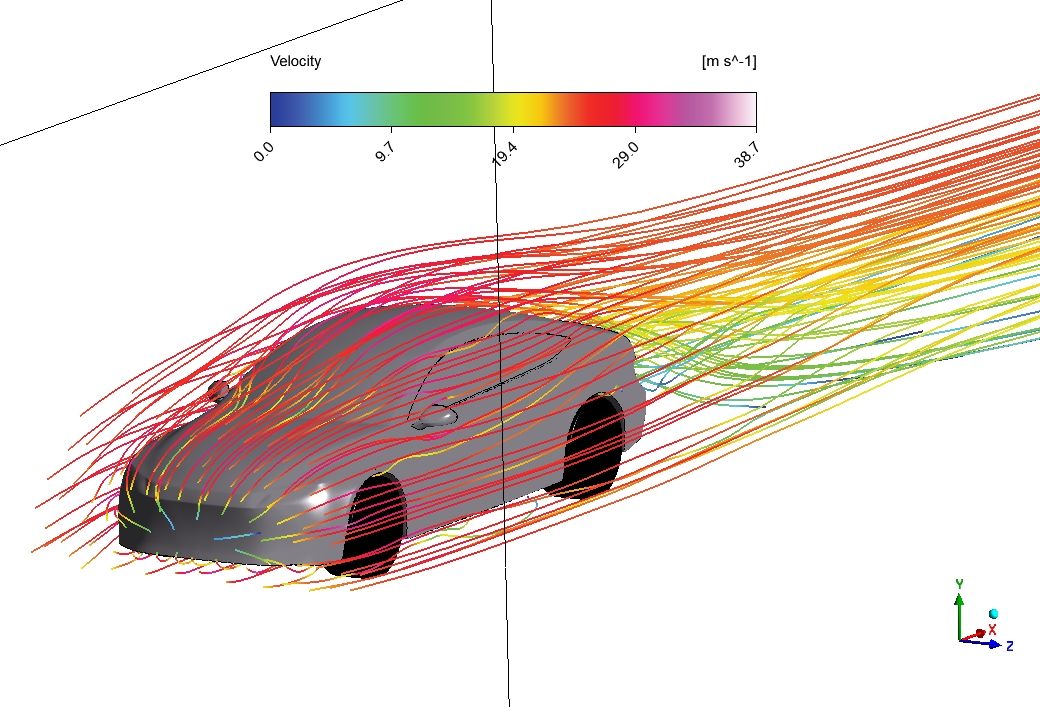
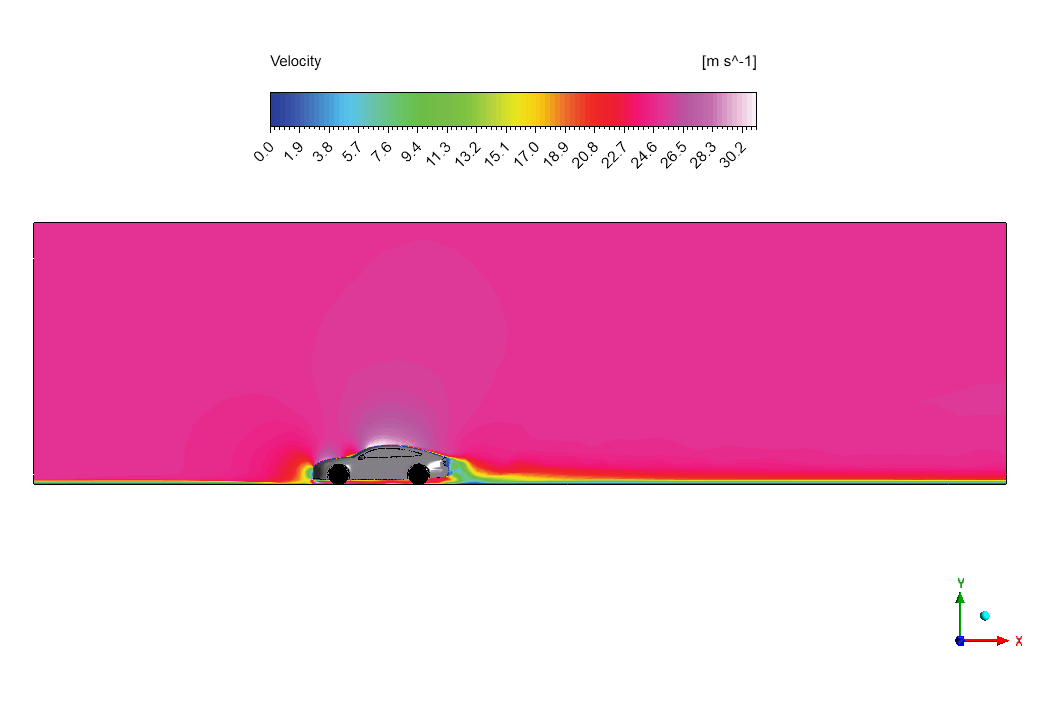
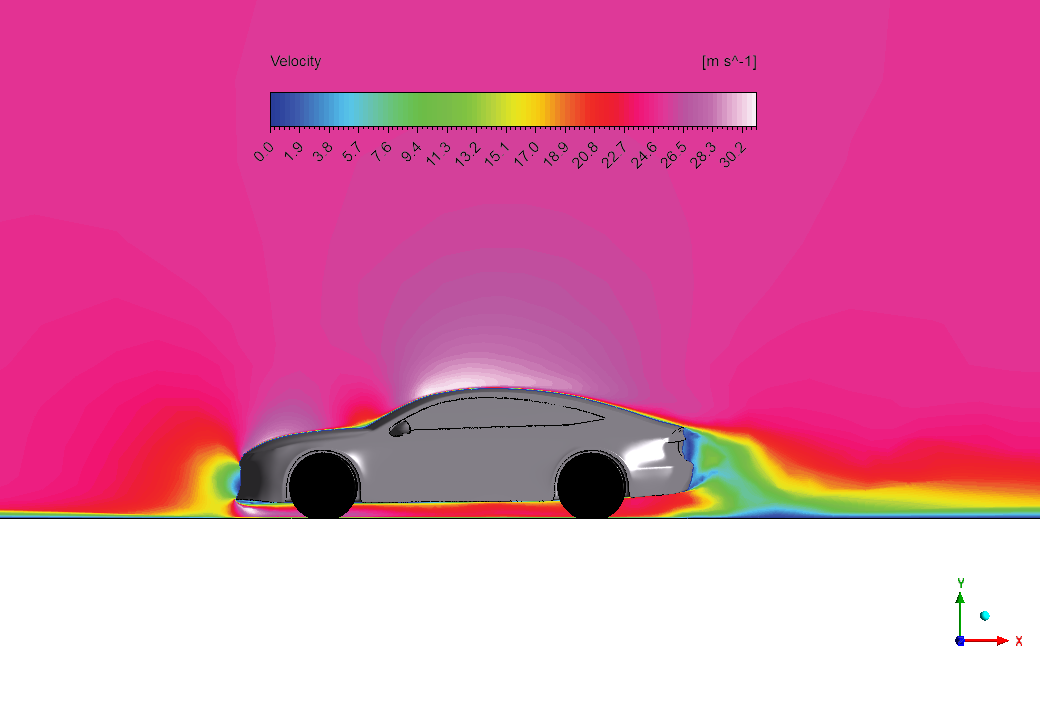
The velocity streamlines and wall shear stress contour tell the rest of the aerodynamic story. The streamlines show the air’s path, speeding up to 39.7 m/s as it flows over the roof. This professional visual shows the air follows the car’s shape smoothly, which is a sign of a good design. The wall shear stress contour shows where the air “rubs” against the car’s body. We can see higher friction, up to 12.4 Pa, on the front edge of the hood and on the side mirrors. These are small areas that add to the total drag. The most important achievement of this simulation is proving that the car’s streamlined shape successfully manages the airflow to achieve a low drag coefficient of 0.29, directly translating to better fuel efficiency and stability on the highway for the driver.
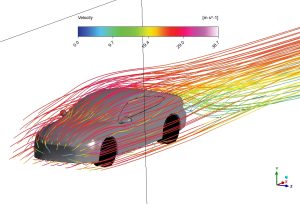
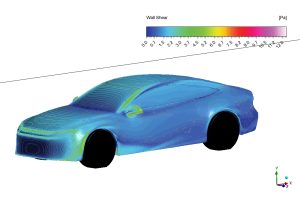
Figure 5: Professional visuals showing wall shear stress and velocity streamlines from the Automotive CFD Simulation.





Reviews
There are no reviews yet.