

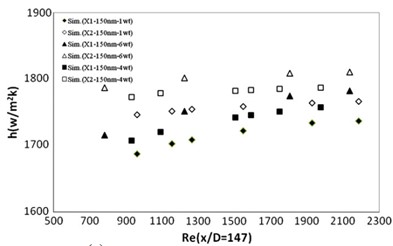
A non-Newtonian nanofluid is a very special liquid designed for better cooling. Imagine a fluid like ketchup, which gets thinner when you stir it. Now, add tiny metal particles to it. This new fluid, a non-Newtonian nanofluid, can carry heat much better than water or oil. This means we can make smaller and more powerful cooling systems for computers and machines. Our Non-newtonian Nanofluid Heat Transfer CFD study uses computer simulation to see if our model can correctly predict how this special fluid behaves. We check our results against a trusted research paper to prove our simulation is accurate [1].
- Reference [1]: Moraveji, Mostafa Keshavarz, Seyyed Mohammad Hossein Haddad, and Mehdi Darabi. “Modeling of forced convective heat transfer of a non-Newtonian nanofluid in the horizontal tube under constant heat flux with computational fluid dynamics.” International Communications in Heat and Mass Transfer7 (2012): 995-999.
Figure 1: Heat transfer coefficient results from the reference paper used for the Non-newtonian Nanofluid CFD Validation [1].
Simulation Process: Fluent Setup, Modeling Non-Newtonian Flow and Heat Transfer
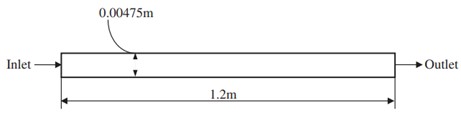
To simulate the flow, we first created a 2D model of a long, thin tube. Because the fluid’s properties are complex, we used a special model called Herschel-Bulkley to tell ANSYS Fluent how the fluid’s thickness changes with flow speed. We treated the mix of Xanthan gum and Al2O3 nanoparticles as a single fluid with enhanced thermal properties. A very neat, structured grid was used to mesh the geometry, which helps get very accurate results. A constant amount of heat was added to the pipe wall to see how the fluid heats up as it flows through.
Figure 2: The 2D geometry used for the Non-newtonian Nanofluid Fluent simulation.
Post-processing: CFD Validation, Comparing Heat Transfer and Flow Predictions
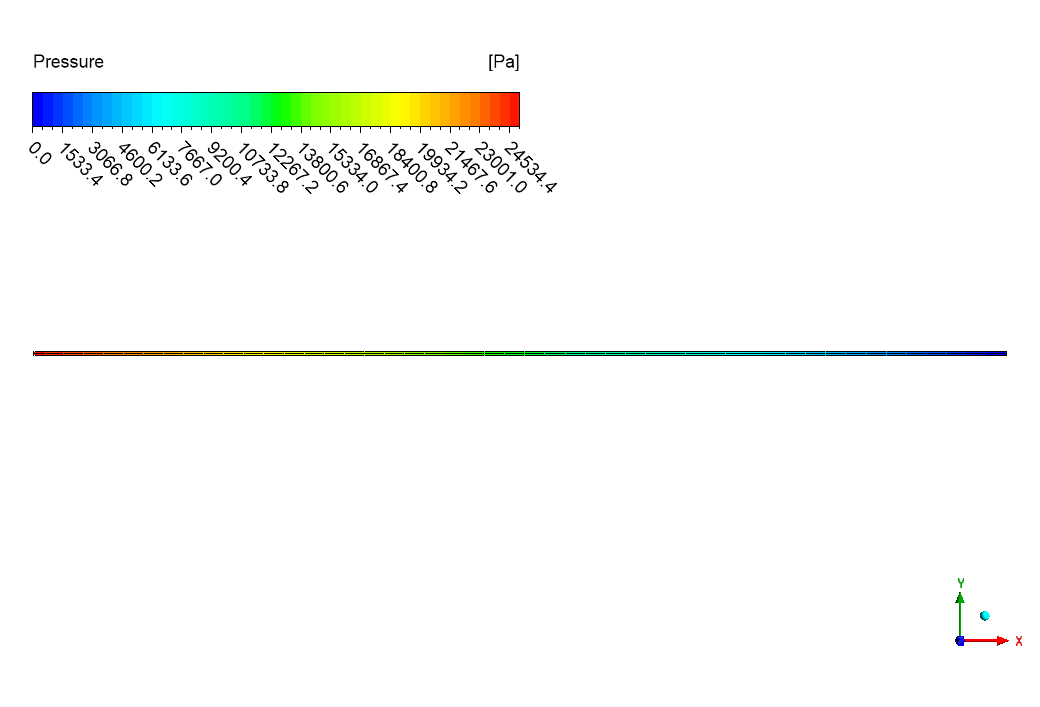
The professional results from our simulation show an almost perfect match with the scientific paper we are comparing against. The table below shows that for a Reynolds number of 900, the paper reported a heat transfer coefficient of 1710 W/m²K. Our CFD simulation calculated a value of 1733 W/m²K. This is a difference of only 1.35%, which is an excellent result and proves our model is very accurate. This agreement confirms that our simulation can correctly predict how much heat the special nanofluid can absorb.
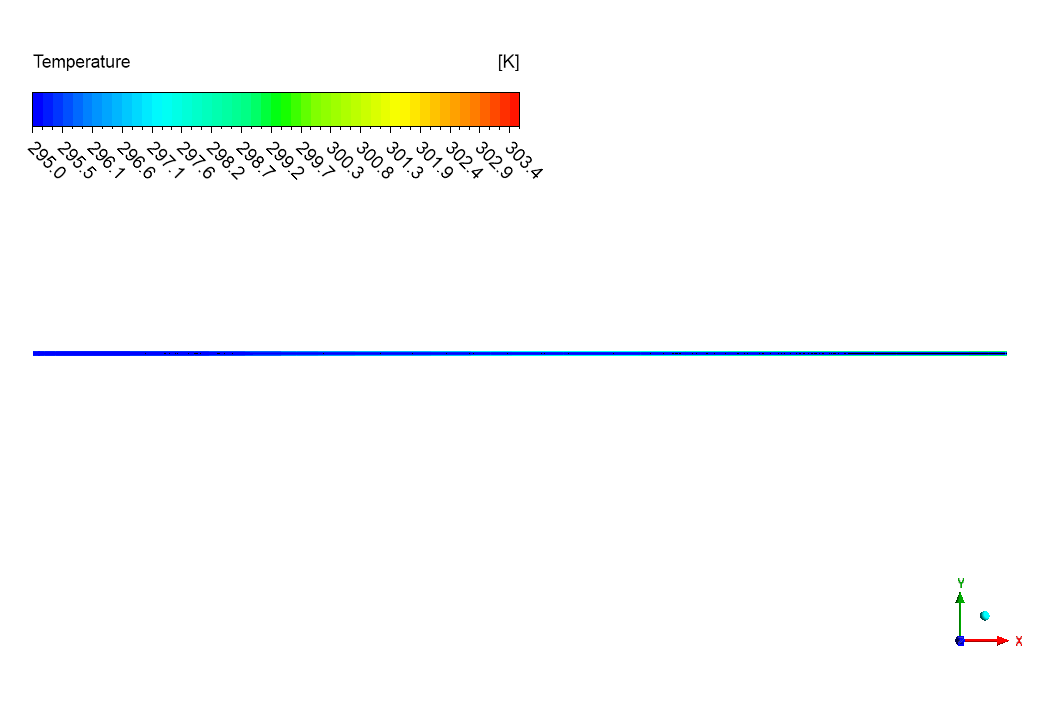
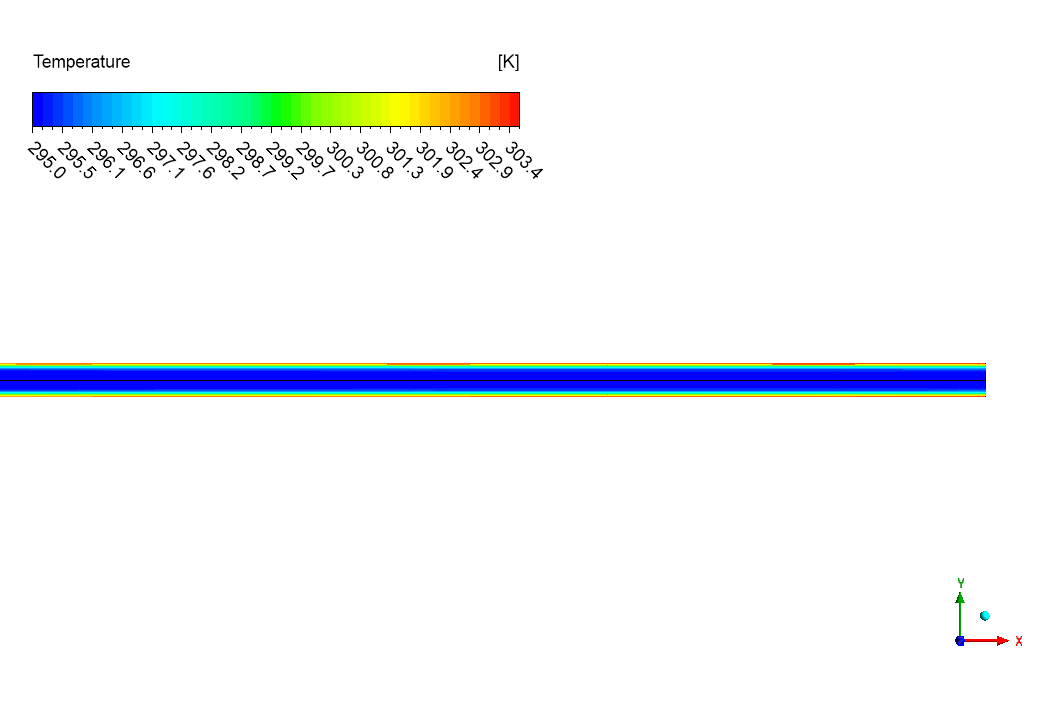
The temperature profile along the pipe also tells an important story. The fluid enters at 295K and as it travels down the heated pipe, its temperature rises to 303.2K. This rise in temperature is a direct measure of the heat being transferred into the fluid. The successful prediction of this temperature change is a key part of the validation.
| Reference Paper | Current CFD Study | Error | |
| Heat Transfer Coefficient (W/m2.K) | 1710 | 1733 | 1.35% |
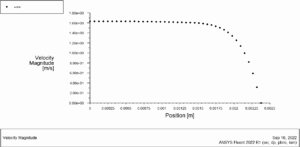
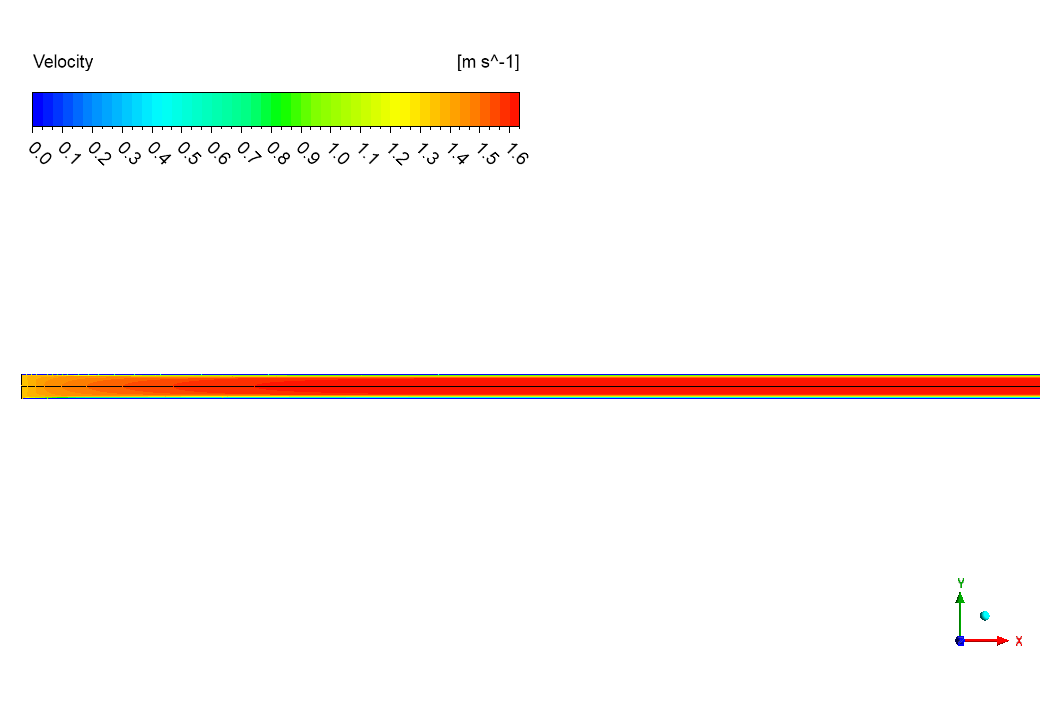
Figure 3: Velocity profile from the Non-newtonian Nanofluid Fluent simulation, showing the characteristic flow behavior inside the pipe.
The flow physics are also critical. The velocity profile shows that the fluid moves fastest in the center of the pipe, reaching a top speed of 1.6 m/s, and slows down to zero at the walls. This is the expected behavior for flow in a pipe. Capturing this flow behavior correctly is essential, as the way the fluid moves directly impacts how heat is transferred from the hot walls to the center of the fluid. The most important achievement of this simulation is the successful validation of a complex, non-Newtonian, single-phase nanofluid model. This provides engineers with a reliable and powerful tool to design and optimize next-generation cooling systems that use these advanced fluids to achieve superior thermal performance.
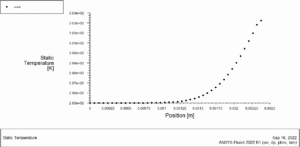
Figure 4: Temperature profile from the Non-newtonian Nanofluid Heat Transfer CFD analysis, showing the fluid heating along the pipe.








Reviews
There are no reviews yet.