
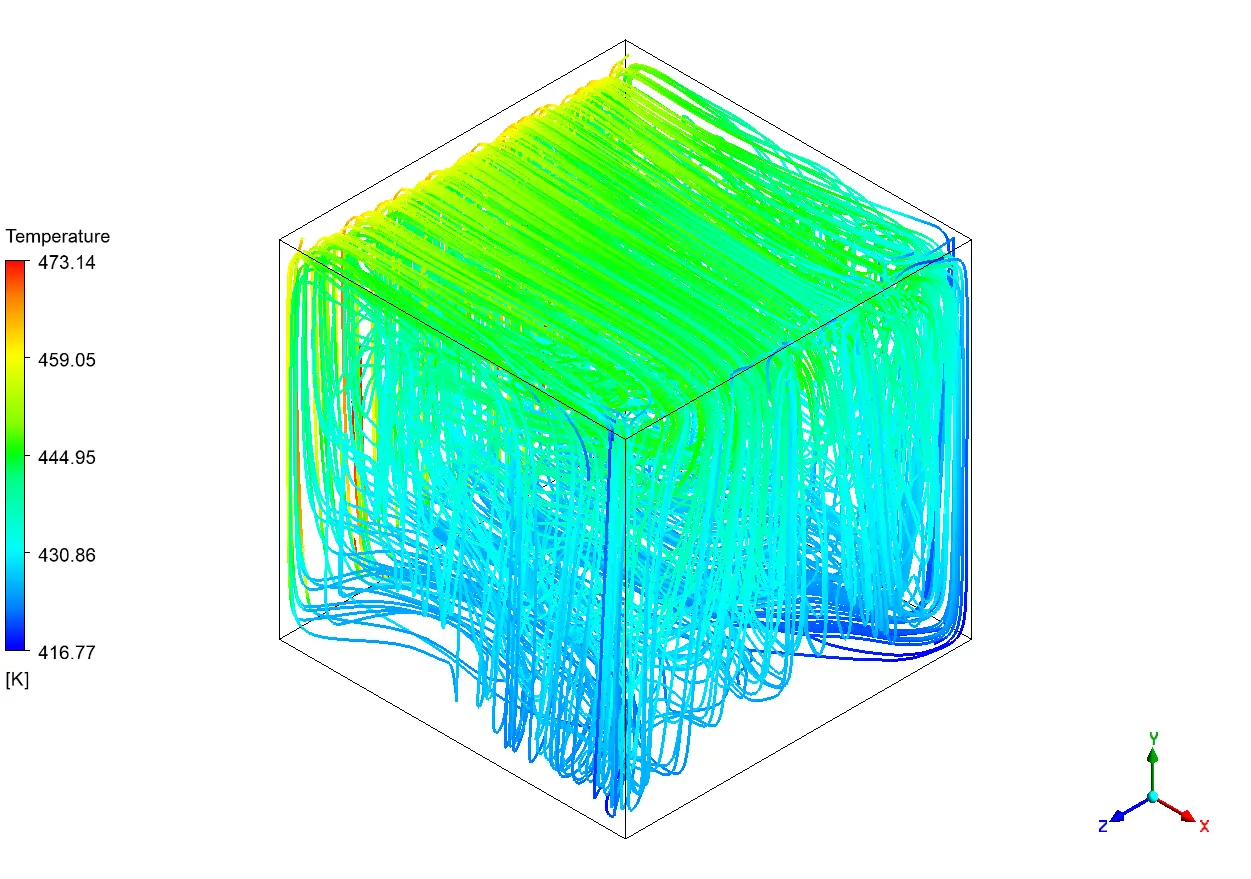
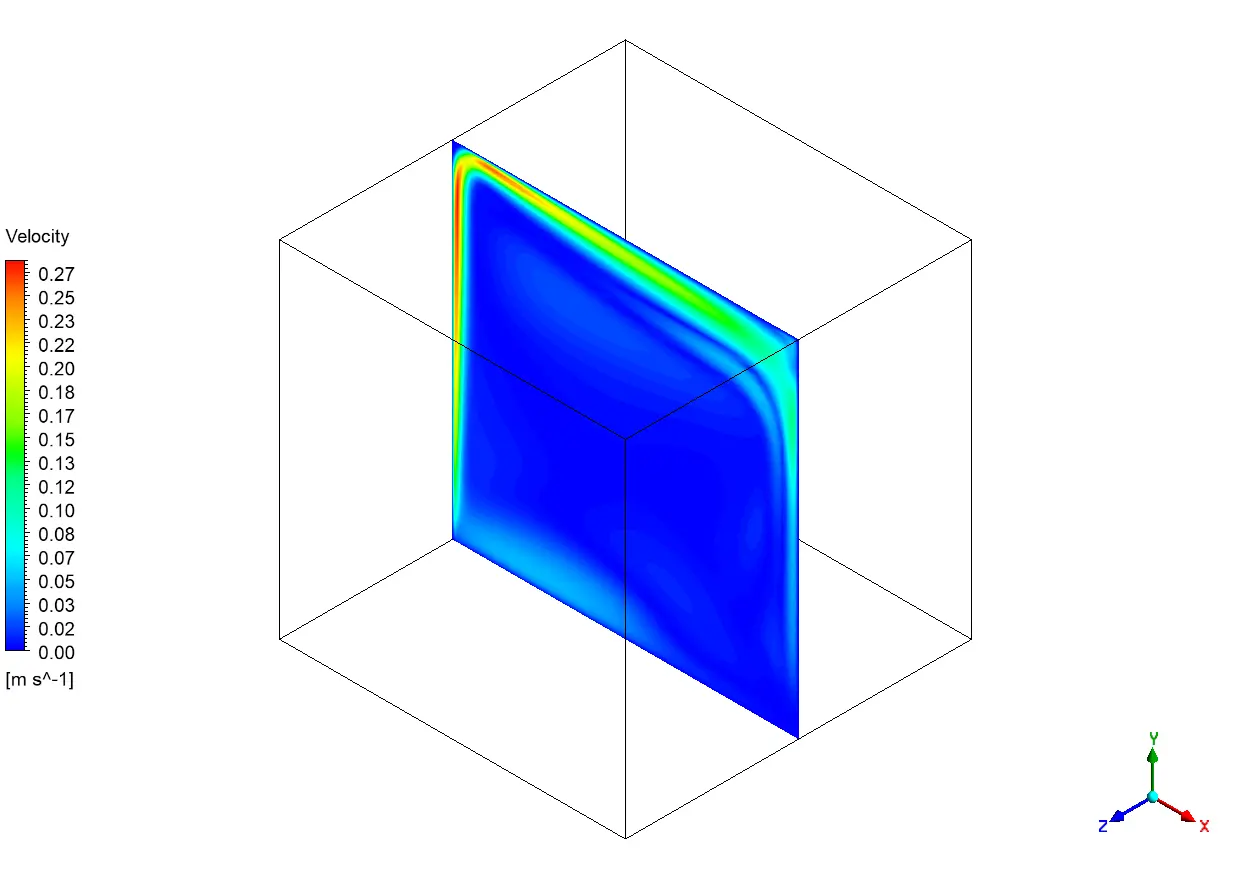
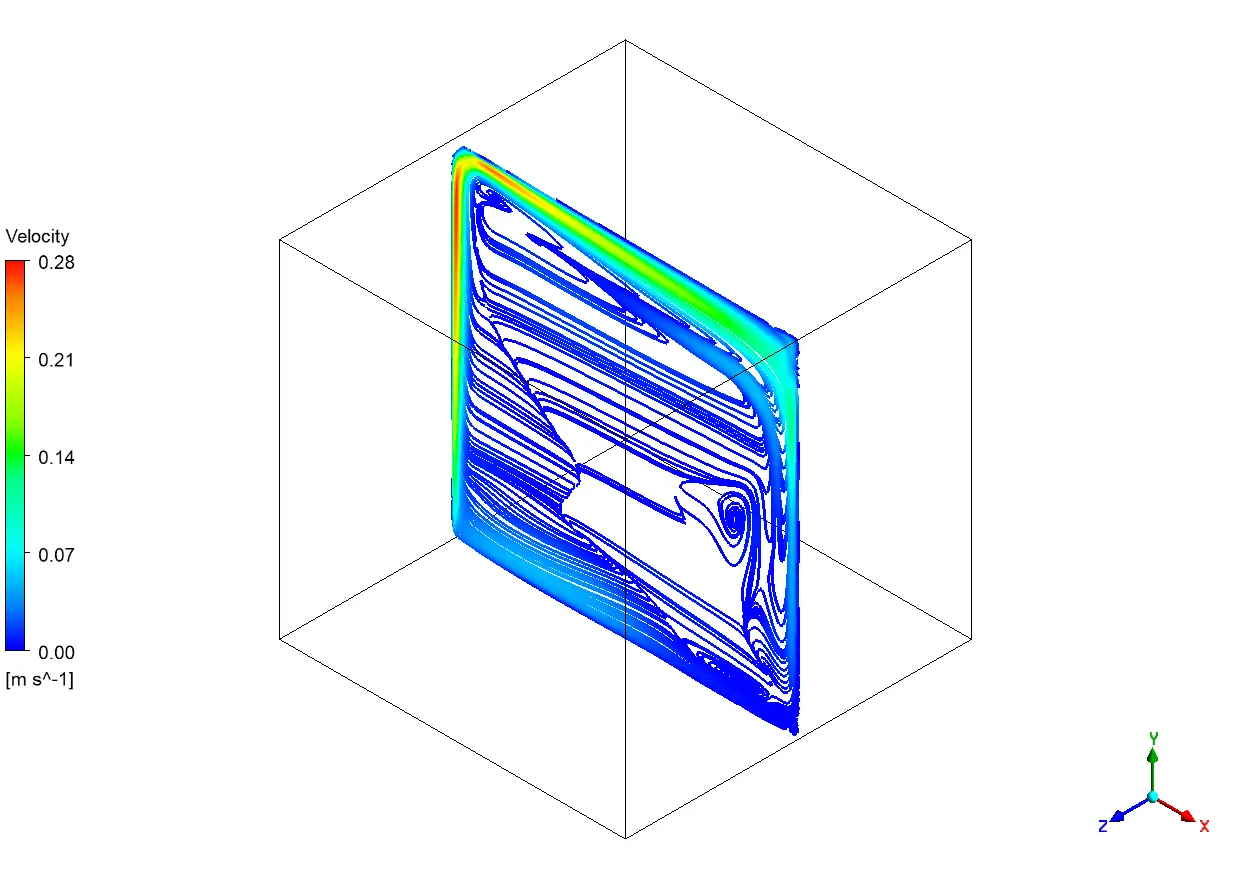
Heating a closed space relies on invisible fluid mechanics. Students study radiation and natural convection in a room to design comfortable and energy-efficient buildings. Inside a normal room, a hot heater warms the air. A cold window cools the air down. These simple temperature differences force the indoor air to move. At the same time, hot solid surfaces emit thermal energy directly to cooler surfaces. We provide this FREE educational lesson to explain how these two thermal processes work together. You can get more free project files from our Free tutorials library. If you are new to fluid dynamics, we highly recommend our comprehensive ANSYS Fluent course for beginners to build a strong foundation in thermal analysis.
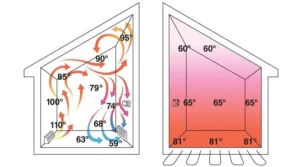
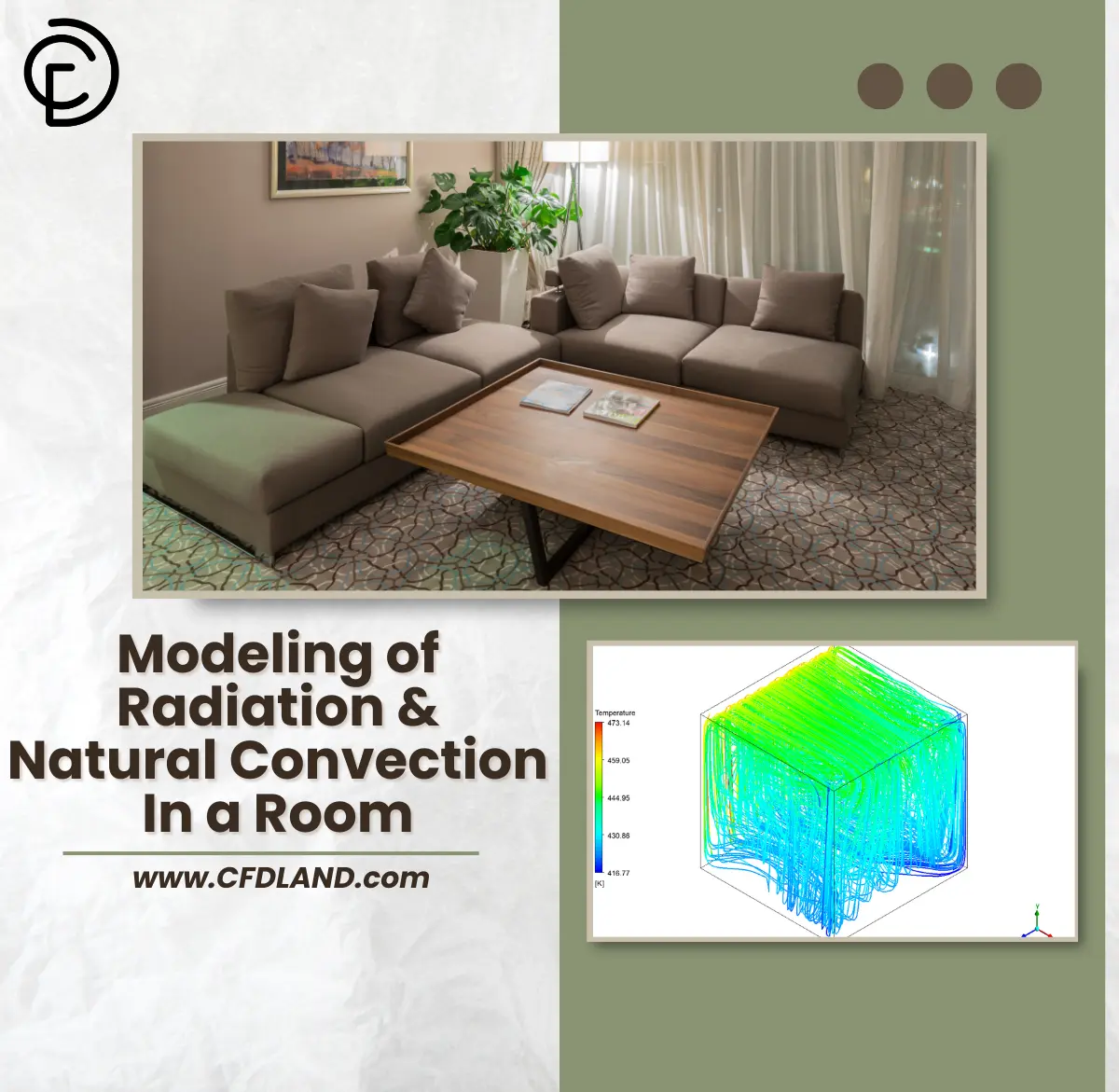
Figure 1: Natural convection in a room, illustrating the basic physical movement of air driven by temperature changes.
Simulation process: Applying Boussinesq Approximation and S2S Radiation
To calculate the thermal physics accurately, the solver relies on the Energy Equation and the Navier-Stokes fluid equations. We defined a 3D fluid domain representing a standard room. One side acts as a hot wall, and the opposite side acts as a cold window. Because density changes drive the fluid motion, we activate gravity at -9.81 m/s² in the downward vertical direction.
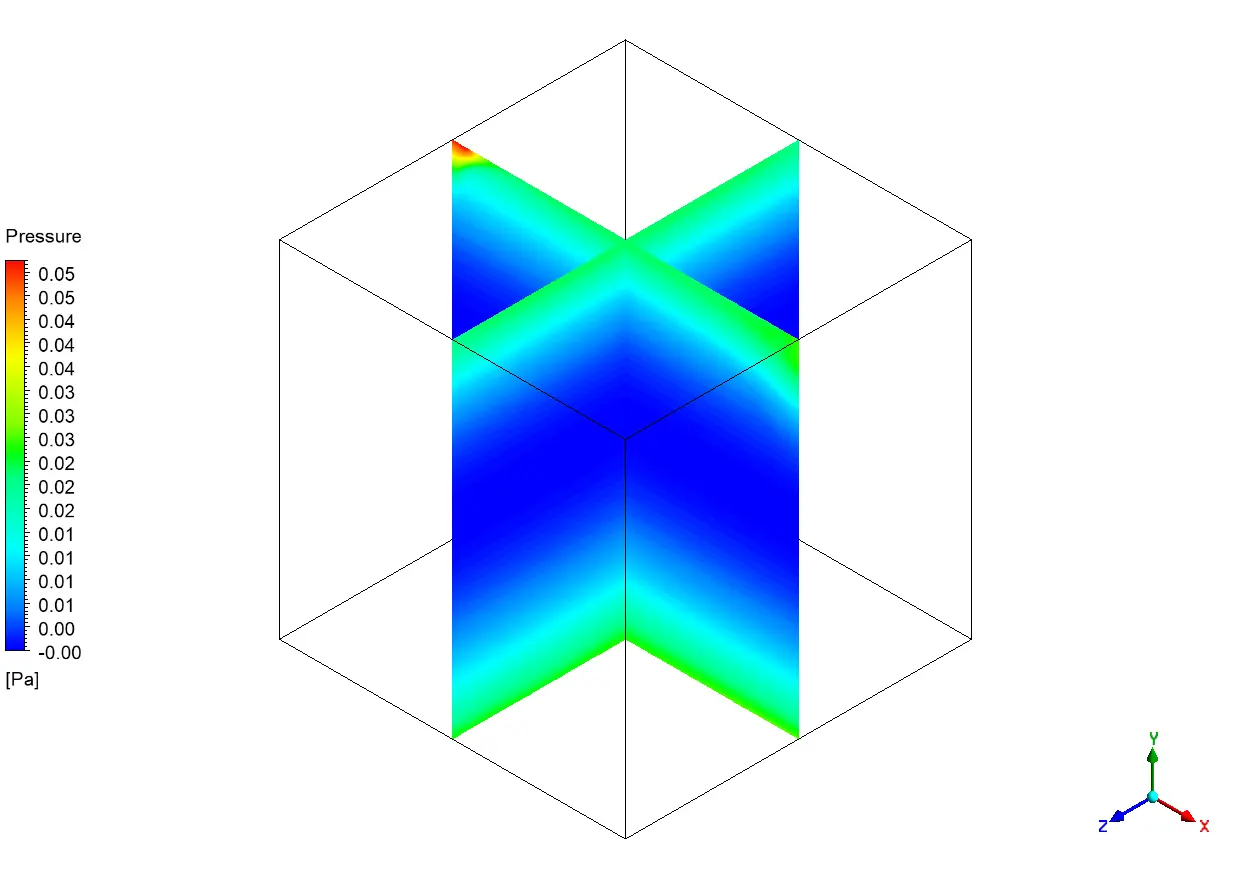
Instead of calculating density variables everywhere, we apply the Boussinesq approximation. This mathematical rule assumes the fluid density only changes when the temperature changes. This makes the buoyancy calculation highly efficient for indoor spaces. For the solid walls, every surface above 0 K emits heat waves. We apply the Surface-to-Surface (S2S) model to calculate this effect. The S2S setting assumes the indoor air is completely transparent and does not absorb the heat waves. The radiation travels directly from the hot wall and hits the floor, raising the floor temperature based on its Emissivity value.
Post-processing:Velocity Streamlines and the Circulation Loop
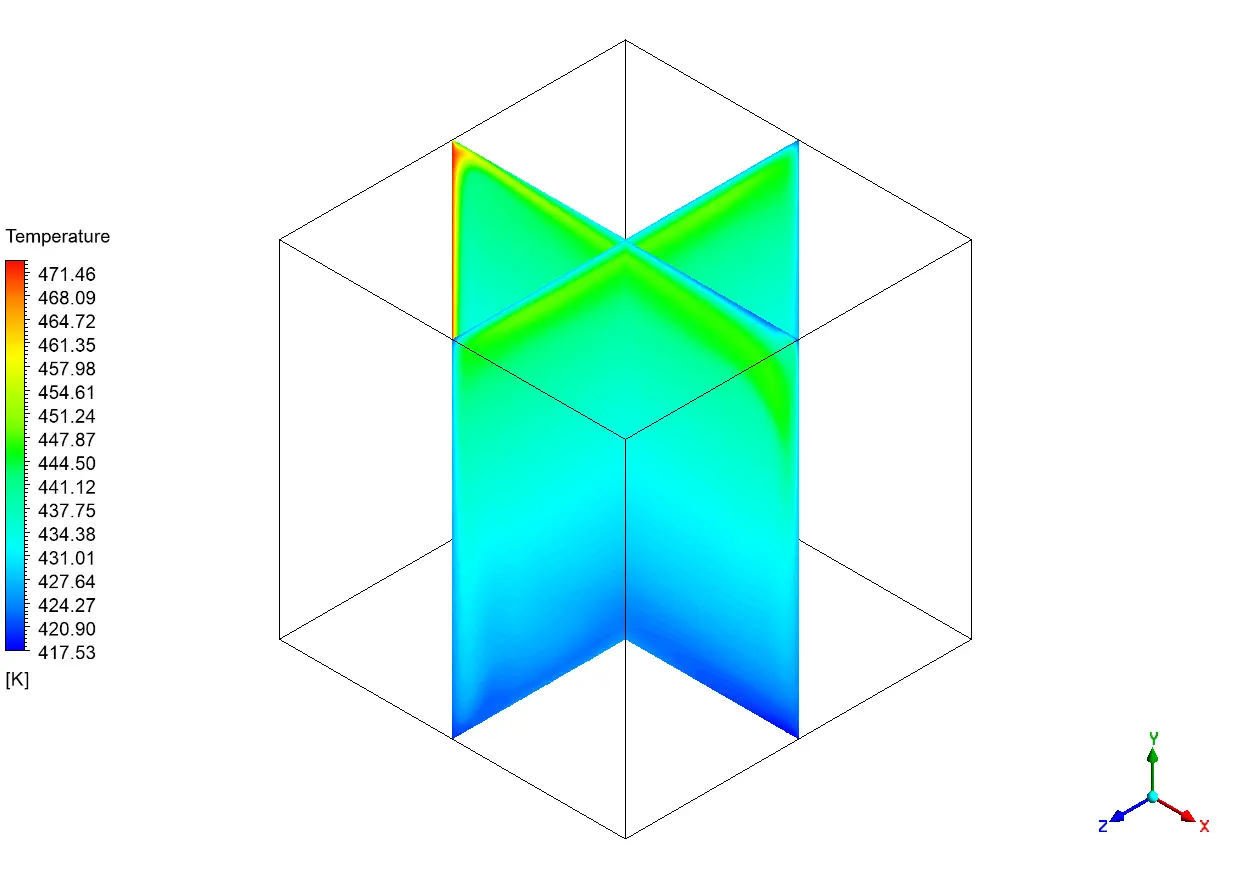
The visual contours prove how simple temperature differences create a powerful air cycle. The hot wall heats the air next to it. Because hot air is light, it rises quickly to the ceiling. The flow travels across the top of the room until it hits the cold window. The window pulls heat out of the air. The air becomes heavy and falls down the cold wall.
When the cold air hits the floor, it moves back toward the hot wall to restart the cycle. The floor also helps heat this returning air because it absorbed radiation directly from the hot wall. The velocity streamlines display this physical behavior as one large room-wide vortex. This single circulation loop constantly mixes the fluid to balance the indoor temperature. The velocity cross-section contours show higher fluid speeds near the vertical walls where buoyancy pushes the air the hardest. The center of the vortex remains relatively slow. This thermal analysis helps engineers find the best physical placement for heaters and windows to improve human comfort.
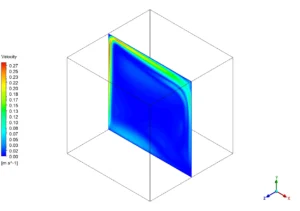
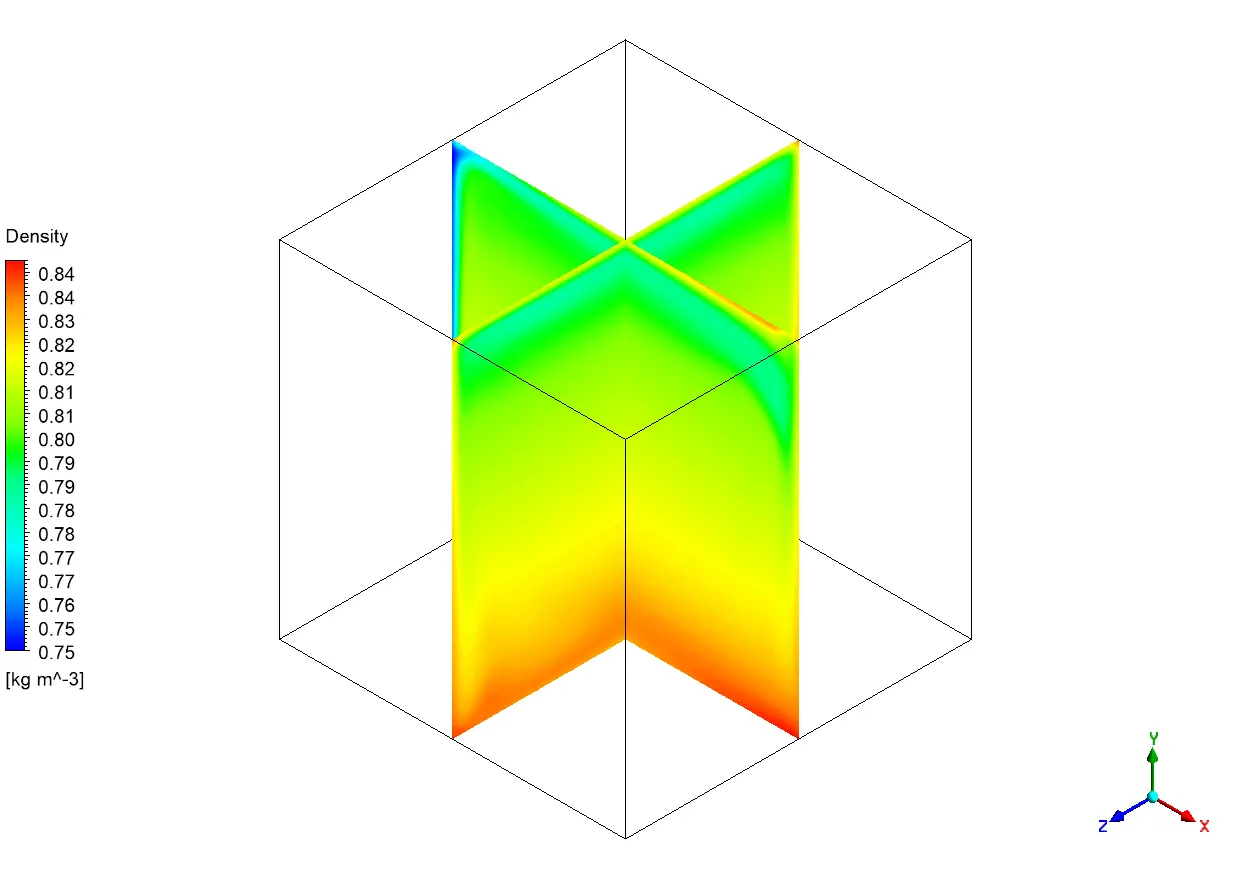
Figure 2: Velocity contour in a room cross-section, showing the fluid accelerating near the hot and cold vertical walls.
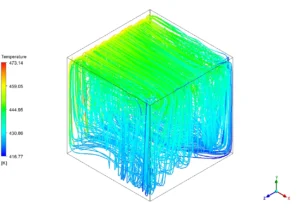
Figure 3: Temperature streamlines acting as definitive proof of the room-scale circulation, showing a clear large-scale vortex.
Frequently Asked Questions (FAQ)
- What causes the main circulation loop inside the room? The loop is caused by gravity acting on different fluid densities. The hot wall makes the air light, so it rises. The cold wall makes the air heavy, so it sinks. This pushing and pulling creates a continuous circular vortex.
- Why do we apply the Boussinesq approximation here? Indoor air pressure changes very little. The Boussinesq approximation links density changes directly to temperature differences only. This simplifies the math and solves the natural convection physics much faster.









2 reviews for Room Radiation & Natural Convection CFD Simulation
Sehli abdelkrim –
Great
Muqtada Abdullah –
good