
The human airway acts as a biological filter. It constantly traps dangerous particles, bacteria, and pollutants. To survive, the body must push these trapped toxins out of the lungs. This continuous natural process is called mucus clearance. When this mechanism fails, humans suffer severe respiratory diseases like chronic obstructive pulmonary disease and asthma. The clearance relies on a strict physical interaction. Fast-moving air must rub against a thick liquid layer to drag it forward.
Measuring this microscopic fluid interaction inside a living human is impossible. Therefore, engineers solve this respiratory problem using ANSYS Fluent software. We simulate the exact momentum transfer between the breathing air and the liquid boundary. If you want to master complex biological fluid mechanics, exploring our Biomedical engineering tutorials is your absolute best next step. Today, you will analyze exactly how aerodynamic shear stress forces non-Newtonian biological fluids to flow upward against gravity.
- Reference [1]: Paz, Concepción, et al. “Analysis of the volume of fluid (VOF) method for the simulation of the mucus clearance process with CFD.” Computer Methods in Biomechanics and Biomedical Engineering5 (2019): 547-566.
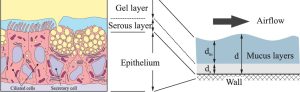
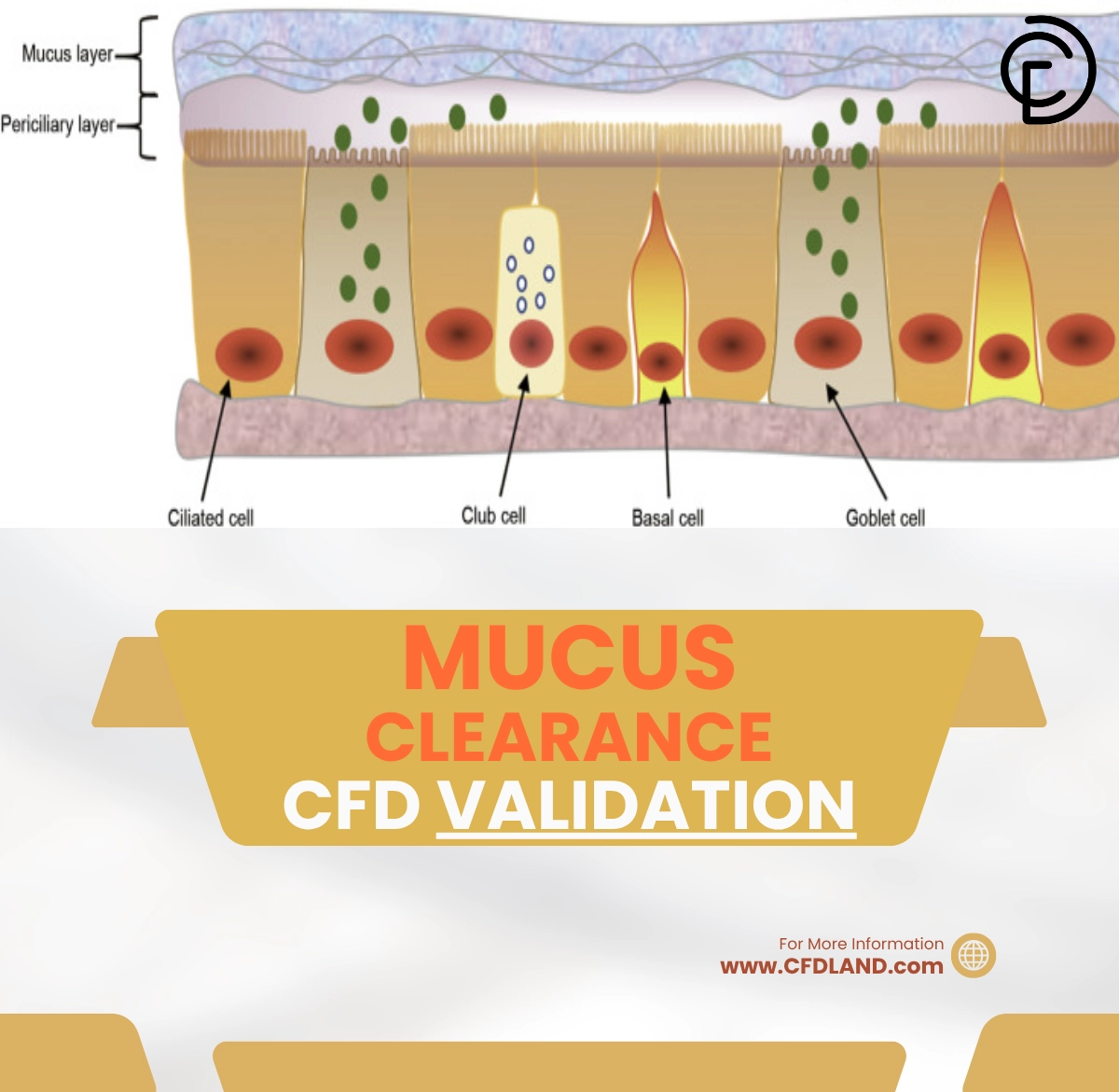
Figure 1: The biological flow schematic defining the two-phase interaction between the central airflow and the wall mucus layer. [1]
Simulation Process: Biomedical Flow Domain
The mucus clearance CFD simulation was set up in ANSYS Fluent as a 2D axisymmetric domain, exploiting the cylindrical symmetry of the airway tube to reduce computational cost while preserving full multiphase flow accuracy. A transient simulation was initially attempted but abandoned due to extreme mesh resolution requirements. The 2D axisymmetric approach was therefore adopted as the validated alternative, directly following the methodology of the reference paper.
The VOF (Volume of Fluid) method was used to track the air-mucus interface with surface tension included and operating pressure properly specified. Boundary conditions were set based on both reference sources to reproduce the experimental conditions of Kim et al. (1986) for direct CFD validation.
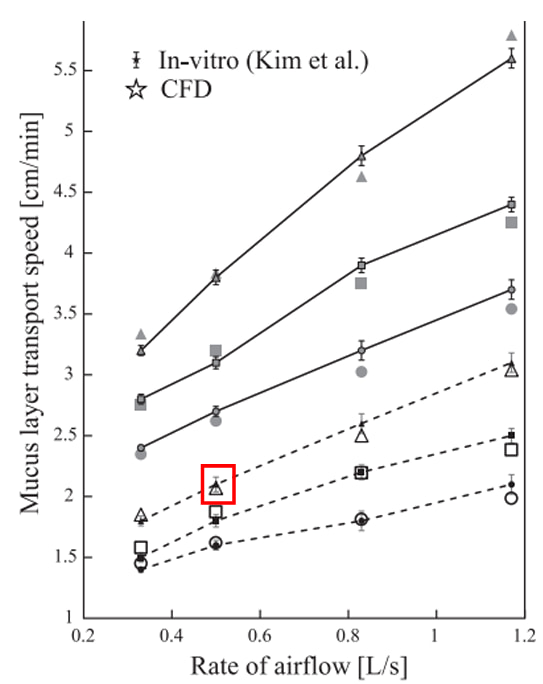
Figure 2: Target validation plot showing mucus velocity versus airflow rate
Post-processing
Before evaluating the visual flow fields, we must confirm the strict quantitative accuracy of this simulation setup. We extract the final transport speed from the numerical solver and compare it directly against published clinical experimental data.
| Parameter | Reference Value | CFD Simulation Result | Error |
| Mucus Transport Speed | 0.33 mm/s | 0.32441578 mm/s | 1.69 % |
This table proves the fundamental momentum transfer physics are resolved flawlessly. The numerical solver calculates a transport velocity of exactly 0.32441578 mm/s. This matches the clinical reference target of exactly 0.33 mm/s with a microscopic error margin of exactly 1.69 %.
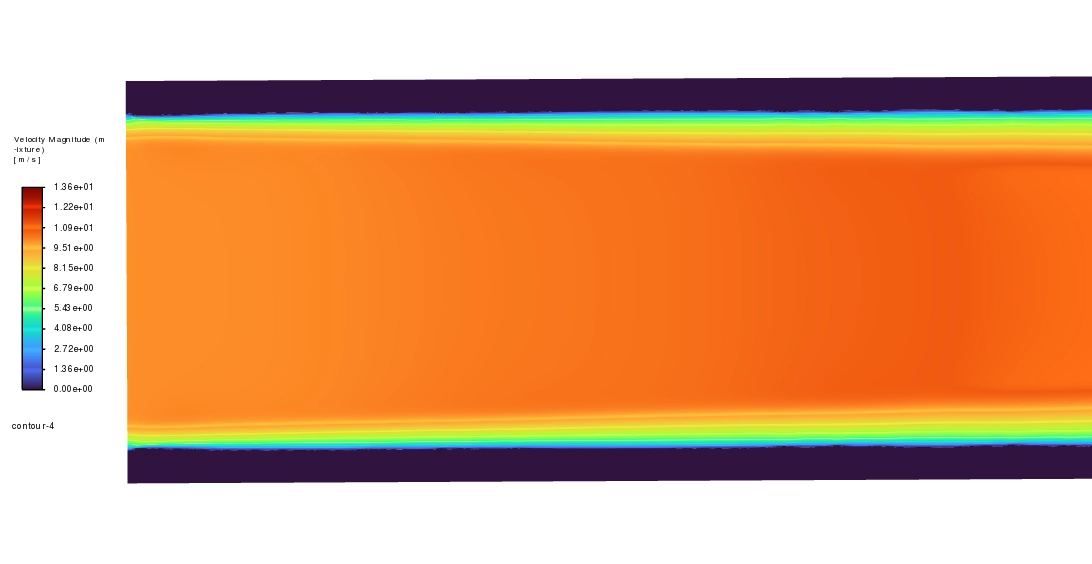
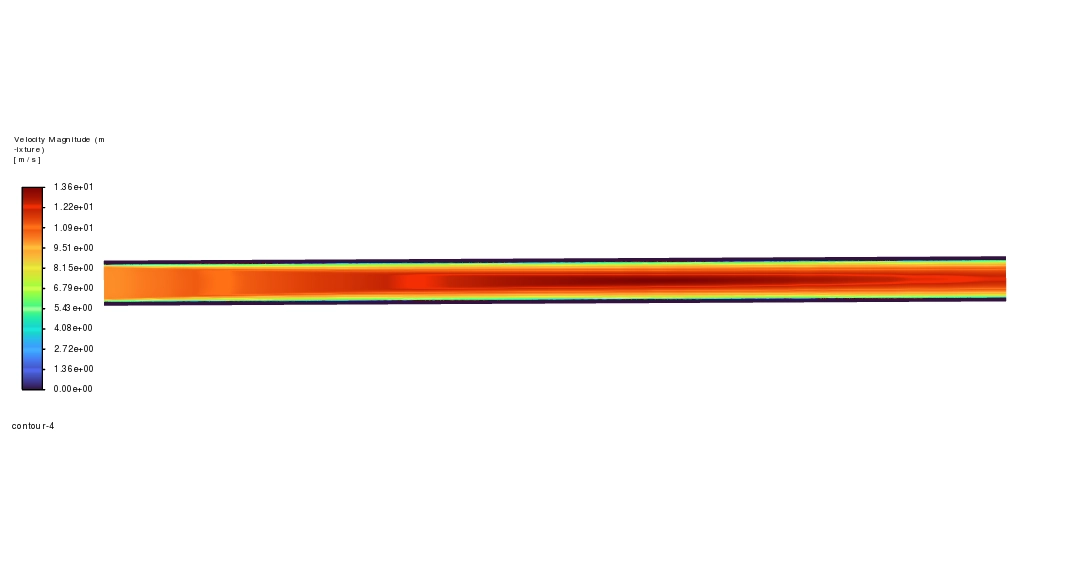
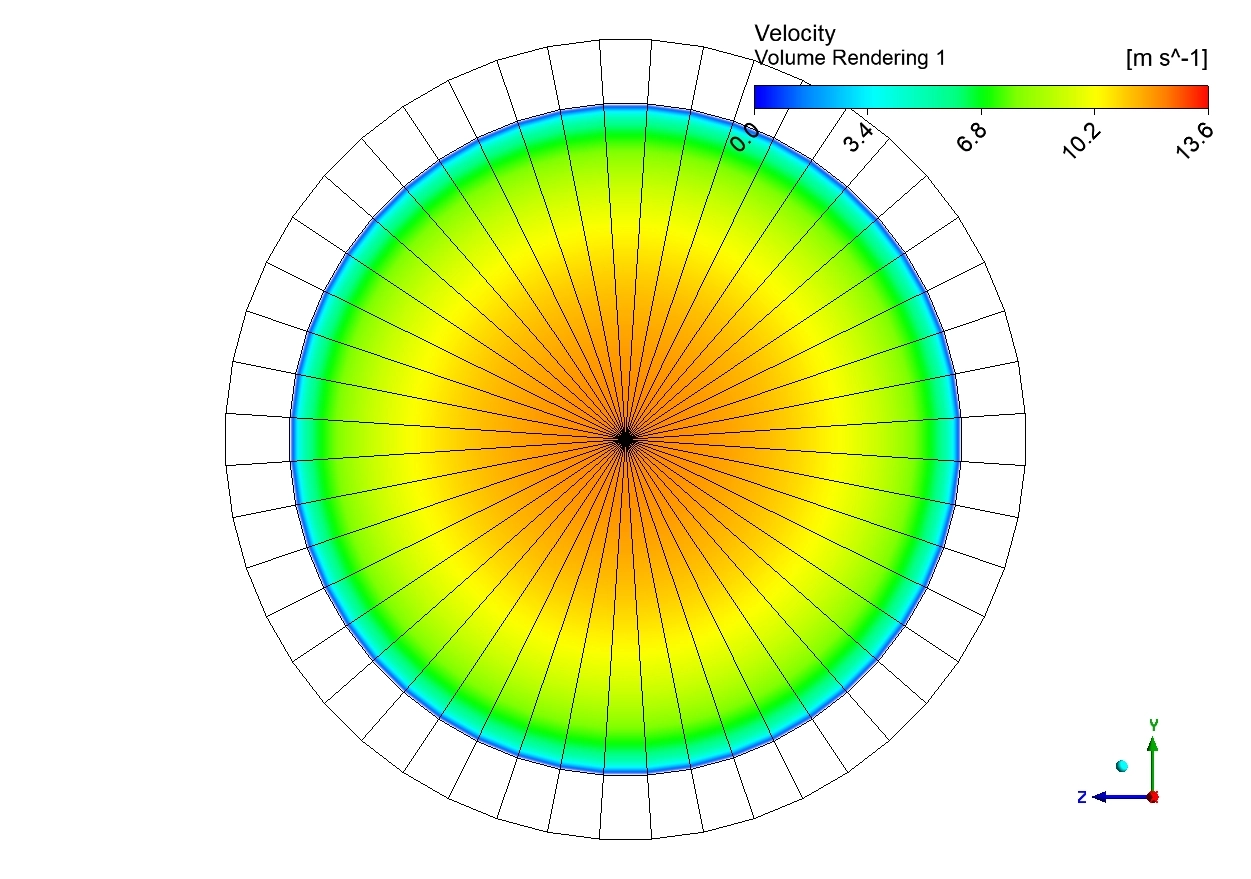
Looking at the exact flow field, the velocity magnitude contour reveals the precise physical mechanism driving this liquid transport. A high-speed air core rushes through the center of the cylindrical airway. The maximum central velocity reaches exactly 13.6 m/s. The physical momentum from this fast central air core transfers directly to the very thin mucus layer resting firmly on the solid airway walls. Because the mucus is highly viscous and behaves as a rigid non-Newtonian fluid, it heavily resists this applied shear force. Consequently, the velocity magnitude drops severely near the solid wall boundary. This creates a massive spatial velocity gradient across the tube radius. This specific contour proves the bulk airflow maintains high kinetic energy in the center while successfully dragging the heavy liquid film forward along the edges.
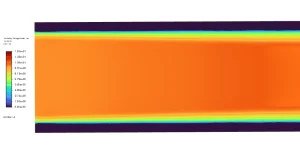
Figure 4: The velocity magnitude contour proving the high-speed central air core creates severe shear stress along the airway wall.
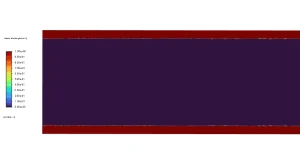
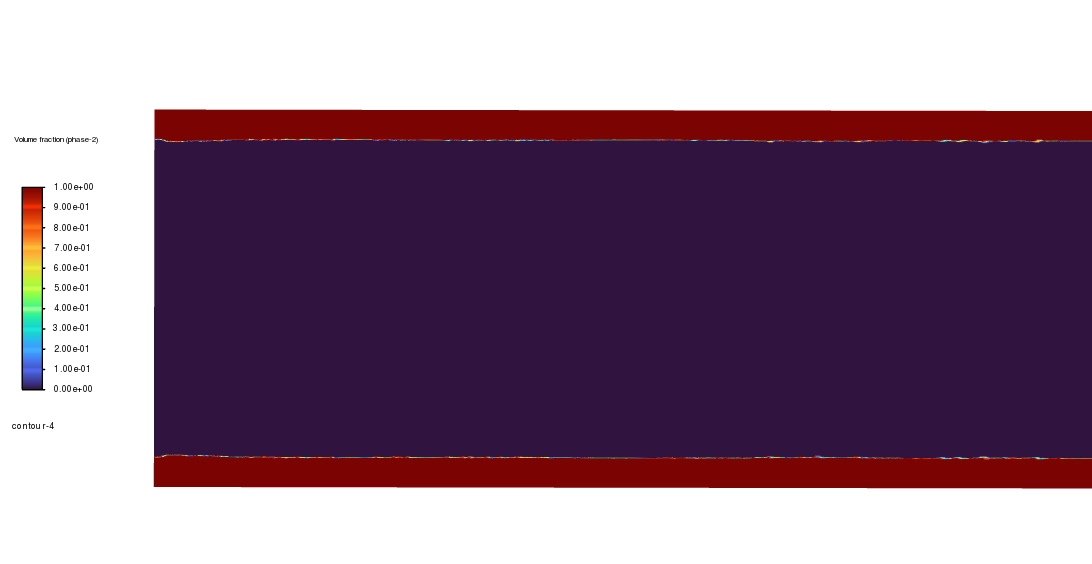
Figure 3: The volume fraction contour proving the Volume of Fluid method maintains a perfectly sharp interface between the two phases.
Finally, the volume fraction contour proves the absolute stability of the multiphase interface. The Volume of Fluid method perfectly isolates the two separate fluid phases within the computational domain. The air phase completely dominates the central volume. Meanwhile, a distinct liquid layer exists exclusively along the top and bottom boundaries representing the thin mucus film. The physical interface separating these two distinct phases remains mathematically sharp and well-defined along the entire tube length. There is no unphysical mixing or phase blending occurring. This highly stable interface visualizes the exact physical reality of the healthy human airway. It proves conclusively that the aerodynamic shear stress properly converts into forward transport velocity without tearing the continuous mucus film apart.
Frequently Asked Questions (FAQ)
- How does airflow move the mucus layer?
- As fast air rushes through the center of the airway tube, it rubs directly against the liquid layer resting on the walls. This physical rubbing creates aerodynamic shear stress. This stress acts as a continuous dragging force that pulls the liquid forward.
- Why use the Volume of Fluid method for this simulation?
- This problem involves two completely separate fluids flowing together without mixing. The Volume of Fluid mathematical model calculates exactly where the air stops and the liquid starts. It maintains a sharp physical boundary, allowing engineers to measure the exact friction between the two phases.





Reviews
There are no reviews yet.