
Cleaning extremely dirty industrial surfaces, stripping thick rust from ship hulls, or cutting solid metal requires a massive amount of mechanical power. To achieve this, engineers rely on a highly specialized tool called a Rotating Water Jet Nozzle. This turbomachinery device shoots high-pressure water while simultaneously spinning very fast in continuous circles. This spinning action makes the cutting and cleaning process 5 to 20 times more effective than a standard, stationary nozzle, while uniquely saving 30% to 60% of the total water used. We constantly see these advanced rotating water jet nozzle applications in heavy factory washing, sewer pipe clearing, and precision manufacturing. However, building physical metal prototypes to test these high-speed nozzles in the real world is an incredibly expensive and dangerous process. To save time and manufacturing costs, modern engineers perform a Rotating Water Jet Nozzle CFD simulation on a computer. By utilizing the ANSYS Fluent software, we can look directly inside the spinning metal head and calculate the exact mathematical behavior of the water droplets as they interact with the air. Performing a complete CFD Analysis of Rotating Water Jet Nozzle allows manufacturers to visualize the exact water speed, spray footprint, and internal pressures before cutting any real metal. For more easy-to-understand lessons on how to simulate spinning blades and rotational forces, please explore our Turbomachinery tutorials.
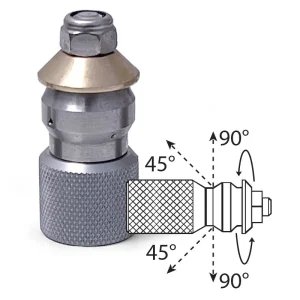
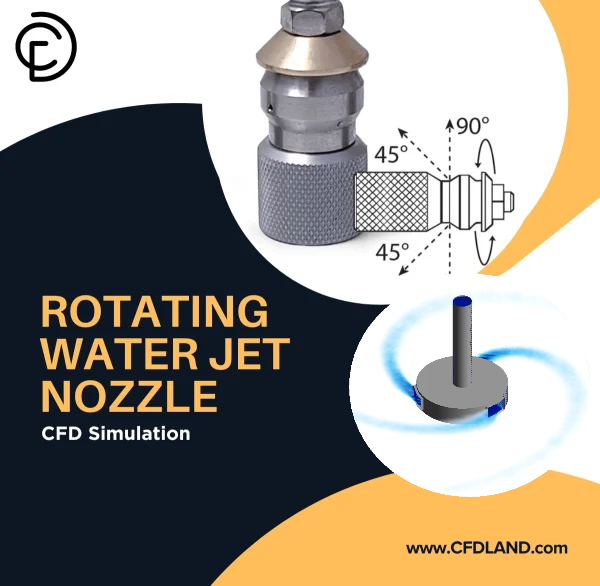
Figure 1: Schematic of the System, showing the basic engineering concept of the high-pressure water entering the spinning nozzle head.
Simulation Process: VOF Multiphase and Sliding Mesh Setup in ANSYS Fluent
To perform this Rotating Water Jet Nozzle fluent simulation, we built a highly complex 3D computer model divided into two entirely separate physical zones. We created a large, stationary outer domain representing the open air, and a smaller, moving inner domain representing the solid nozzle body. To make the nozzle actually spin inside the computer environment, we utilized a highly advanced physics tool called the Sliding Mesh. We programmed the CFD solver settings to spin the inner domain at exactly 20 rad/s (which is equal to 191 revolutions per minute). This allows the computer to perfectly calculate the circular, sweeping centrifugal motion of the exit holes.
Because we are dealing with two completely different fluids—heavy liquid water and light gas air—we applied the Volume of Fluid (VOF) multiphase model. This specific mathematical model is flawless at tracking the exact, sharp boundary line where the water meets the air. We also carefully adjusted the boundary conditions to activate wall adhesion. This setting calculates exactly how the liquid water physically grips the inner metal walls just before it is thrown out of the small holes. Finally, the transient solver calculated the changing fluid dynamics millisecond by millisecond, allowing us to capture the true, twisting shape of the high-speed spray.
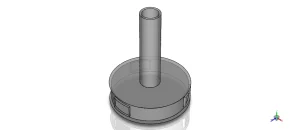
Figure 2: Geometry Model of Rotating Domain, displaying the 3D computer model featuring the stationary outer air block and the inner spinning nozzle body.
Post-processing: Deep Analytical Review of Multiphase Atomization and Rotational Aerodynamics
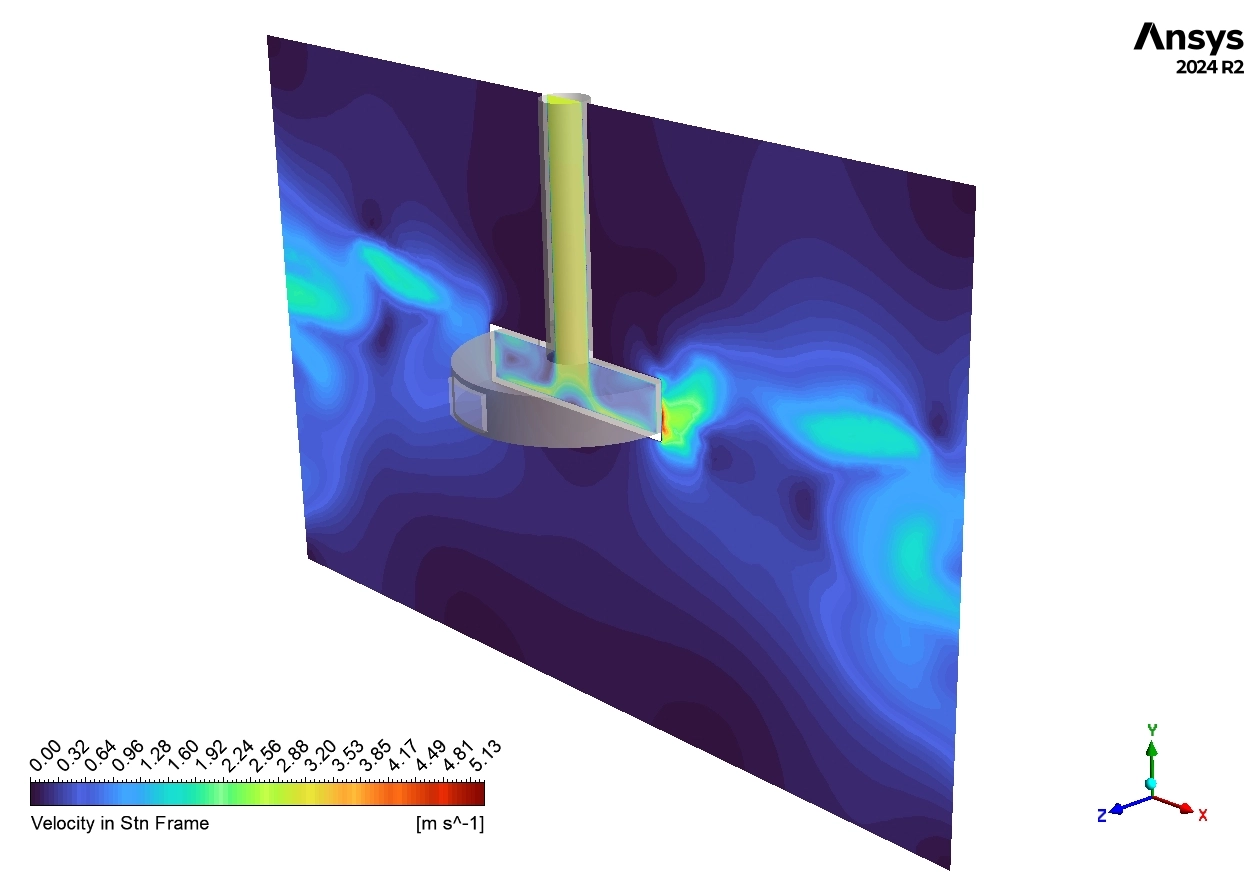
To truly understand this Rotating Water Jet Nozzle fluent study, we must look at the colorful pictures (contours and streamlines) and translate the math into simple, real-world physics. The success of this cleaning tool depends entirely on how wide the water spreads, how fast it spins, and if the pressure inside is safe for the metal. We will explain exactly how the water breaks apart, how the spinning creates a beautiful spiral, and the hidden danger of negative vacuum pressure.
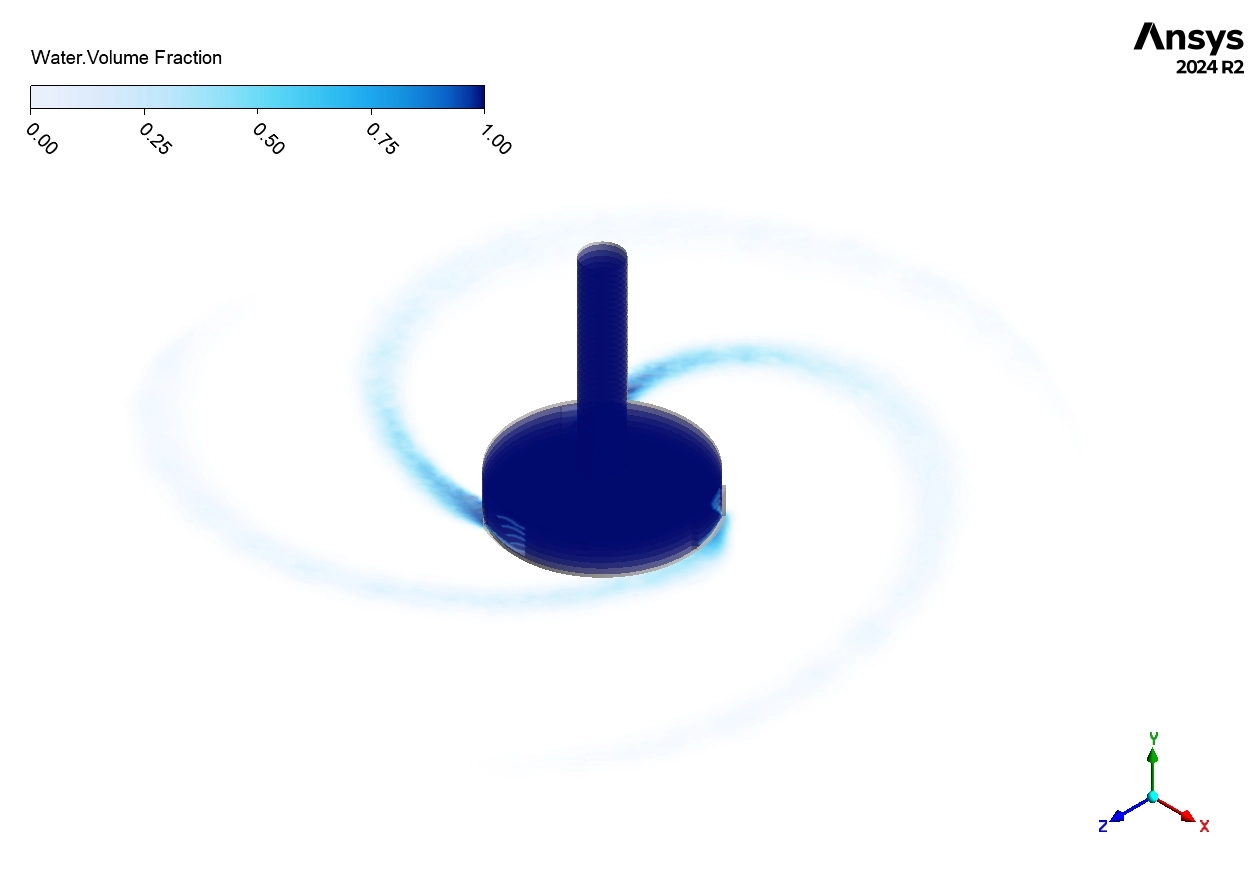
First, we look at the Water Volume Fraction contour (Figure 3) to see the exact shape of the cleaning footprint. Inside the metal nozzle, the color is dark blue. This means the water is pure, solid, and tightly packed together. When the water shoots out of the holes, it stays perfectly solid and strong for a short distance of 20 to 50 millimeters. But after this short distance, the fast-moving outside air hits the water and aggressively rips it apart into millions of tiny drops. The color changes to light blue, showing a mixed mist of water and air. Because the nozzle is spinning in circles, these tiny drops spread outward to create a massive, perfectly round cleaning zone that is 0.3 to 0.5 meters wide. This is a huge achievement for the designers. If a factory needs to clean a much larger floor, the engineers now know exactly how to change the angle of the holes to make this 0.5-meter cleaning circle even bigger.
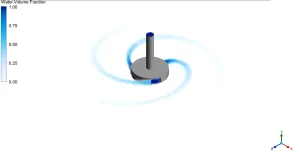
Figure 3: Water Volume Fraction (VOF Phase Distribution), visualizing the dark blue solid water breaking into light blue droplets as it sprays outward.
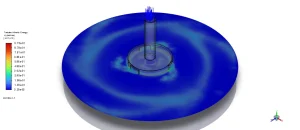
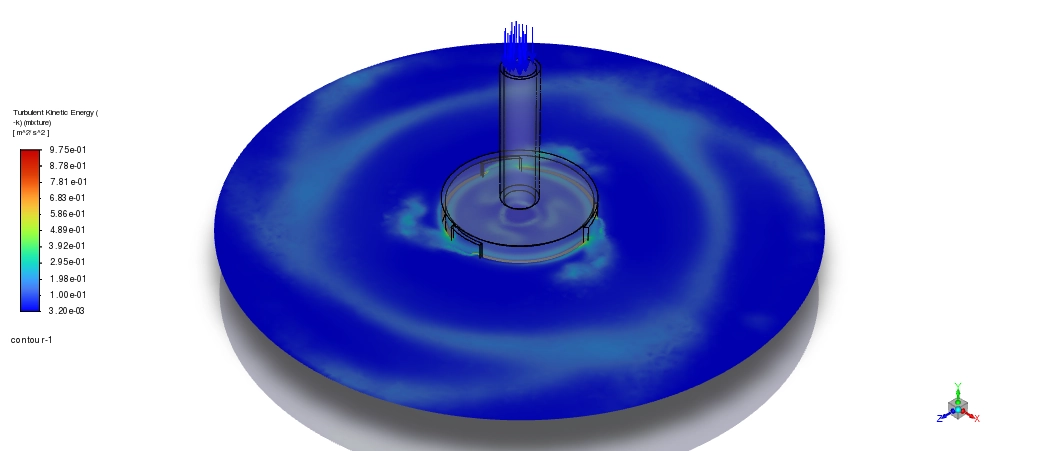
Figure 4: Turbulent Kinetic Energy Contour, illustrating the chaotic mixing zones (up to 97.5 J/kg) where the fast water violently crashes into the quiet air.
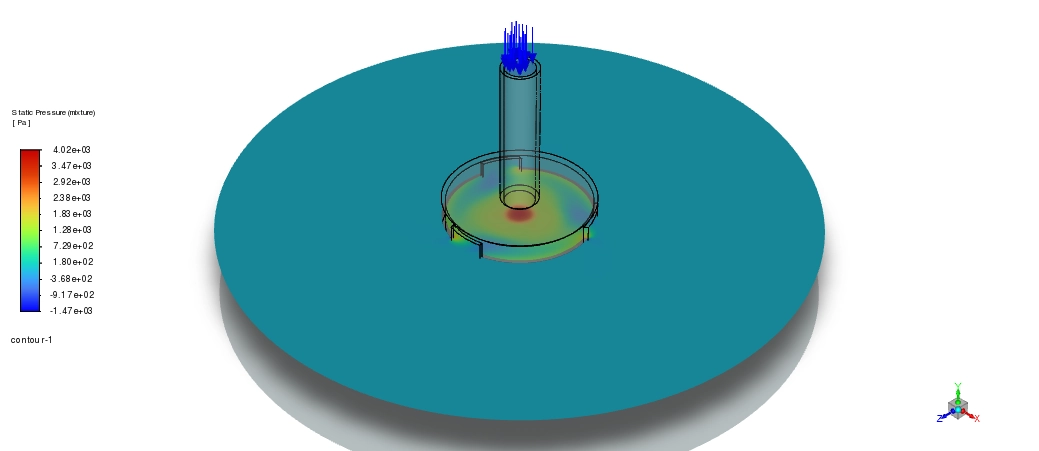
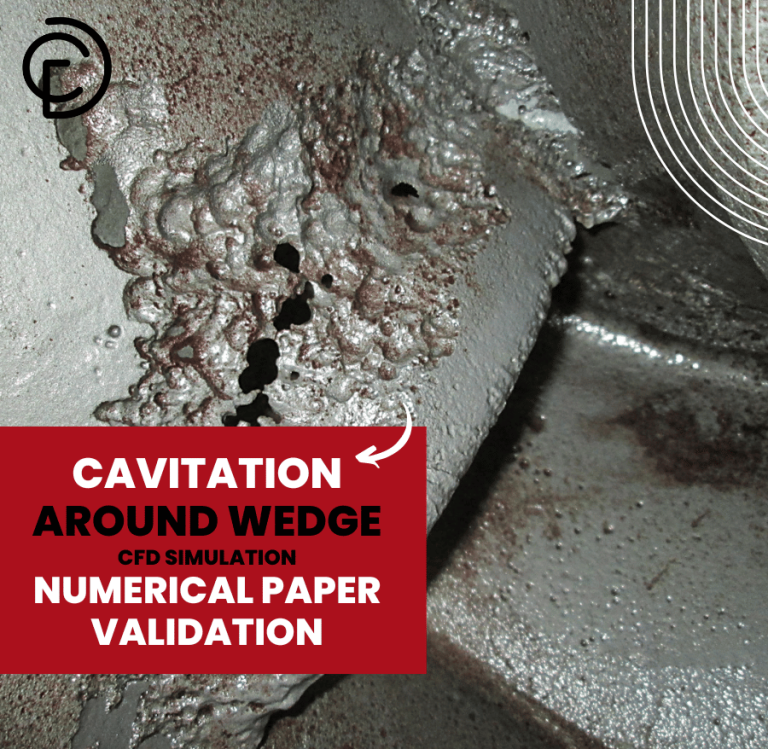
Finally, we must study the Static Pressure (Figure 5) to find a hidden danger that could destroy the machine. Inside the top pipe, the pressure is very high, glowing warm colors between 1.28 and 2.38 kPa. This high pressure is the strong pushing force needed to drive the heavy water out of the tiny holes. However, the most critical discovery happens right at the exit holes. The pressure suddenly drops completely below zero, turning dark blue at a negative -917 to -1470 Pa. This negative number means a strong, dangerous vacuum is created right behind the fast water. In simple physics, if a vacuum gets too strong, it will cause the cold water to suddenly boil. This boiling creates tiny, violent bubbles that explode against the metal wall, slowly eating away the steel. Engineers call this dangerous problem cavitation. By seeing this exact negative vacuum in the CFD simulation, the designers can easily fix the problem by smoothly rounding the sharp edges of the holes. This simple fix stops the vacuum, preventing the metal from breaking and guaranteeing the cleaning tool will last for many years.
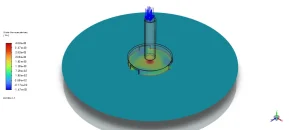
Figure 5: Static Pressure Contour, displaying the strong pushing pressure inside the pipe and the dangerous negative vacuum pressure (-1470 Pa) at the exit holes.
Key Takeaways & FAQ
- Q: Why do rotating nozzles clean better than normal nozzles?
- A: Spinning nozzles shoot fast water in a wide, circular spiral. This sweeping motion covers a much larger area (up to 0.5 meters wide in our test) and hits the dirt from multiple different angles, making it 5 to 20 times stronger.
- Q: What is the Sliding Mesh interface in ANSYS Fluent?
- A: It is a smart computer setting that allows one part of the 3D model (the metal nozzle) to physically spin in circles (at 191 rpm) while the outside air stays completely still.




Reviews
There are no reviews yet.