
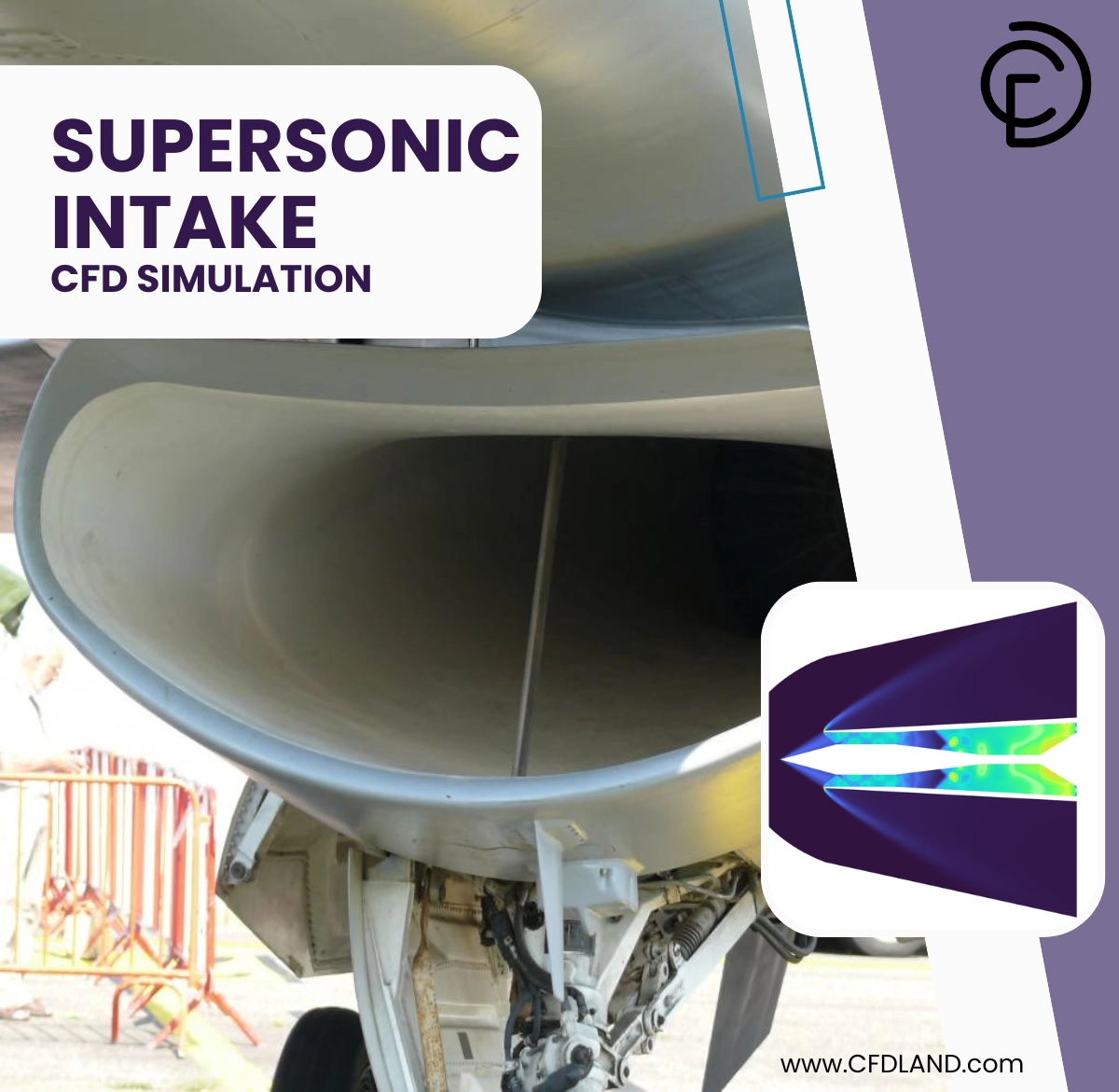
Fighter jets fly extremely fast, often moving much faster than the speed of sound. However, there is a big problem. The jet engine inside the plane cannot drink air that is moving too fast. If super-fast wind hits the engine fire, the fire will blow out like a candle, and the plane will fall. To fix this, engineers put a special metal tube at the front of the plane called a Supersonic Intake. This tube creates invisible walls of air called shock waves. These invisible walls act like heavy brakes, slowing the wind down so the engine can safely breathe it. In the old days, testing this metal tube meant building a real one and putting it in a giant wind tunnel. This cost millions of dollars and took many months. Today, smart engineers do a Supersonic Intake fluent simulation directly on a computer to save time and money. By using the highly advanced ANSYS Fluent software, designers can look safely at the invisible shock waves on their screen. Doing a complete CFD Analysis of Supersonic Intake helps airplane builders see exactly how hot the metal will get and how slow the air becomes before they build the real jet. For more easy-to-understand lessons on how air moves around fast planes, please explore our Aerodynamics & aerospace tutorials.
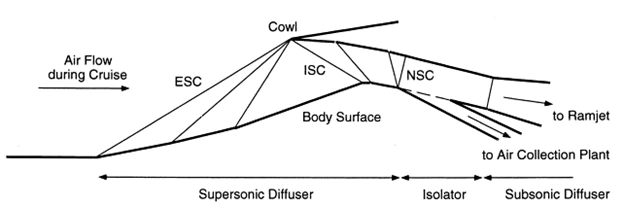
Figure 1: Schematic of supersonic intake, showing the sharp center cone and the outer shell where the fast air enters.
Simulation Process: Density-Based Solver and Compressible Flow Setup
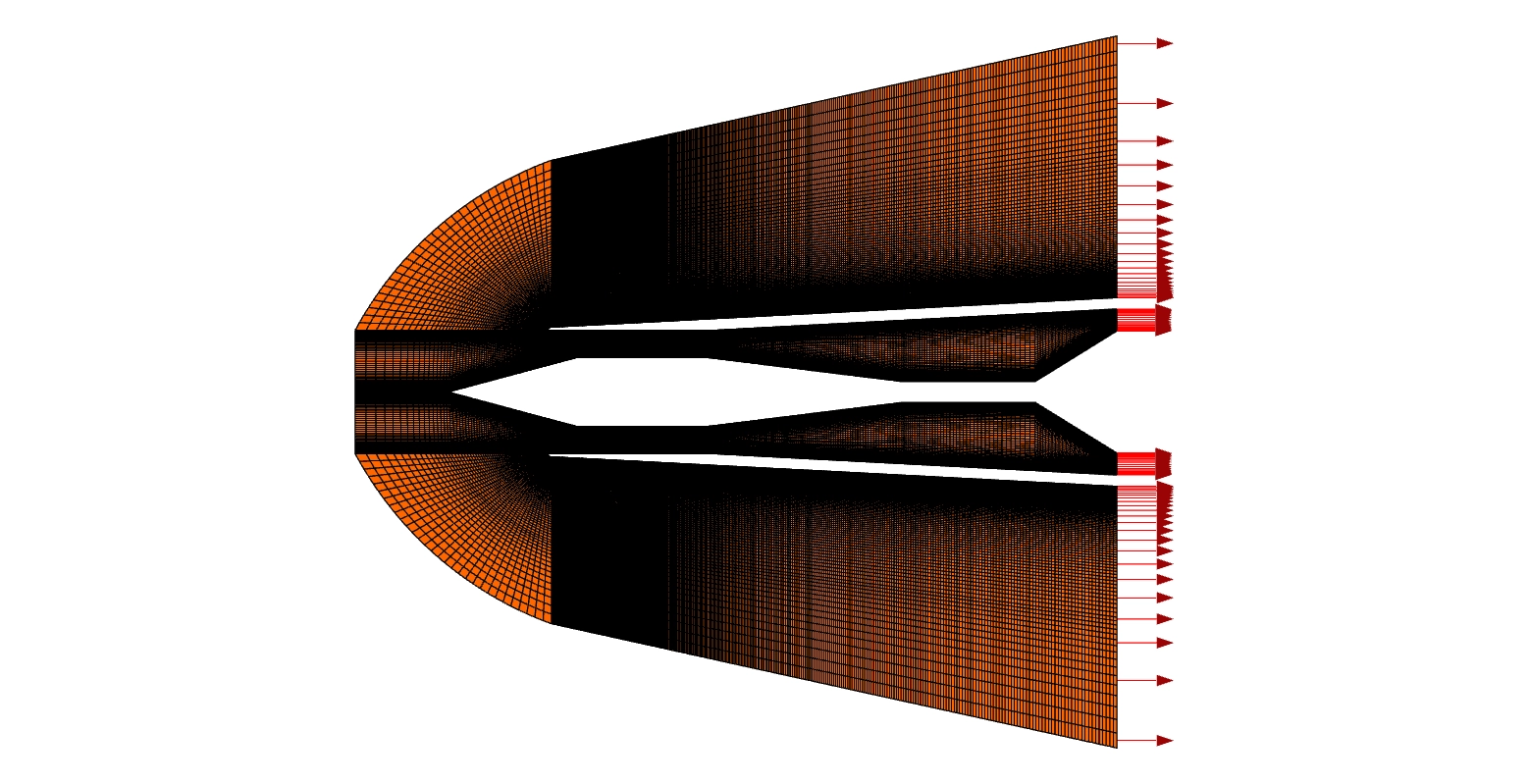
For this important aerospace project, we built a 2D axisymmetric computer model of the intake. This means we drew half of the circular tube and told the computer it spins completely around the center axis. We divided this empty space into a very clean and perfect grid containing exactly 73,540 structured hexahedral cells. This fine mesh is absolutely necessary to clearly see the sharp boundary layers near the metal walls.
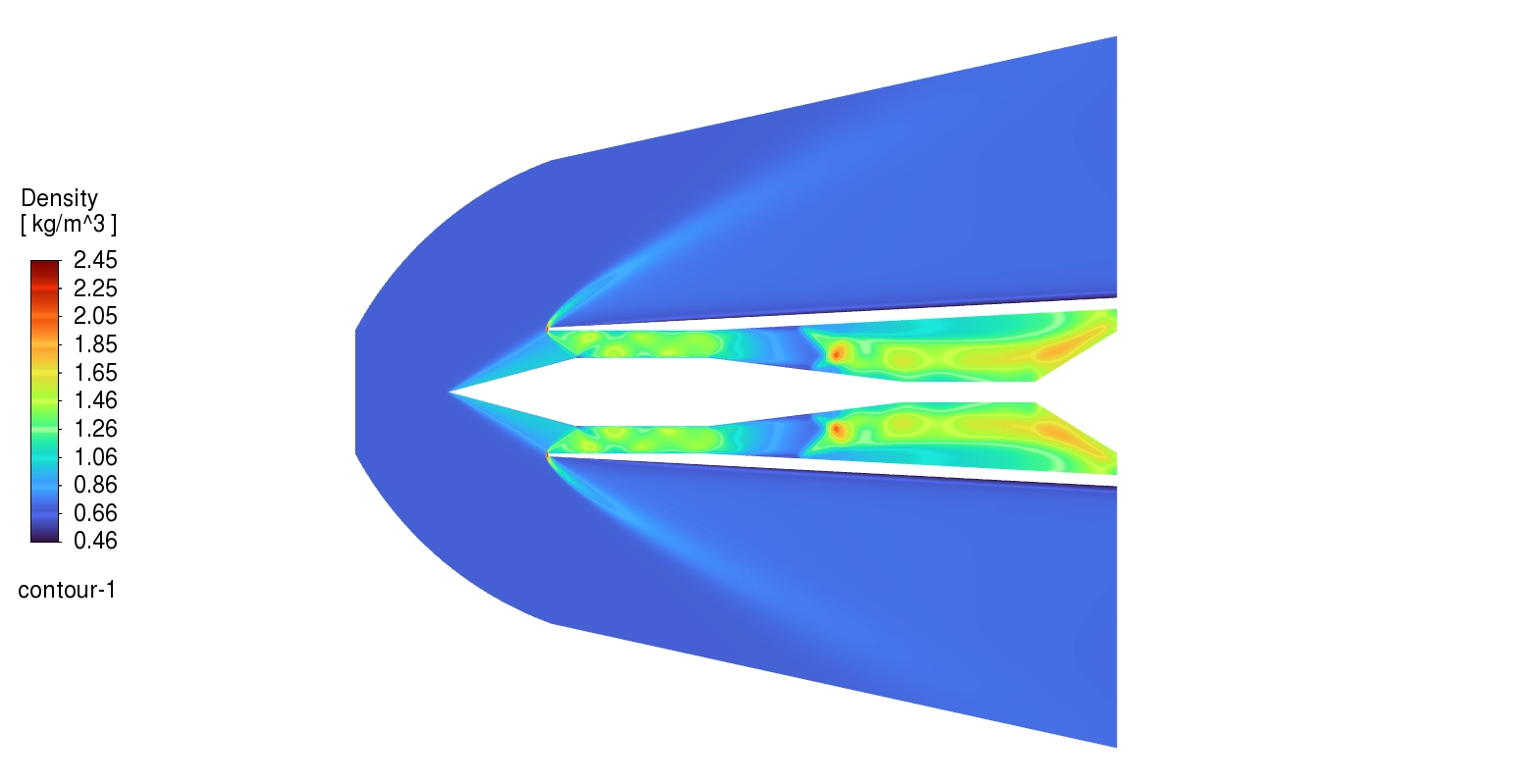
Because the air is moving faster than the speed of sound, we used the density-based coupled solver inside ANSYS Fluent. This special mathematical solver is built exactly for compressible flows where pressure and temperature change very quickly. We set the incoming wind speed at the inlet to Mach 2.15, which equals a massive velocity of 686 m/s. We also set the incoming air temperature to exactly 254.025 K to simulate a cold flight high in the sky. Finally, the computer solved the complex gas equations to show exactly how the air compresses, heats up, and slows down as it travels through the intake passage.
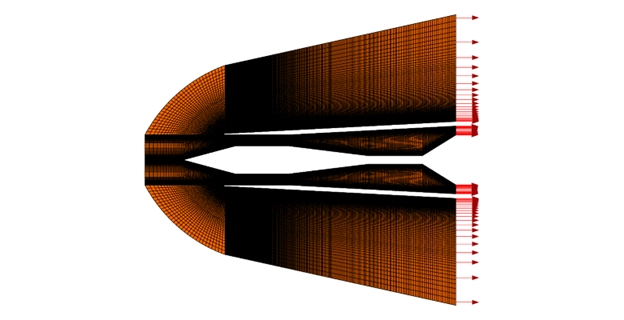
Figure 2: Structured grid, displaying the high-quality mesh with exactly 73,540 organized cells used to catch the sharp shock waves.
Post-processing: Accurate Analysis of Shock Waves and Engine Power
To truly master this Supersonic Intake fluent study, we must look at the colorful contours and translate the numbers into a simple story. The success of this metal tube depends entirely on three things: slowing the wind down, squeezing the air tightly, and surviving extreme heat. We will explain exactly how the invisible air walls brake the wind, how the engine gets its power, and where the metal is in danger of melting.
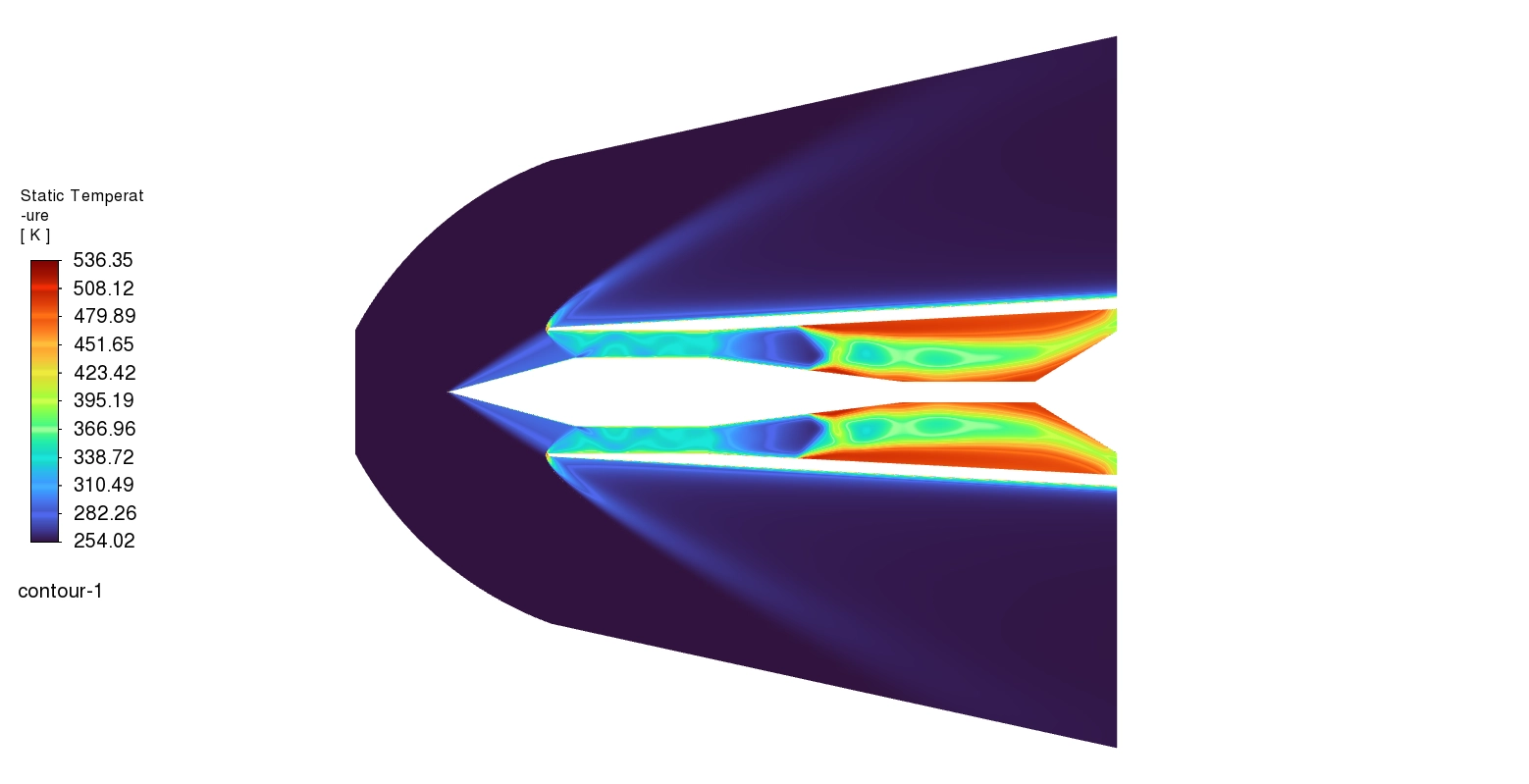
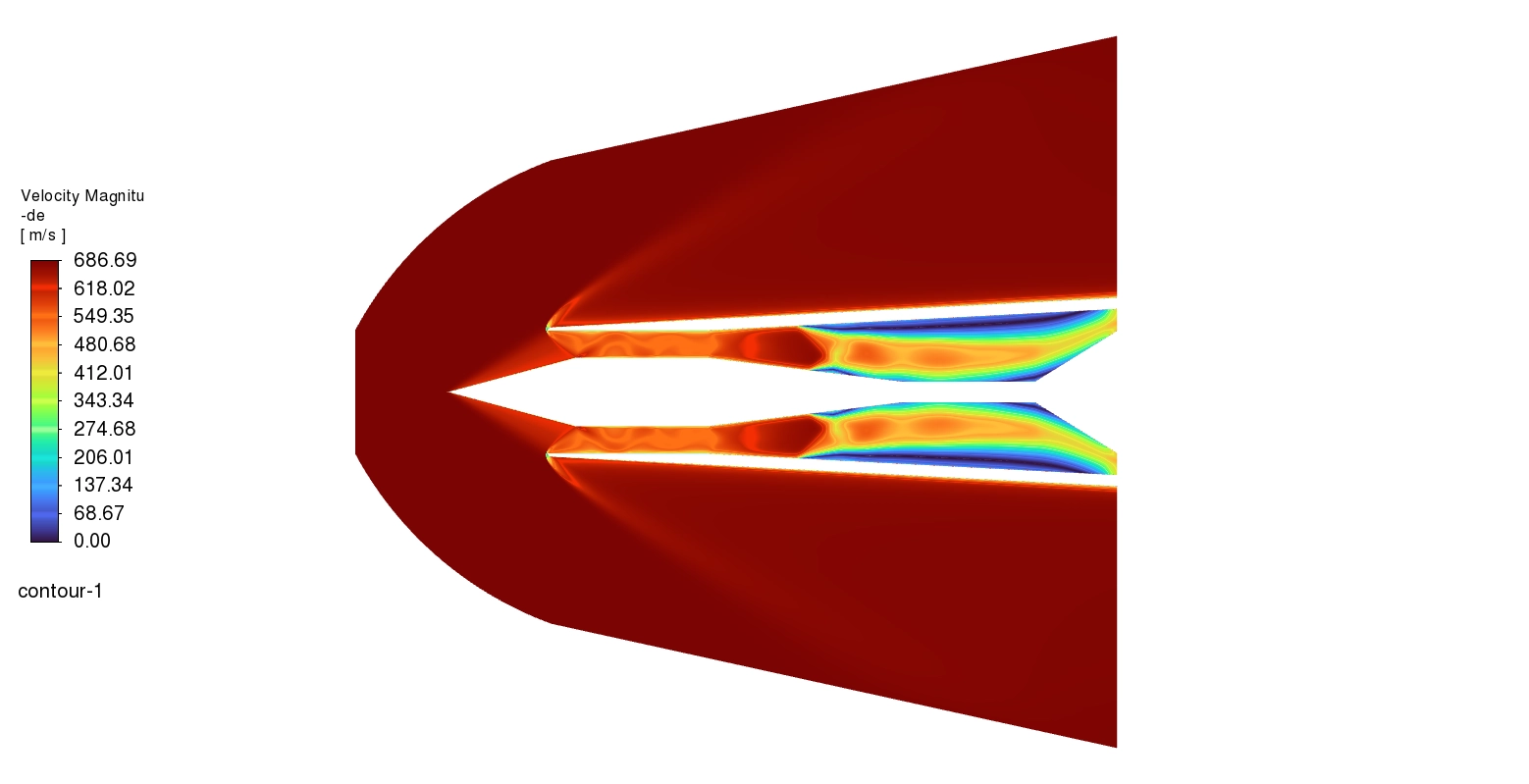
First, we look at the Velocity contour to prove the invisible walls successfully slow down the wind. The outside air flies into the picture glowing in a dark red color at an amazing speed of 686.69 m/s. But suddenly, the air hits the first invisible shock wave resting on the sharp front cone. The speed drops immediately to between 549 and 618 m/s. As the air moves deeper into the narrow part of the tube, it crashes into another big shock wave. The colors turn to calm blue and cyan, proving the wind has slowed down beautifully to just 137 to 275 m/s. This is a massive victory for the airplane makers. Because the air is now moving slower than the speed of sound, the jet engine can safely swallow it without blowing out the fire.
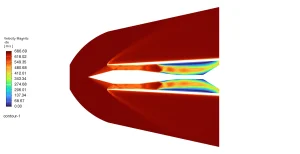
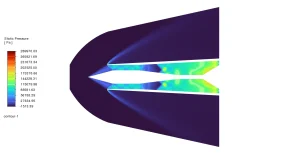
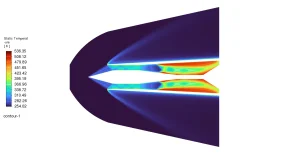
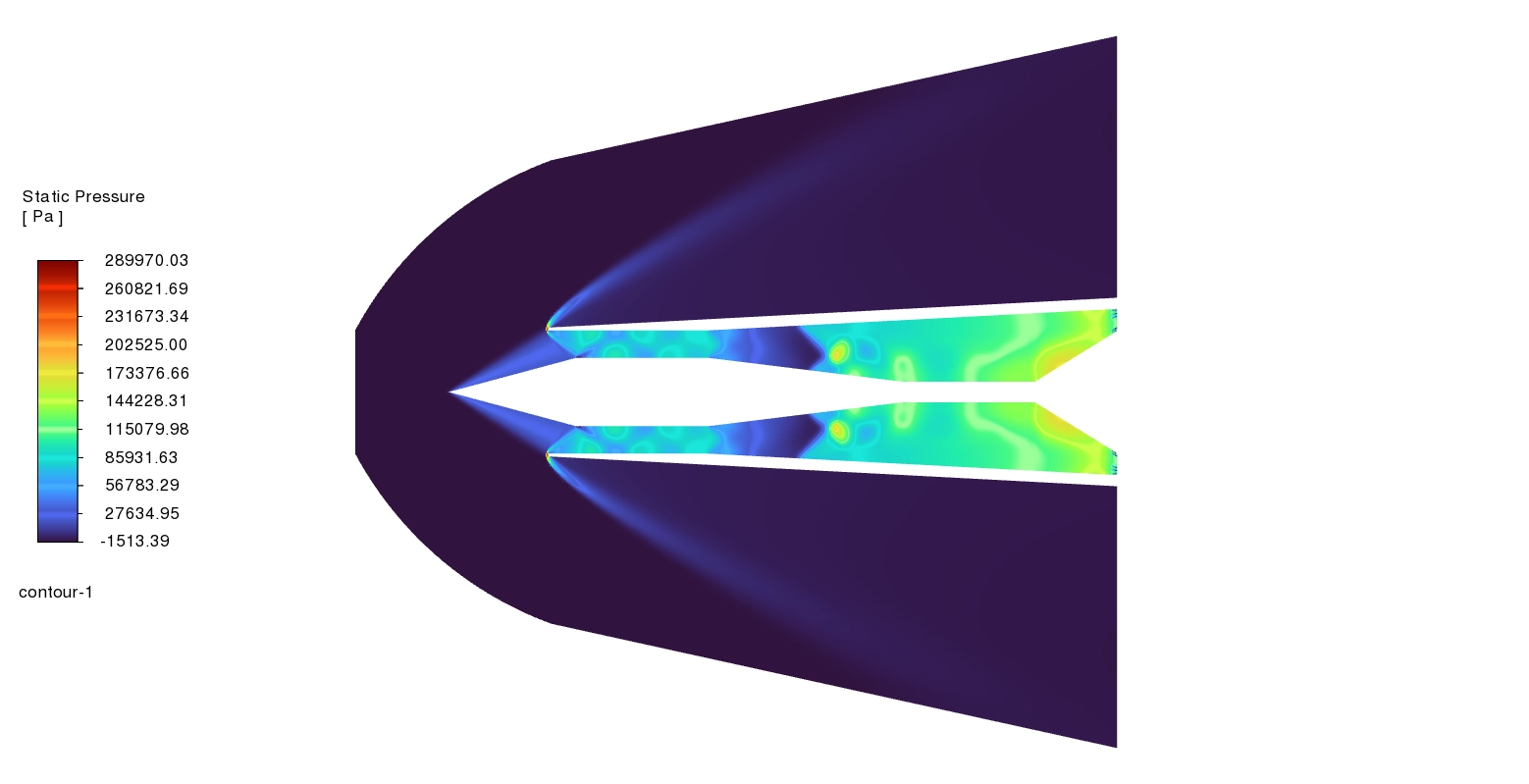
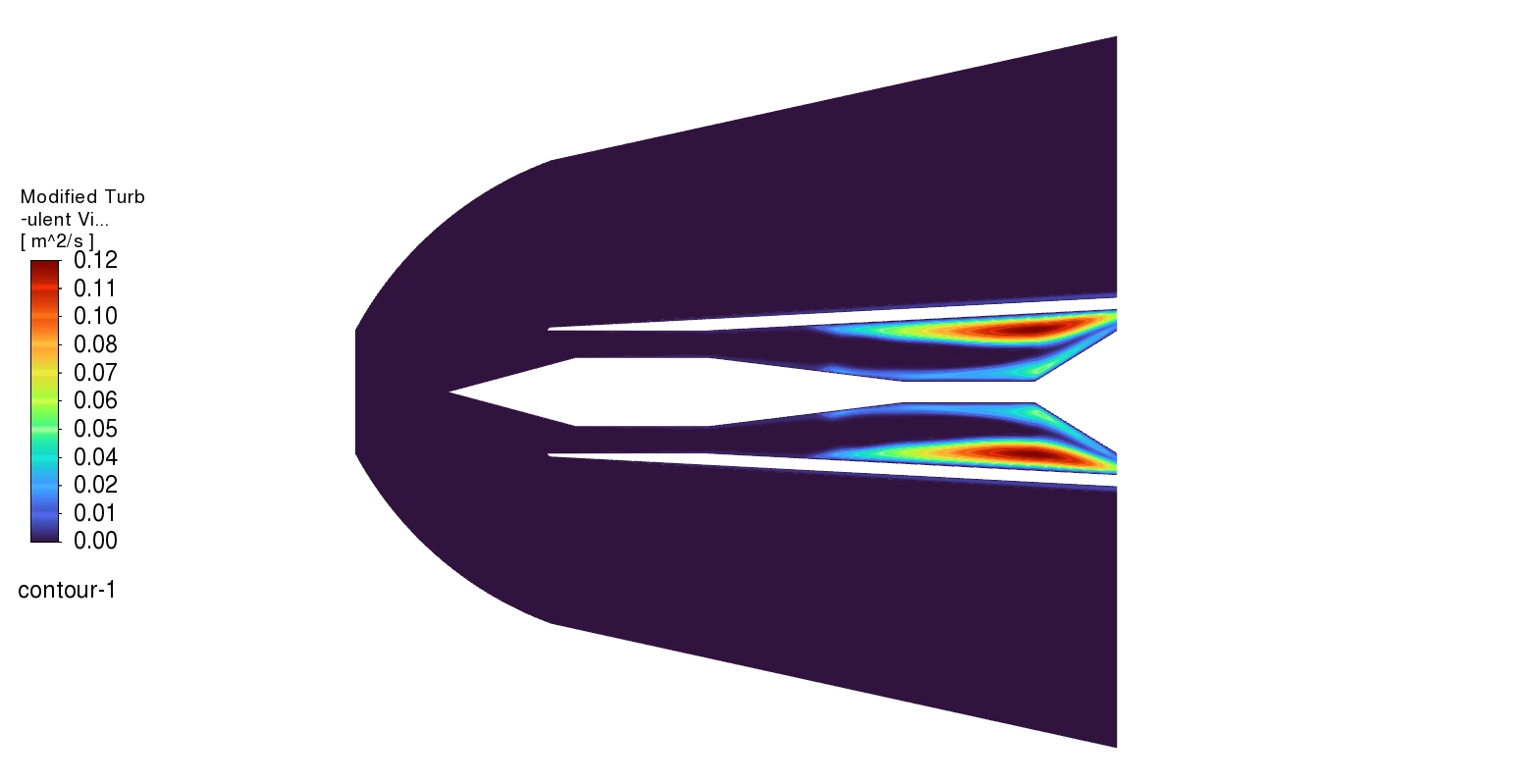
Figure 3: Velocity, pressure and Temperature contours, visualizing the incredible changes as the air crashes into the invisible shock waves.
Next, we study the Static Pressure contour to see how tightly the air is squeezed. Jet engines need thick, heavy air to create strong pushing power. The air outside the airplane is very thin and weak, sitting at a low pressure of 27,635 Pa. However, when the fast wind smashes into the shock waves, it acts like a car hitting a wall; the air piles up and squeezes together. In the middle of the tube, the pressure jumps quickly to 173,000 Pa. By the time the air reaches the very end of the tube, the pressure hits a massive maximum of 289,970 Pa. This means the tube successfully made the air almost six times thicker and stronger. Engineers use this exact number to guarantee the engine will have enough heavy air to push the fighter jet forward with maximum force.
Finally, we must look at the Static Temperature conotur to find the hidden danger of heat. In simple physics, when very fast objects suddenly stop moving, their movement energy magically turns into fire and heat. The wind starts very cold at 254.02 K. But after the air crashes through the braking shock waves, the temperature quickly jumps up to 450 K. The most dangerous discovery is right at the very sharp front tip of the center cone. Here, the wind stops completely. The computer picture glows bright red at this exact spot, reaching an extreme burning temperature of 536.35 K. By finding this exact hot spot in the CFD simulation, the factory learns a life-saving lesson. They know they cannot build that front tip out of cheap plastic or weak aluminum. They must buy very strong, heat-resistant metal so the tube does not melt or break off during a fast flight.
Key Takeaways & FAQ
- Q: Why does a jet engine need a Supersonic Intake?
- A: Jet engines cannot burn fuel if the wind is too fast; the fire will blow out. The intake tube creates shock waves that act like brakes to slow the super-fast wind down to a safe speed.
- Q: Why do we use the Density-based solver for this simulation?
- A: When air moves faster than sound, it gets squeezed and changes its weight and heat very quickly. The Density-based solver is a special math tool built exactly to calculate this squeezed (compressible) air.
- Q: Why does the front tip of the intake get so hot (536.35 K)?
- A: When extremely fast wind (686 m/s) hits the solid metal tip, it stops moving instantly. In physics, all that fast movement energy immediately turns into intense heat.






Reviews
There are no reviews yet.