
Vertical axis wind turbines (VAWT) capture wind from any direction. The modern Gorlov helical design uses twisted blades. This unique shape prevents the harsh shaking seen in older flat-blade models. But capturing heavy storm wind has a hidden cost. The fast air rips away from the trailing edges. It creates a violent, swirling wake. This turbulent wake shakes the physical metal. It also generates a loud, humming acoustic noise. Communities reject wind farms that hum constantly. Designing a machine that is both powerful and completely quiet is the biggest hurdle in modern renewable energy CFD simulation engineering.
The objective of this project is to use ANSYS Fluent to predict the aerodynamic sound levels and calculate the physical blade stress under heavy wind loads. By mapping these invisible forces, engineers can reinforce the weak connection joints and redesign the blade tips to quiet the turbine before manufacturing. This requires a complicated 2-way FSI analysis.
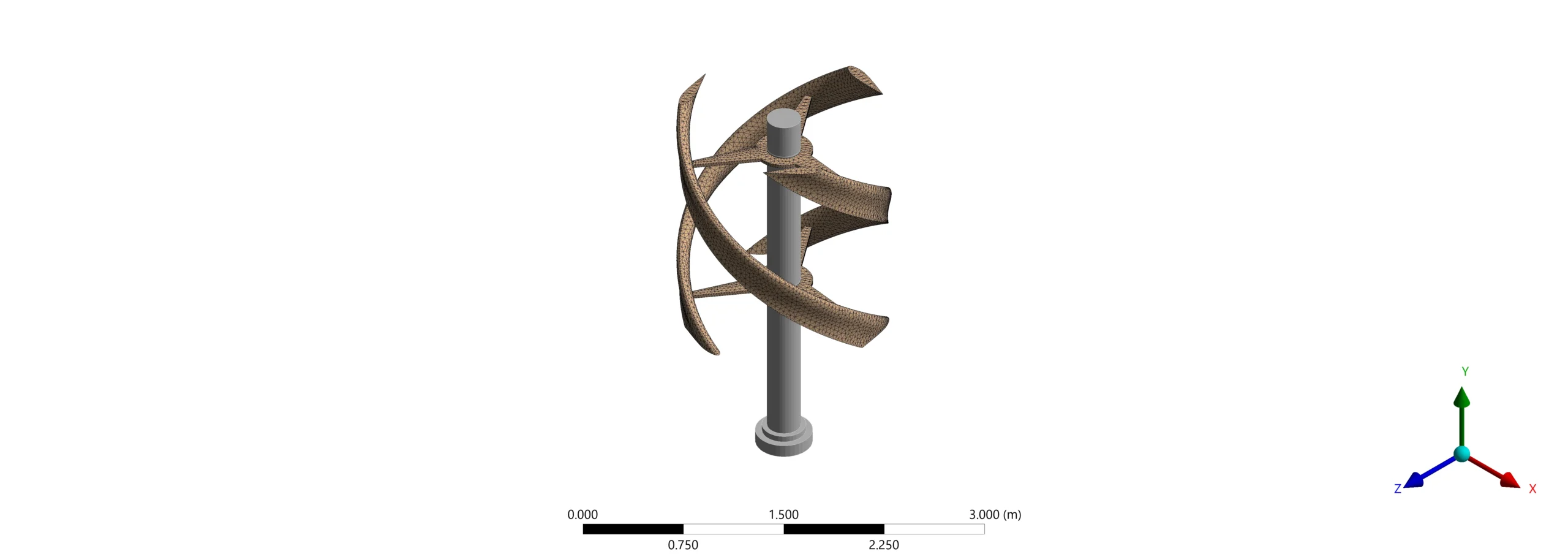
Figure 1: The 3D geometry of the Gorlov helical wind turbine featuring three twisted vertical blades.
Simulation process: 2-Way FSI Coupling and FW-H Acoustic Setup
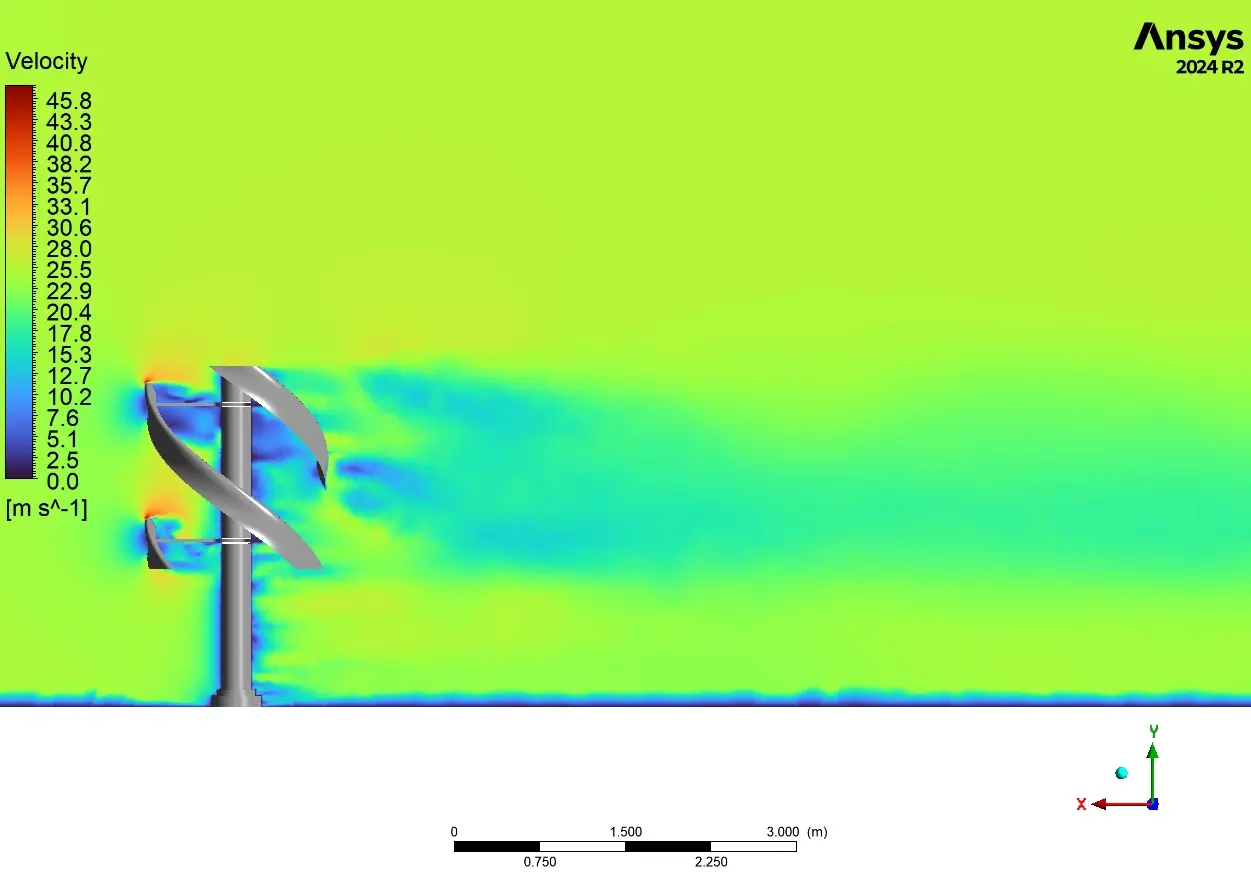
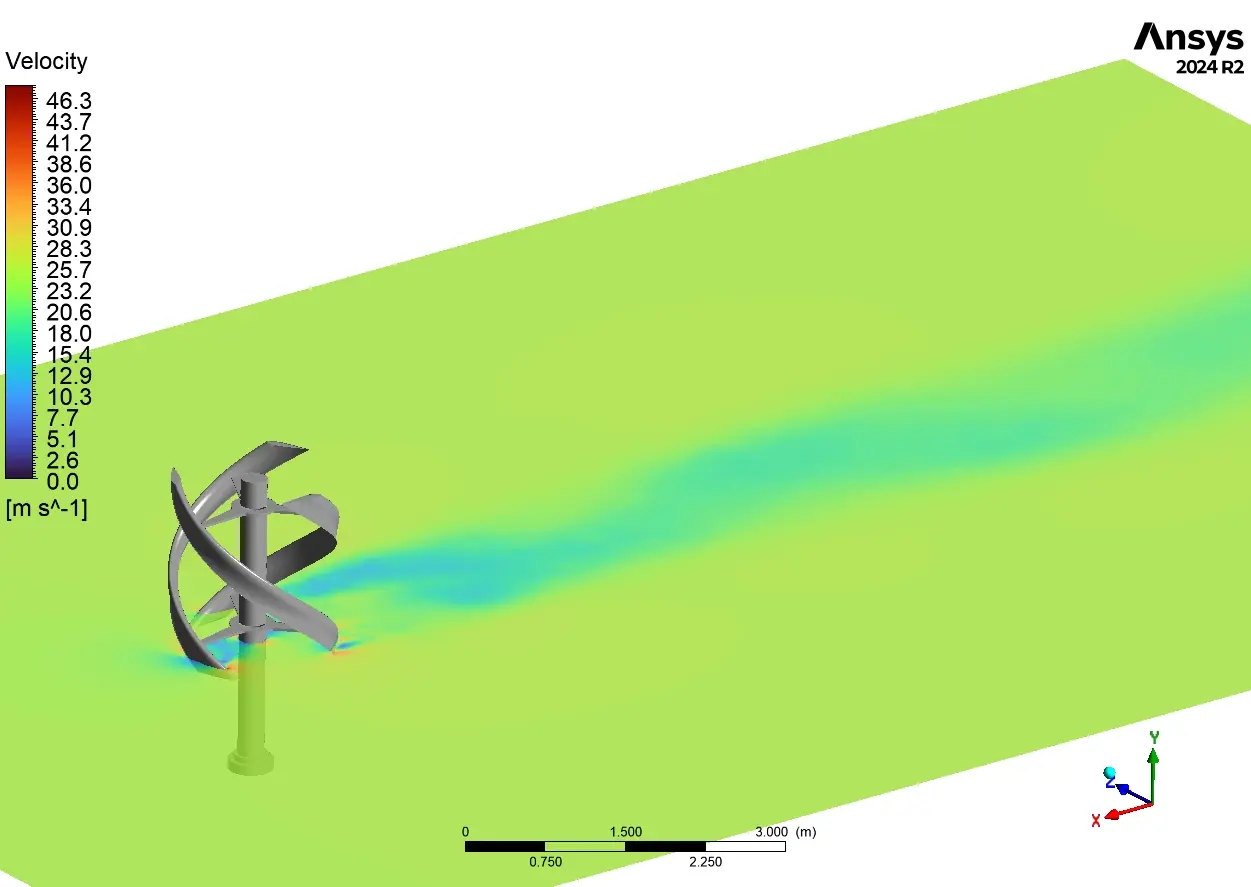
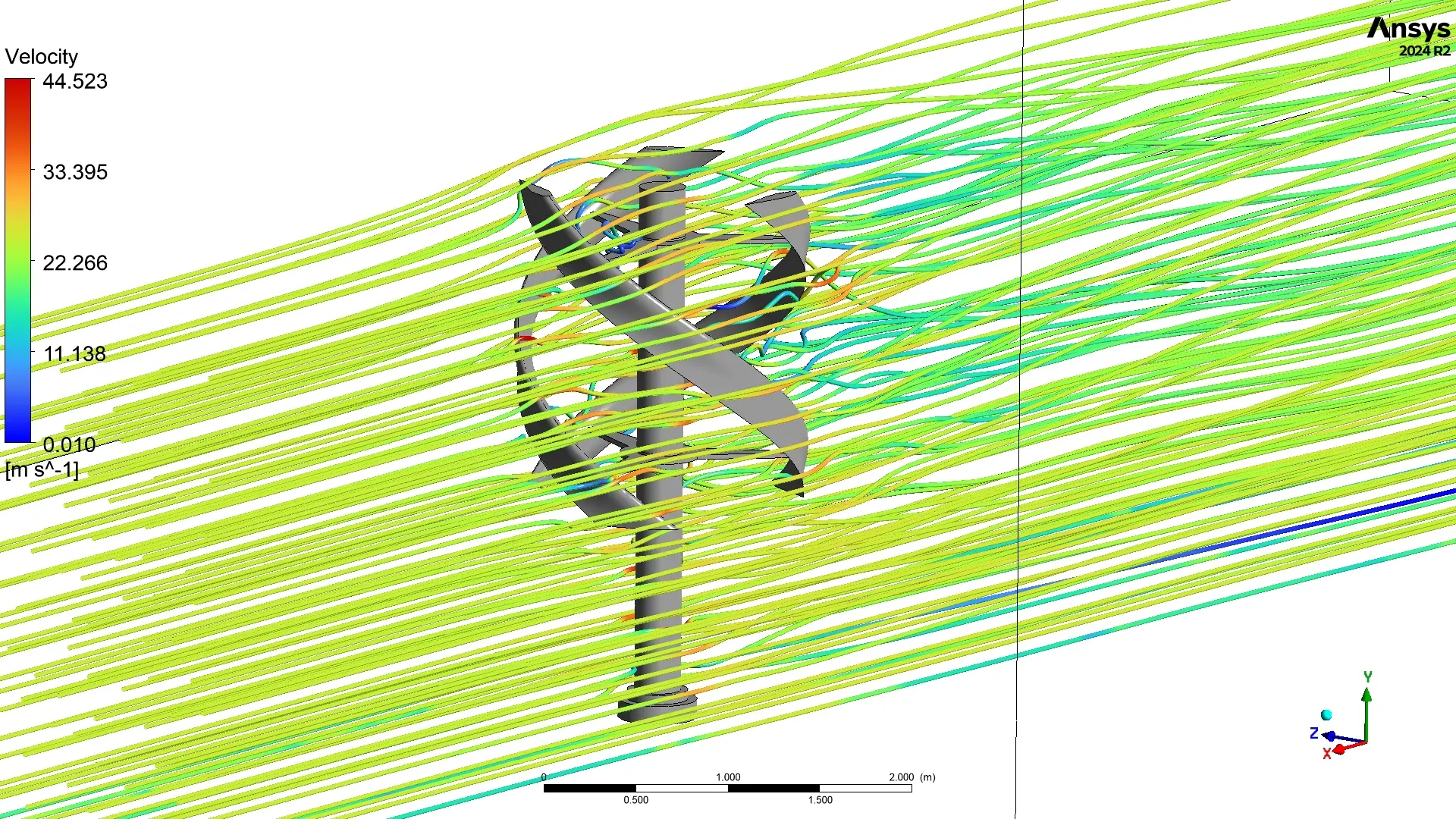
We build a high-quality computational grid around the twisted solid blades. Then, we push air toward the rotor at a continuous, heavy speed of 25 m/s. Wind hits the solid metal. The blades bend. We must capture this physical movement. To do this, we rely on a coupled 2-way fluid-structure interaction solver. ANSYS Fluent solves the unsteady fluid flow to measure the air pressure pushing on the walls. Fluent sends this pressure data directly to the mechanical solver. The mechanical solver calculates how far the solid blades bend. It sends the new, deformed shape back to Fluent. The dynamic mesh updates instantly. The wind and the metal dictate each other’s behavior continuously.
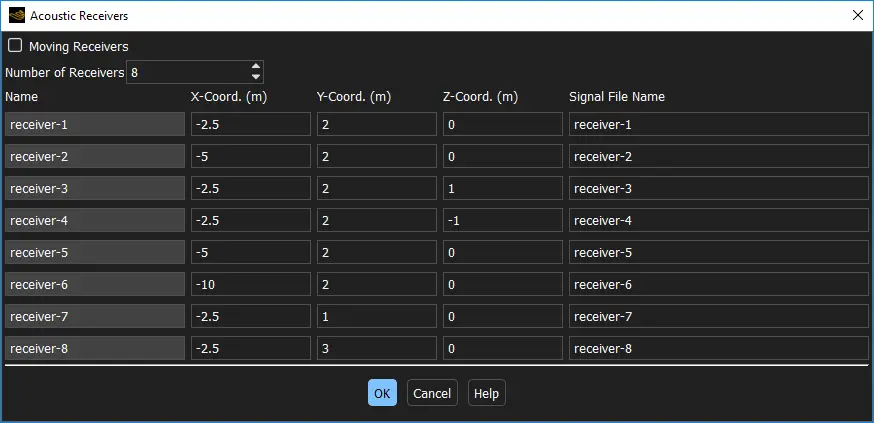
While the structure bends, we also track the invisible noise. We activate the FW-H acoustic model inside the fluid solver. This mathematical tool listens to the rapid pressure changes on the moving walls, tracking how those pulses travel outward through the air as actual sound waves. Understanding this turbulent wave propagation is the core requirement of any reliable aeroacoustics CFD simulation.
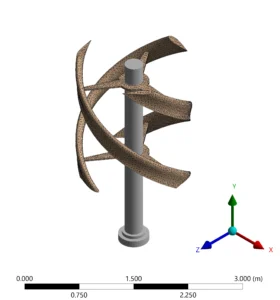
Figure 2: The computational mesh generated for the structural and aerodynamic domains.
Post-processing: Torque Generation, Structural Stress, and Aeroacoustics
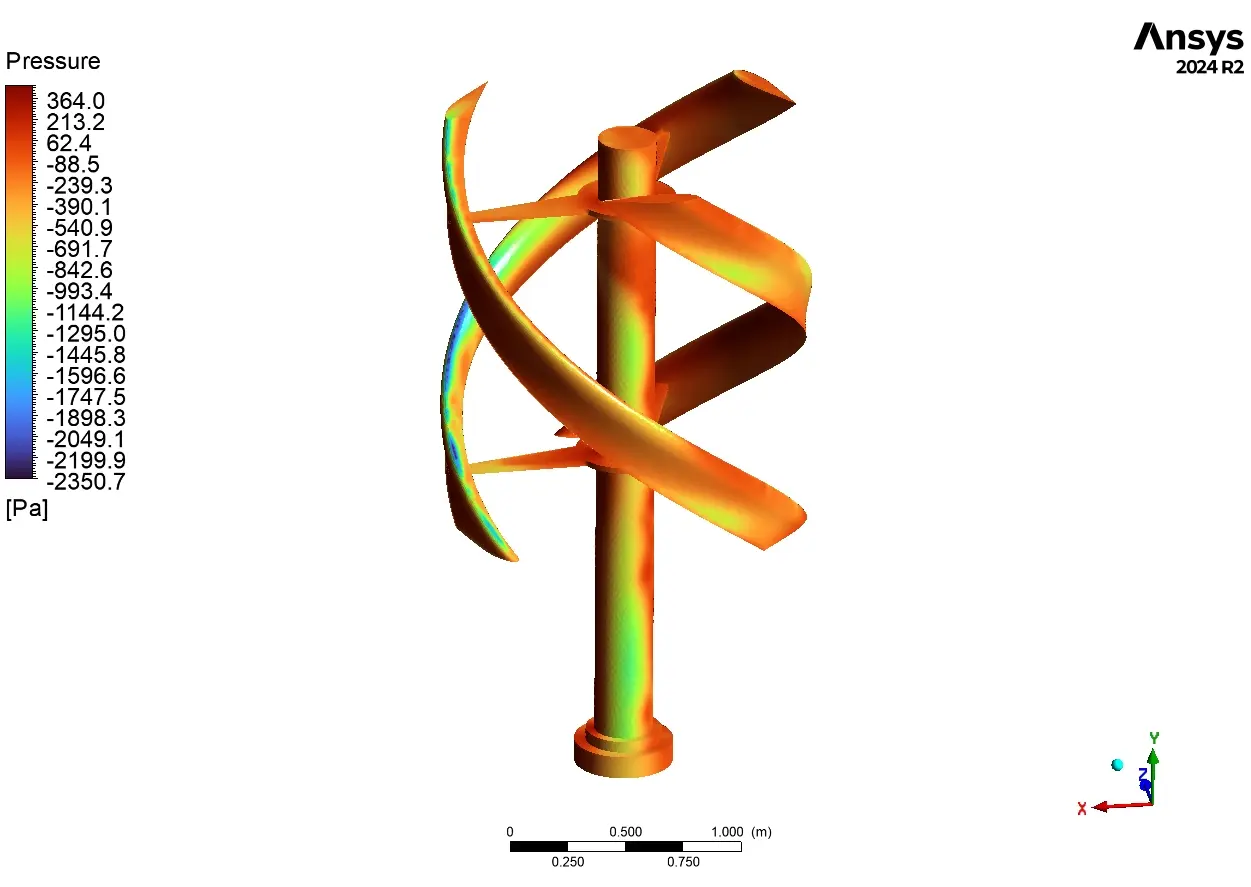
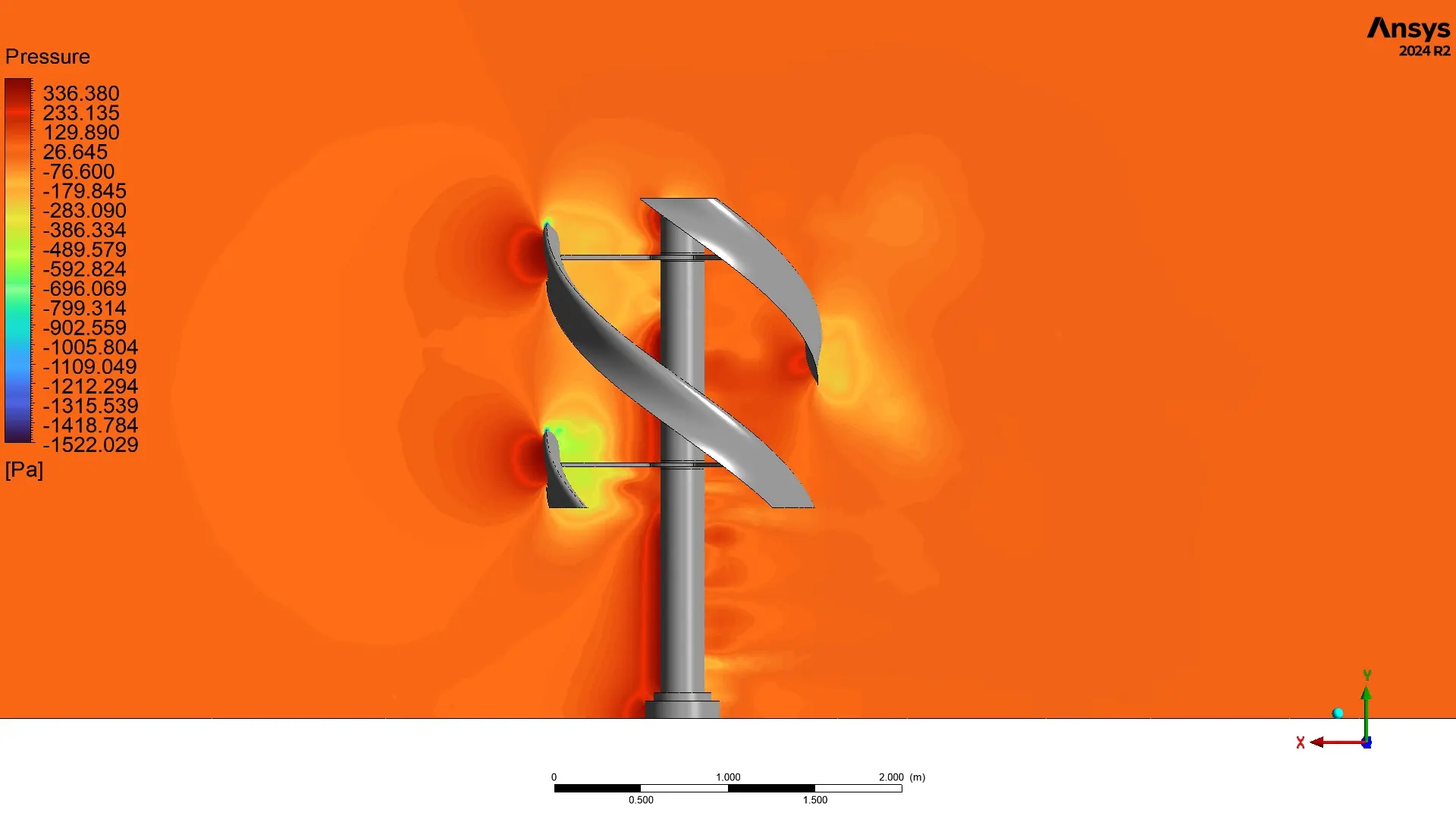
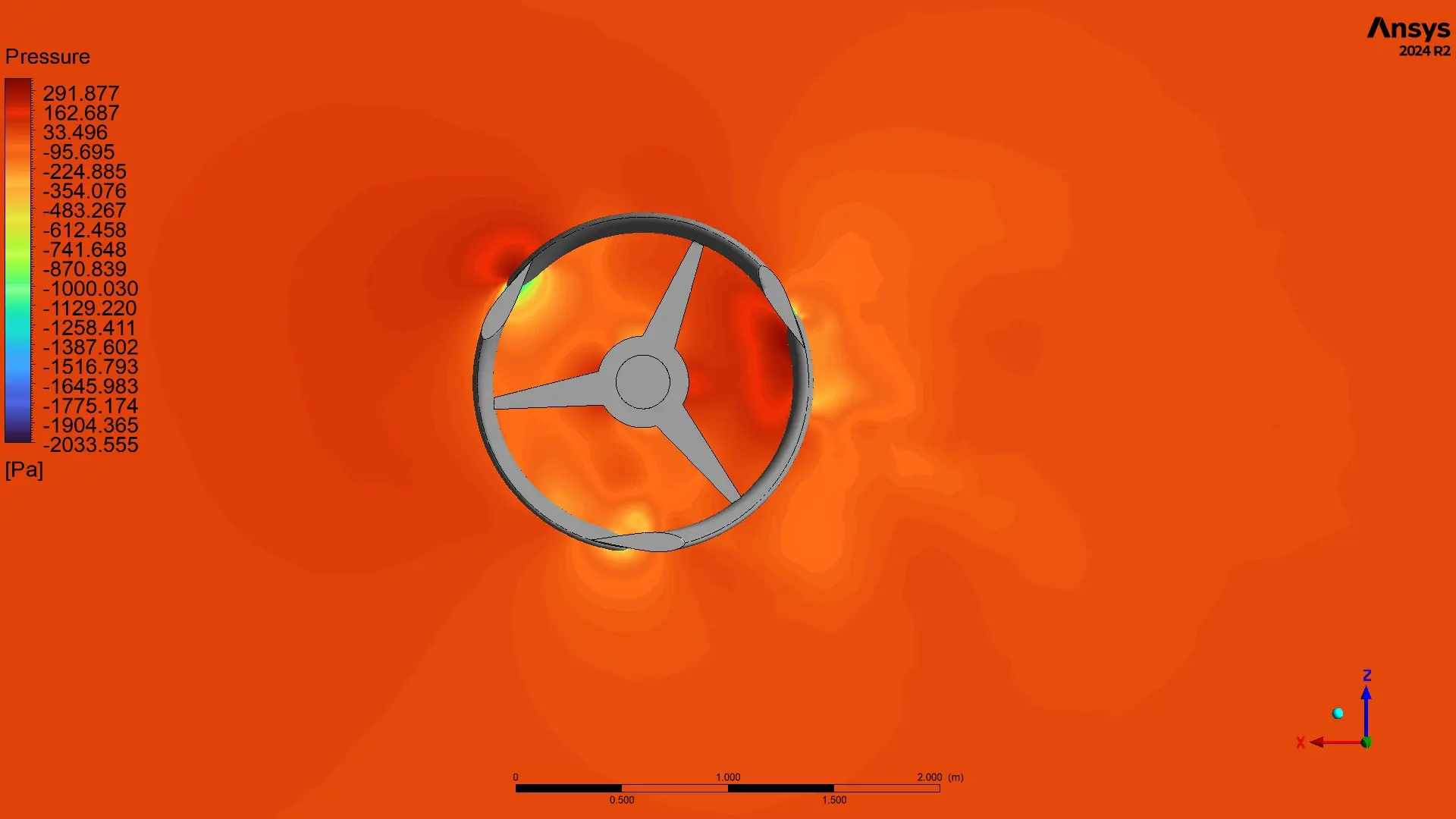
We evaluate the full engineering story by extracting the aerodynamic pressure, torque graphs, structural stress maps, and acoustic frequency plots. Let`s start by checking the static pressure contour. The incoming 25 m/s wind crashes into the front curves. This creates a high-pressure pushing zone peaking at 291 Pa. Air accelerates around the back of the blades. The pressure drops severely to a negative -2033 Pa. This massive difference is the engine. It provides the heavy push required to spin the central shaft.
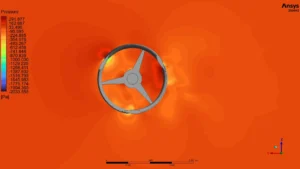
Figure 3: The pressure contour illustrating the massive driving differential between the front and back blade surfaces.
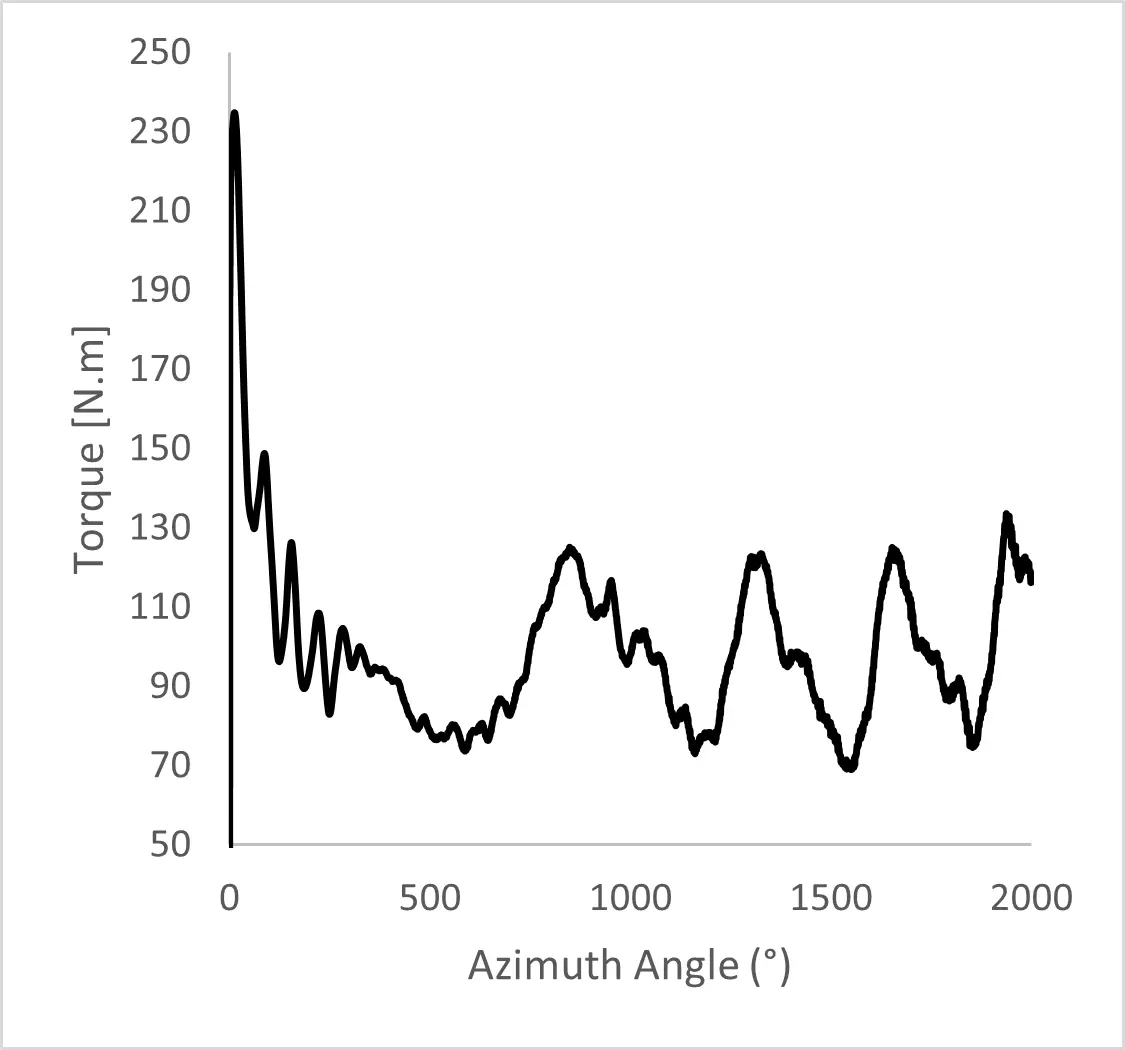
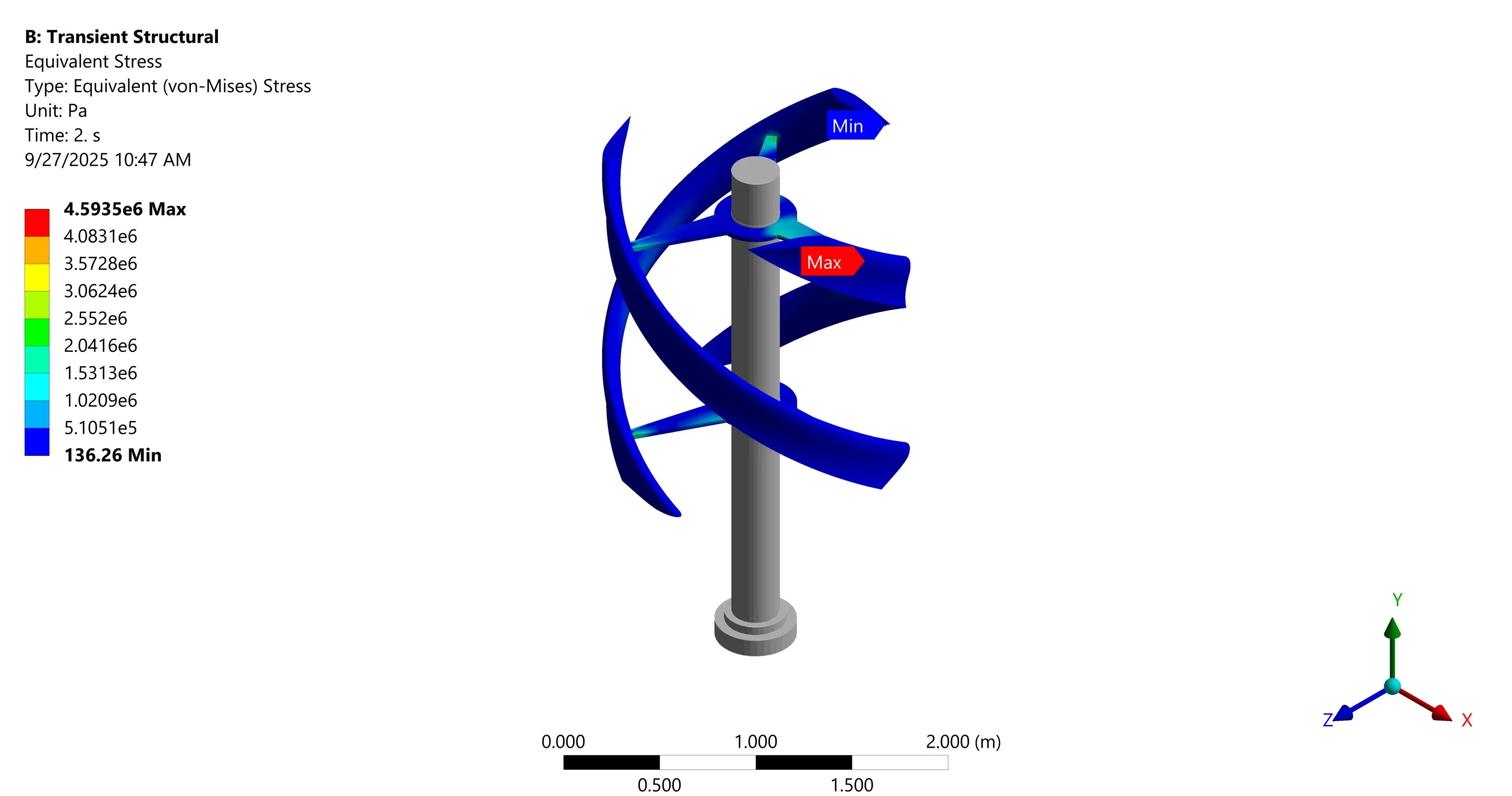
We track this spinning force on the transient torque graph. The initial wind strike is violent. The torque spikes instantly to a peak of 237 N.m. This proves the Gorlov turbine can start itself easily without an external motor. After this initial hit, the spinning stabilizes. The torque bounces constantly between 70 N.m and 240 N.m as the helical blades rotate through the air. This constant pulling damages the physical metal over time. We review the equivalent von Mises stress contour. The aerodynamic load forces the entire blade to bend outward. The material stress hits a maximum peak of 4.59 MPa. The red contour zones show this stress concentrates entirely at the small blade-hub connection joints. Engineers must add thicker steel here to stop catastrophic fatigue failure.
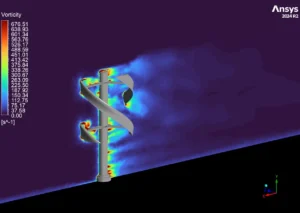
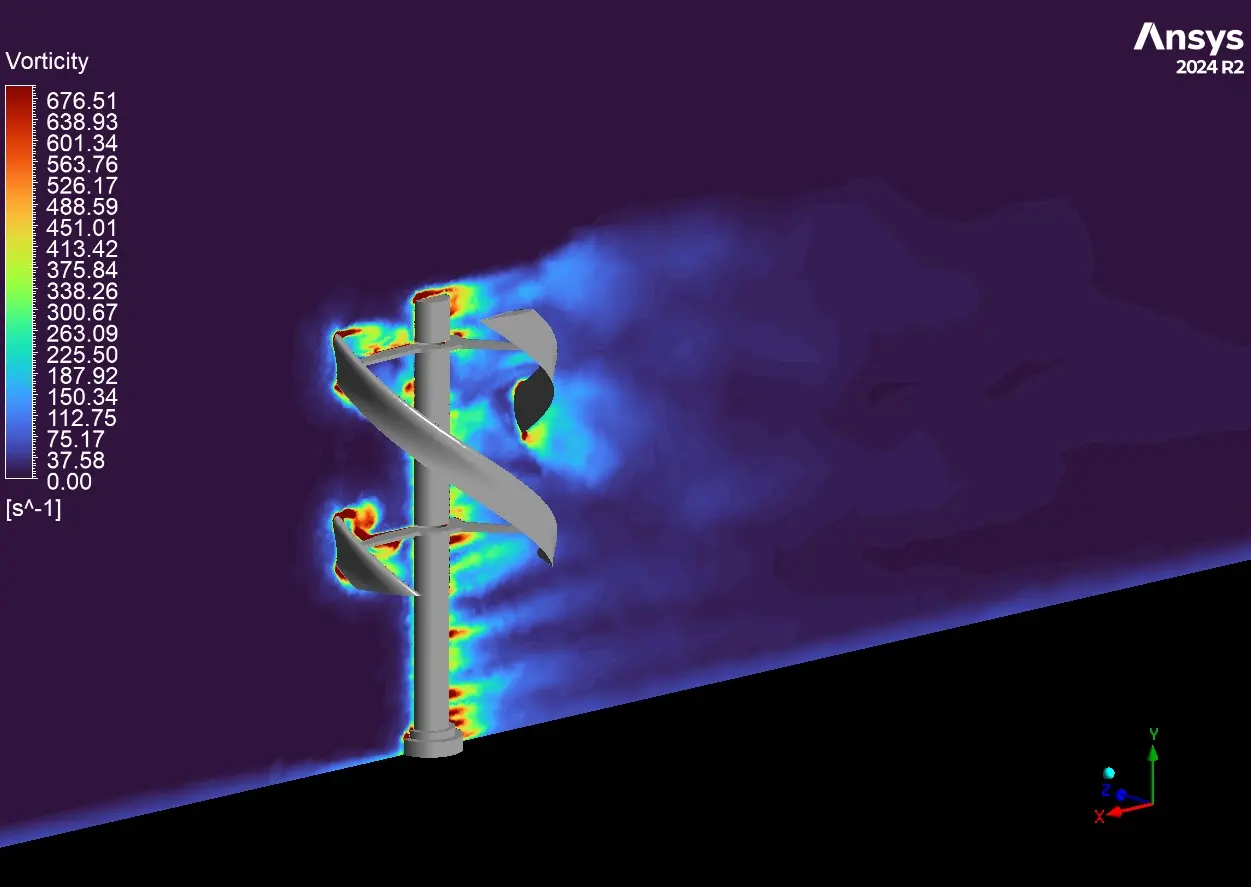
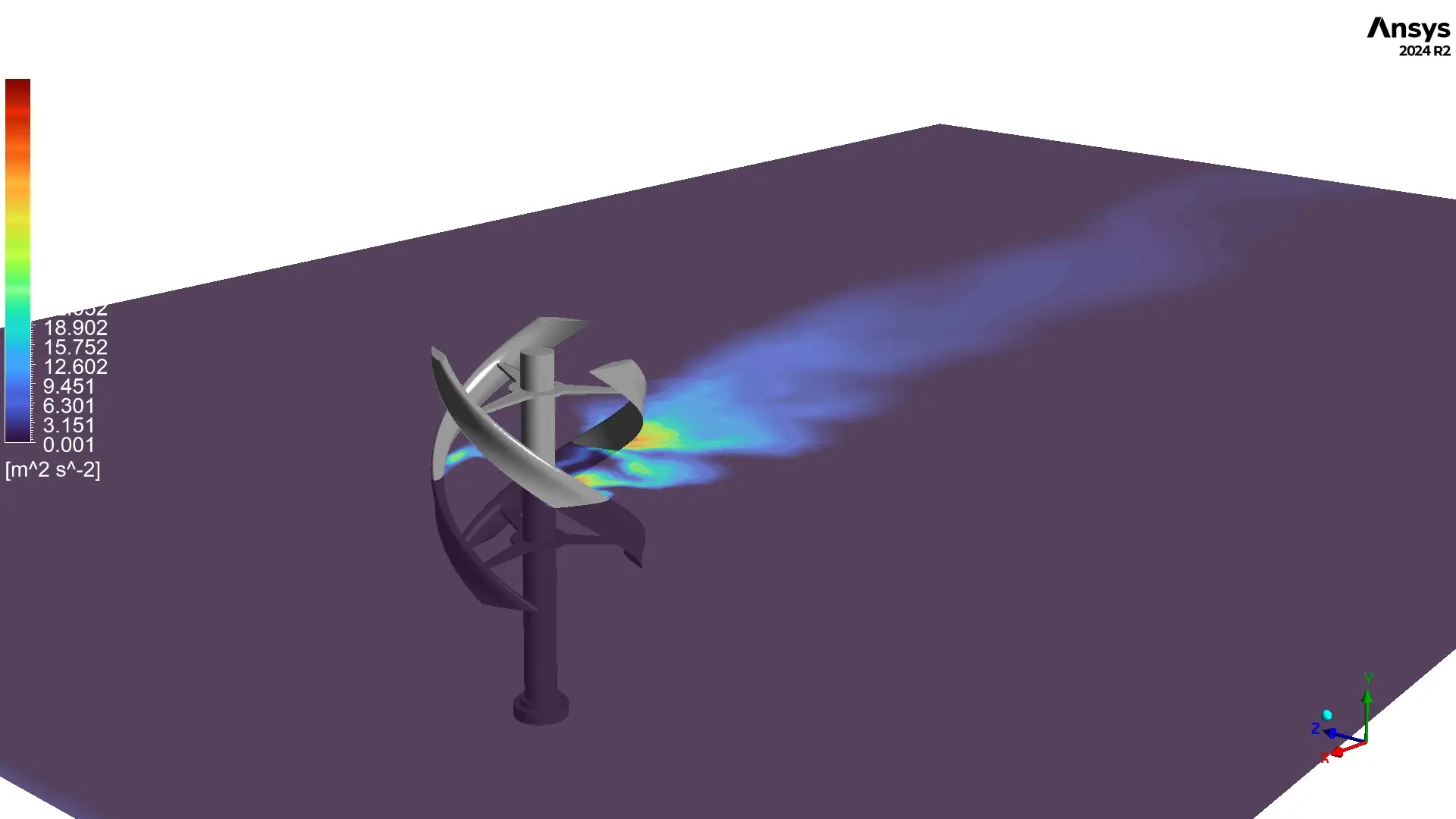
Figure 4: Vorticity contours from the Fluent simulation, visualizing the turbulent wake and vortex shedding structures that are the primary sources of Wind Turbine AeroAcoustics.
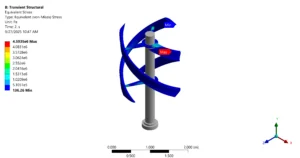
Figure 5: The structural stress contour identifying the blade-hub joints as the primary risk zone for fatigue failure.
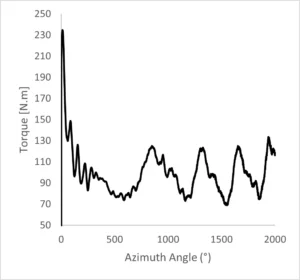
Figure 6: The torque generation graph proving the strong self-starting behavior of the helical turbine.
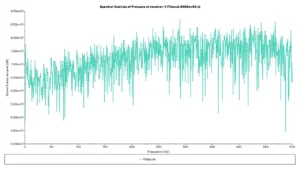
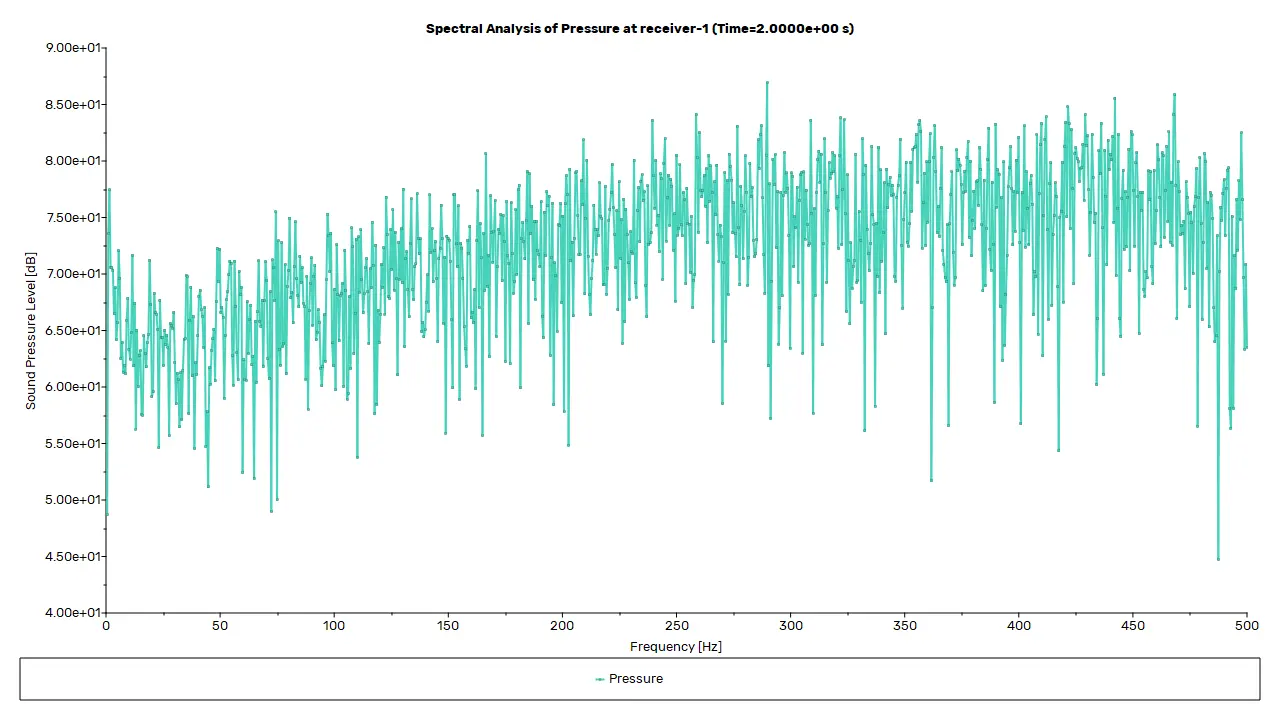
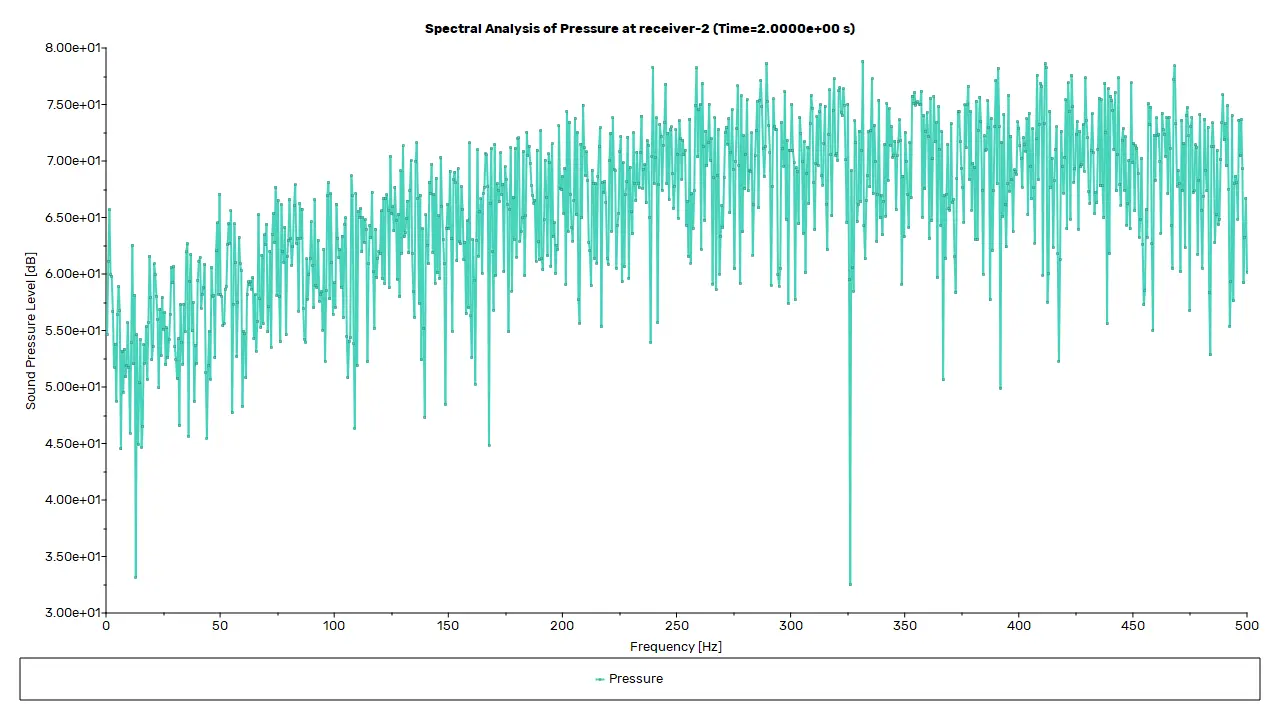
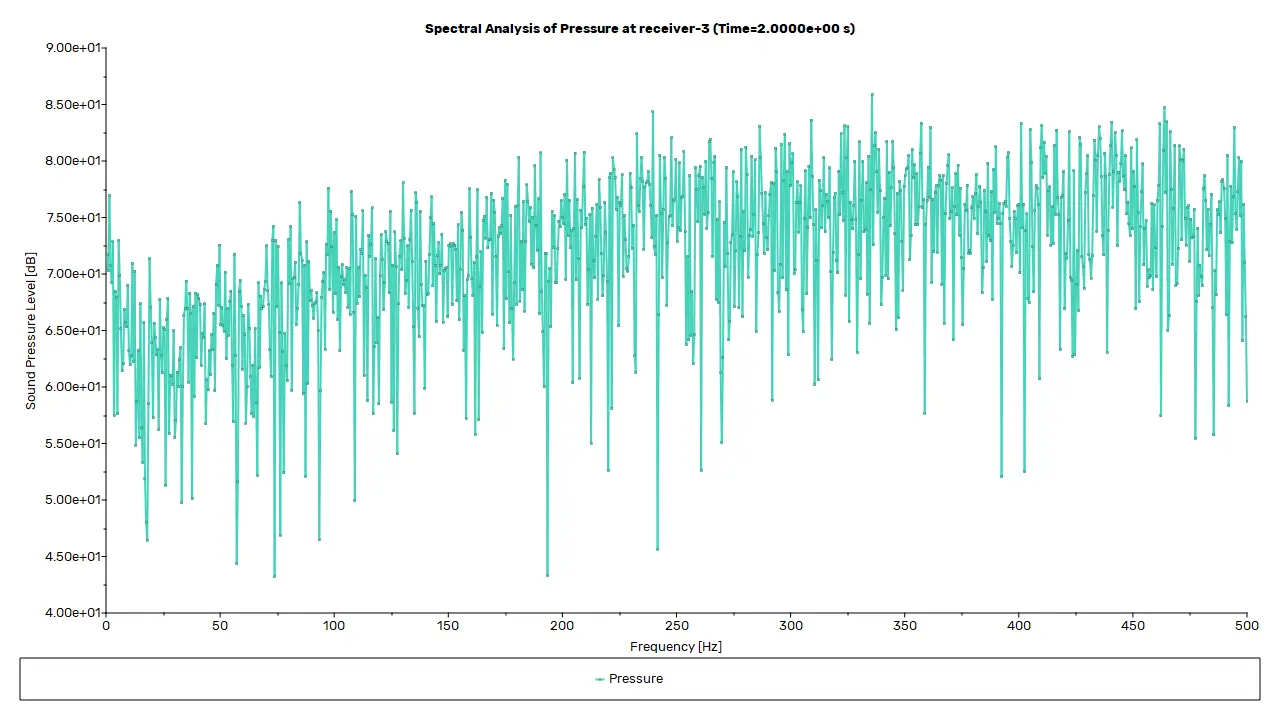
Figure 7: The acoustic spectral plot identifying the dominant 87 dB noise frequencies generated by the turbine.
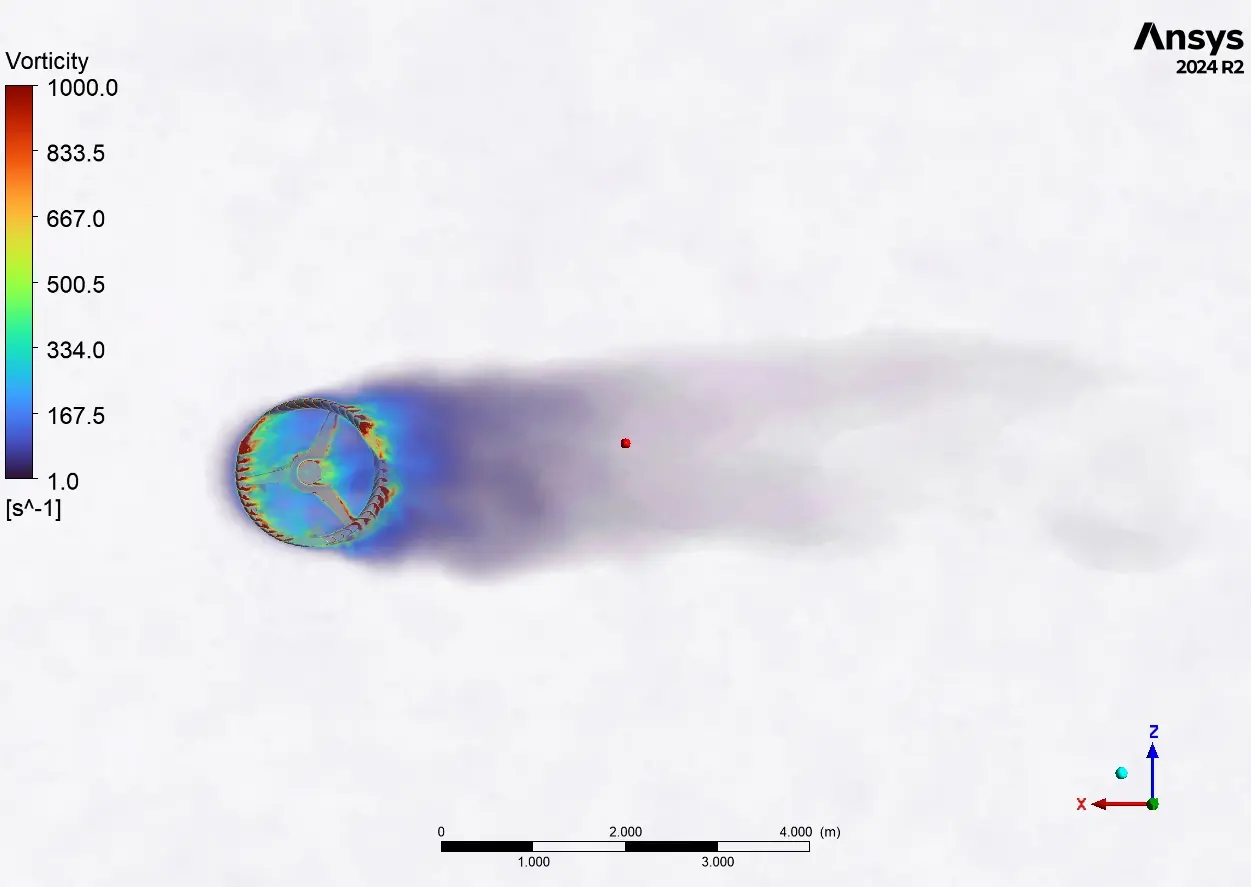
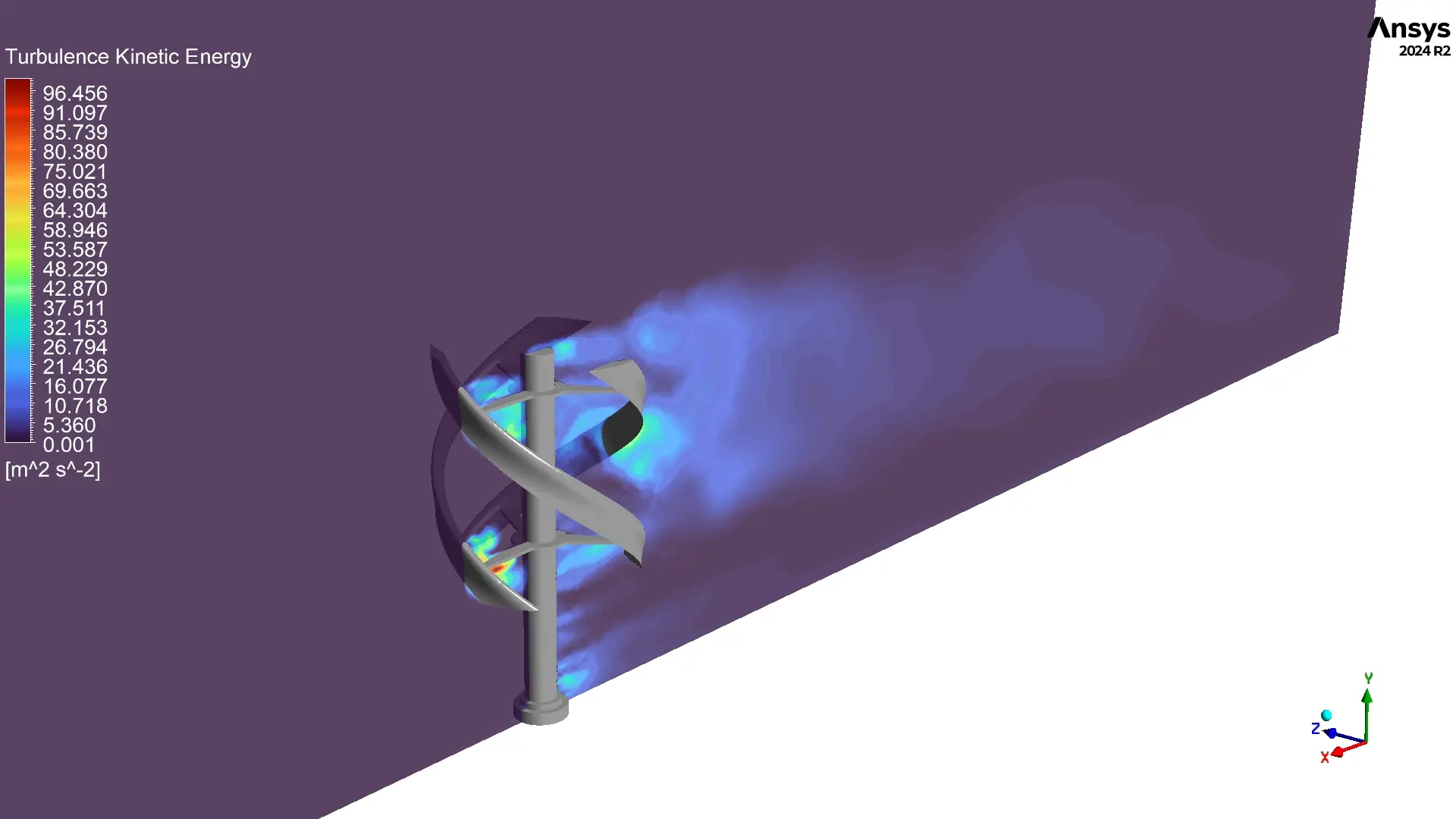
After it, we investigate the loud humming noise. We start with the vorticity contour. Fast air leaves the twisted trailing edges. It breaks apart into chaotic, swirling turbulent structures. The vorticity hits an extreme high of 676.51 s^-1. These violently spinning air pockets create rapid pressure drops. These drops travel outward as audible sound waves. The FW-H spectral analysis plot quantifies this specific noise. The graph displays the sound pressure level across different frequencies. The noise profile is broad. But we see two massive, dominant peaks occurring at 275 Hz and 450 Hz. At these specific frequencies, the noise hits an intense 87 dB. Designers must alter the blade tips to break up those specific swirling vortices. This will lower the 87 dB sound spikes for nearby communities.
FAQ About Gorlov Wind Turbine FSI & Acoustics Training
- Why does the Gorlov turbine produce loud aerodynamic noise?
- The fast-moving trailing edges tear the air apart. This creates swirling turbulent vortices reaching 676.51 s^-1. These violently spinning air pockets cause rapid pressure changes that radiate outward as humming sound waves.
- Why must we use a 2-way FSI model for this design?
- Heavy winds physically bend the thin blades. A bent blade changes how the air flows around it. The 2-way setup ensures both solvers update each other constantly to capture this real, physical feedback loop.
- Where does the physical structure face the highest risk of breaking?
- The heavy pressure differential creates a massive twisting force. The resulting maximum mechanical stress hits 4.59 MPa. This severe stress concentrates entirely at the small connection joints where the blades meet the central hub.






Reviews
There are no reviews yet.