

When we look at a fast-moving river, smoke rising from a chimney, or wind blowing past a building, we see chaotic and messy fluid motion. We call this irregular behavior turbulence. However, this chaotic motion does not always form in the same way. The physical cause behind the mixing can be very different depending on the environment. To understand fluid behavior better, we classify these chaotic motions into specific types of turbulence. In this guide, we will explore the main classifications of turbulent flow in the shortest and simplest way possible.
What Are the Different Types of Turbulence? (Overview)
Before we classify the different types of turbulence, we should understand what they all have in common.
Turbulence is a state of fluid flow where particles move in random, chaotic directions. Instead of moving in straight lines, the fluid forms swirling pockets of motion. Because of this random motion, turbulent flow mixes fluids very quickly and loses energy fast. Almost every type of turbulence starts the same way. A fluid usually begins moving in a smooth, organized manner. We call this laminar flow. However, as the fluid moves faster or encounters an obstacle, the flow becomes unstable. We use a parameter called the Reynolds number to predict this change. When the Reynolds number becomes high enough, the smooth flow breaks down and becomes turbulent.
While the final chaotic result always looks similar, the physical trigger that causes the flow to break down can be very different. In fluid mechanics, we name the turbulence based on what caused this initial breakdown. Now we group them.
A Quick Look at Turbulence Types
When people ask about turbulence types, they often get different answers. Some sources say there are three types, while others list four or more. This confusion happens because engineers, physicists, and pilots classify chaotic flow using different logical systems.
To make things simple, we categorize turbulence based on how it forms and where it happens. Here are the three main classification frameworks used in fluid mechanics:
| Classification Basis | Main Categories | Used By |
|---|---|---|
| Physical Cause | Mechanical, Convective, Shear, Wall-Bounded | Engineers & CFD |
| Flow Structure | Isotropic, Anisotropic, Homogeneous | Fluid Dynamics Theory |
| Intensity Level | Light, Moderate, Severe, Extreme | Aviation |
When people talk about the 4 main types, they usually mean mechanical, convective, frontal, and wind shear. These are mostly atmospheric terms. In this guide, we will focus on the physical causes that matter most in fluid mechanics and engineering.
Mechanical Turbulence
The most common type of chaotic flow we see every day is mechanical turbulence. This happens when a moving fluid crashes into a physical obstacle or moves over a rough surface.
When a fluid flows smoothly, it wants to travel in straight lines. If a solid object blocks the path, the fluid must go around it. However, if the object has a blunt shape or sharp corners, the fluid cannot stick to the solid surface. Instead, the flow separates from the object. This separation creates a low-pressure zone directly behind the obstacle. We call this empty space a wake. Fast-moving fluid from the outside rushes into this wake, rolling up into swirling eddies. You can see this effect when wind blows past a tall building, or when water flows over a rock in a river.
In fluid dynamics, we study this behavior closely around shapes like cylinders and spheres. Often, the eddies detach from the object in a repeating pattern called vortex shedding. Engineers use a parameter called the Strouhal number to predict how fast these vortices will shed. Whether it is wind blowing over irregular mountain terrain or liquid passing a closed valve in a pipe, the physical cause remains the same. The physical blockage forces the fluid to break down into chaotic motion.
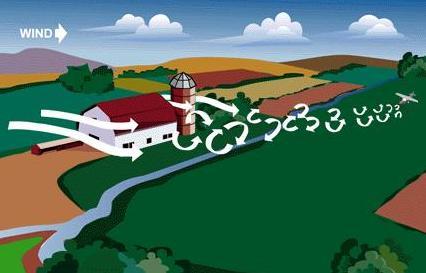
Figure 1: Mountain waves are turbulent eddies that are found downwind from mountain ridges (Image taken from weather website)
Convective Turbulence / Thermal Turbulence
Another major cause of chaotic fluid motion is temperature. When a fluid experiences uneven heating, it creates a flow driven by buoyancy, which we call convective turbulence / thermal turbulence.
The physics behind this are very simple. When a surface heats the fluid directly above it, that fluid expands and becomes lighter. Because it is less dense, the warm fluid naturally rises. At the same time, the cooler, heavier fluid from above sinks down to take its place. This continuous cycle of rising updrafts and sinking downdrafts creates strong vertical currents. As these opposite currents crash into each other, they break the smooth flow apart into swirling eddies.
We can observe this behavior easily. It happens when the sun heats the ground, causing the warm air to rise and mix unsteadily in the atmosphere. It also happens in a simple pot of boiling water or inside industrial heat exchangers. The greater the temperature difference in the fluid, the stronger and more chaotic the vertical mixing becomes.
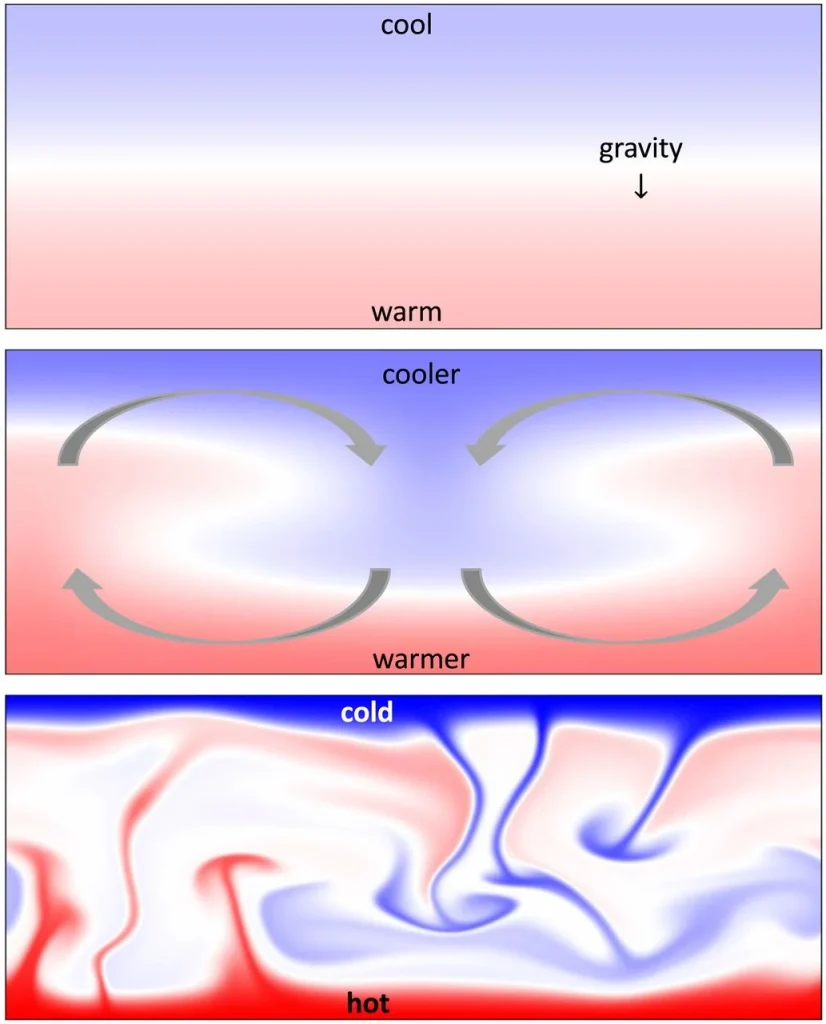
Figure 2: Snapshots of the temperature field in 2D Rayleigh–Bénard convection simulations.
Shear Turbulence
The third major cause of chaotic flow is a difference in fluid velocity. We call this shear turbulence.
This type of flow happens when two adjacent layers of fluid move at different speeds or in different directions. Because fluids have viscosity (internal friction), the faster layer drags against the slower layer. This friction causes the boundary between the two layers to become unstable, eventually rolling up into swirling eddies.
We see this often in the atmosphere in the form of wind shear. For example, during a temperature inversion, a layer of warm air traps cooler air near the ground. When wind blows horizontally across this invisible boundary, the friction between the layers creates strong chaotic mixing.
Another famous example is Clear Air Turbulence (CAT). This phenomenon occurs at high altitudes when rapid jet streams interact with the slower, calmer air surrounding them. Even without any physical obstacles or vertical heat rising, the pure difference in speed is enough to break down the smooth flow. In fluid mechanics, analyzing these velocity differences is essential for understanding how mixing layers behave.
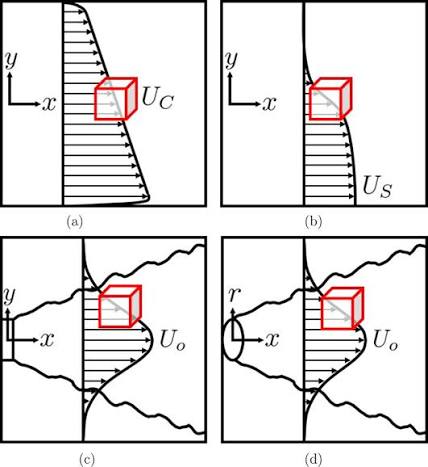
Figure 3: Different turbulent free shear flows considered for the current study with the computational domain ( Image from Dhandapani et al. paper)
Free Shear Turbulence
When shear turbulence happens out in the open fluid, completely away from any solid walls or surfaces, we call it free shear turbulence. Because there are no solid boundaries to trap the flow or force it into a specific shape, the chaotic eddies can grow and spread freely in all directions. A classic example is water shooting out of a high-speed nozzle into a calm pool, or a jet exhaust blasting into the open air.
As the fast-moving jet enters the still fluid, the edges where the two fluids meet create a strong free shear layer. This layer spreads outward as it moves downstream, grabbing the surrounding quiet fluid and pulling it into the chaotic mixing zone. Engineers study this specific type of unconfined flow closely when designing fuel injectors or burners, as the lack of walls completely changes how the turbulent energy behaves.
Wall-Bounded Turbulence
In contrast to free shear, wall-bounded turbulence happens when a moving fluid is directly restricted by a solid boundary. This is extremely common in engineering, such as water flowing inside a pipe, or air rushing over an airplane wing. When a fluid flows over a solid object, the fluid particles directly touching the surface completely stop moving due to friction. However, the fluid layers just above it continue moving fast. This creates an intense area of shear right next to the wall.
In this near-wall region, the chaotic flow organizes into specific layers, such as the viscous sublayer (where fluid stickiness dominates) and the log-law region. Instead of just being random, the flow creates organized shapes called coherent structures, like high-speed streaks and swirling hairpin vortices.
These tiny near-wall vortices are incredibly important because they create skin-friction drag. Understanding wall-bounded turbulence allows engineers to design smoother surfaces, reduce aerodynamic drag on cars, and improve heat transfer in industrial cooling pipes.
Wake Turbulence
When a solid object moves through a fluid, or when a fluid flows past an obstacle, it leaves a chaotic trail behind it. We call this disturbed trail wake turbulence. You have probably seen this effect when a fast boat moves through a lake. The boat pushes the water aside, leaving a swirling, bumpy path behind it. The same physical process happens in the air. When an object forces fluid to separate, it creates an empty zone of low pressure directly behind it.
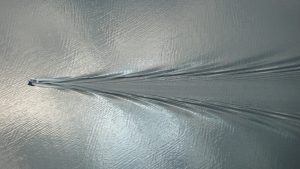
Figure 4: a great example of wake turbulence forming behind a boat
The surrounding fluid quickly rushes into this low-pressure zone, rolling up into tight, spinning vortices. A classic example is the spinning air that forms at the ends of an airplane wing as high-pressure and low-pressure air mix. However, in engineering, we see wakes behind almost any blunt shape, from a tall skyscraper in high winds to a sensor probe placed inside a water pipe. Because wake turbulence carries a lot of chaotic energy, it requires time and distance for the swirling eddies to lose their strength and fade away.
Isotropic Turbulence
In the real world, chaotic flow is usually pushed in a specific direction by solid walls, gravity, or heat. However, in theoretical physics, we study an idealized state called isotropic turbulence.
“Isotropic” means equal in all directions. In this perfectly balanced theoretical state, the swirling eddies have no preferred direction or orientation. There is no wind shear, no thermal rising, and no solid walls to influence the flow. If you measured the chaotic energy moving up and down, left to right, or front to back, the statistical results would be identical.
While pure isotropic turbulence rarely exists in nature, it is a critical building block for engineers. Because the math is much simpler without directional bias, researchers use this concept to create standard mathematical frameworks. It allows physicists to study how kinetic energy breaks down from large swirls into microscopic heat.
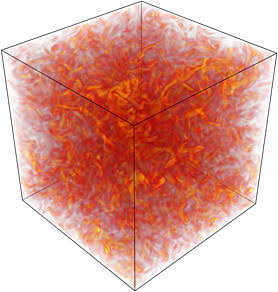
Figure 4: decay of homogeneous isotropic turbulence
Turbulence Categories (Light to Extreme)
While researchers study the physics of microscopic eddies, meteorologists and aerospace engineers also classify chaotic flow on a much larger, practical scale.
To understand how strong turbulent forces act on a physical structure (like an aircraft or a wind turbine), the industry groups turbulence into four main intensity categories:
- Light Turbulence: The flow causes slight, erratic changes in altitude or attitude. The forces are very small, causing only momentary bumps.
- Moderate Turbulence: The flow creates stronger, rhythmic impacts. A structure or vehicle experiences a definite physical strain, but it remains completely stable and in positive control.
- Severe Turbulence: The chaotic flow causes large, abrupt changes in aerodynamic forces. Vehicles may momentarily lose control, and the structural stress is very high.
- Extreme Turbulence: The fluid motion is so violent that it becomes practically impossible to control a vehicle. The physical forces are powerful enough to cause severe structural damage or complete failure.
Instead of relying on how passengers feel to guess these levels, modern engineers use a parameter called the Eddy Dissipation Rate (EDR). The EDR provides a pure mathematical measurement of how fast the chaotic energy breaks down in the air, giving a precise, machine-independent value for turbulence intensity.
Conclusion
Understanding the different types of chaotic flow is the first step to mastering fluid mechanics. Whether the mixing is caused by solid walls, uneven heating, or differences in fluid speed, it completely changes how forces and energy behave in a system. By learning how to identify these physical behaviors, engineers can create better aerodynamic designs, optimize heat transfer, and set up highly accurate Turbulence CFD simulations. The key is knowing which specific flow physics are at play in your engineering problem. Discover step-by-step guides for simulating chaotic flows using advanced numerical models like LES and RANS. We at CFDLAND have conducted numerous CFD simulations using ANSYS Fluent. Trust our experts and order your turbulent flow simulation projects at ORDER CFD PROJECT.