

This article explains the difference between verification and validation in simulation. Many new students and researchers use these two words as the same thing. However, in the academic world, they have very different meanings and purposes. Verification asks if the model is solved correctly, while validation asks if the model represents real physical behavior. In research, both steps are required to trust the results of a numerical model, a CFD simulation, or a laboratory test. This article explains their scientific definitions and their role in computational studies.

Figure 1: Conceptual difference between verification and validation in numerical modeling
What Is Verification?
Verification means checking that a numerical model is solved correctly. In the academic world, verification answers one simple question: Are we solving the equations right? It does not check real physics or experiments. Instead, it focuses on the mathematical equations, the numerical method, and the computer code.
In numerical simulation, verification includes checking the boundary conditions and numerical errors. Common verification steps are grid convergence, comparing data with an analytical solution, and doing a Grid Independence Test in ANSYS Fluent. If verification is not done, the simulation results may look correct, but they can be numerically wrong and unreliable.

Figure 2: Typical verification steps used in numerical and CFD studies.
What Is Validation?
Validation means checking that a model represents real physical behavior. In the academic world, validation answers one clear question: Does the model match reality?
CFD validation is done by comparing numerical results with experimental data, laboratory measurements, or trusted results from scientific articles. We use real data such as pressure, velocity, or temperature. If the numerical model shows good agreement with this real data, the model is valid. Validation does not check the code. Instead, it checks the physical accuracy of the model. Without validation, a model may be numerically correct but physically wrong.
The Model Development Process
A simulation project moves through different stages. According to academic standards, each stage has its own type of validity check:
- Conceptual model validation: Checking that the theories, assumptions, and physics behind the model are reasonable for the project.
- Computerized model verification: Checking that the code and numerical setup correctly reflect the conceptual model.
- Operational validation: Checking that the model’s final output matches real system behavior within an acceptable range of accuracy.
- Data validity: Ensuring the input data used to build and test the model is correct.
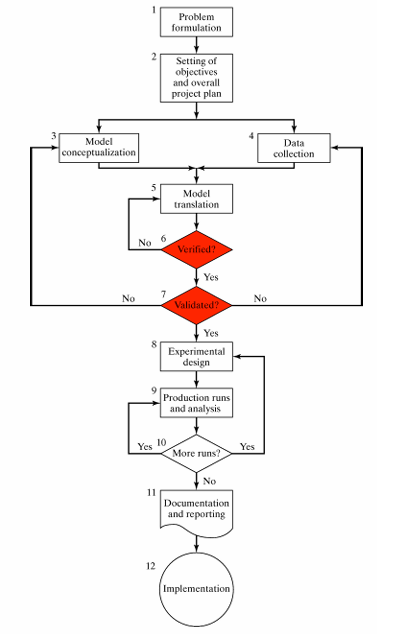
Figure 3: Flowchart shows all steps to fully tackle a simulation problem
Calibration vs Validation: What’s the Difference?
Many people confuse calibration vs validation. Calibration is the iterative process of adjusting a model to better match real system data. You change settings until the results are close. Validation is the overall process of confirming that a model (after calibration) is an acceptable representation of reality. Calibration happens during development, while validation is the final confirmation.
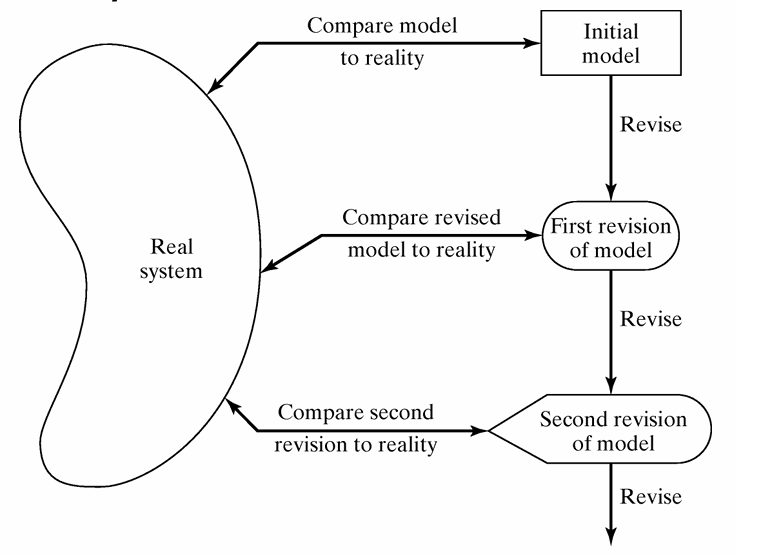
Figure 4: The iterative process for calibration. This process normally requires several revision
Free Simulation Tutorials with Validation Practice
Validation is easier to understand when readers see it in practice. For this reason, we provide two free simulation courses that show how validation is applied in real numerical models. These tutorials focus on comparing numerical results with trusted reference data, which is the core idea of validation.
This free tutorial presents a lid‑driven cavity CFD simulation in ANSYS Fluent. The numerical results are validated against well‑known benchmark data, which makes it a standard case for CFD validation studies in incompressible flow.
This free tutorial focuses on laminar flow over a flat plate. The CFD results are validated against the analytical Blasius solution, which is widely used as a reference for boundary layer validation in fluid mechanics.

Figure 5: CFD validation of laminar boundary layer flow over a flat plate using the Blasius solution, Validation of CFD results using the classical lid‑driven cavity benchmark problem.
Verification and Validation in Numerical Modeling
In numerical modeling, verification checks that the mathematical solution is correct. Researchers focus on mesh independence and checking the time-step size. They also compare results with an analytical solution when available. Proper verification reduces numerical error and increases model reliability.

Figure 6: Example of mesh independence study in CFD verification.
After verification, researchers move to validation. This is the step where simulation results are compared with real data from laboratory experiments or published articles. Good agreement means the model is physically accurate. Poor agreement means the model setup or boundary conditions must be improved.
How Validation Is Commonly Done
Validation uses real and trusted sources, not guesses or visual results.
Table 1: Validation and Laboratory Modeling
| Validation Source | Description |
| Laboratory experiments | Measured data from wind tunnels, pipes, nozzles, or channels |
| Published scientific articles | Peer‑reviewed experimental or numerical benchmark data |
| Standard benchmark cases | Well‑known test cases accepted by the research community |
| Industrial test data | Measured data from real engineering systems |
Laboratory‑Based CFD Validation Examples
Gas-Solid Fluidized Bed Hydrodynamics: This case models the complex interaction between gas flow and solid particles. The CFD results are validated against laboratory measurements from published research. Key parameters like velocity fields and pressure show close agreement between numerical and experimental results.

Figure 7: Validation of CFD simulations against laboratory reference data using CFDLAND benchmark studies. Numerical results show close agreement with experimental and published solutions.
Density Current CFD Simulation: This example studies density-driven flow, which is common in environmental applications. The simulation is validated using experimental data from laboratory studies. The validation poster compares flow structure and front propagation, showing strong agreement.

Figure 8: Validation of CFD simulations against laboratory reference data using CFDLAND benchmark studies. Numerical results show close agreement with experimental and published solutions.
Cyclone Separator CFD Validation Study: In this case, CFD is used to predict flow patterns and separation behavior inside a cyclone separator. Validation is performed by comparing numerical results with well‑established analytical and experimental reference data from the literature. The results confirm the accuracy of CFD in predicting particle separation performance.

Figure 9: Validation of CFD simulations against analytical reference data using CFDLAND benchmark studies. Numerical results show close agreement with experimental and published solutions.
Looking for more validated, benchmark-tested CFD tutorials? Browse our ANSYS Fluent Tutorials & CFD Simulation Projects featuring peer-reviewed comparisons against experimental and analytical data.
Key Differences Between Verification and Validation
Although verification and validation are closely related, they answer different scientific questions. New researchers often confuse them, but in academic research, they are separate and sequential steps. Verification checks the numerical correctness of the model, while validation checks the physical accuracy of the model. Understanding this difference is essential for scientific credibility and trustworthy results.
Table 2: Verification vs Validation – Clear Comparison
| Aspect | Verification | Validation |
| Main question | Are the equations solved correctly? | Does the model represent reality? |
| Focus | Numerical method and code | Physical model and real behavior |
| Uses experimental data | No | Yes |
| Uses laboratory data | No | Yes |
| Uses analytical solution | Yes | Sometimes |
| Uses benchmark cases | Yes | Yes |
| Related to mesh and time step | Yes | No |
| Related to physics assumptions | No | Yes |
| Typical tools | Grid convergence, mesh independence | Experiment comparison, literature data |
| Result | Numerical correctness | Physical accuracy |
In the academic world, the correct order is:
- Verification – make sure the numerical solution is correct
- Validation – make sure the model matches real physical behavior
Skipping verification can hide numerical errors. Skipping validation can lead to physically wrong conclusions.
Why Verification and Validation Matter in Research
For a reputable academic journal, verification and validation are not optional steps. They provide clear evidence that the numerical work is trustworthy. Journals and reviewers use these two steps to judge if simulation results can be accepted and cited by other researchers. Without proper testing, numerical results cannot support scientific conclusions.
Who Decides If a Model Is Valid?
In professional engineering, there are three main ways to decide if a model is valid. First, the model developer can decide based on their own tests. Second, the end-user of the model can decide if the results meet their needs. Finally, the most trusted method is independent verification and validation (IV&V). This is when a third-party expert checks the model. If you need help with this, you can get professional review by using an ordering CFD Project service to ensure your research is perfectly accurate.
Common Mistakes in Verification and Validation
Even experienced researchers can make mistakes. These mistakes reduce the scientific value of numerical work and may lead to rejection by journals.
| Mistake | Why It Is a Problem |
|---|---|
| Skipping verification | Numerical errors remain hidden |
| Using only one mesh | Results may depend on grid size |
| Calling a simulation “validated” without data | Validation needs experimental or literature data |
| Mixing verification and validation | Causes confusion for reviewers |
Conclusion
Verification and validation of simulation models are essential steps in CFD research. Verification ensures that the numerical equations are solved correctly. Validation ensures that the model represents real physical behavior. Together, they form the foundation of credible and publishable numerical work. Scientific journals rely on these steps to judge the quality of simulation results. By separating verification from validation, researchers can increase the trustworthiness and impact of their numerical studies.
Frequently Asked Questions (FAQs)
- What is the difference between verification and validation in simulation? Verification checks if the math and computer code are correct. Validation checks if the simulation output matches real-world physical data.
- Can a CFD simulation validate itself? No. A very common mistake researchers make is saying, “The results are validated by CFD simulation.” This is scientifically incorrect. A simulation cannot validate itself. Validation must always involve external data like laboratory measurements.
- What is calibration in CFD modeling? Calibration is the process of changing model settings (like boundary conditions or material properties) over and over until the simulation results match real data.