

Large marine ships carry liquid natural gas across the ocean. When the ship moves on the sea waves, the heavy liquid inside the tank moves too. Engineers call this violent motion LNG tank sloshing. When the heavy fuel sloshes, it crashes into the metal walls of the vessel. This crash creates a severe physical force. Over time, this repeating force can break the walls and cause a very dangerous accident on the water.
Scientists cannot easily test a real moving ship to see these dangers. Instead, a numerical study helps us see the true wave shape and the crushing force. By analyzing this fuel tank sloshing simulation, engineers can learn how to design stronger vessels. We base this study on the trusted parameters from this reference guide: Lu, Zhimei, et al. “Numerical Simulation and Optimization Study of Liquid Sloshing in a LNG Storage Tank.” Journal of Marine Science and Engineering 14.6 (2026): 525.
You can learn how engineers handle moving boundaries in our Dynamic Mesh CFD Simulation category. If you want to see how designers stop this dangerous fluid motion, read our Sloshing Suppression by Baffle project.
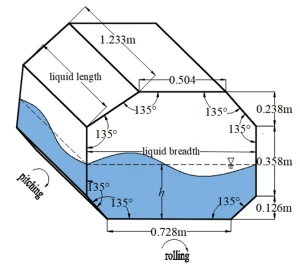
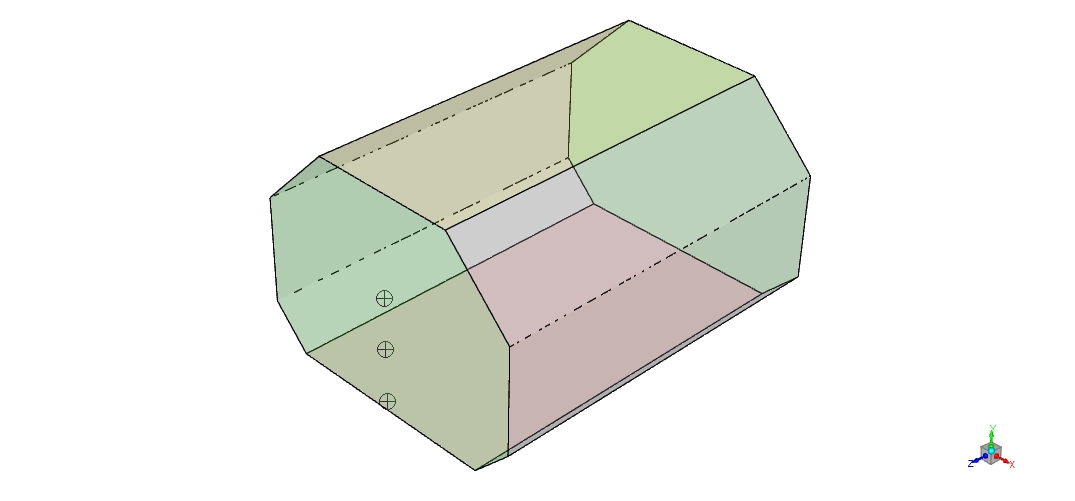
Figure 1: A sketch showing the geometry and walls of the storage vessel used for this LNG tank sloshing study. [1]
Simulation Process: Polyhedral Grid and Marine Ship Pitch Motion
To solve this fluid problem, the solver needs a very smart mathematical grid. The domain uses 559,829 polyhedral cells. Because they have multiple flat faces, polyhedral shapes calculate the pressure much better when the heavy liquid hits a flat wall.
The tank must move like a real ship on ocean waves. The setup applies a pitch (front-to-back) velocity and a roll (side-to-side) velocity at the same time. The math uses a cosine wave formula to create a smooth, repeating ocean motion. Thus, Dynamic Mesh module is needed to implement the motion on the LNG tank. As the tank rocks, the Volume of Fluid (VOF) model tracks the boundary line between the heavy liquid fuel and the empty gas. To measure the physical forces properly, the engineers placed testing points at 1 cm, 19 cm, and 36 cm heights.
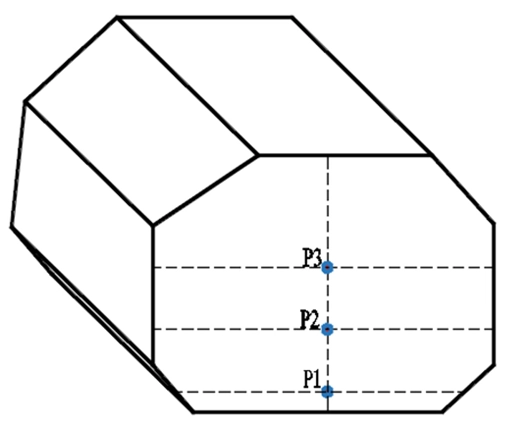
Figure 2: A diagram showing the testing points at 1 cm, 19 cm, and 36 cm heights to measure the sloshing hydrodynamic pressure.
Post-processing: Liquid Volume Fraction and Sloshing Hydrodynamic Pressure
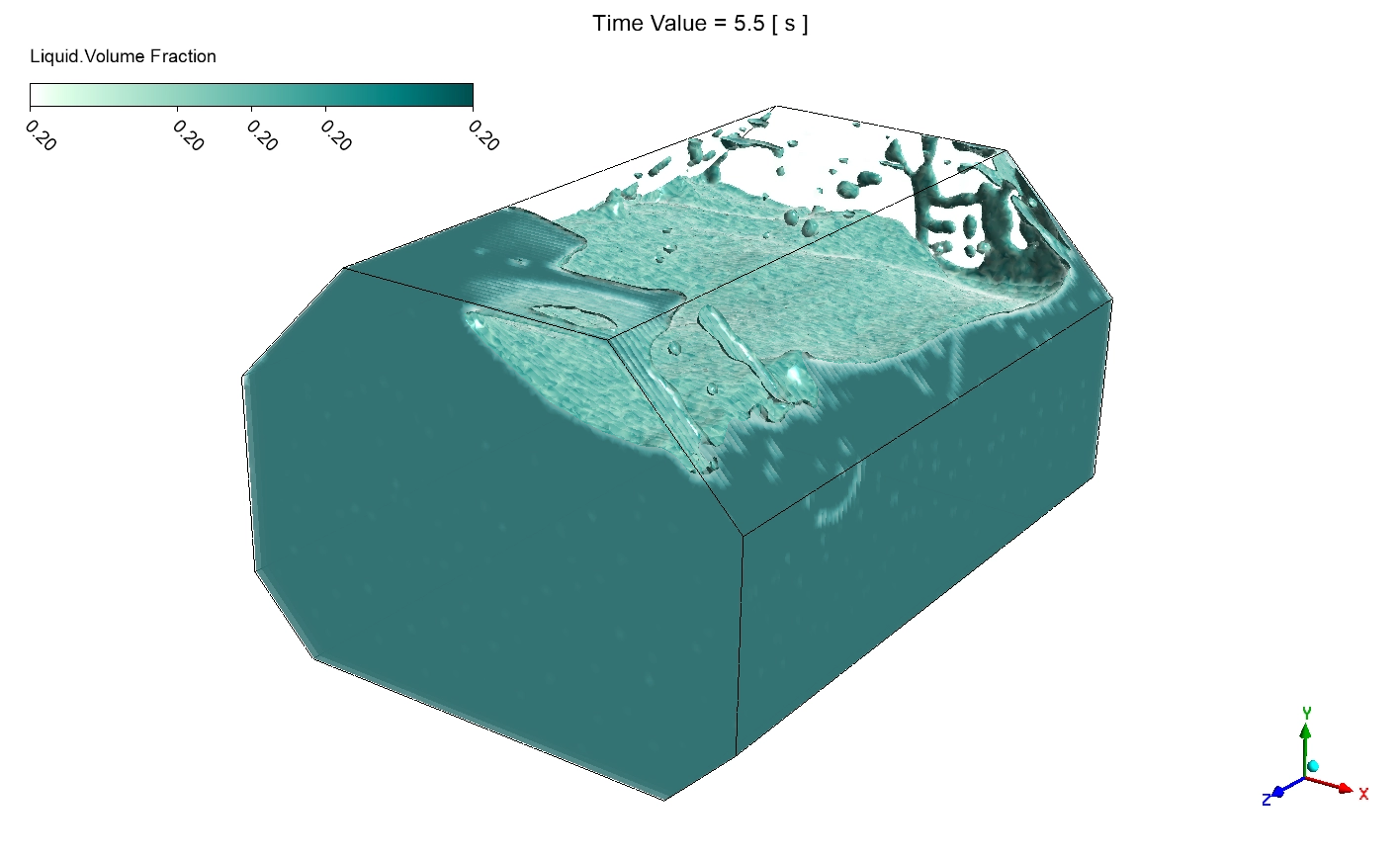
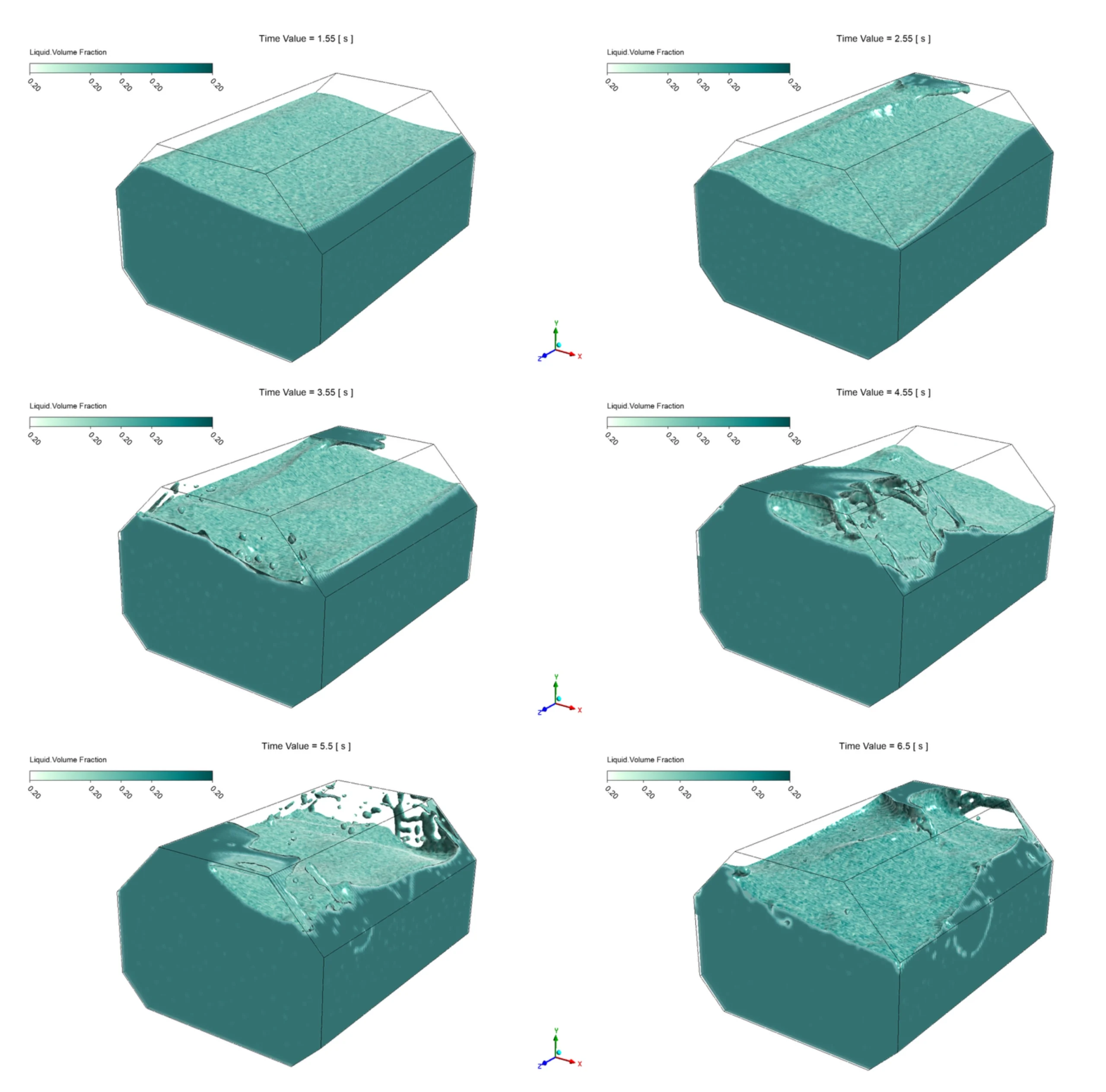
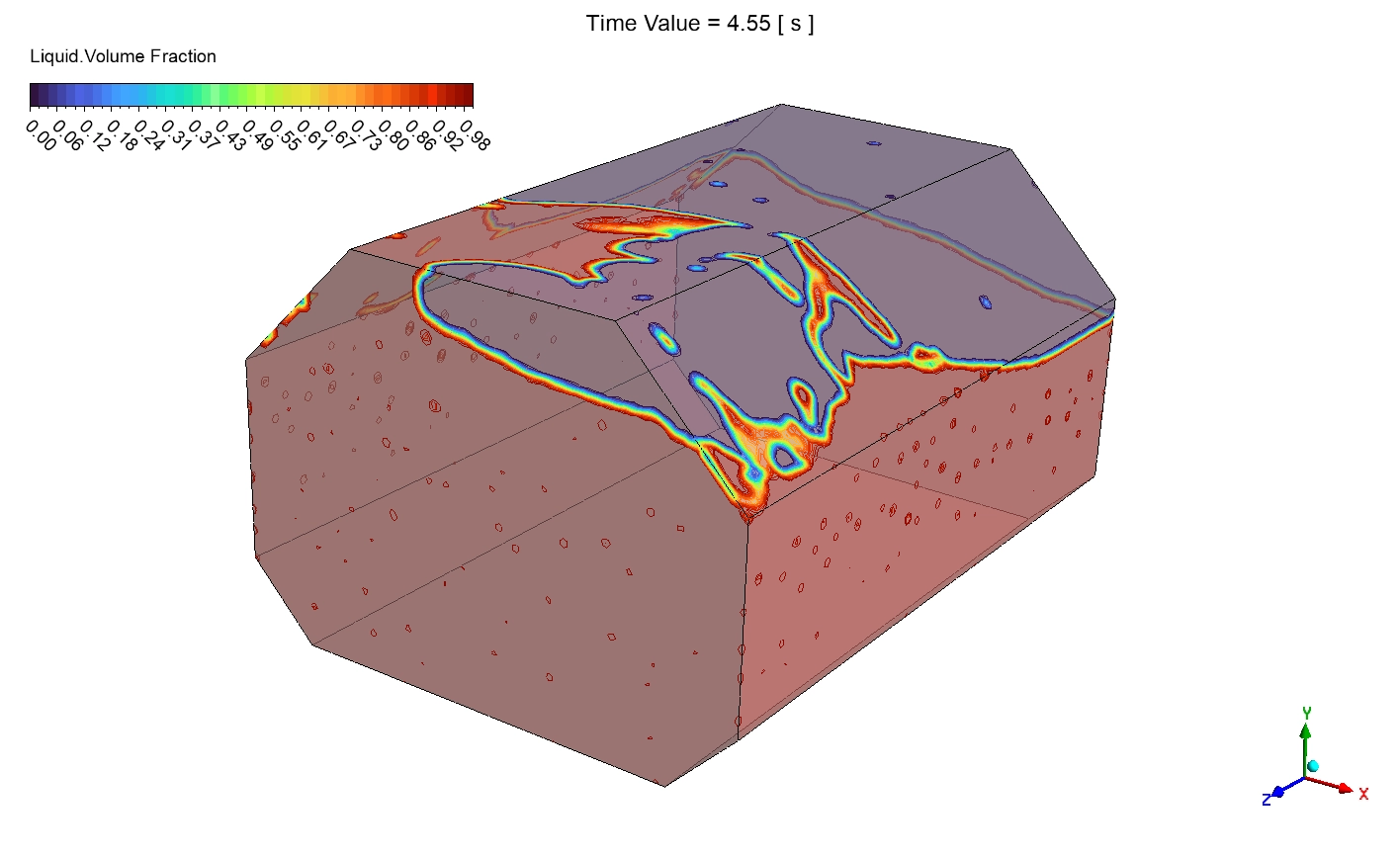
We look at the data to understand the physics of the crash. First, we study the liquid volume fraction contours. The dark color represents the liquid natural gas, and the light color is the empty gas. At 1.55 s, the tank sits at a 50 % filling level. The surface is very flat. This is the most dangerous filling level because the wave has enough room to grow big.
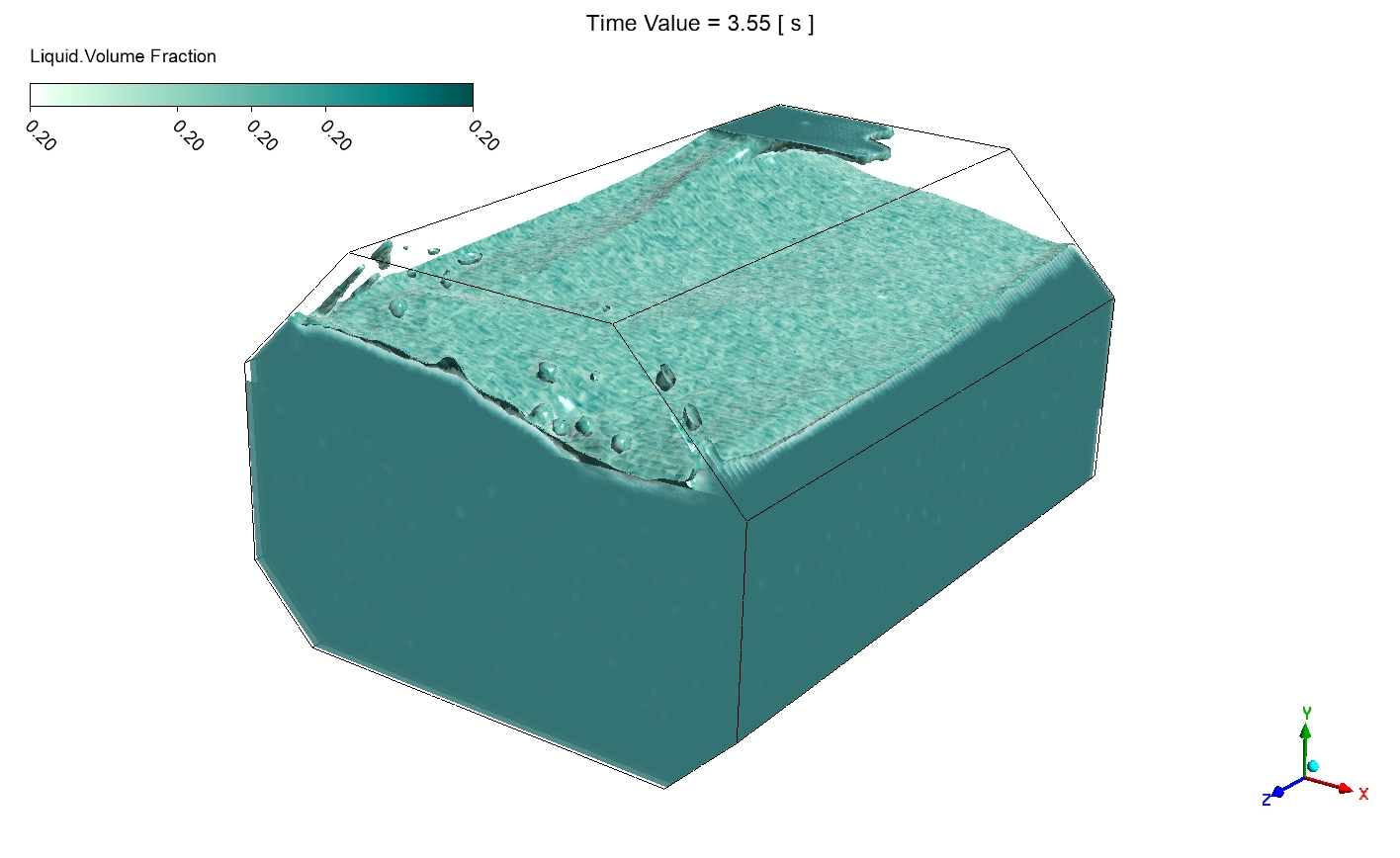
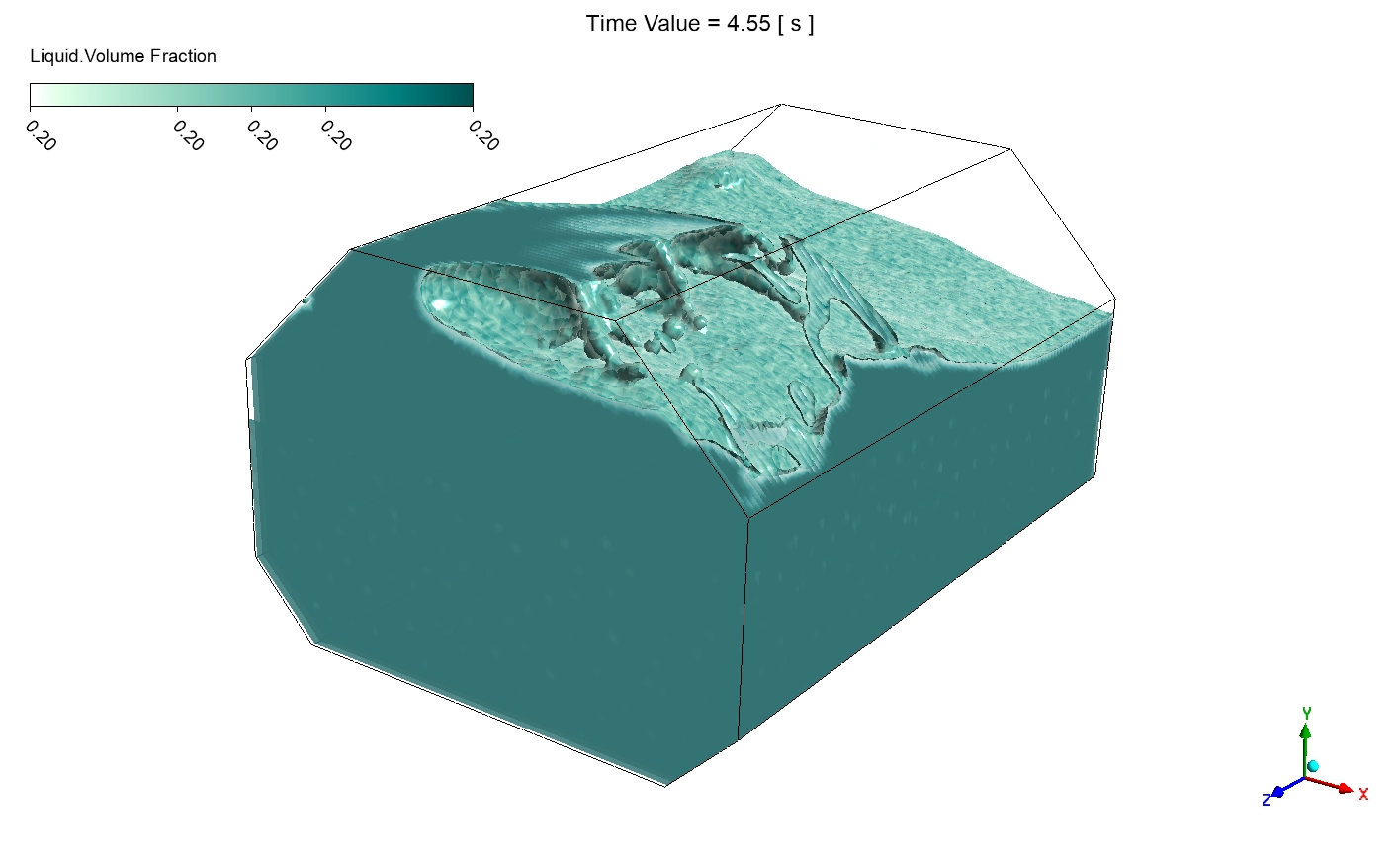
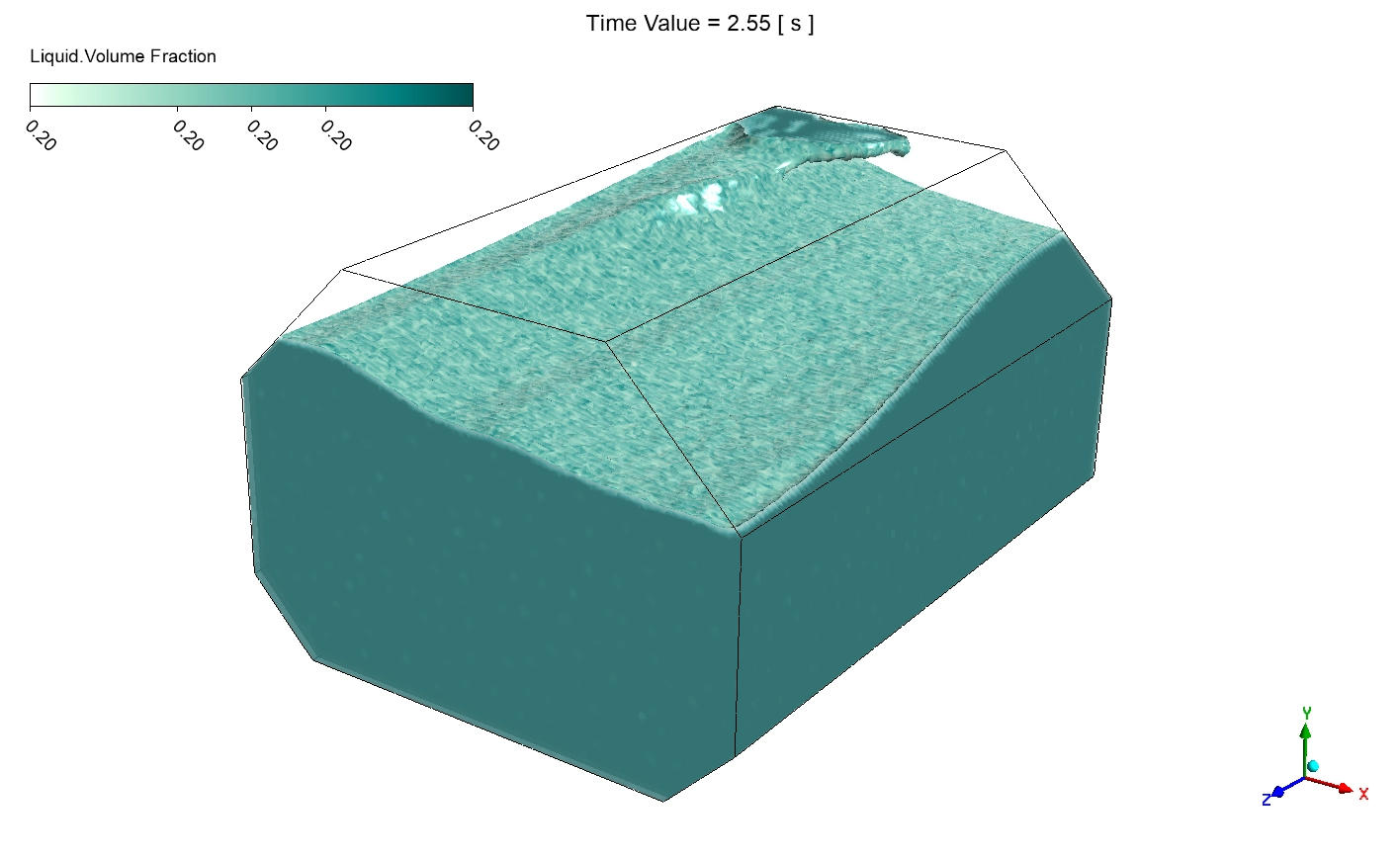
At 2.55 s, the tank rolls. The heavy liquid climbs the right wall at an angle of 15 degrees. At 3.55 s, the pitch and roll motions mix. This creates a complex 3D wave that pushes high into the corner. The worst structural damage happens between 4.55 s and 5.55 s. The big wave completely breaks apart. The heavy fuel flies through the air and crashes into the top roof. At 5.55 s, the heavy liquid directly hits 20 to 30 % of the tank roof. By 6.5 s, the broken wave falls down, leaving a rough surface.
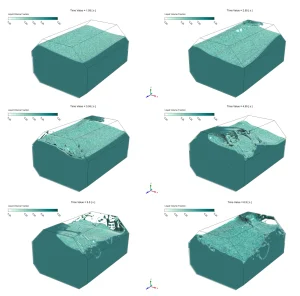
Figure 3: The liquid volume fraction contours from 1.55 s to 6.5 s, showing the heavy wave crashing on the roof during the marine ship fuel sloshing.
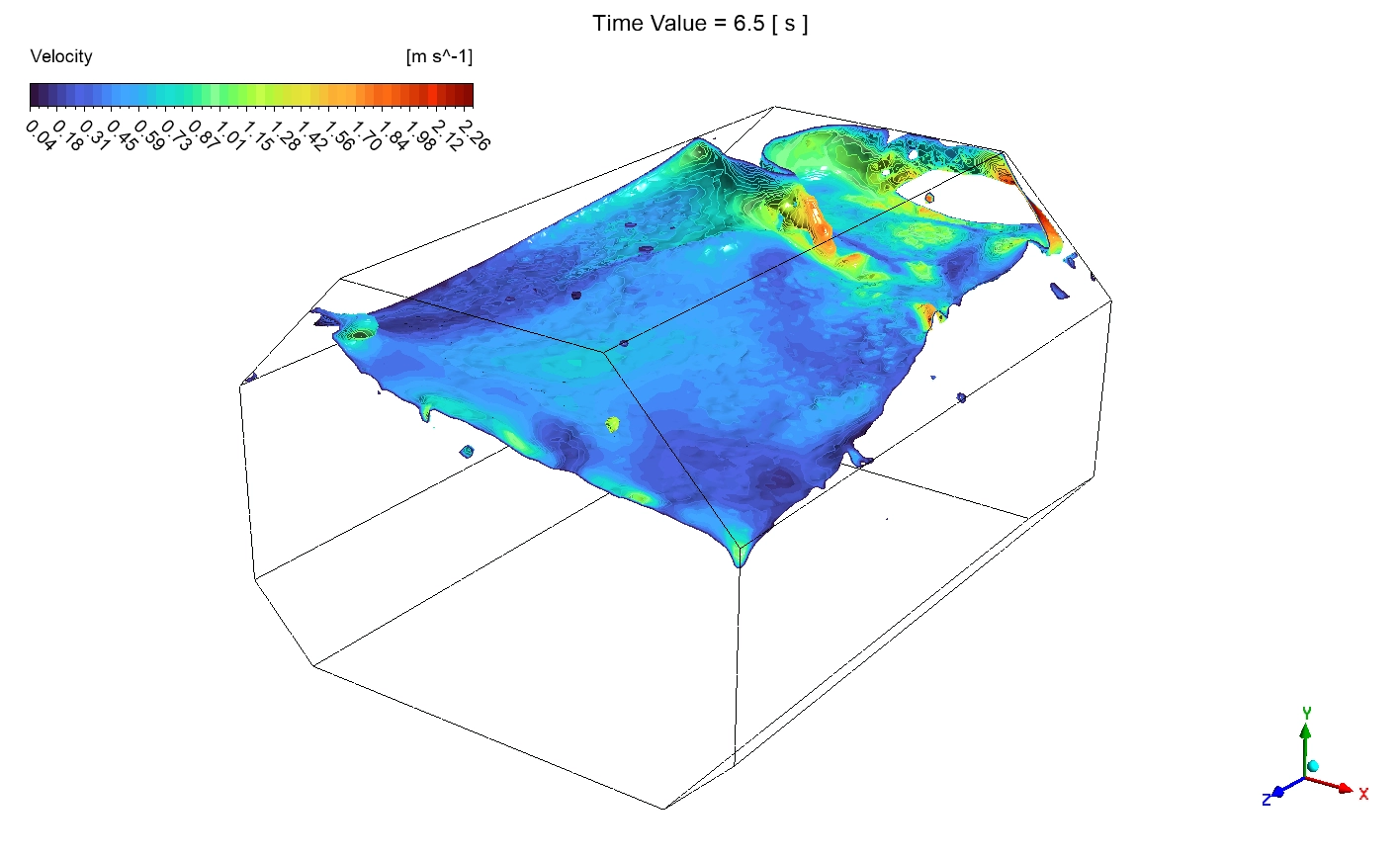
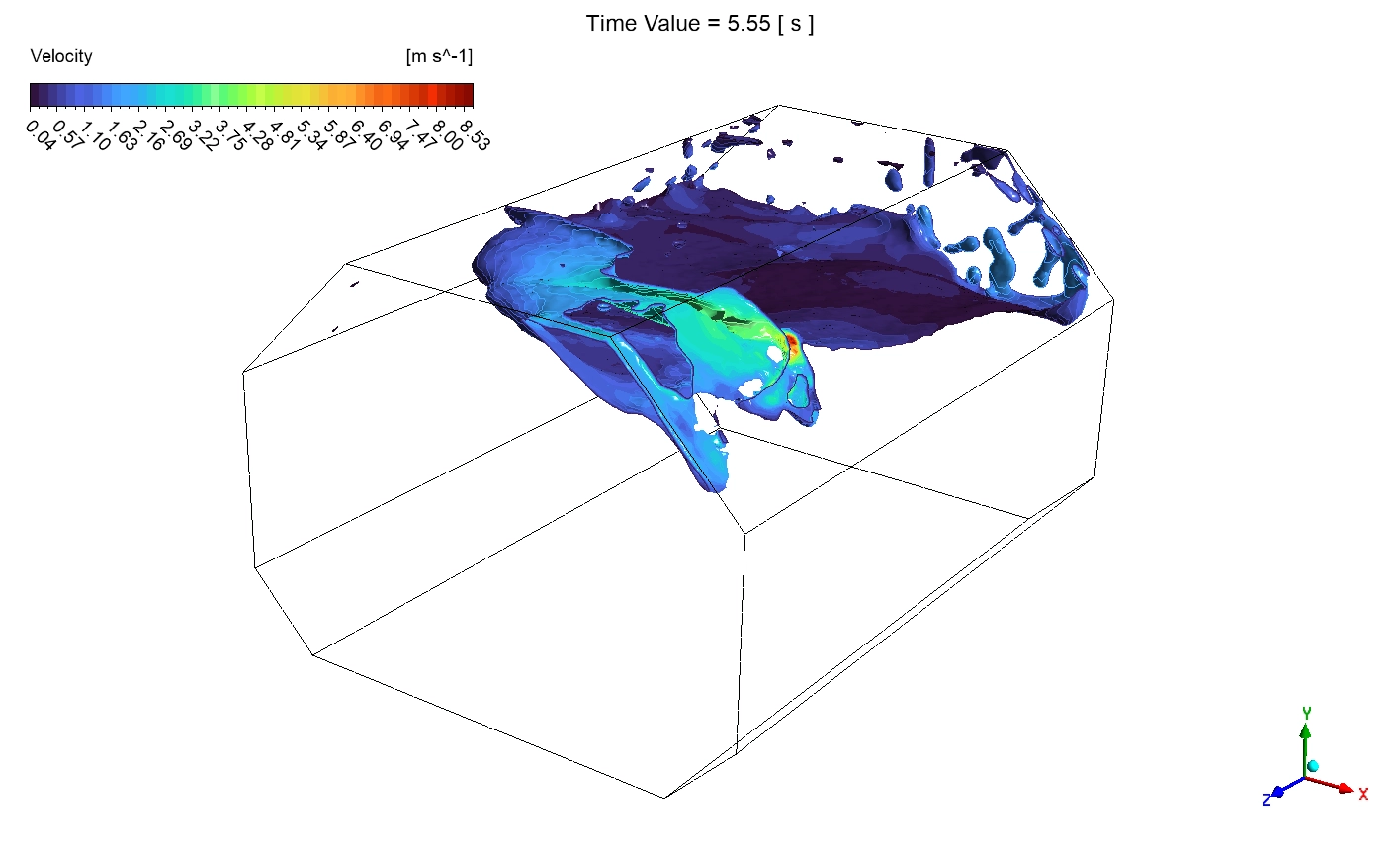
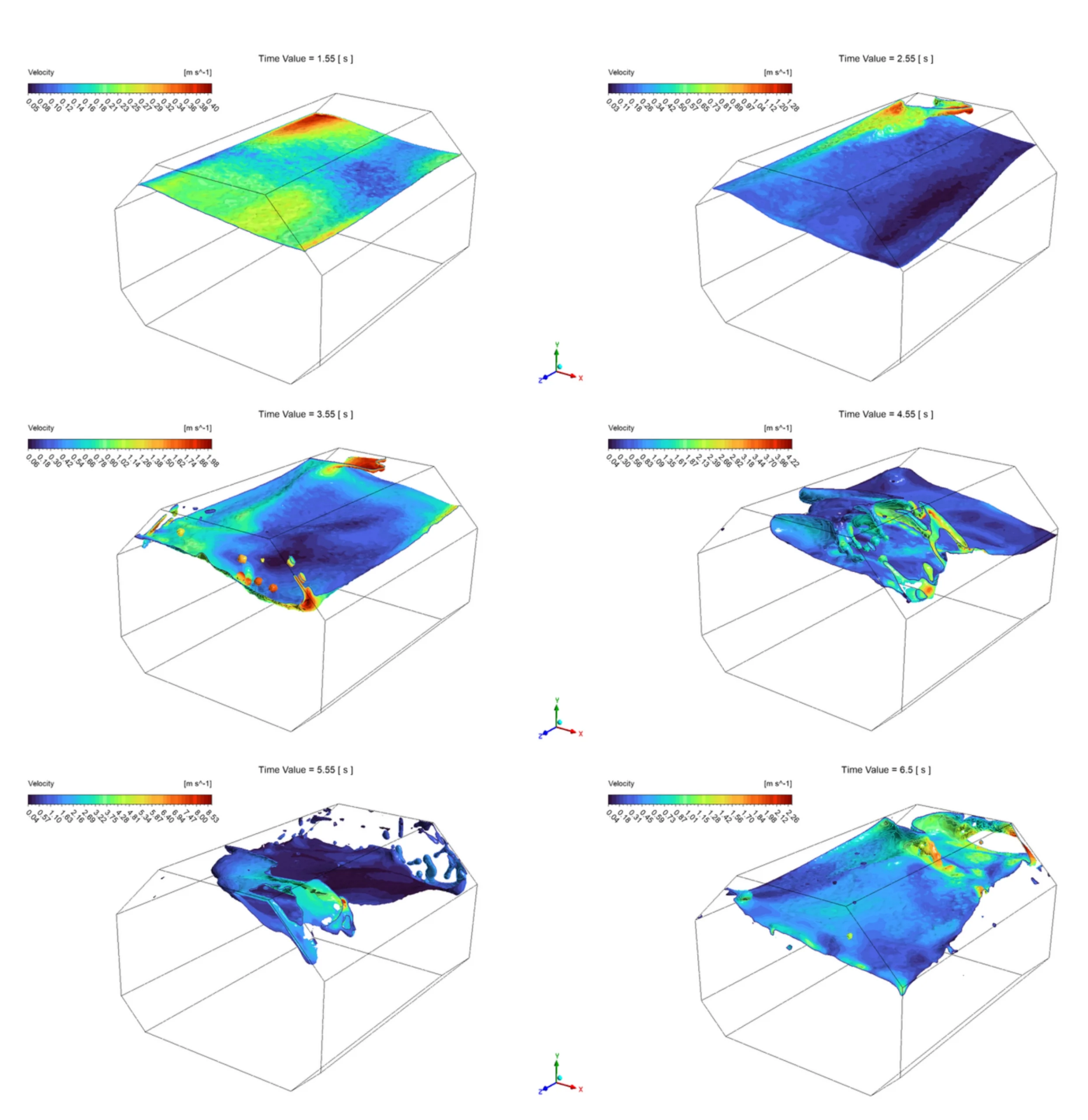
The velocity contours show the extreme danger of this crash. At 1.55 s, the liquid moves very slowly with an absolute maximum velocity of 0.40 m s^-1. As the wave climbs the wall at 3.55 s, the maximum velocity grows to 1.98 m s^-1. During the severe roof crash at 5.55 s, the fluid speed jumps to an absolute maximum of 8.53 m s^-1. This high-speed water carries huge kinetic energy. When it hits the solid roof, it stops instantly, turning all that speed into a crushing physical force. By 6.5 s, the top velocity drops down to 2.26 m s^-1.
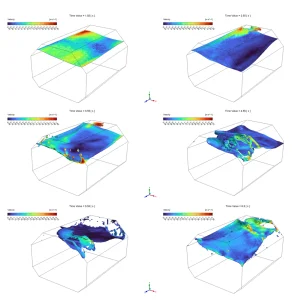
Figure 4: The velocity surface contours mathematically proving the fluid speed reaches a maximum of 8.53 m s^-1 at 5.55 s.
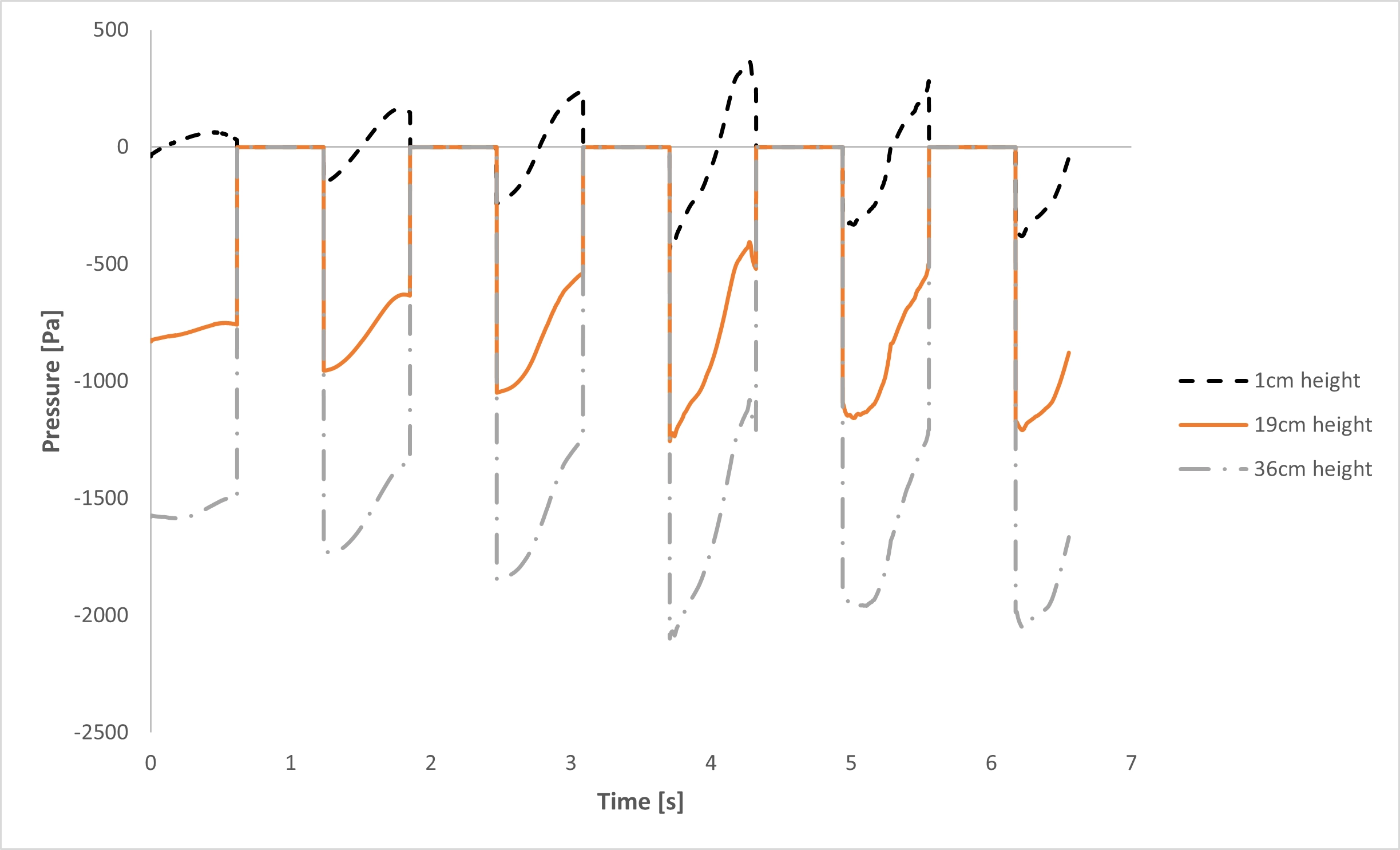
Finally, the pressure line graph proves how much force hits the walls. The floor at a 1 cm height stays safely under the liquid, feeling a maximum positive pressure of 350 Pa. The middle wall at 19 cm drops down to a suction of -1200 Pa.
The greatest danger happens near the roof at a 36 cm height. When the heavy liquid natural gas falls away from the roof, it pulls the empty gas down with it. The graph proves this creates a severe suction vacuum of -2100 Pa. When the wave crashes back up, the pressure instantly spikes to 400 Pa. This violent swing from pulling to pushing happens every 1.4 s, matching the ocean wave timing. This repeating force bends the metal until it breaks.
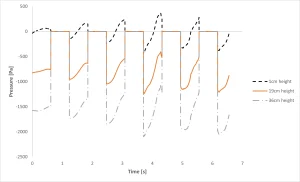
Figure 5: The pressure graph showing the severe wall suction reaching -2100 Pa at the top height.
Frequently Asked Questions (FAQ)
- Why is the 50 % filling level so dangerous for LNG tank sloshing? When the tank is half full, the liquid has enough empty space above it to accelerate. The ocean motion allows the waves to grow very large before they hit the top roof, causing severe damage.
- What creates the severe -2100 Pa suction on the roof? A negative pressure acts as a suction vacuum. When the heavy liquid hits the roof and then drops very quickly, it pulls violently on the roof metal. This strong pulling force can tear the walls apart over time.
- Why is a fluid velocity of 8.53 m s^-1 dangerous inside the fuel tank? Liquid natural gas is very heavy. When a large mass moves at a fast velocity, it carries a huge amount of energy. When that fast liquid hits the solid roof, it stops instantly, turning into a physical hammer.








Reviews
There are no reviews yet.