

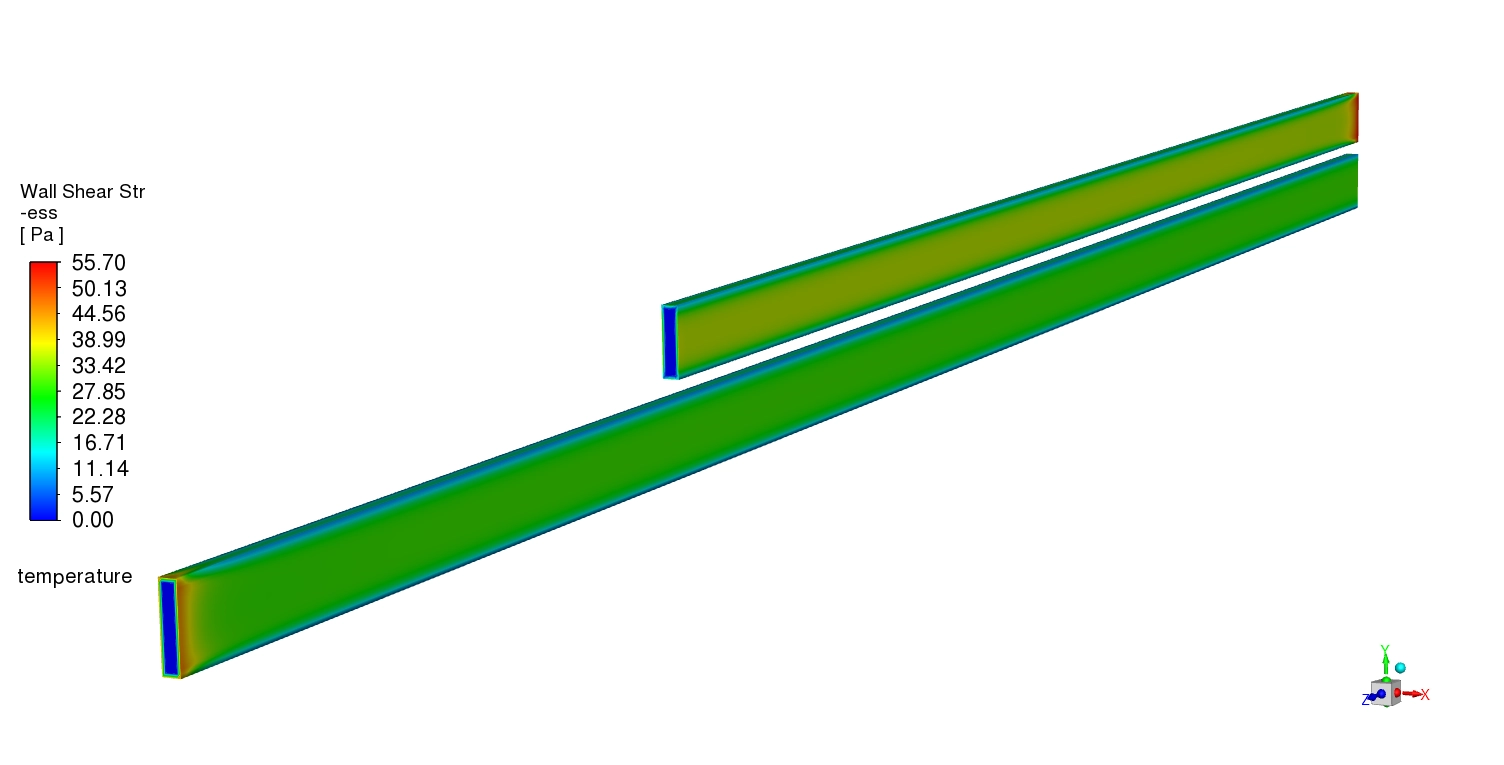


Electronic chips are getting faster and hotter. A normal Single-Layer heat sink is sometimes not enough to cool them. The water gets too hot by the time it reaches the end of the channel. To fix this, engineers invented the Double-Layered Microchannel Heat Sink. This design puts one channel on top of another. It creates a Sandwich of water flow. To understand how this works without building it, we use Double-Layered Microchannel Heat Sink CFD simulation.
This project is a Double-Layered heat sink fluent tutorial. We will teach you how to model the complex flow in two layers. We use ANSYS Fluent to visualize the temperature and pressure. By performing this Double-Layered Microchannel Heat Sink simulation, we can design coolers that keep the temperature even across the whole chip. For more lessons on small-scale flows, please visit our Microfluids and nanofluids tutorials.
- Reference [1]: Leng, Chuan, et al. “Multi-parameter optimization of flow and heat transfer for a novel double-layered microchannel heat sink.” International Journal of Heat and Mass Transfer84 (2015): 359-369.
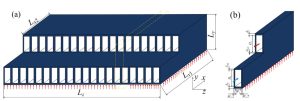
Figure 1: 3D model showing the Top Layer and Bottom Layer with Counter-Flow arrangement [1].
Simulation Process: Conjugate Heat Transfer and Counter-Flow Setup
For this Double-Layered Microchannel Heat Sink ANSYS fluent analysis, we designed a geometry with two levels of fluid channels. The most important part is the mesh. We created a high-quality Structured Mesh for both the solid silicon and the fluid water. We made the mesh very fine (small cells) at the interface where the solid meets the liquid. This is crucial because heat moves from the solid to the fluid at this boundary.
We set up the physics in ANSYS Fluent using the Laminar Flow Model. The channels are so small that the water flows smoothly, not chaotically. We defined the materials as Silicon (solid) and Water (liquid). We used a Conjugate Heat Transfer (CHT) approach. This means the solver calculates heat conduction in the solid and convection in the water at the same time. We applied a Constant Heat Flux to the bottom surface to act as the electronic chip. Often, we make the top and bottom layers flow in opposite directions (Counter-Flow) to make the temperature more uniform.

Figure 2: Structured Mesh Generation displaying the refined grid in the fluid domains.
Post-processing: Analysis of Thermal Stratification
To truly understand the success of this Double-Layered Microchannel Heat Sink CFD simulation, we must analyze the temperature data like a story. The story begins at the bottom, where the heat source is located. The simulation data shows that the Bottom Channel (Solid/Wall) is the hottest part of the system, with an average temperature of 314.43 K. This makes sense because it is closest to the chip. The heat then moves into the water flowing in this bottom layer. The Bottom Fluid (Water) heats up to 309.61 K. This shows that the bottom layer is doing the heavy lifting by removing the immediate heat.
The story continues as the heat travels vertically up through the silicon ribs. This is where the Double-Layered heat sink design becomes very effective. The heat reaches the Top Channel (Solid/Wall), and the temperature drops to 309.57 K. This is a vertical temperature gradient (drop) of nearly 5 Kelvin from the bottom solid to the top solid. This proves that the heat is successfully moving away from the chip and spreading upwards into the structure.
Table 1: Volume-Weighted Average Static Temperatures
| Location | Temperature [K] |
| Bottom Channel (Solid/Wall) | 314.43 |
| Bottom Fluid (Water) | 309.61 |
| Top Channel (Solid/Wall) | 309.57 |
| Top Fluid (Water) | 305.84 |
Finally, the top layer of water acts as a Thermal Buffer. Because it is further away from the hot chip, the “Top Fluid (Water)” stays much cooler at 305.84 K. In the contour images (Figure 3), you can see this clearly. The bottom area is colored Red and Orange, indicating high heat. As you look higher, the colors shift to Green and Blue. This cool top layer is critical because it has a high capacity to absorb extra heat. By shaving off the peak temperatures, the second layer prevents hot spots and reduces thermal stress. This data confirms that the double-layer design is far superior to a single layer for keeping high-power electronics safe.


Figure 3: Static Temperature Contours visualizing the thermal gradient from the hot bottom layer (Red) to the cooler top layer (Green/Blue).

Figure 4: Velocity Magnitude illustrating the flow distribution inside the double-layered microchannels.
Key Takeaways & FAQ
- Q: Why use a Double-Layered Heat Sink?
- A: It reduces thermal resistance. The top layer provides extra cooling capacity, keeping the average temperature lower compared to a single layer.
- Q: What is the temperature difference between layers?
- A: The Double-Layered Microchannel Heat Sink fluent simulation shows the top fluid (305.84 K) is about 4 K cooler than the bottom fluid (309.61 K).
- Q: What is Conjugate Heat Transfer (CHT)?
- A: It is a simulation method that solves heat transfer in both the solid (silicon) and the fluid (water) simultaneously.









Reviews
There are no reviews yet.