
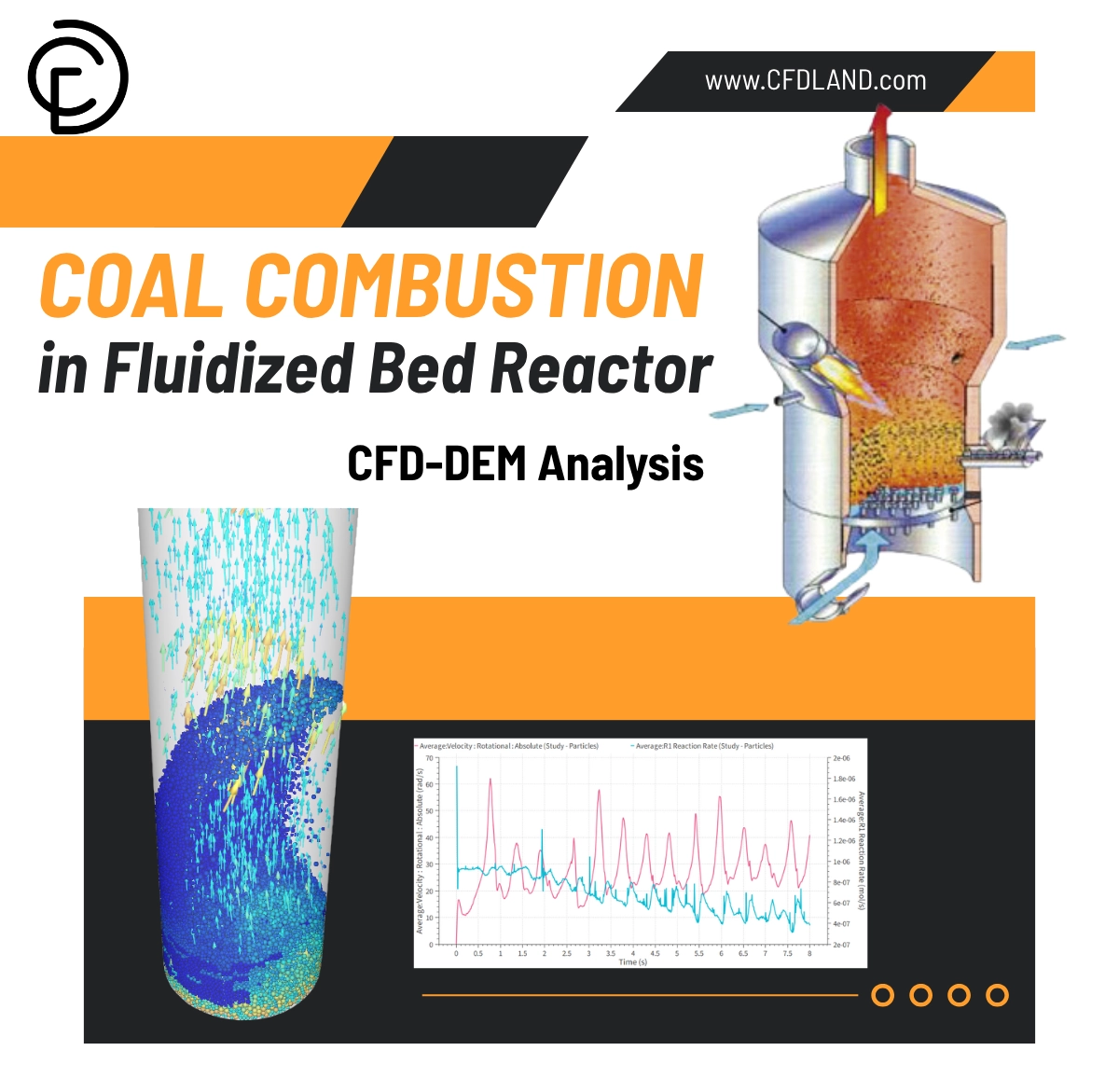
Burning solid coal to make electricity is a very important job for large industrial power plants. Smart engineers perform a highly accurate Coal Particle Combustion in Fluidized Bed Reactor CFD-DEM Analysis to see exactly how the hot air burns the solid coal pieces in 3D space. To learn more about how software mathematically tracks hot fire and chemical reactions, please explore our professional Combustion CFD Simulation projects. Practicing this Rocky DEM tutorial project helps designers control the heavy fire, reduce dangerous smoke, and save factories millions of dollars. This CFD simulation analyzes exactly how solid coal burns inside a cylindrical fluidized bed reactor. The engineering study calculates the heavy solid particle mixing and the complex chemical gases. The highly accurate results help factory designers build much safer and cleaner power plants.
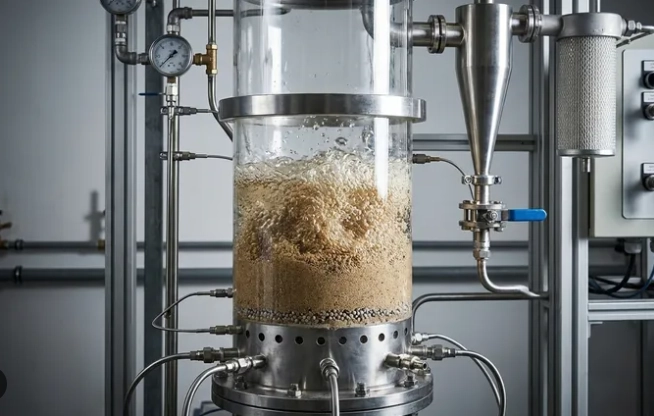
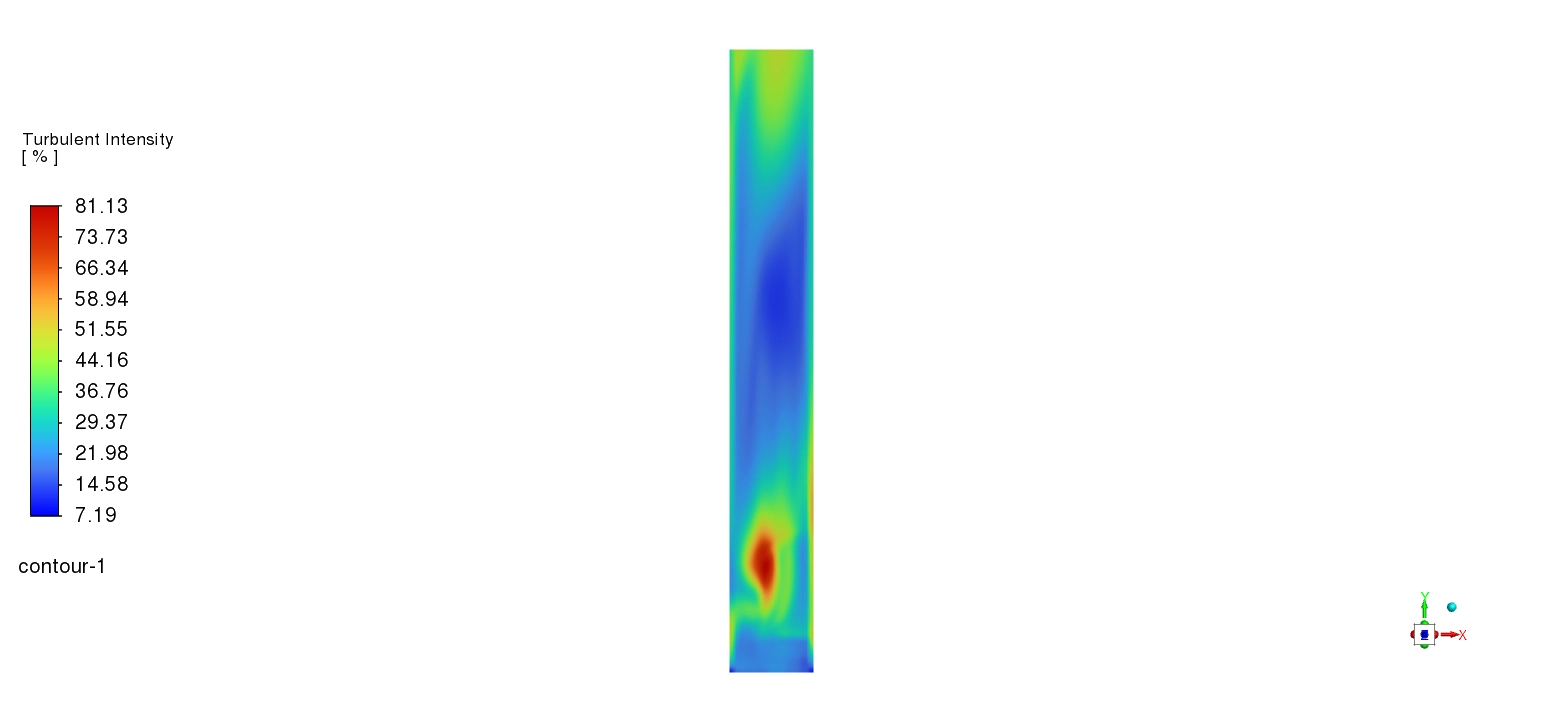
Figure 1: General 3D geometry of the cylindrical fluidized bed reactor used to simulate the floating and burning of heavy coal pieces.
Simulation Process: Species Transport CFD and Fluent-Rocky DEM Coupling Methodology
For this important power plant project, we built a 3D digital model of a cylindrical fluidized bed reactor with a bottom air distributor plate and an open freeboard space at the top. Inside the Rocky DEM software, we injected exactly 1 kg of coal, splitting it perfectly into 0.5 kg of small 3 mm particles and 0.5 kg of larger 4 mm particles. We turned on the thermal and combustion physics for every single moving stone to calculate the exact carbon burning process. To simulate the hot mixing gases, we used the powerful ANSYS Fluent software. We activated the Species Transport model to mathematically track the invisible CO, H2O, CO2, H2, O2, and N2 gases traveling through the cylinder. We programmed two specific chemical reaction equations into the Fluent CFD software:
Reaction 1: CO → CO₂ + H₂
Reaction 2: CO + H₂O → CO₂ + H₂
Finally, we turned on the bidirectional coupling between the two programs. The Fluent CFD solver calculated the exact gas speed and oxygen levels and sent this data to Rocky. Then, Rocky calculated the exact fire heat and moving void spaces, sending this back to Fluent to create a highly realistic, coupled gas-solid chemical test.
Post-processing: Analysis of Combustion Temperatures and Reactions
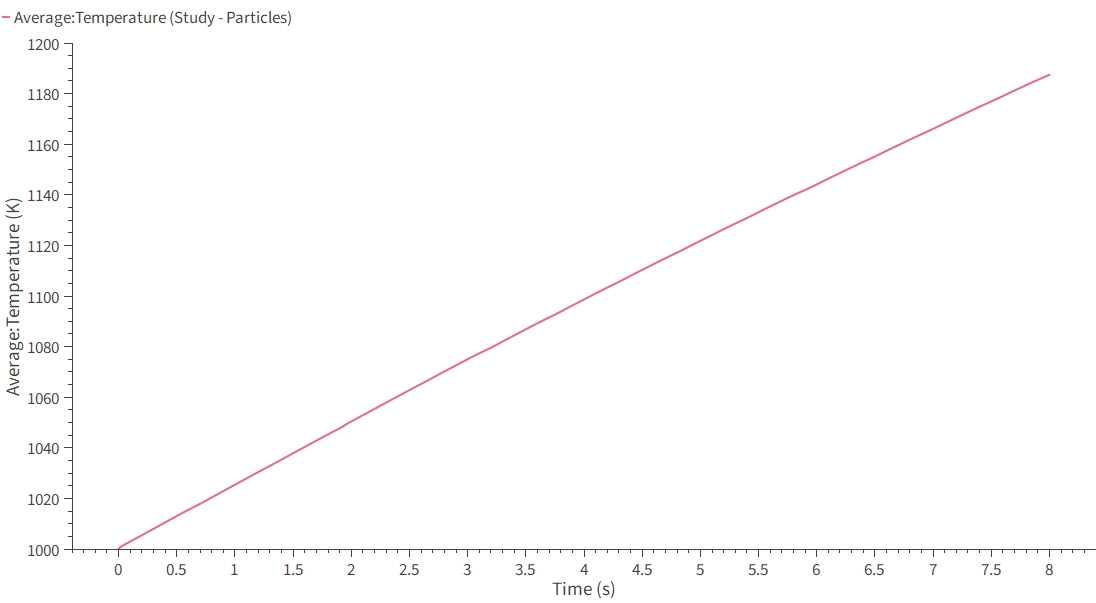
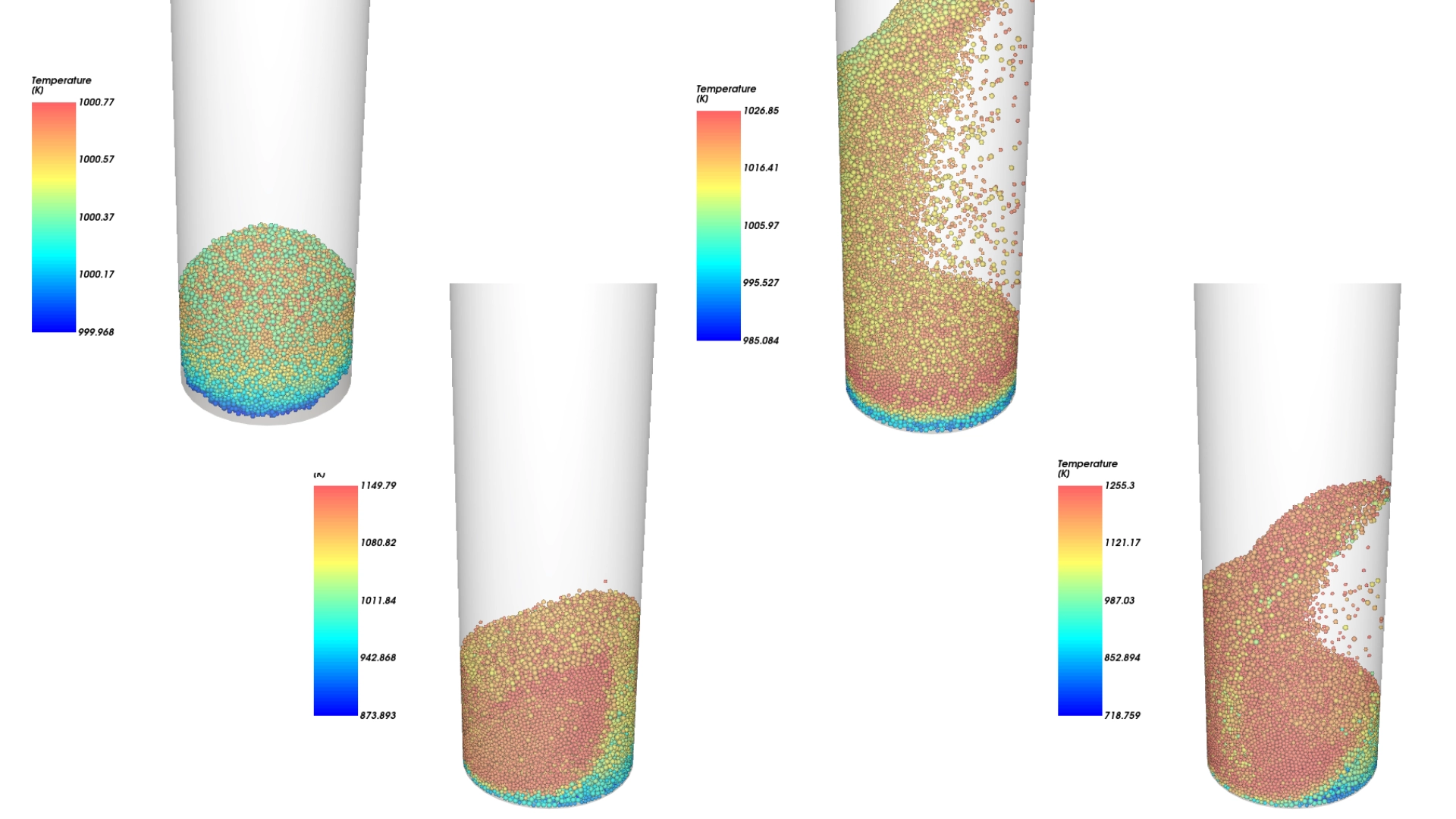
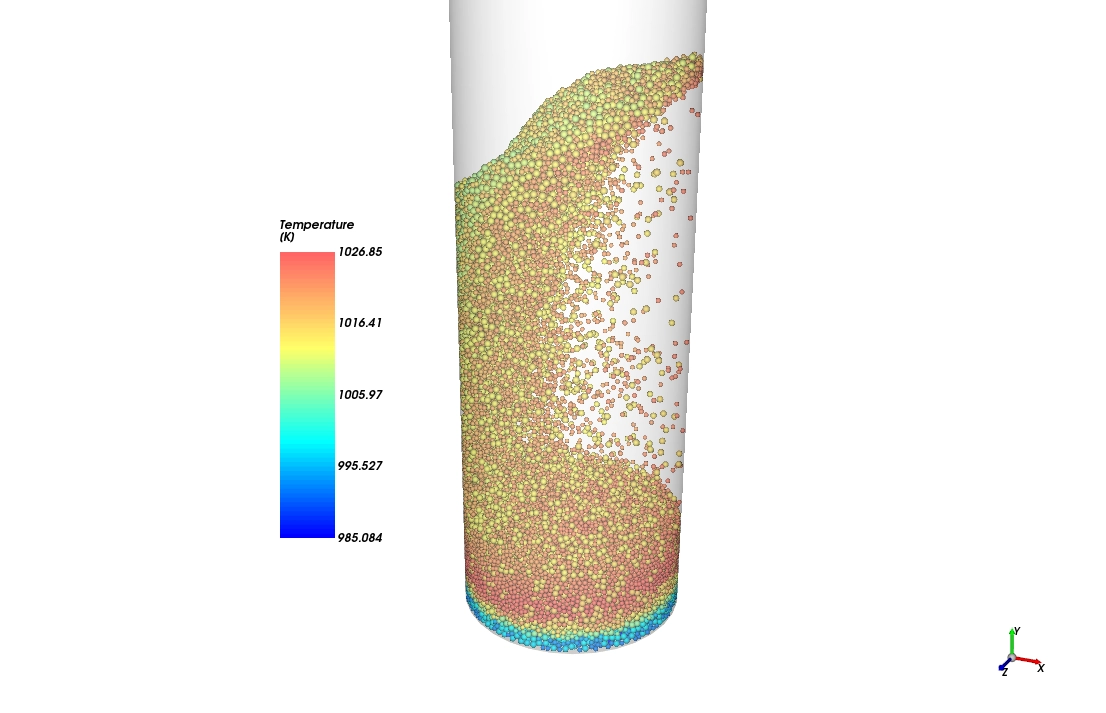
Let us carefully analyze the temperature contours and chemical reaction graphs over the complete 8-second test. First, we evaluate the Particle Temperature snapshots. When the Ansys Fluent simulation starts, all the coal stones have a narrow temperature of exactly 999.97 to 1000.77 K. Over time, the fire expands higher into the air. At the final stage, the bottom blue particles stay cold at exactly 718 K because fresh air enters there. However, the top red particles in the reaction zone reach a severe maximum heat of 1255 K. This massive 537 K temperature difference is a highly successful achievement. It mathematically proves that the cold air correctly stops the bottom metal plate from melting. Also, the 1255 K top heat proves the coal burns perfectly without exceeding the dangerous 1600 K limit, which stops bad NOx pollution.
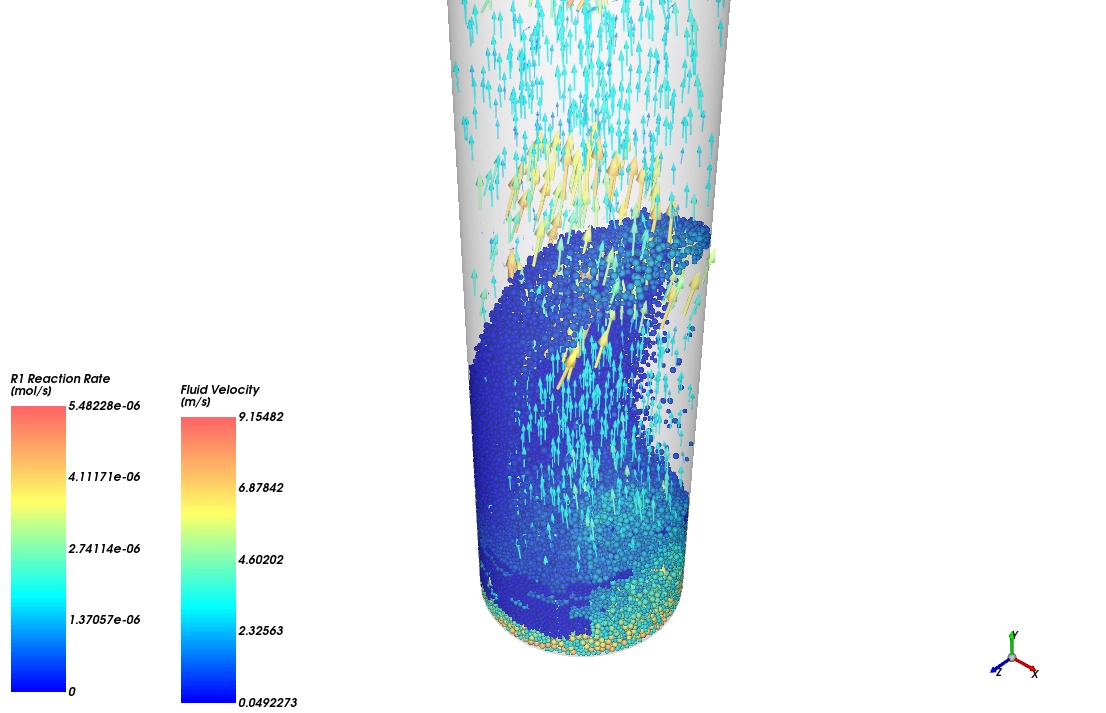
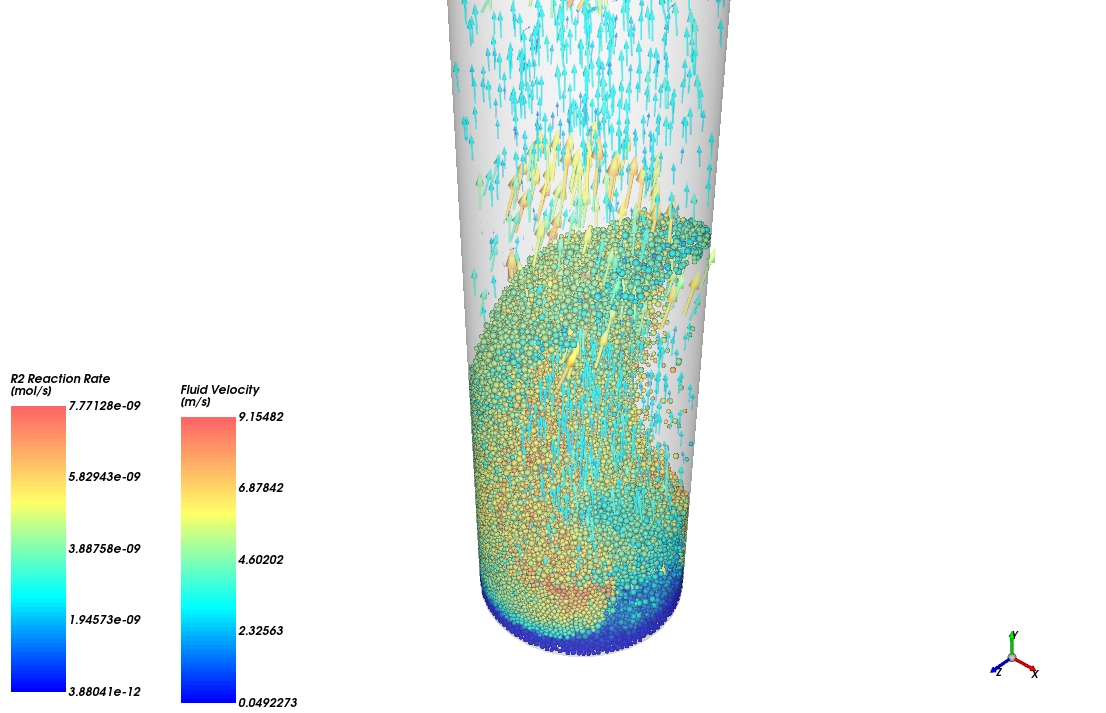
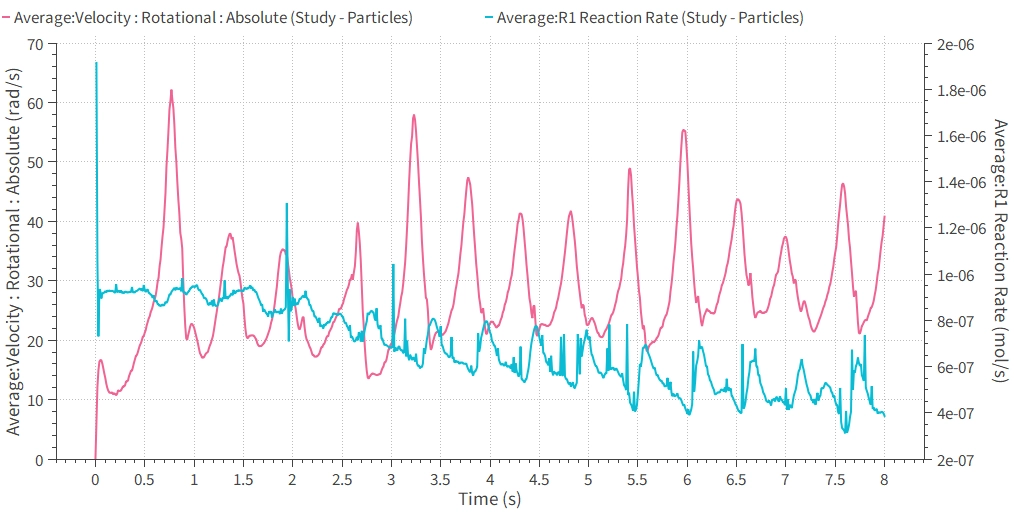
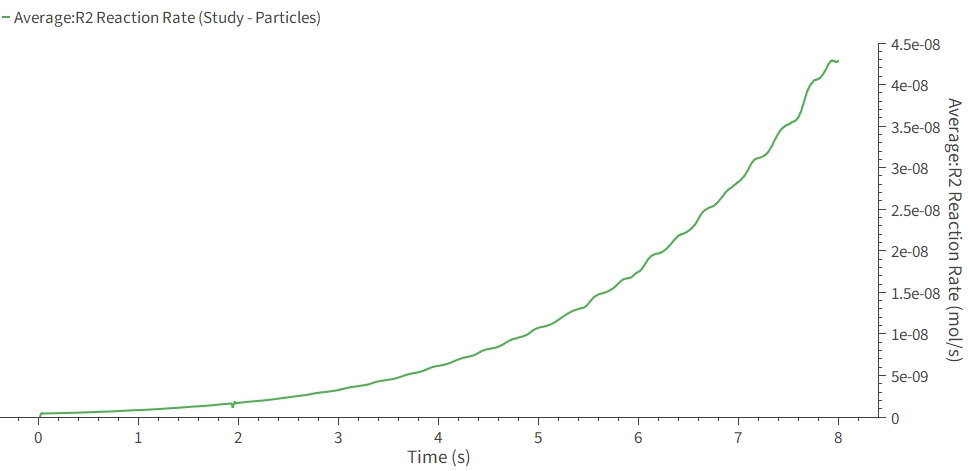
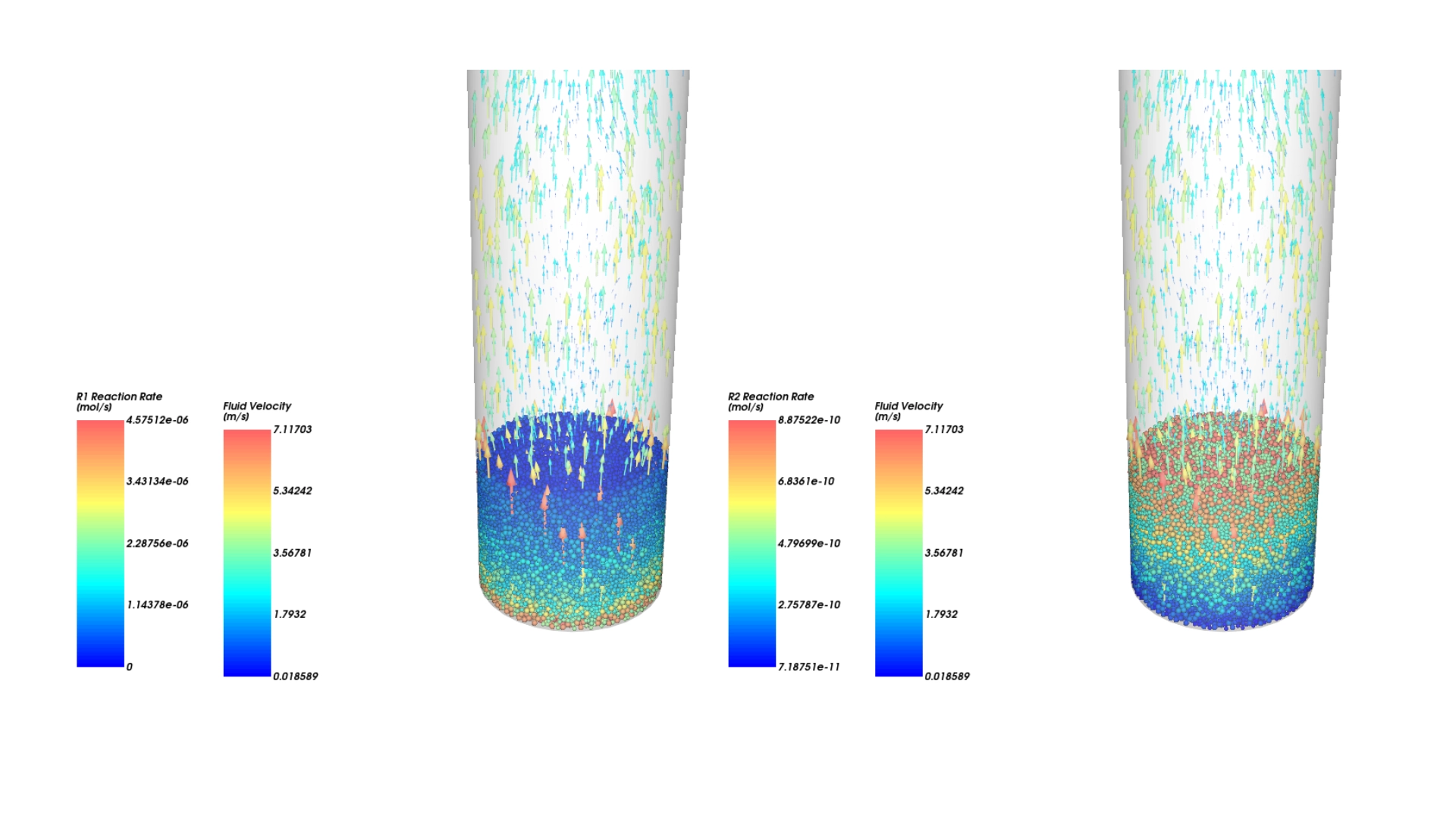
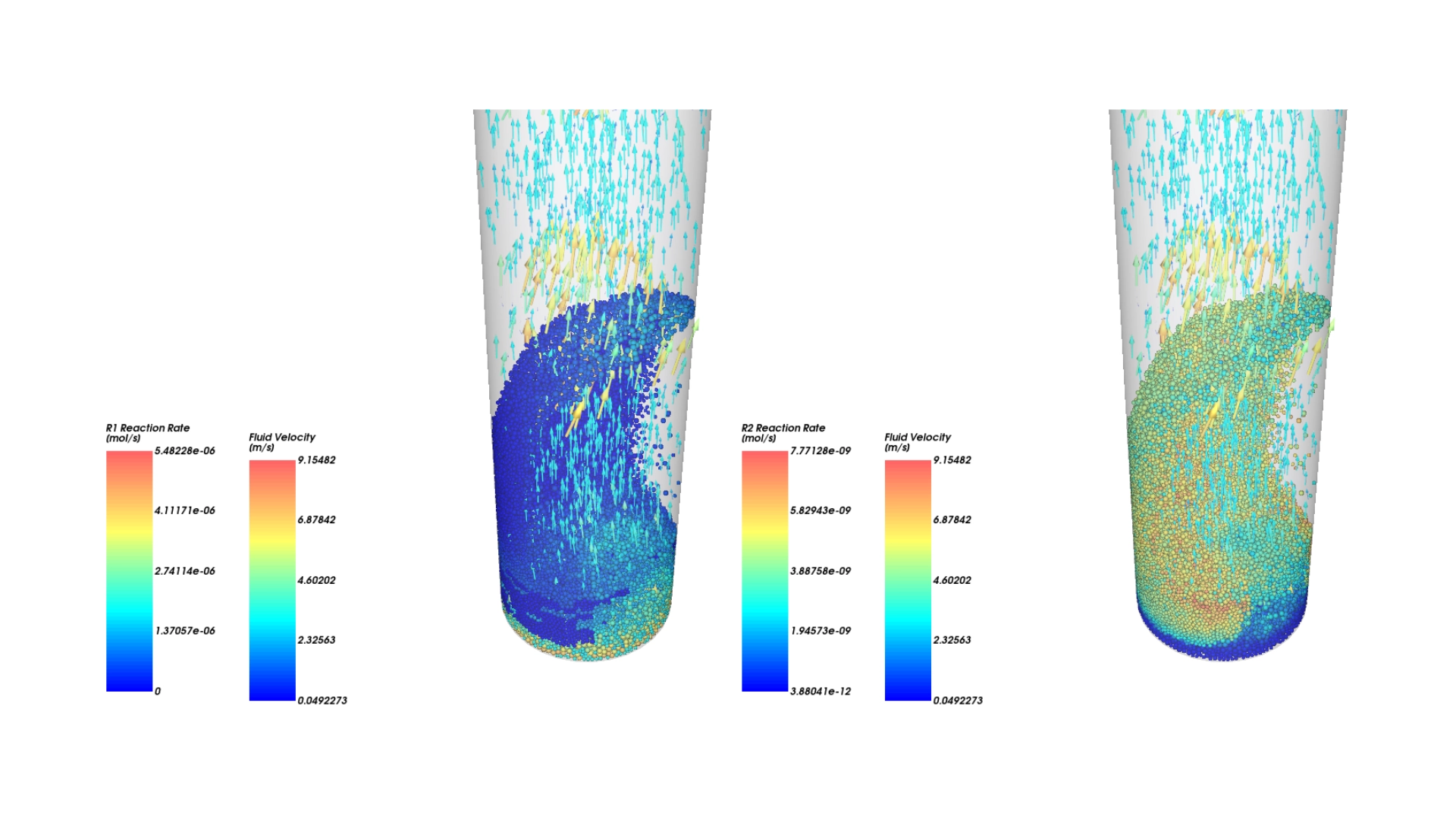
Next, we study the Fluid Velocity and Reaction Rate contours. Inside the dense packed bed at the bottom, the air moves slowly at 0.05 to 2.3 m/s because the heavy stones block the wind. When the gas escapes the stones and enters the empty top space, it quickly speeds up to 6.0 to 9.15 m/s. The exact chemical data shows that the first reaction (R1) is very strong, reaching exactly 5.48e-06 mol/s. However, the second reaction (R2) is extremely weak, measuring only 7.77e-09 mol/s. This proves the second reaction is exactly 1000 times slower because it requires much more heat to work. As the bed reaches 1200 K over the 8 seconds, the R2 graph grows exponentially stronger.
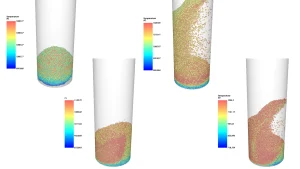
Figure 2: Particle temperature snapshots from Rocky DEM (718 to 1255 K), visualizing how the bottom particles remain cold while the top particles become extremely hot.
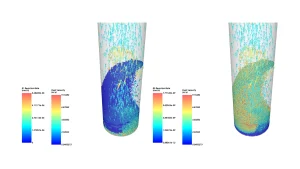
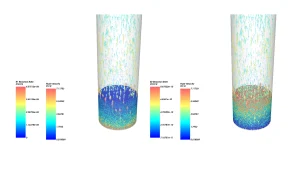
Figure 3: Chemical Reaction Rate and Fluid Velocity Distribution, illustrating the fast gas speeding up to 9.15 m/s in the top empty space.
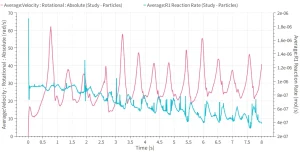
Figure 4: Average R1 Reaction Rate and Rotational Velocity graphs, showing how the coal particles spin heavily at 62 rad/s during the 1 to 2 Hz bubble eruptions.
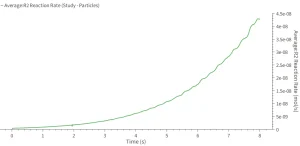
Figure 5: Average R2 Reaction Rate graph over 8 seconds, showing the exact exponential growth curve as the second fire reaction becomes hotter.
Finally, we analyze the Rotational Velocity graph of the solid coal. The data jumps up and down very sharply, hitting extreme peaks of 38 to 62 rad/s every 0.5 to 1.0 seconds. These rapid spinning peaks exactly represent the physical gas bubbles erupting violently inside the fire. By mathematically measuring this, factory designers know exactly how vigorously the stones are mixing. Engineers can use this exact Fluent simulation data to adjust the bottom air speed and guarantee a perfect fire.
Frequently Asked Questions (FAQ)
- Why is there a large 537 K temperature difference in the reactor?
- The temperature difference happens because fresh, cold air enters from the bottom plate, keeping the lower coal stones cool at 718 K. As the air moves up and mixes with the coal, it creates a hot chemical fire, reaching a maximum of 1255 K at the top.
- What is the CFD particle combustion module?
- It is an advanced mathematical tool inside the software that precisely calculates how solid pieces heat up, release gases, and burn away inside a moving fluid.
- Why does the coal particle spinning speed jump up and down?
- The spinning jumps to high peaks of 62 rad/s because large gas bubbles form inside the hot bed and suddenly erupt. When a bubble bursts, it violently throws the coal pieces, making them spin extremely fast.







Reviews
There are no reviews yet.