

Charged particles move rapidly when exposed to an electric field. This physical process happens in many real industrial machines, like electrostatic precipitators that clean dirty air. This basic guide shows how to run a numerical simulation of particle in electric field to study this movement.
This particle in electric field ANSYS Fluent tutorial teaches you how to use a UDF code to apply the electric field effect on a DPM particle. This method helps engineers solve complicated medical and environmental problems. For a similar application, you can read our magnetic nanoparticles in artery CFD simulation using UDF guide. However, that specific project places the particles under a magnetic field, not an electric field. You can find more electromagnetic flow models in our MHD simulation training category.
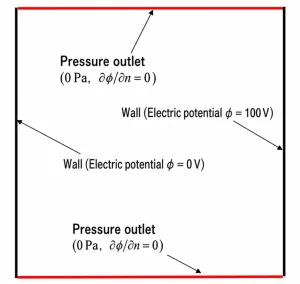
Figure 1: The 2D fluid domain with the electric potential applied on the left and right boundaries.
Simulation Process: UDF Setup for Electric Particle Tracking
W We build a 2D computational domain to capture the fluid physics. The space is meshed with a fully structured grid containing 10,000 quad cells. The boundary conditions drive the physics. The left wall holds an electric potential of 0 V, and the right wall holds a potential of 100 V.
We release a single injection of charged particles into the domain. This particle in electric field Fluent simulation tracks the movement using the Discrete Phase Model (DPM) with two-way coupling. This allows the particle motion and the fluid flow to exchange momentum at every unsteady time step.
To calculate the electric forces, we must solve the Laplace equation for the electrostatic potential:
\frac{\partial^2\phi}{\partial x^2} + \frac{\partial^2\phi}{\partial y^2} = 0
The standard solver does not calculate this automatically. We add a User-Defined Scalar (UDS) to solve this potential across the mesh. We then use User-Defined Memory (UDM) to store the local electric field components. The electric field is found from the gradient of the potential:
E = -\nabla\phi
Finally, a DPM body force UDF reads these values to calculate the actual electric force acting on each particle using the formula:
F = qE
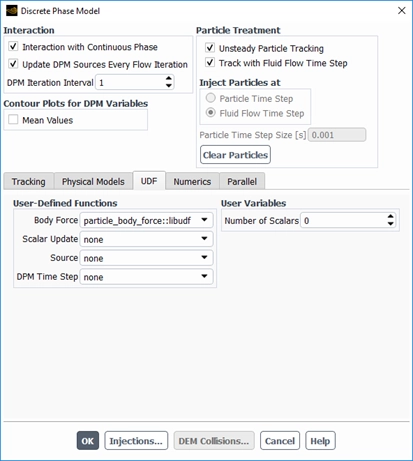
Figure 2: The UDF setup panel needed to apply the electric field effect on the discrete particles.
Post-processing: Electrophoretic Migration Analysis
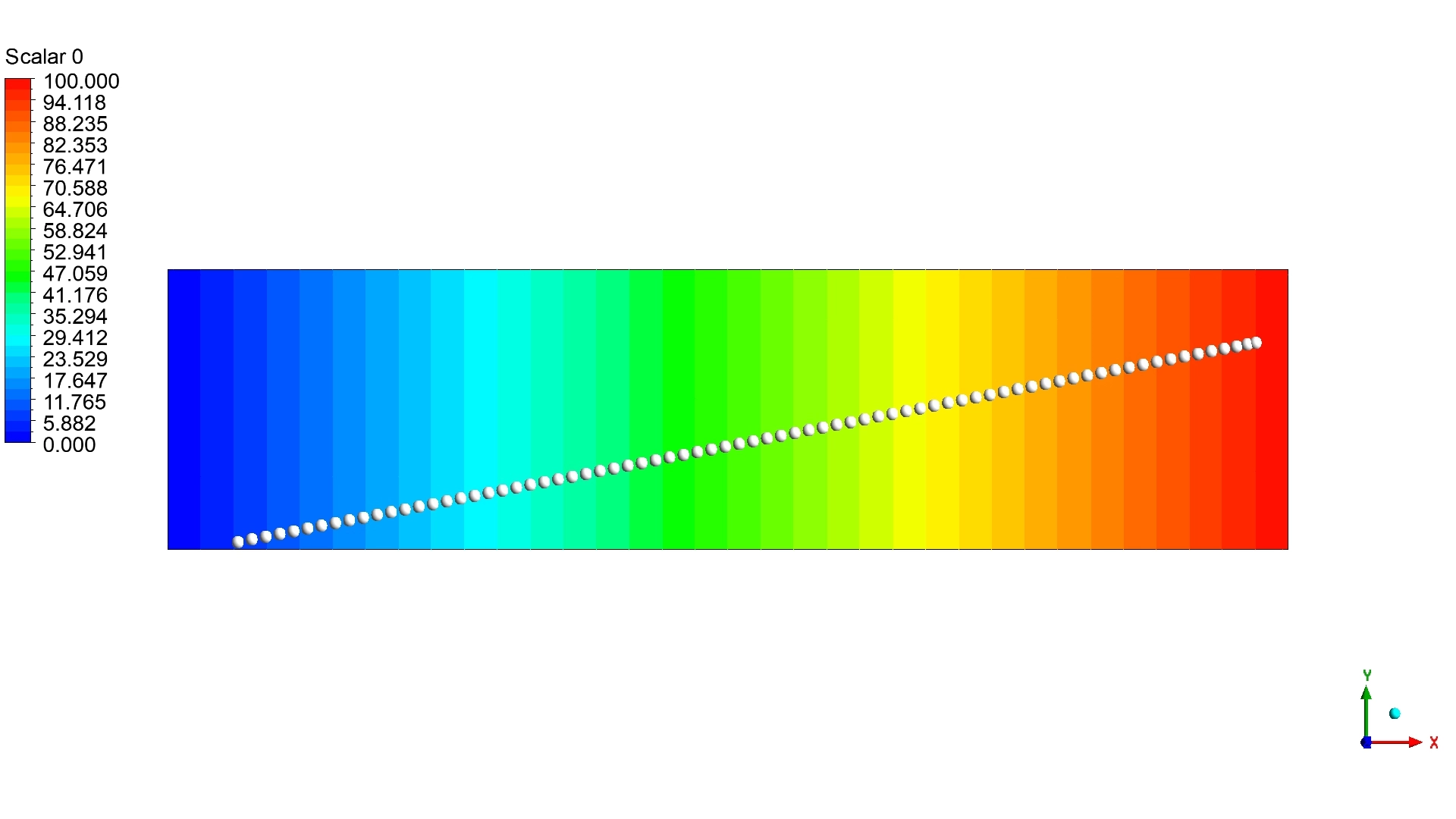
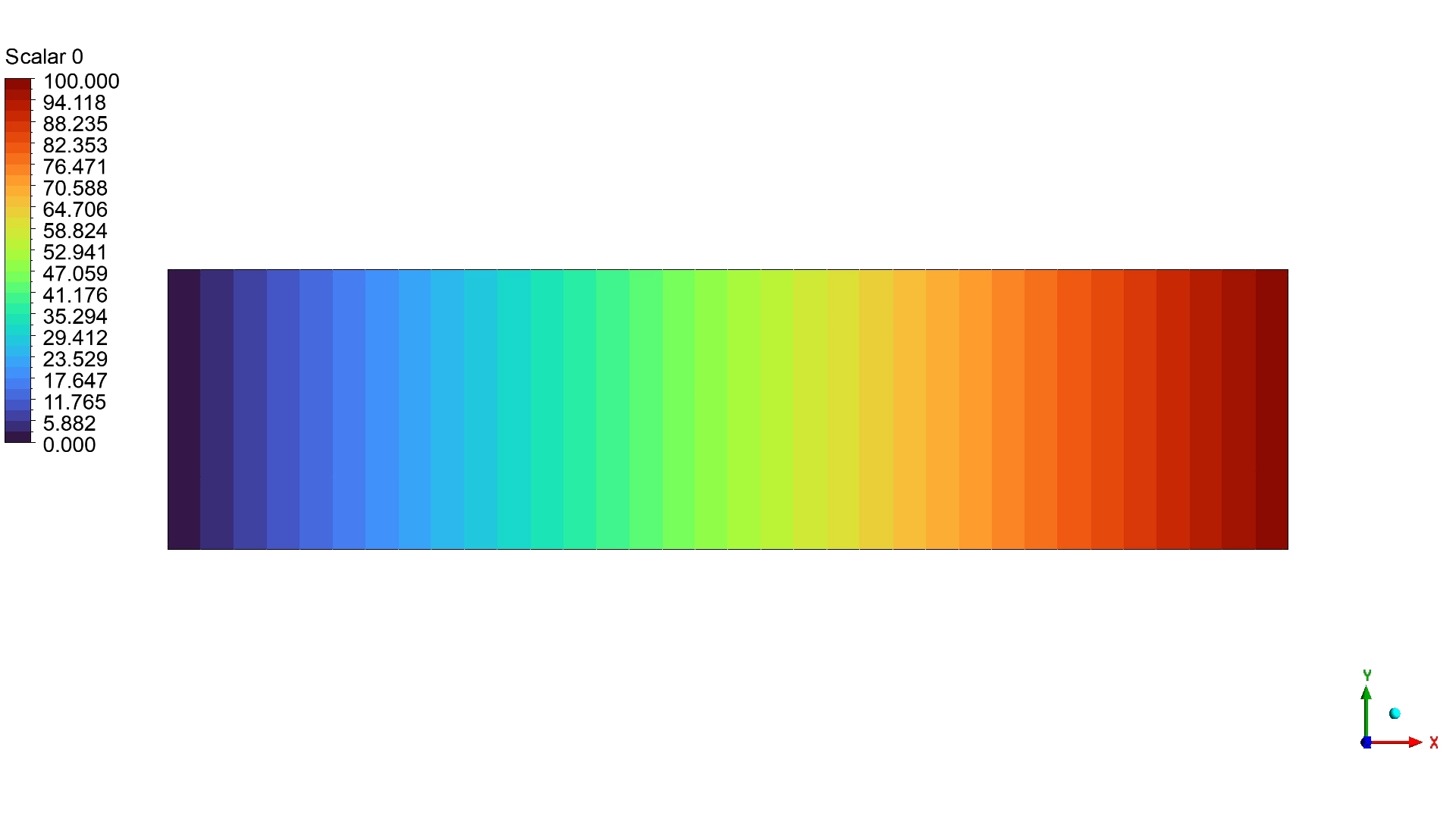
We start by contours to understand how the electric force pushes the particle. The background field contour shows a perfectly smooth spatial gradient. The electric potential increases from 0 at the left boundary to 100 at the right boundary. This confirms a linear potential distribution that perfectly matches the solved Laplace equation.
The particle track line demonstrates physical electrophoretic migration. The particle stays entirely inside the domain and never touches the outlet boundaries. This proves the particle moves primarily due to the strong electric force rather than simply following the bulk fluid flow direction.
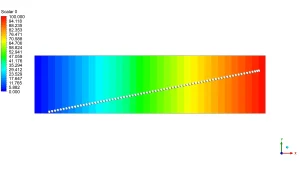
Figure 3: Particle trajectory migrating across the linear electric potential contour.
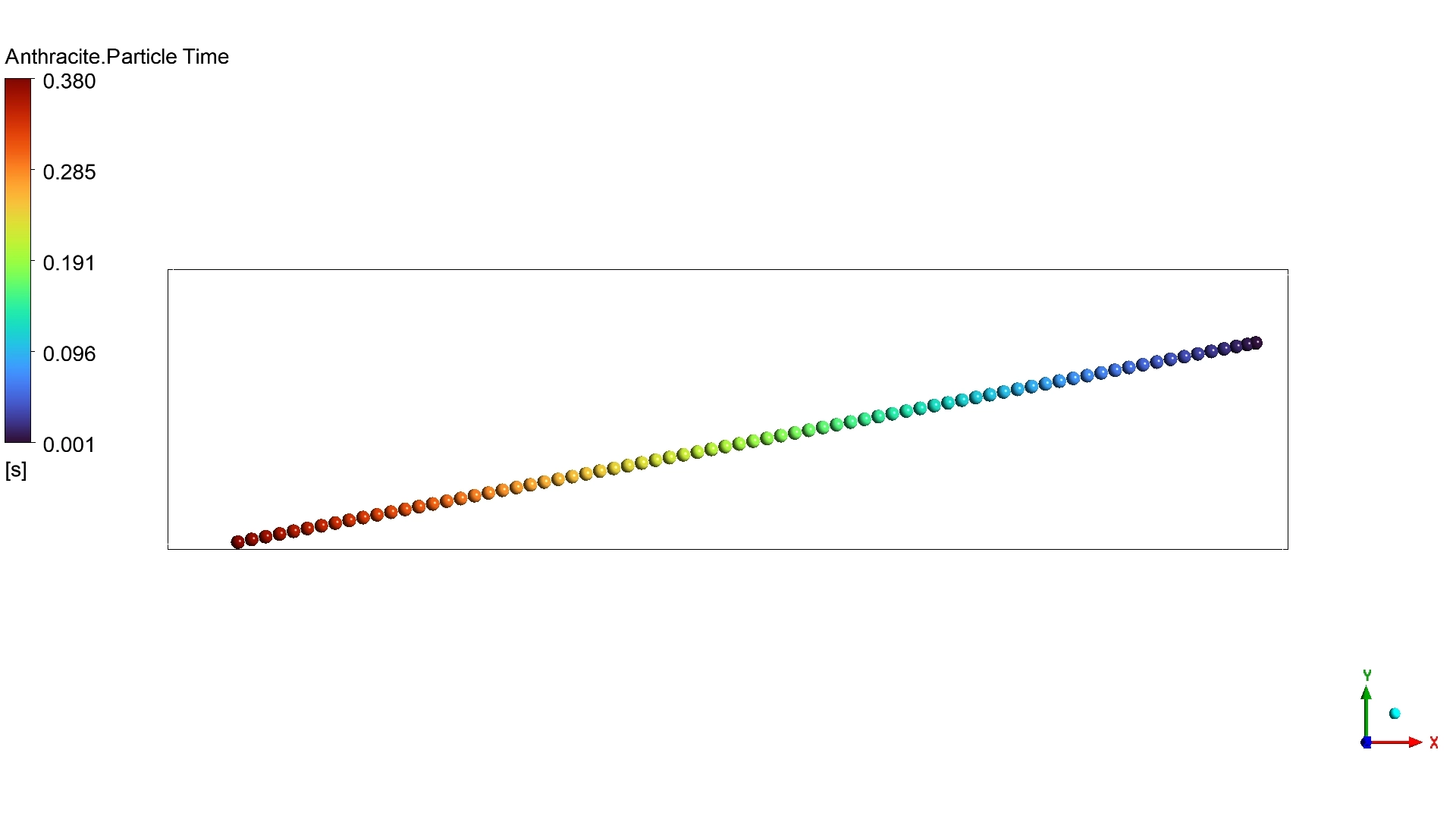
The particle time graph explains the transit duration across the domain. The track segment near the high-potential right side carries the lowest elapsed time of 0.001 s. The segment near the low-potential left side reaches the highest elapsed time of 0.380 s. This physical data proves the particle was released in the high-potential region and drifted directly toward the low-potential region. Over this full 0.380 s transit, the Coulomb force pushes the charged particle downhill along the potential gradient. This behavior confirms that the UDF-UDS-UDM calculation chain successfully applies the electric field to the particle in electric field CFD simulation.
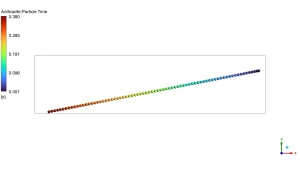
Figure 4: Particle trajectory colored by time showing drift toward the low-potential region.
FAQs About Electric Field Physics
- Why do we need a UDF code for this calculation? The standard fluid solver does not automatically calculate electrical body forces on moving items. We must write a custom code to calculate the potential gradient and apply the correct Coulomb force to the particles.
- Why does the particle move diagonally? The particle is pushed sideways by the electric field between the left and right walls. At the same time, the background fluid pushes it forward. These two different forces combine, creating a diagonal travel path.
- What is the purpose of the Laplace equation here? The Laplace equation calculates how the voltage changes smoothly across the empty space between the 0 V wall and the 100 V This creates the invisible gradient field that pushes the charged particles









Reviews
There are no reviews yet.