
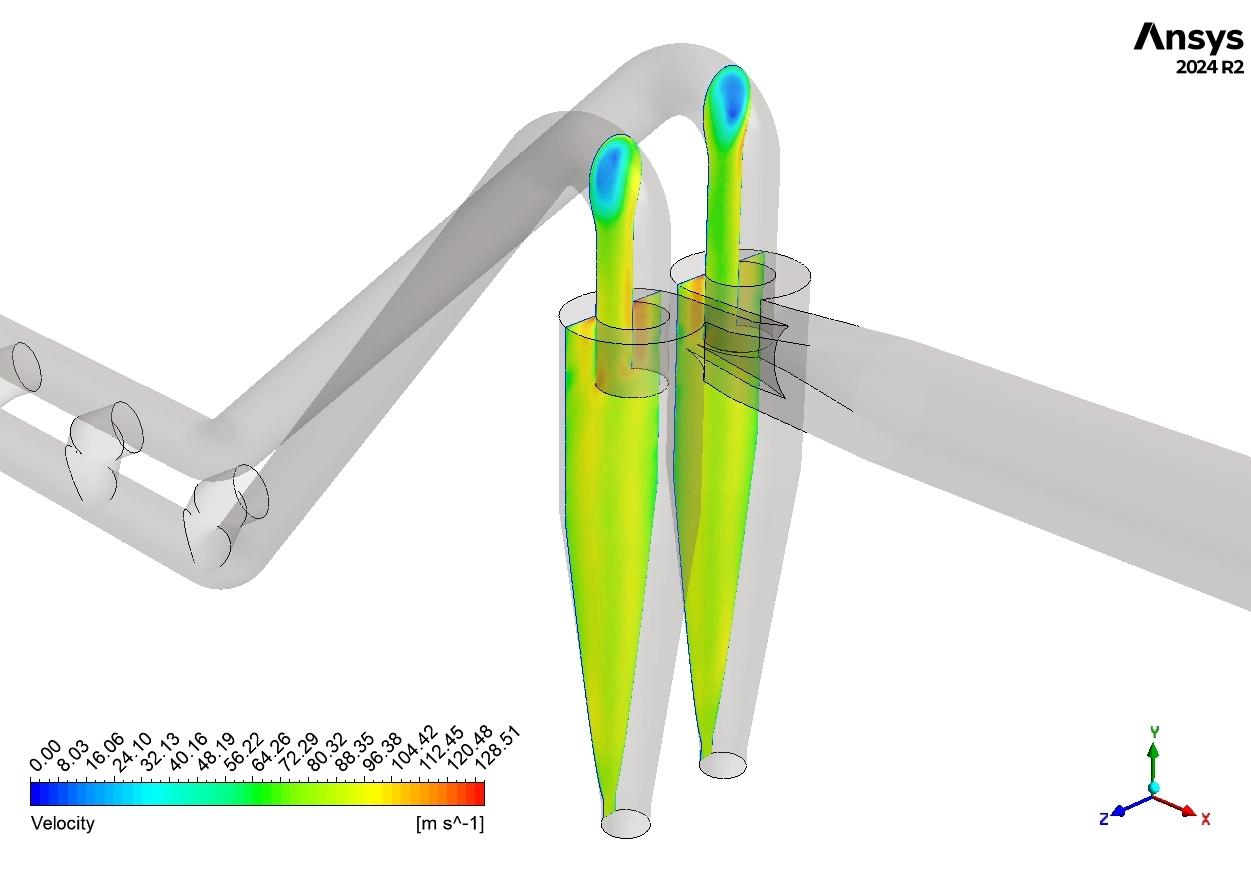
Factories use large dust separators to clean dirty air. When engineers connect multiple tanks together, they face a big problem. The air loses a lot of mechanical energy as it travels through the pipes and spins inside the tanks. This physical energy loss is called a pressure drop. This report studies a real industrial model. We focus heavily on the pipelines and the Pressure Drop in Industrial Parallel Cyclones. By understanding the aerodynamic friction, designers can save electrical power. To learn more about separating heavy particles from air, please check our Separators CFD simulation category.
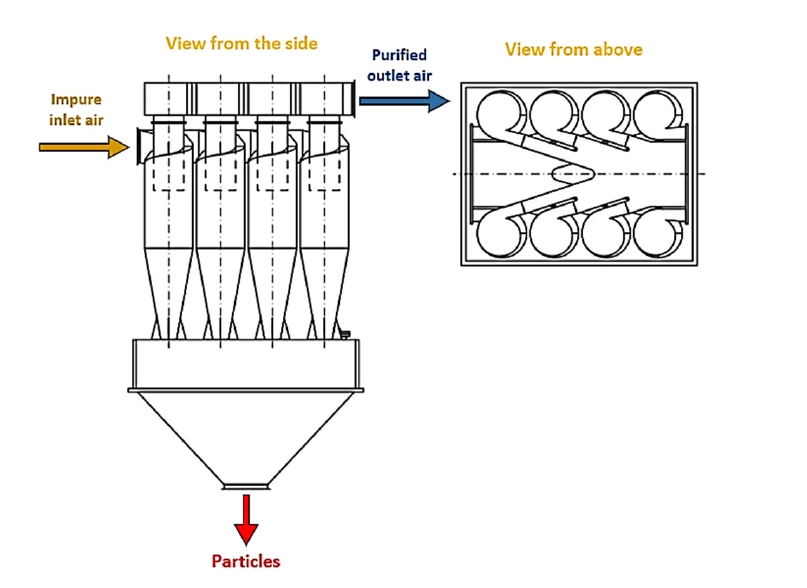
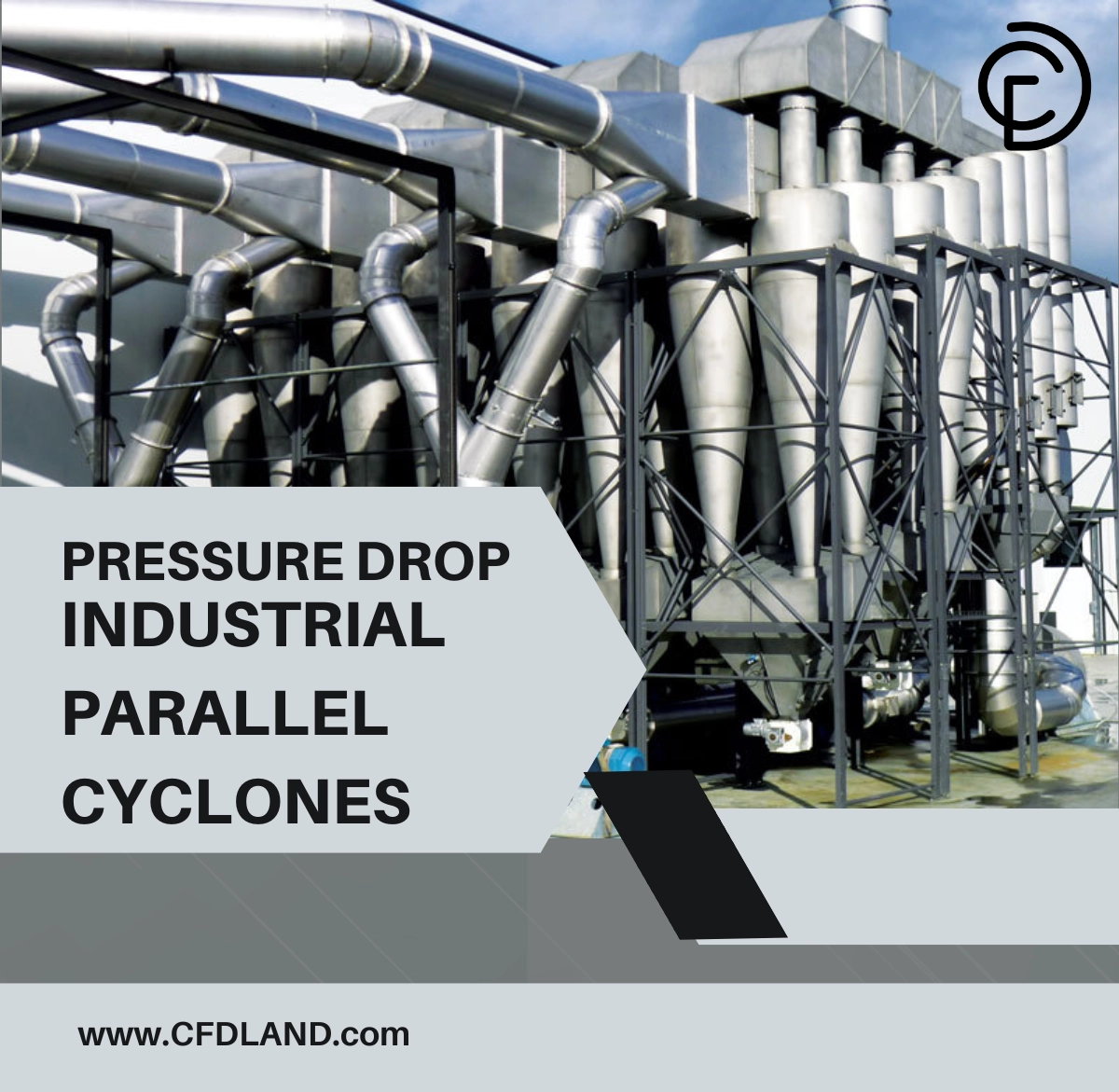
Figure 1: Connecting cyclones in parallel at the same level – Image taken from Comparative Study of Single Cyclone Validation and Predictive Simulation of Multi-Cyclone Configurations
Simulation process: Polyhedral Meshing
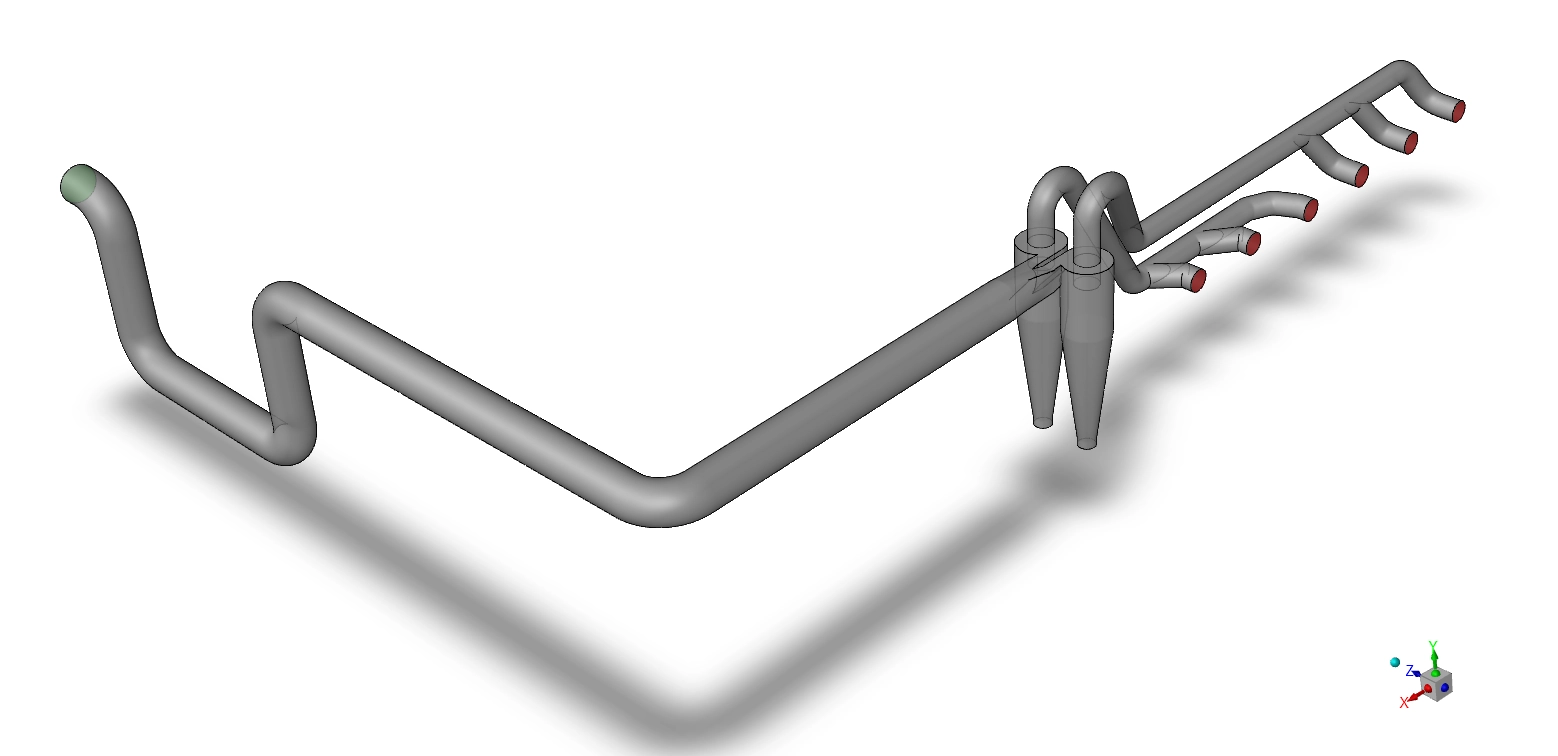
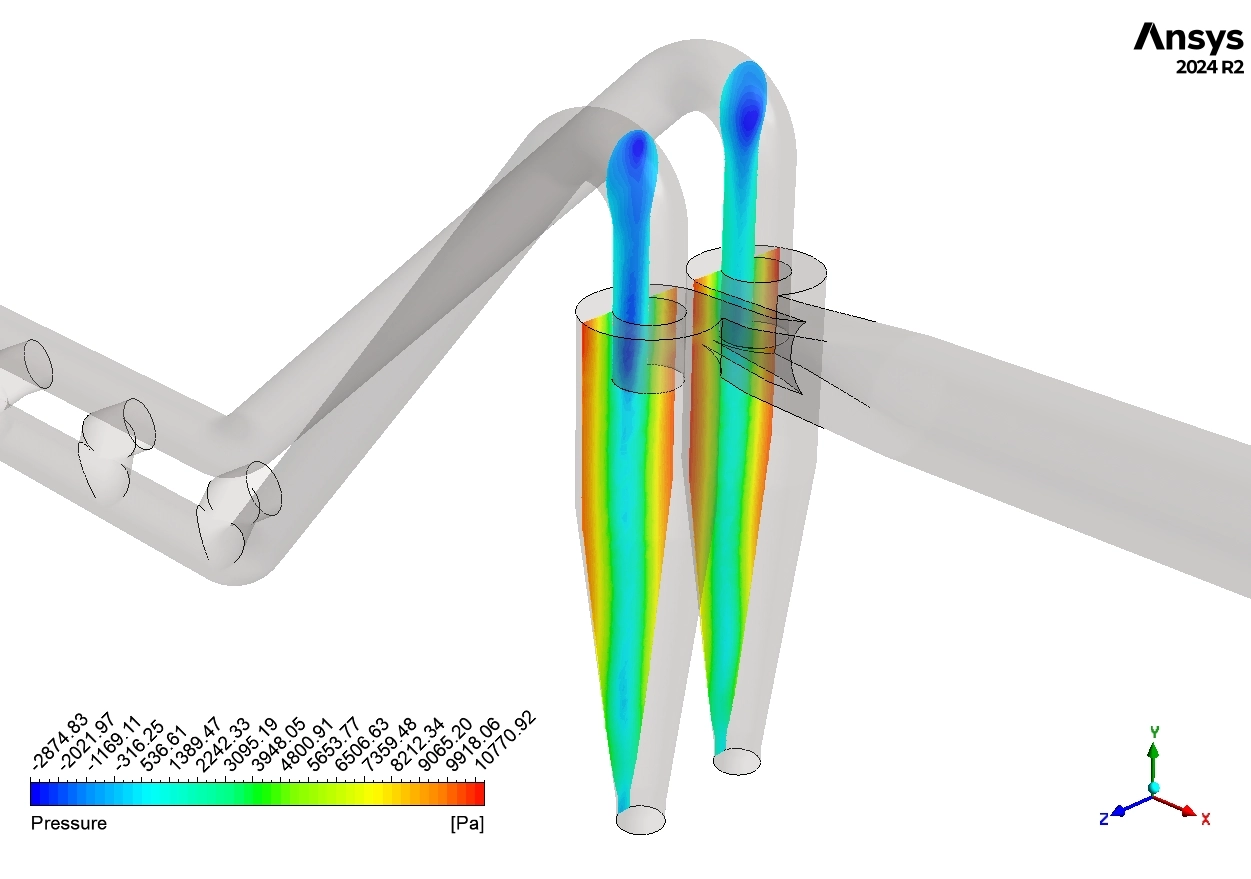
We built a 3D computer model of a twin cyclone system. This real industrial model has a main inlet pipe and a common outlet tube. The fluid solver divides this large computer space into 3,155,124 polyhedral cells. We use polyhedral cells because they calculate fast, highly curved air much better than standard triangular shapes.
For the boundary conditions, we force a mass flow rate of 47.15 kg/s of dirty air into the main pipe. The computer solver then calculates how this large amount of air travels through the parallel cyclone separators. It checks how the air distributes, how it creates a spinning vortex, and how it finally leaves through the top tubes.
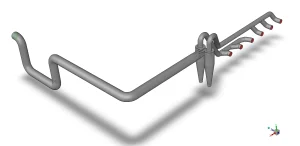
Figure 2: The 3D geometry of the parallel cyclones, including the complex main inlet pipe and the outlet manifold.
Post-processing: Analyzing 140.67 m/s Velocity and Wall Friction
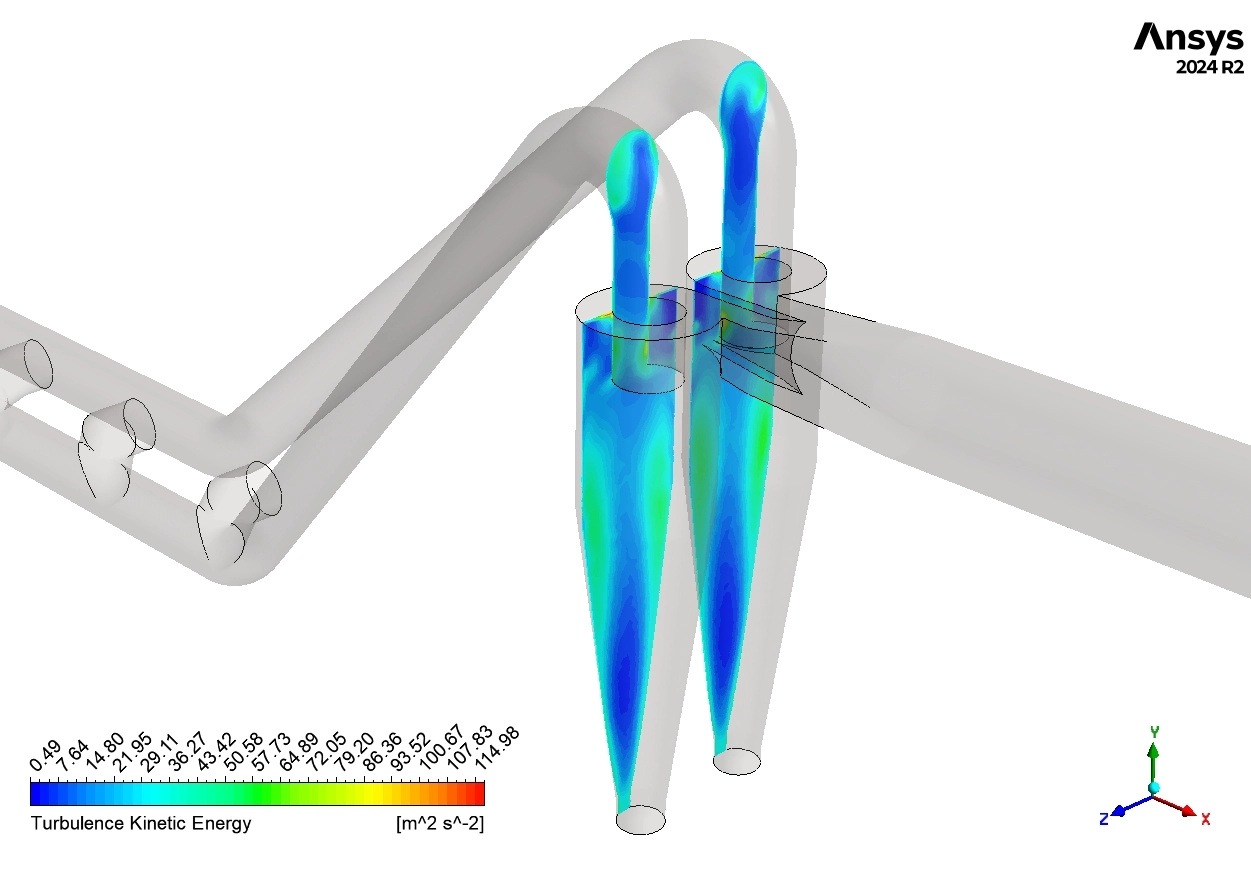
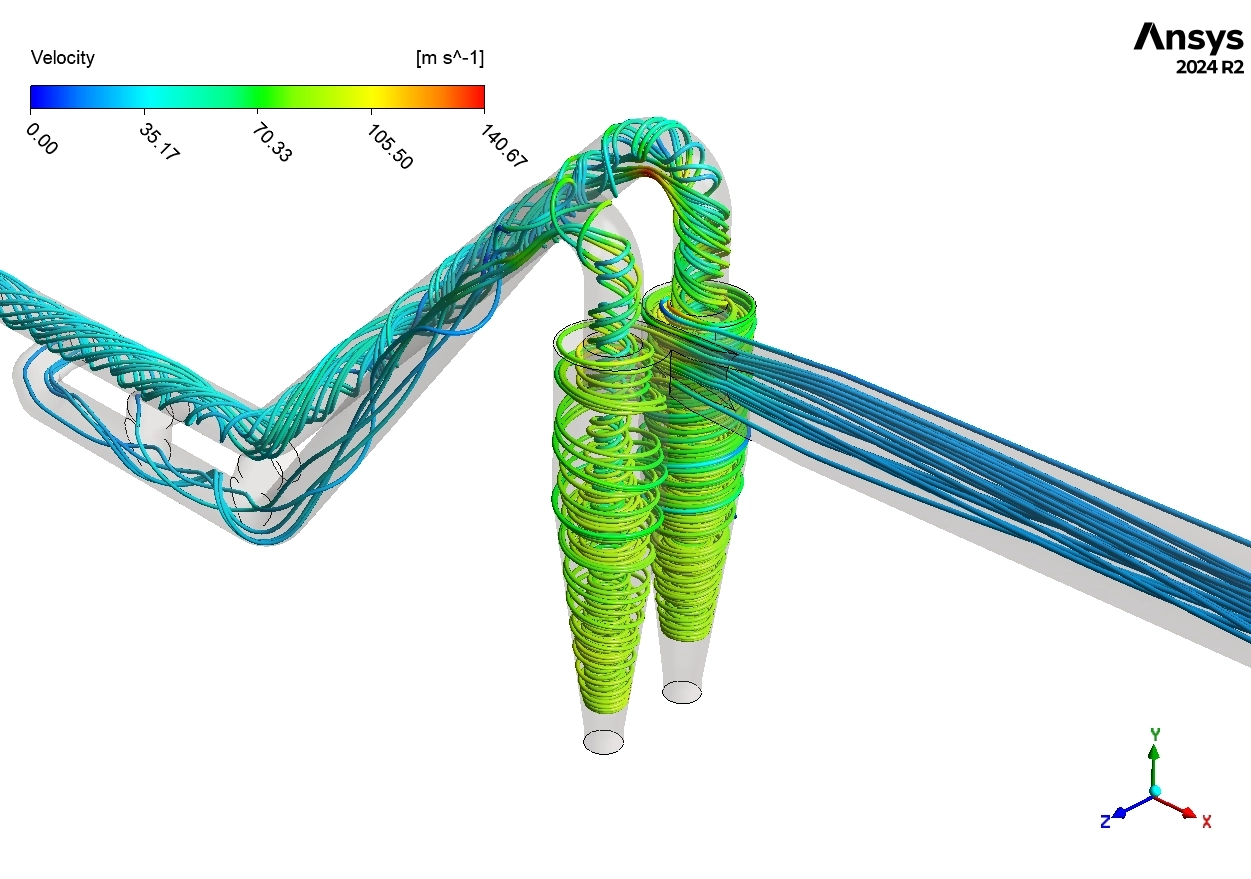
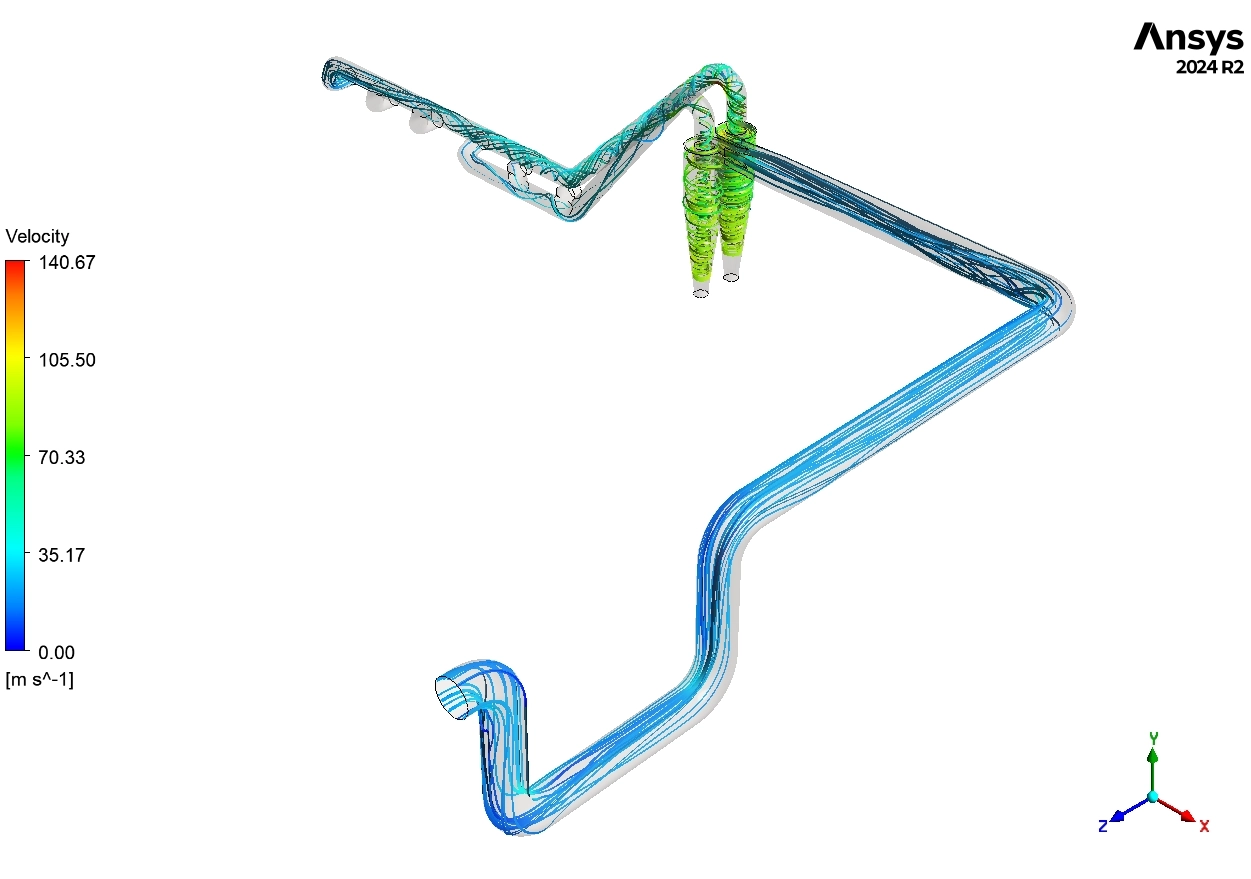
We look at the contours to understand the physics of the energy loss. First, the Velocity Streamlines show how the air speeds up. The air enters the main pipe very smoothly at a slow speed of 5 to 15 m/s. When it hits the round tanks, the air starts to spin very fast. The speed reaches 70 to 105 m/s near the walls. Inside the center exit tubes, the spinning air hits an extreme peak velocity of 140.67 m/s. This fast spinning is necessary for the machine to work. The strong centrifugal force pushes heavy dust outward against the walls. However, pushing air at 140.67 m/s creates extreme friction against the steel walls.
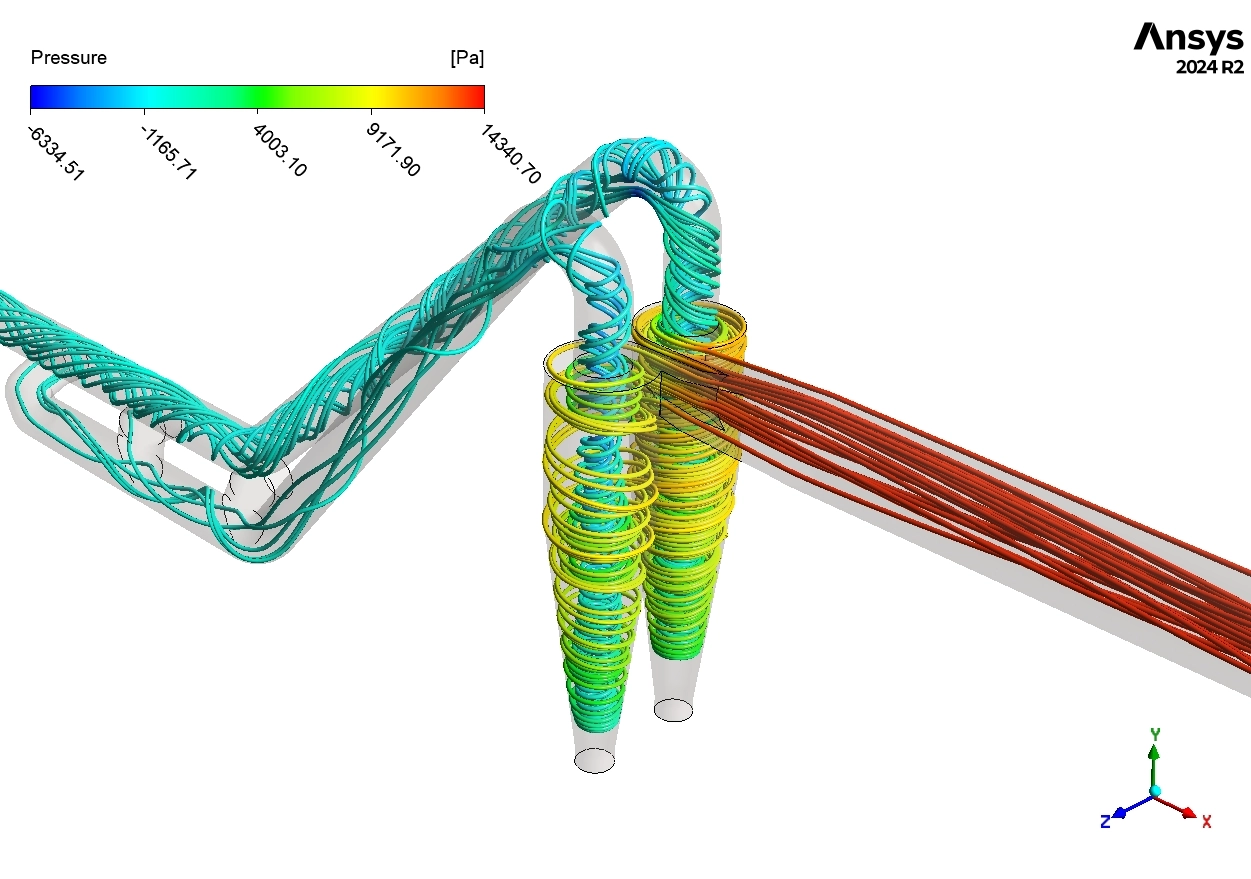
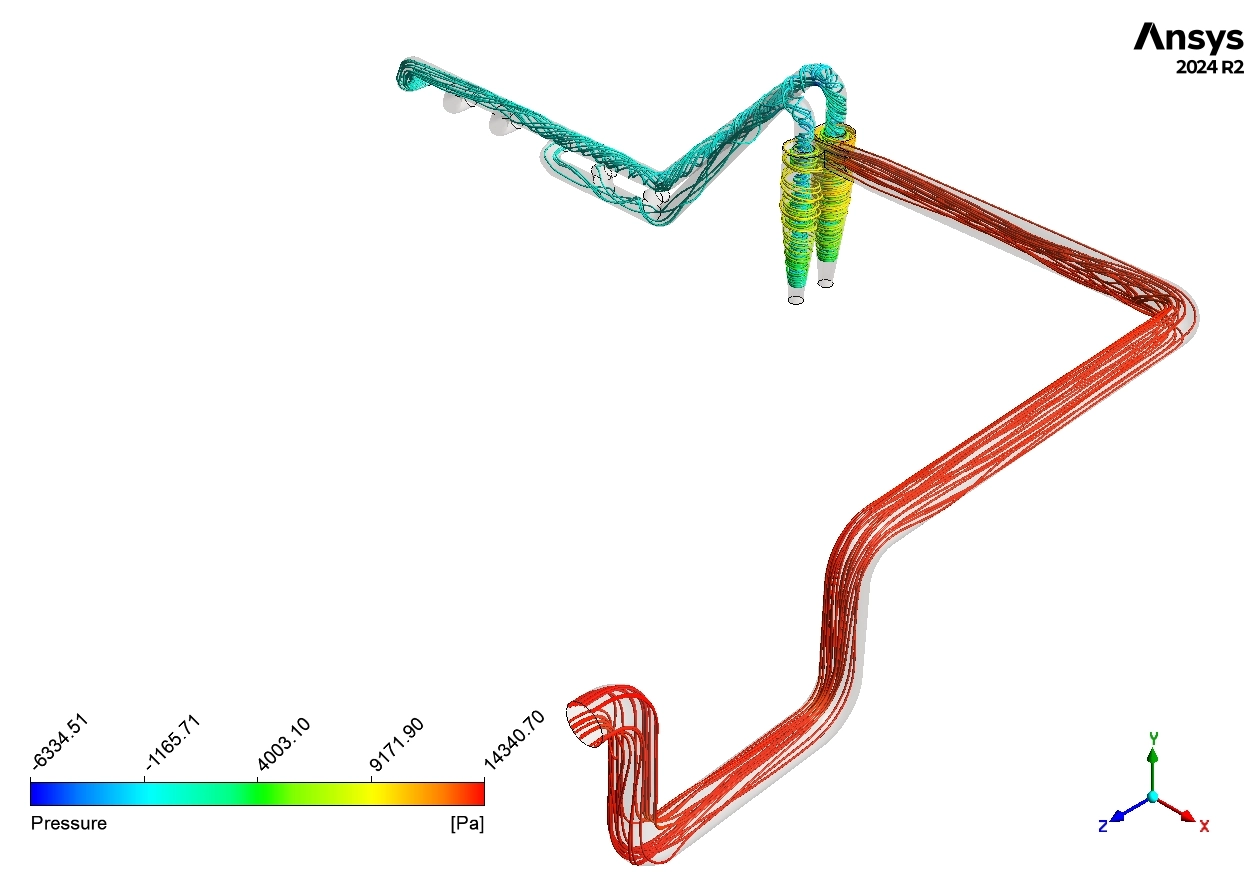
We then check the Pressure Streamlines to measure this specific energy loss. The dirty air enters the system carrying a high pushing pressure of 14,340.70 Pa. As the air swirls rapidly, the heavy wall friction eats this mechanical energy. Therefore, the clean air leaves the top pipes at a negative pressure of -6334.51 Pa. The calculation proves that the system suffers a high pressure drop of 14,142.564 Pa.
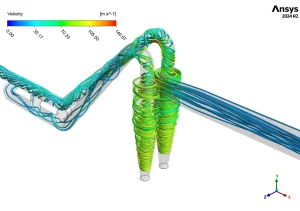
Figure 3: Velocity streamlines from 0.00 to 140.67 m/s, displaying the fast rotational airflow inside the tanks.
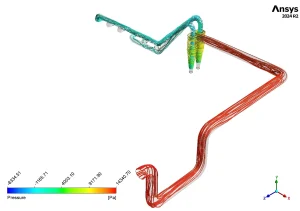
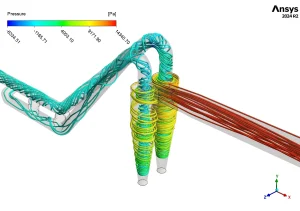
Figure 4: Pressure streamlines ranging from -6334.51 Pa to 14,340.70 Pa, visualizing the high aerodynamic energy loss.
This Pressure Drop in Industrial Parallel Cyclones data is the most important result of this industrial cyclone simulation. A total drop of 14,142.564 Pa is very high. It means the factory must install a huge electrical fan just to push the air through the machine. Furthermore, the visuals show an imbalance. The upper sections receive slightly more air pressure than the lower sections. By changing the shape of the main inlet pipe, engineers can balance the airflow perfectly. This will lower the aerodynamic friction and reduce the electrical power costs.
Frequently Asked Questions (FAQ)
- Why does the airflow velocity increase so rapidly inside the tanks? The machine forces the air from a wide straight pipe into a narrow, circular cone. This structure forces the air to spin into a tight vortex. It must reach a high speed of 140.67 m/s to keep the same amount of mass moving forward.
- What is the main cause of the 14,142.564 Pa pressure drop? The high pressure drop happens because of aerodynamic friction. When the high-speed air rubs aggressively against the solid steel walls, it loses its mechanical energy as heat.
- Why do you use polyhedral cells for this specific system? Polyhedral cells have multiple flat sides. This complex shape helps the computer solver calculate highly curved, swirling air much more accurately and efficiently than standard shapes.


Reviews
There are no reviews yet.