
Do you know how we can catch wind energy without spinning blades? Traditional wind turbines are very big. They are loud. They can also be dangerous for birds. Today, engineers use a new design called a vortex bladeless wind turbine. This machine does not spin at all. Instead, it shakes and vibrates in the wind to make electricity. It uses special springs and a tall mast to turn wind pushes into safe, quiet power.
To build these new machines, engineers must test them first. They use computers to see how the invisible wind pushes the solid metal mast. This science is called fluid-structure interaction. If you want to master this skill, studying our professional renewable energy CFD simulation library is the perfect choice. In this tutorial, we will use ANSYS Fluent and ANSYS Mechanical to understand the physics of wind-induced vibration and discover how wind can generate power without any rotating blades.
- Reference [1]: Hamdan, Hasan, et al. “Experimental and numerical study of novel vortex bladeless wind turbine with an economic feasibility analysis and investigation of environmental benefits.” Energies1 (2023): 214.
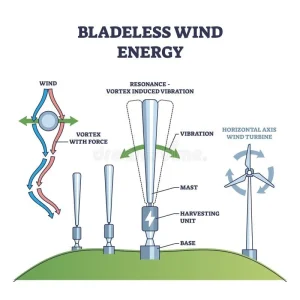
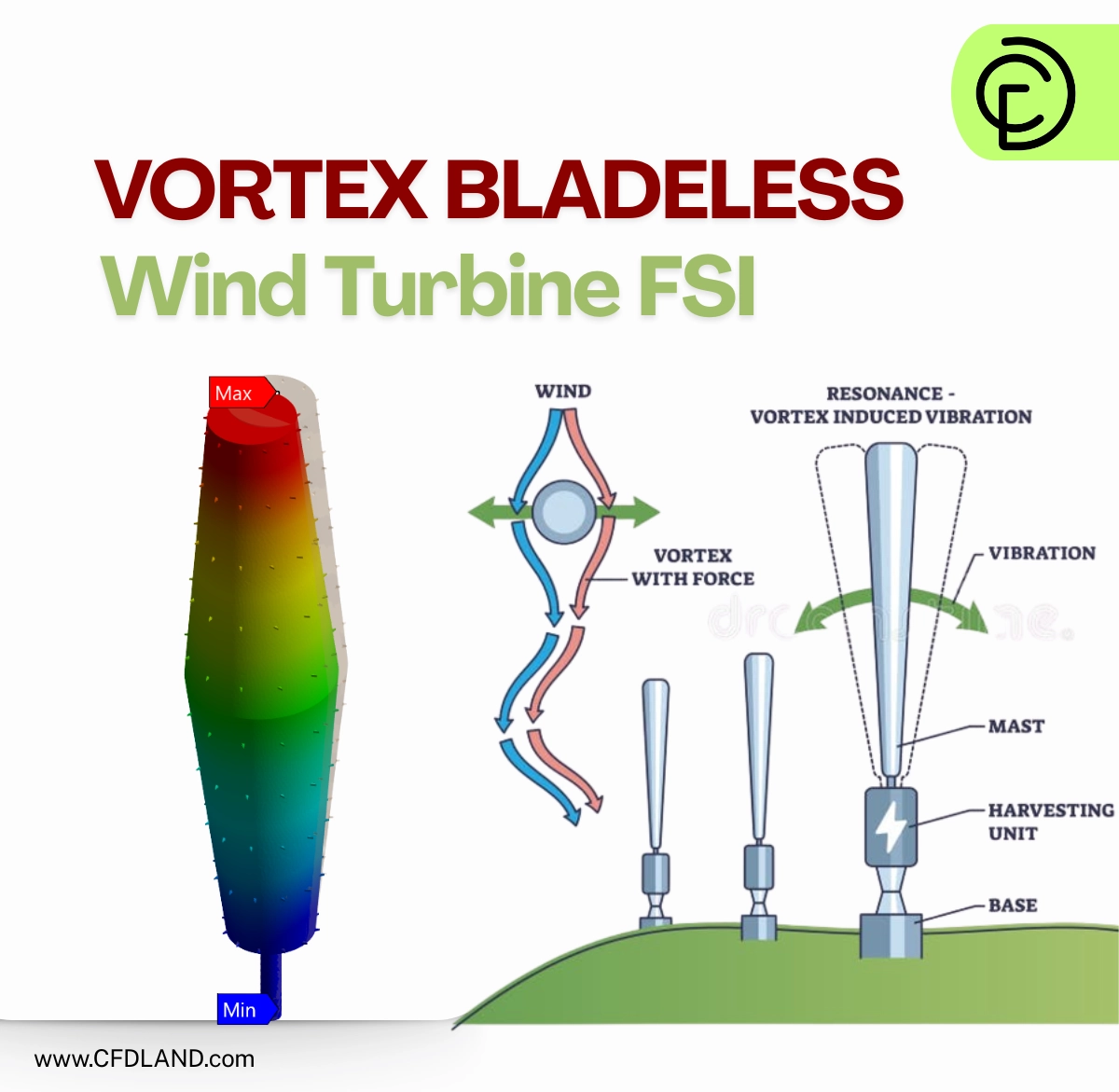
Figure 1: Bladeless Wind Energy with Power from Air Flow Vibration Outline Diagram
Simulation Process: Two-Way FSI Physics and Wind Setup
To start our simulation, we must set up the physics correctly. We use a method called two-way fluid-structure interaction. This means the wind pushes the solid mast, and the moving mast pushes the wind back. We connect the fluid solver to the transient structural solver to calculate this double effect.
First, we build the mesh with exactly 1,582,201 cells. We use very small cells near the mast to capture the wind boundary layer perfectly. Second, we set the incoming wind speed to exactly 10 m/s. We turn on the k-omega SST turbulence model. We use this specific model because it is very good at calculating the swirling, spinning wind behind round objects. Finally, we apply a fixed support at the turbine base. This mimics a real heavy turbine that is bolted tightly to the ground.
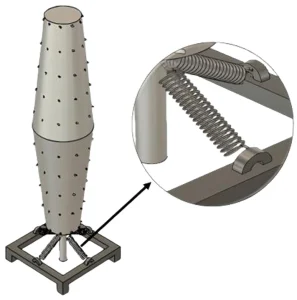
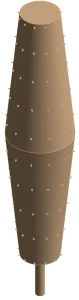
Figure 2: Schematic of a VBWT system with base and spring design.
Post-processing: Physics of Wind Swirls and Mast Bending
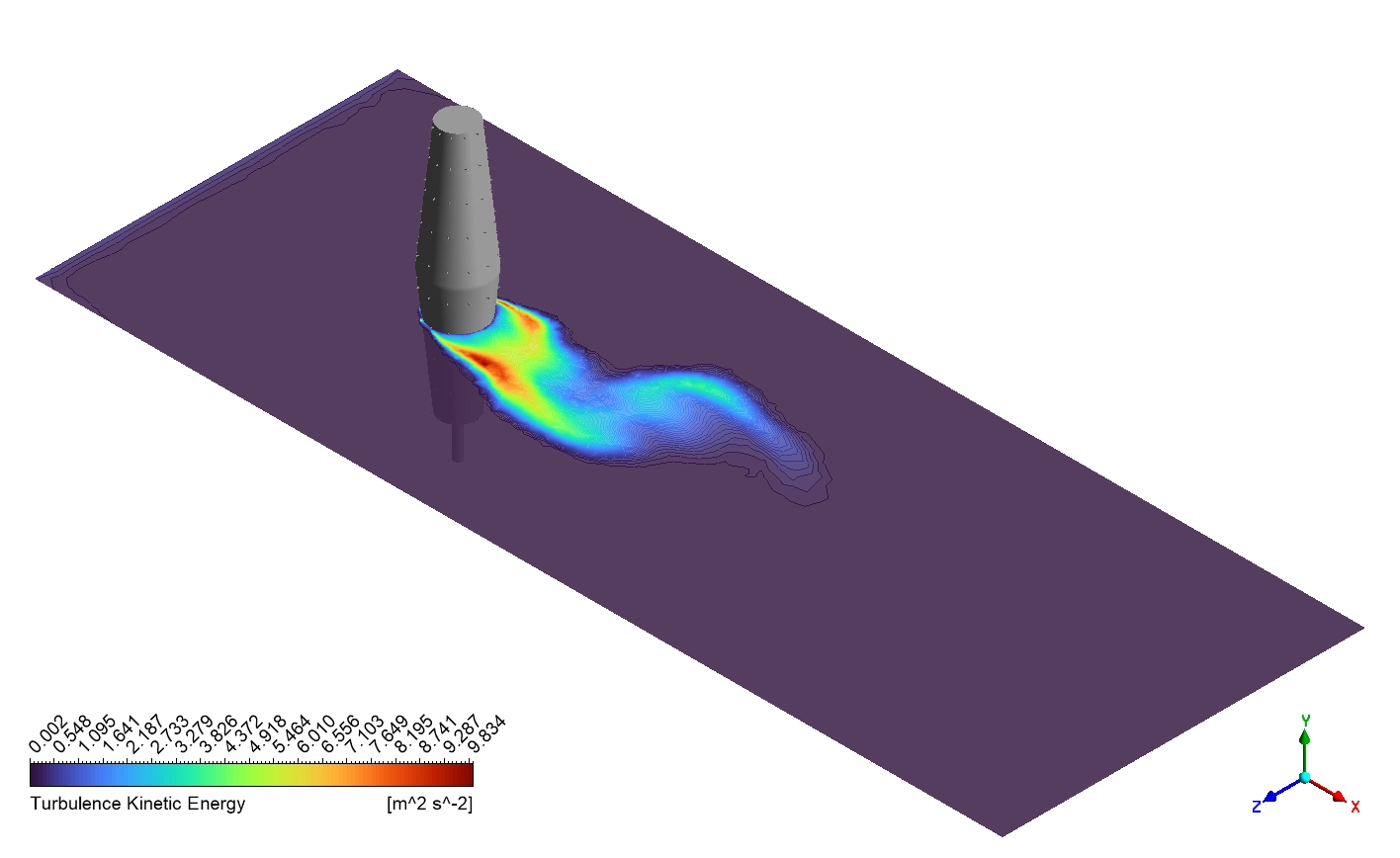
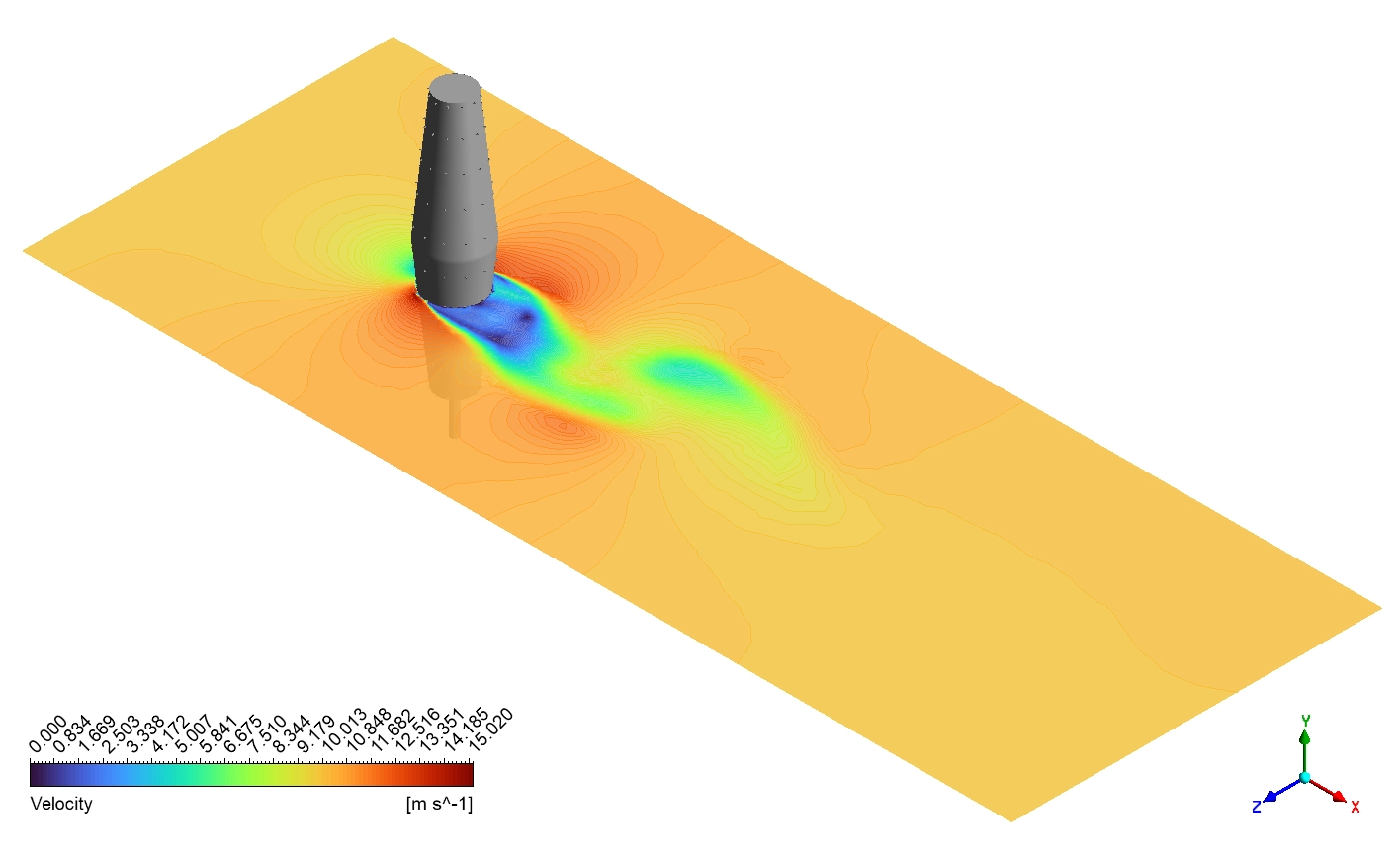
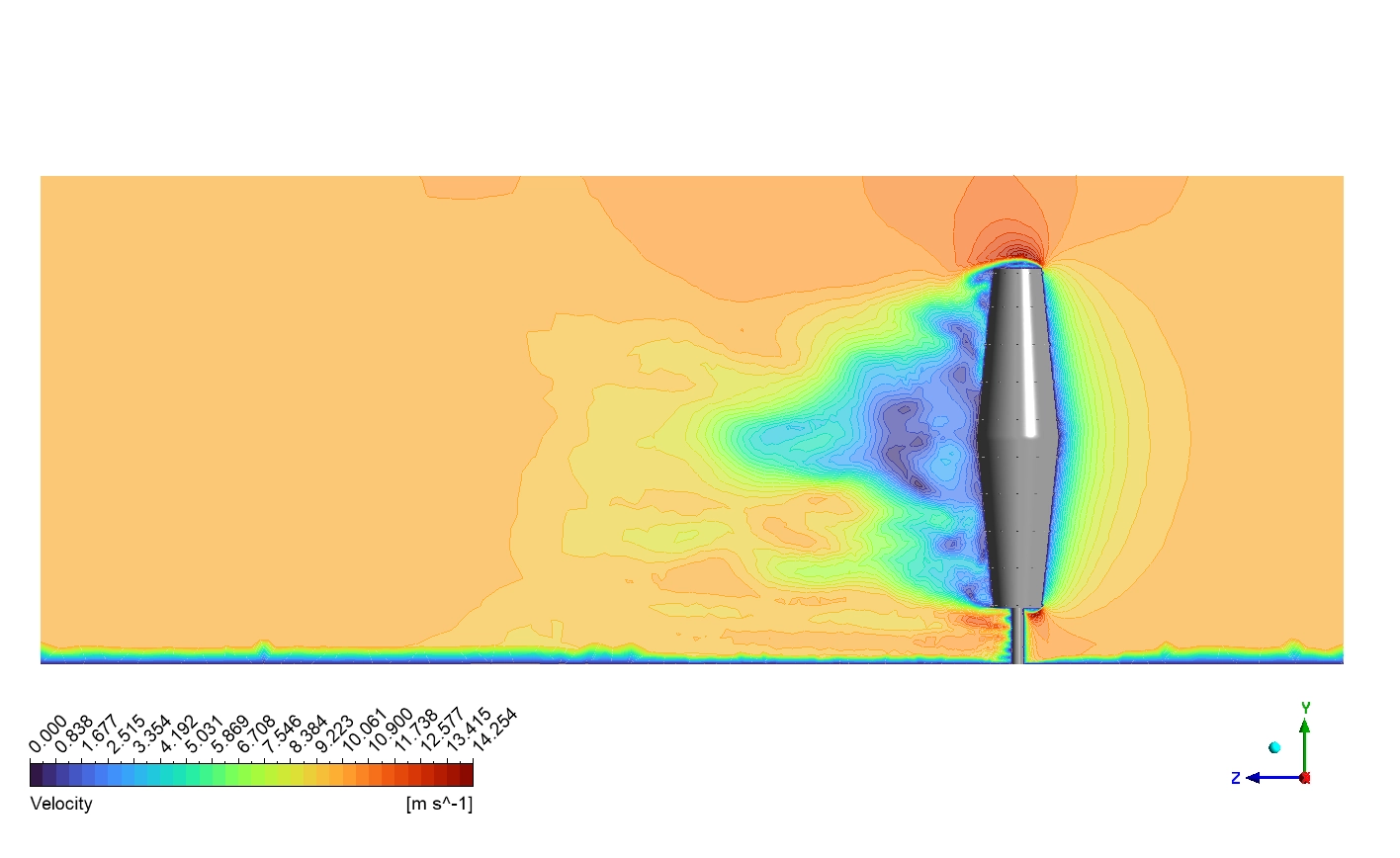
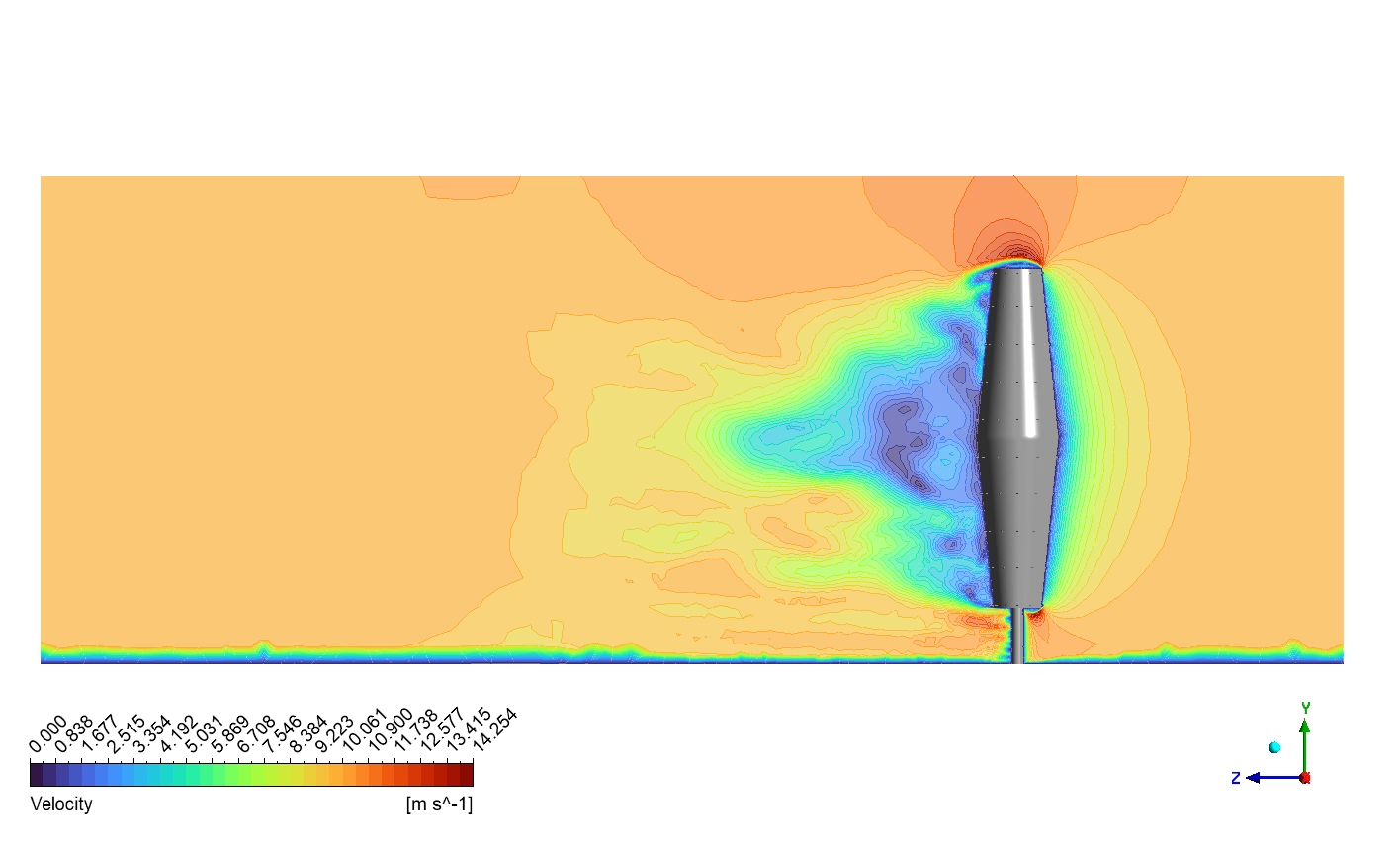
Now we will look deeply into the visual data to understand the exact physics of the vibrating mast. We will study the wind swirls, the bending distance, the wind pushes, and the metal stress. First, we analyze the wind velocity contour (Figure 6). This image shows the air flowing past the mast. The fast wind hits the front and slows down. Behind the mast, we see a wavy blue, green, and yellow pattern. This physical effect is called the Von Karman Vortex Street. The wind breaks into swirling circles. These circles push the mast from left to right very fast. This alternating push is the exact engine that makes the bladeless turbine vibrate and create energy.
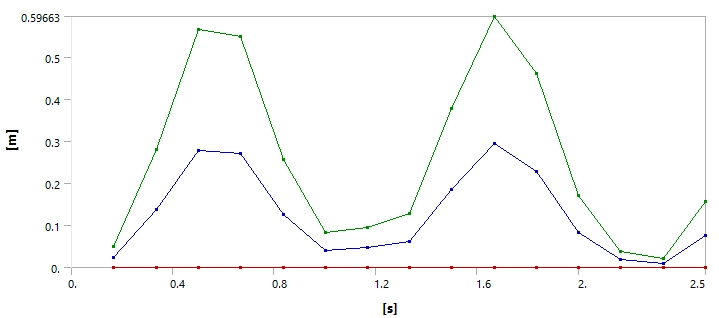
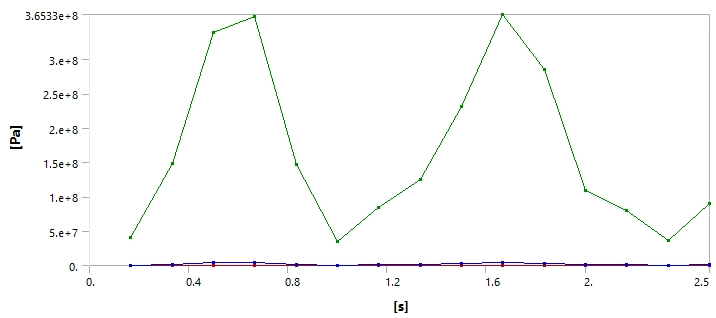
Second, we study the total deformation line graph over time (Figure 4). The line shows the mast bending back and forth. The green line proves the maximum total deformation reaches exactly 0.597 m. This huge bend happens precisely at 0.45 s and again at 1.65 s. This proves the mast completes two full vibration cycles in the wind. The blue line shows the average bend stays near 0.28 m.
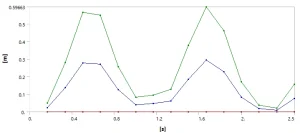
Figure 4: The average and maximum total deformation line graph over time, proving two clear vibration cycles.
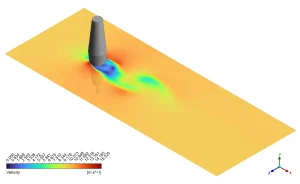
Figure 6: The wind velocity contour showing the swirling vortex shedding pattern behind the bladeless mast.
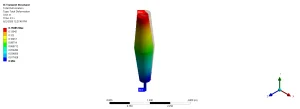
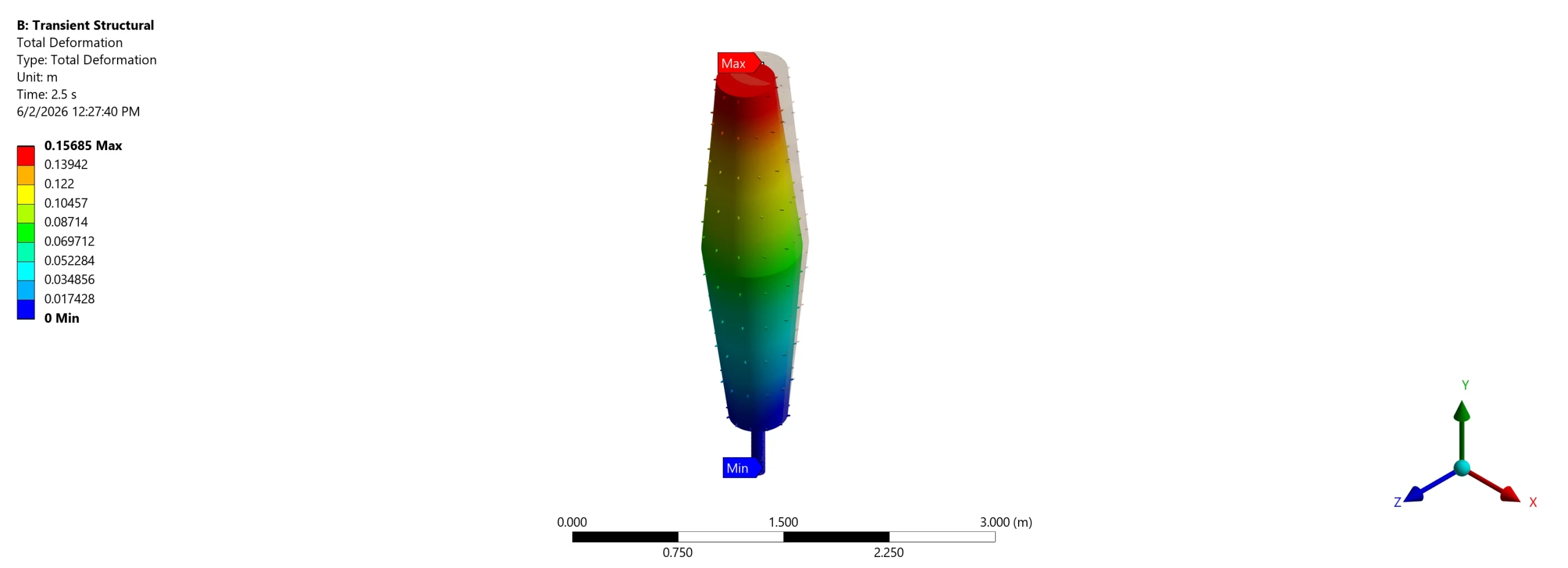
Figure 7: The 3D total deformation contour at exactly 2.5 s, showing the red peak movement at the top and zero movement at the fixed base.
Figure 8: The 3D total deformation animation during the simulation.
Finally, we look at the 3D total deformation contour snapshot at the exact time of 2.5 s (Figure 7). The legend shows the maximum bend is exactly 0.1568 m at this specific moment. The top of the mast is bright red because it is free and moves the most. The bottom base is dark blue with exactly 0 m of movement. This proves the fixed support base holds the structure tightly while the top swings freely to catch the wind.
The table below shows the exact structural and aerodynamic results calculated by the two-way FSI solver.
Frequently Asked Questions (FAQ)
- What is a vortex bladeless wind turbine?
- It is a new renewable energy machine. It does not have spinning blades. It has a tall, flexible mast. When wind flows past it, the wind creates swirling circles that push the mast. The mast shakes and vibrates, and a generator at the bottom turns this shaking into clean electricity.
- Why do we use two-way fluid-structure interaction?
- We use two-way coupling because the wind and the mast affect each other at the same time. The wind pushes the mast, causing it to bend. But when the mast bends, it changes the shape of the air flowing around it. We must calculate both actions together to get true physics.



Reviews
There are no reviews yet.