



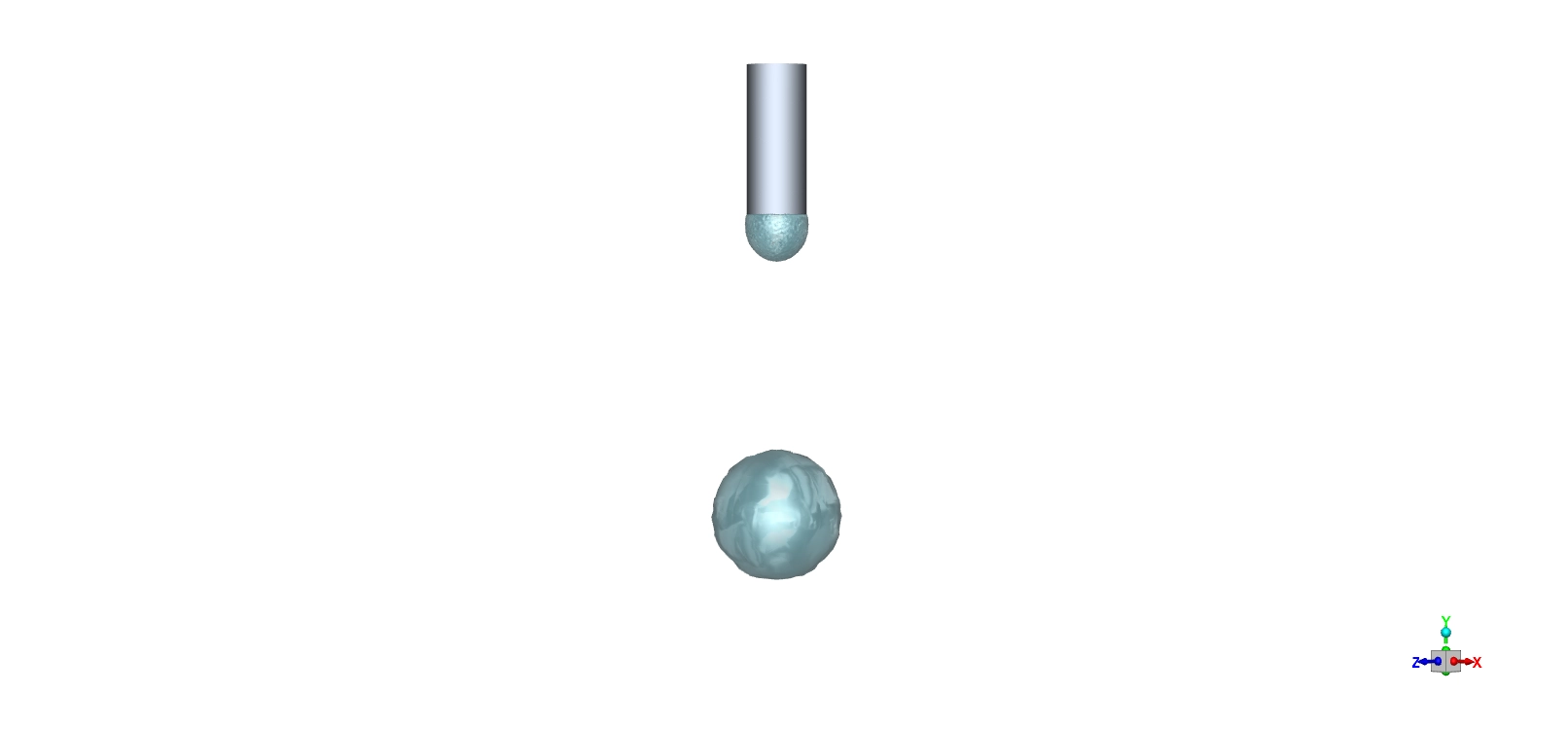
Have you ever watched a dripping water faucet? The water does not fall in one thick line. It stretches into a thin neck and then snaps into tiny, perfect drops. Engineers call this physical event capillary thinning and pinch-off. This very fast action is incredibly important for modern technology. It happens inside inkjet printers, car engine fuel sprays, and medical sprayers. If the drop breaks too early or too late, the machine will completely fail.
Engineers must see exactly how this liquid stretches and snaps. To see this fast event clearly, we use ANSYS Fluent to model all simulations here. By studying a highly accurate Multiphase CFD Simulation, engineers can learn the exact physics behind the falling drops. This tutorial will entice you to look deeper into fluid behavior and help you master droplet formation physics.
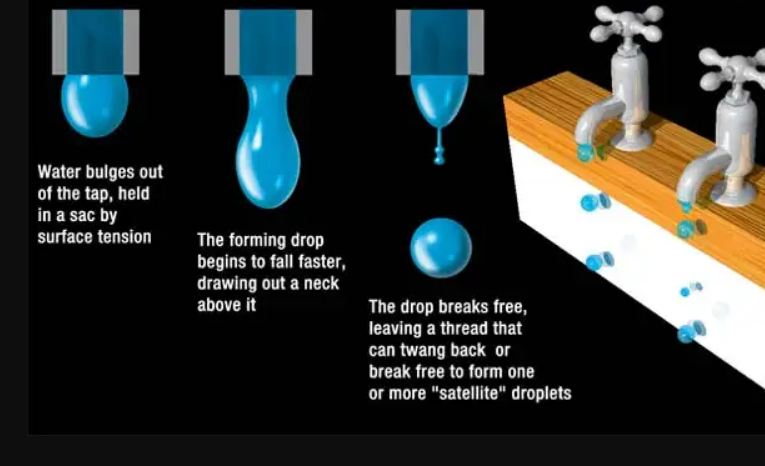
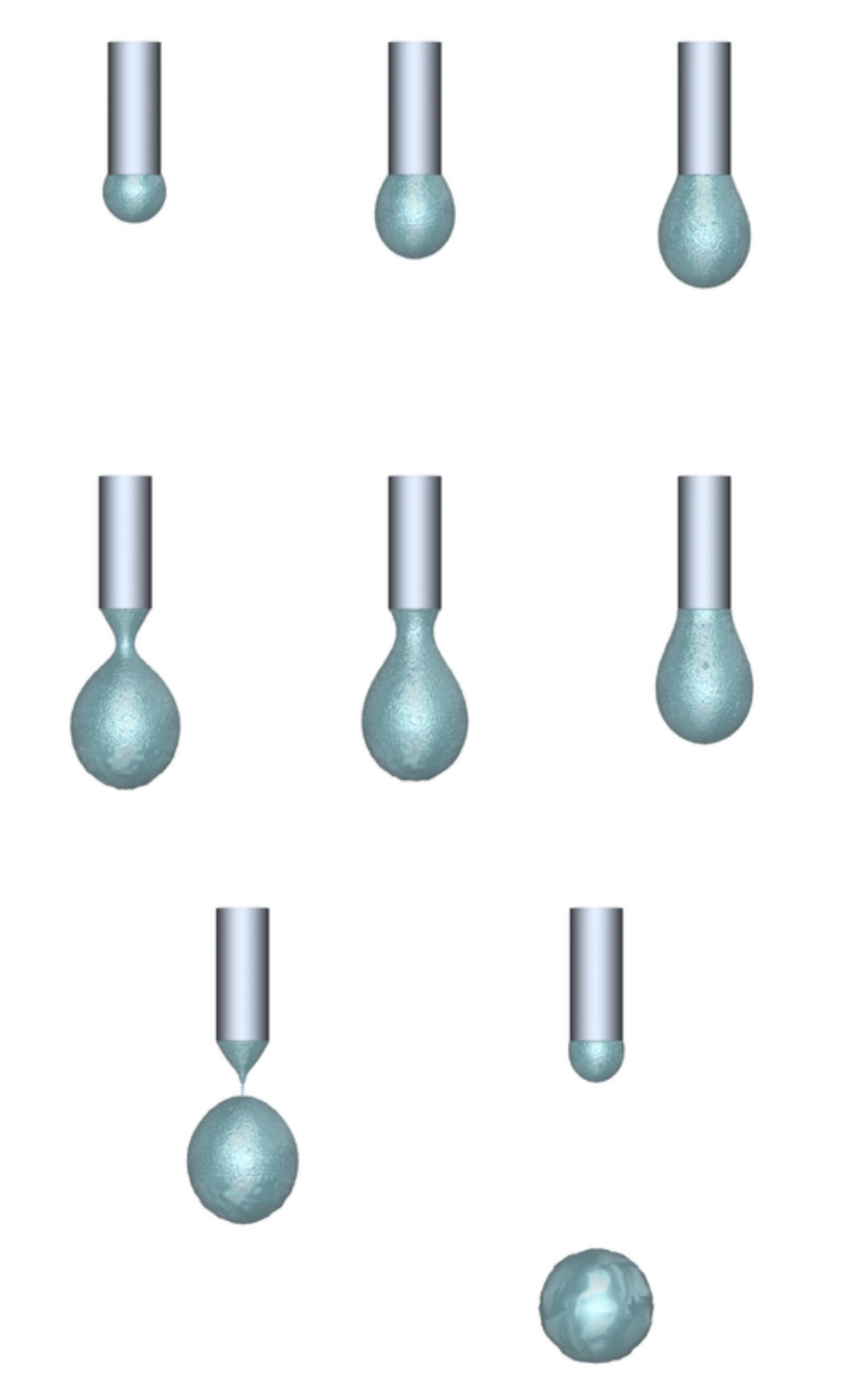
Figure 1: A real-world example showing the capillary thinning and pinching off of a water droplet from a faucet.
Simulation Process: Multiphase Modules and Polyhedral Mesh
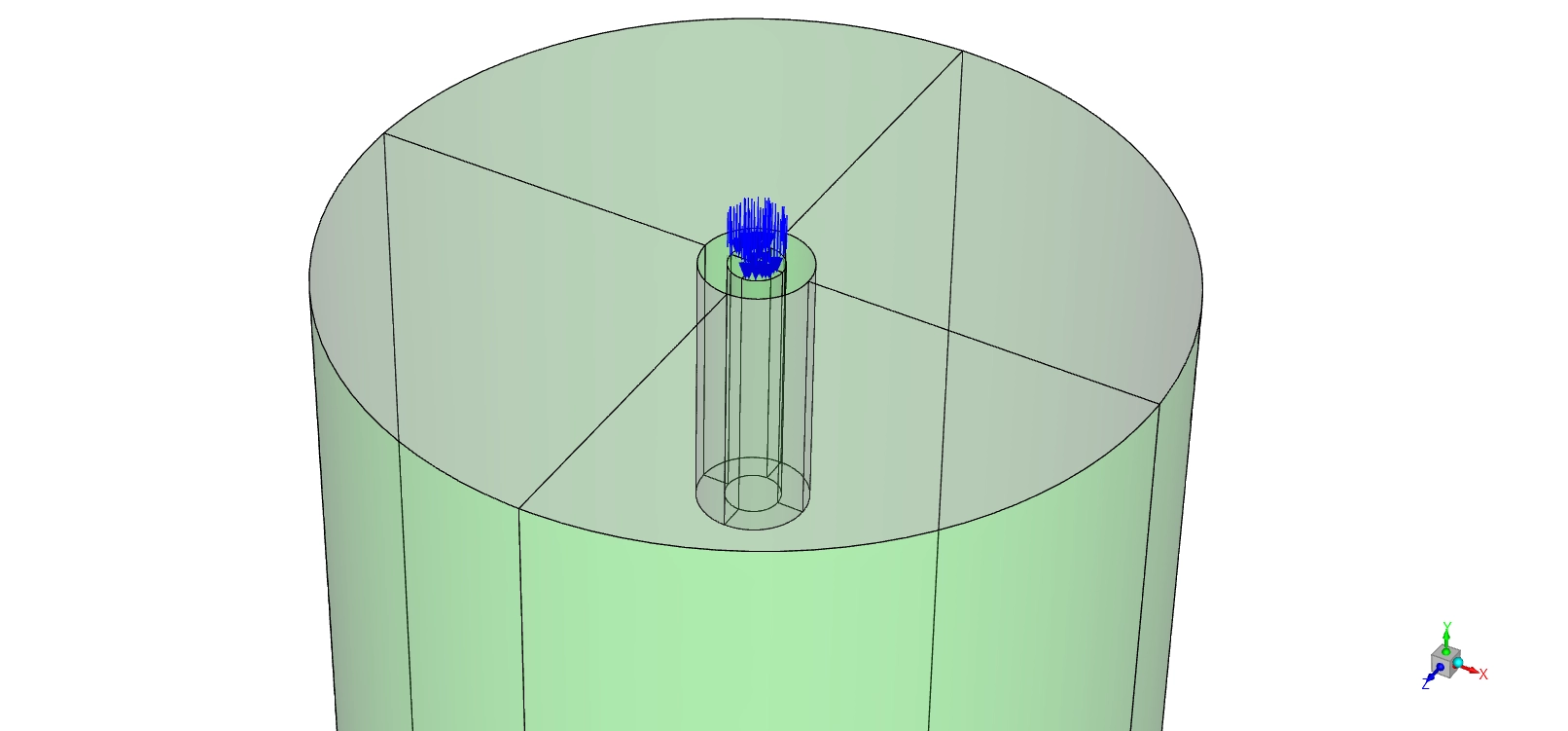
To create this exact tutorial, we must build a very smart mathematical grid. The geometry is a cylindrical domain. It has an injector nozzle at the top. To save calculation time, we use two symmetry boundary conditions. This means we only calculate a quarter of the cylinder, but the results represent the full round drop. We use the ANSYS Fluent to create exactly 697,288 polyhedral cells. A polyhedral cell has many flat faces. This helps the solver calculate the surface tension gradient much better when the water touches the air.
For the fluid physics, we turn on the Volume of Fluid (VOF) multiphase module. This specific module tracks the exact line between the water and the air. We also activate the Continuum Surface Force (CSF) method. This method mathematically applies a surface tension force of exactly 0.072 N/m. This force acts like an elastic skin that pulls the water together. Water enters the top nozzle at a constant velocity of 0.1 m/s. Because the drop changes shape over time, we use an transient solver.
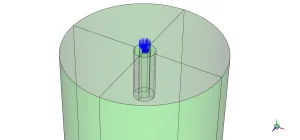
Figure 2: A sketch showing the cylindrical domain, the top injector nozzle, and the two symmetry boundary conditions.
Post-processing: Capillary Thinning and High-Speed Neck Snap
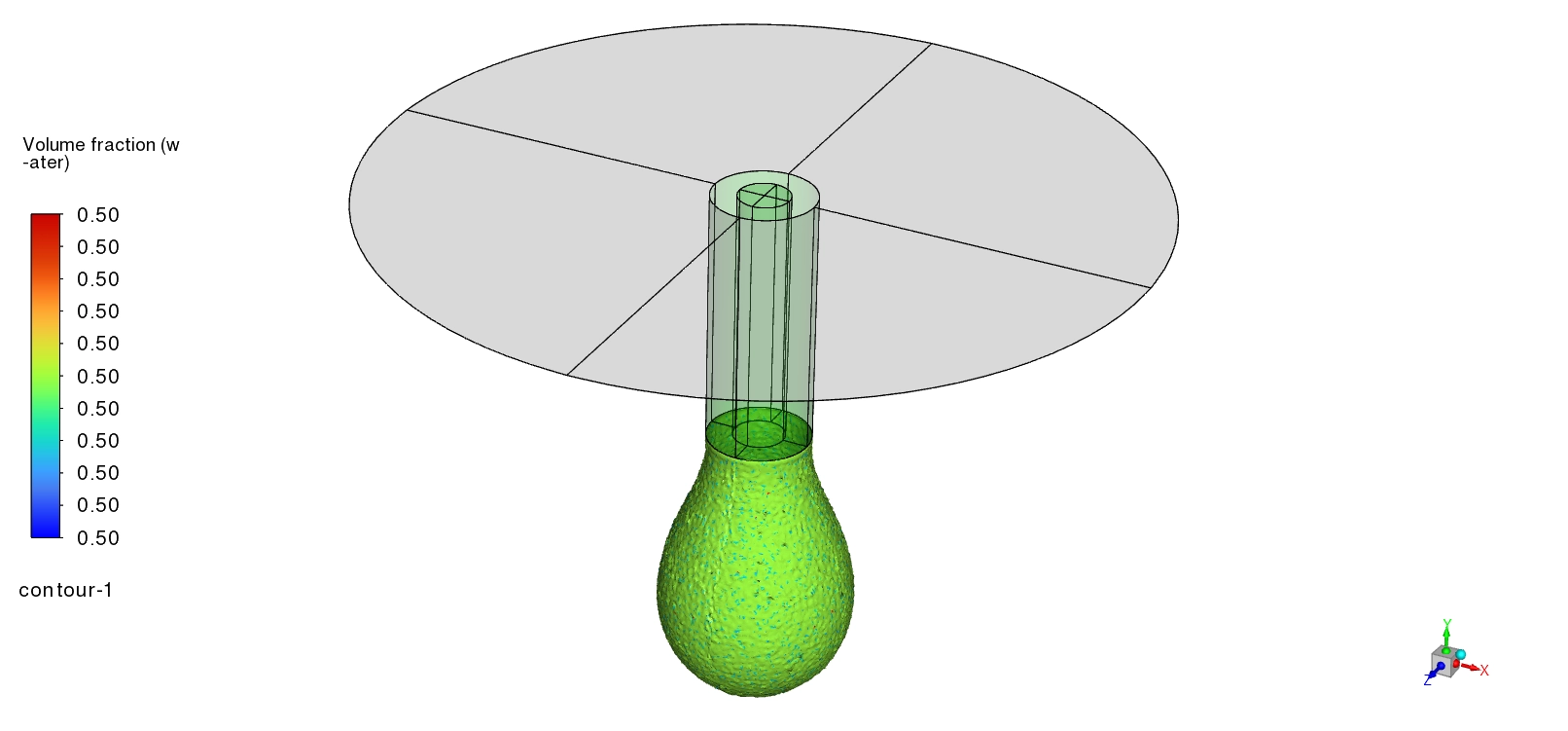
We must analyze the visual data very closely to understand the physics of the falling drop. We will look at the exact shape of the water and the speed of the fluid stretching. This analysis relies exactly on the visual contours. First, we look at the volume fraction contour to see the droplet shape changing over time. The dark color shows the liquid water. The clear space shows the empty air. At the start, the water gathers at the tip of the top nozzle. Gravity pulls the heavy water down. At the same time, the surface tension pulls the water skin up. As more water pushes through the nozzle, gravity wins. The water drops lower and forms a round pendant shape.
As the heavy round drop falls, it pulls on the water above it. This creates a thin liquid bridge. This bridge connects the falling drop to the top nozzle. Because of the 0.072 N/m surface tension force, the sides of the bridge pull inward. This creates the capillary thinning effect. The neck gets thinner and thinner. Finally, the thin neck breaks completely. This is the exact pinch-off moment. The main round drop falls down freely. The remaining water in the broken neck instantly retracts and flies back up into the nozzle.
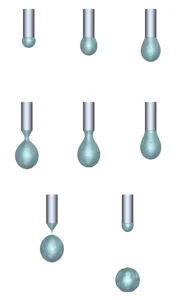
Figure 3: The volume fraction contour showing the water accumulation, the neck stretching, and the final droplet pinch-off event over time.
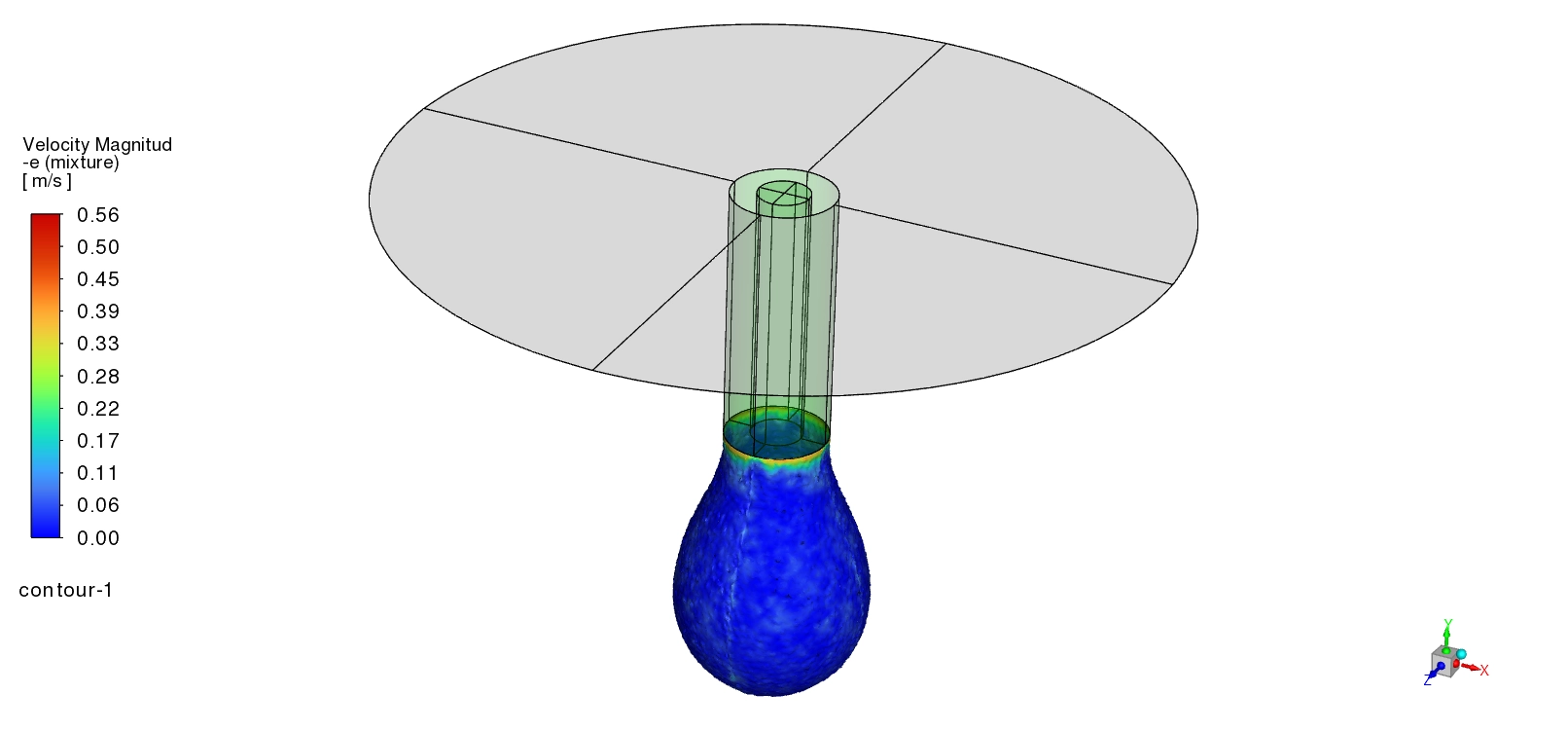
Next, we look at the exact fluid speed in the velocity contour on the droplet surface. The colors prove exactly where the forces are the strongest. Inside the large main drop at the bottom, the fluid moves very slowly. The dark blue colors prove the velocity here is only between 0 m s^-1 and 0.11 m s^-1. The water inside this big bulk area is just falling with gravity; it is not stretching.
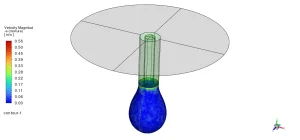
Figure 4: The velocity surface contour proving the fluid speed reaches a maximum of 0.56 m s^-1 exactly at the narrow, stretching neck.
The true physical violence happens at the thin neck. Just before the pinch-off, the liquid in the thin neck must stretch extremely fast to stay connected to the falling drop. The red and orange colors appear exactly at this narrow point. The contour proves the maximum velocity inside the stretching neck reaches exactly between 0.50 m s^-1 and 0.56 m s^-1. The liquid here accelerates very fast because the thin neck is collapsing inward rapidly. When the neck finally snaps, this high velocity forces the broken water to fly back up to the nozzle tip.
Frequently Asked Questions (FAQ)
- What forces cause the capillary thinning?
- Capillary thinning happens because of a fight between gravity and surface tension. Gravity pulls the heavy drop down, while the surface tension force pulls the sides of the liquid bridge inward until it snaps.
- Why do we use the VOF and CSF modules?
- We use the VOF module because it tracks the exact boundary shape between the water and the air perfectly. We use the CSF module to accurately apply the surface tension force that drives the neck thinning physics.
- Why is the velocity highest at the thin neck?
- The large bottom drop is heavy and falls slowly. But the thin neck connecting it to the nozzle must stretch incredibly fast to keep the bridge unbroken. This rapid stretching creates the high velocity right before the snap.






Reviews
There are no reviews yet.