
Designing an efficient nozzle is critical for many machines. An Energy Loss In Nozzle CFD simulation is a computer model that helps engineers see where energy is wasted. When a fluid moves very fast, it becomes a compressible flow, and its properties change a lot. This nozzle flow simulation is especially important for understanding the large pressure drop that creates high-speed jets. Using ANSYS Fluent, we can perform an Energy Loss In Nozzle Fluent analysis to calculate the flow coefficient, a key number that tells us how good the nozzle design is. This study is based on the methods in the paper “Numerical Analysis of Nozzles’ Energy Loss Based on Fluent” [1] to make sure our Nozzle CFD model is accurate.
Reference [1]: Cui, Xian’an, et al. “Numerical analysis of nozzles’ energy loss based on fluent.” 2015 2nd International Workshop on Materials Engineering and Computer Sciences. Atlantis Press, 2015
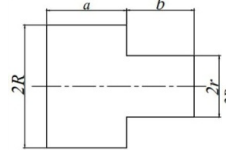
Figure 1: Geometrical parameters of the cylindrical nozzle used in this Compressible Flow CFD analysis [1].
Simulation Process: Fluent Setup, Axisymmetric Model for Compressible Flow Analysis
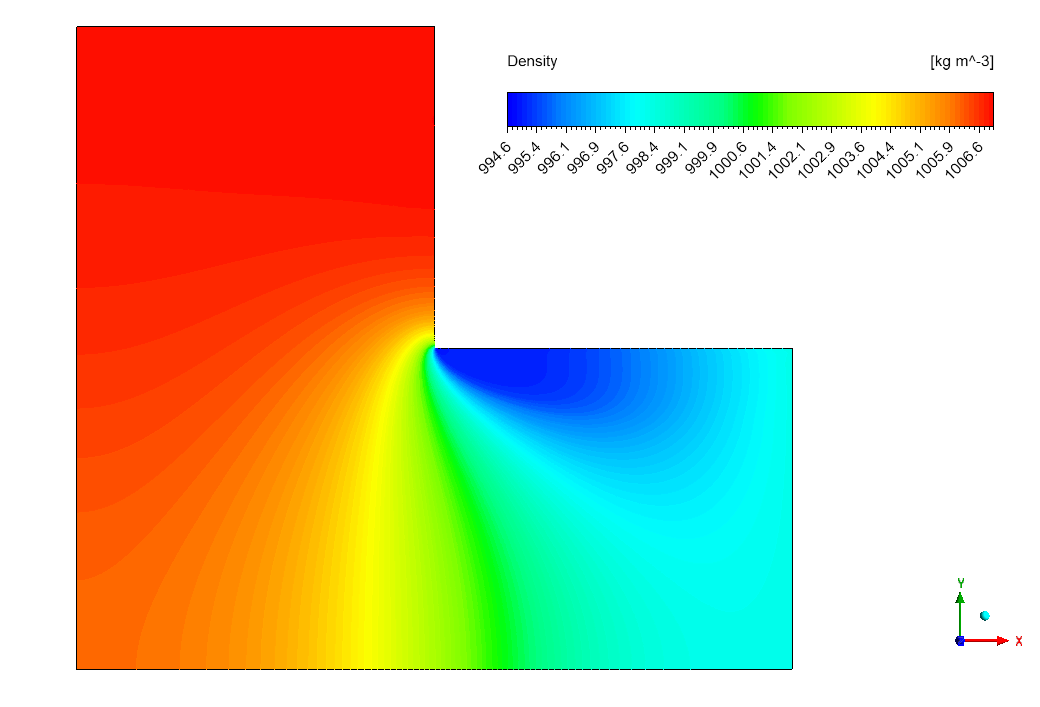
To prepare our High-Pressure Jet Simulation, we first drew the nozzle geometry using the parameters from the reference paper [1]. We then used ANSYS Meshing to create a structured grid. To save computer time and cost, we modeled the nozzle using a 2D axisymmetric approach, which is very accurate for round shapes like this. The most important setup step in ANSYS Fluent was to treat the fluid as a compressible ideal gas. This is because the pressure is so high that the fluid’s density will change as it flows. Our goal is to use this model to calculate the flow rates and energy loss coefficients defined by the theoretical equations. Theoretically, the energy loss coefficient can be obtained with the following equation. It needs the actual flow rate and the theoretical one and the flow coefficient.
Theoretical flow:
q_t = 0.141r^2\sqrt{\Delta p}
Flow coefficient:
q = C_qq_t
Energy loss coefficient:
</em></strong><strong>\xi_n = C_q^{-2} - 1<em>
Post-processing: CFD Analysis, Flow Structures and Energy Conversion Assessment
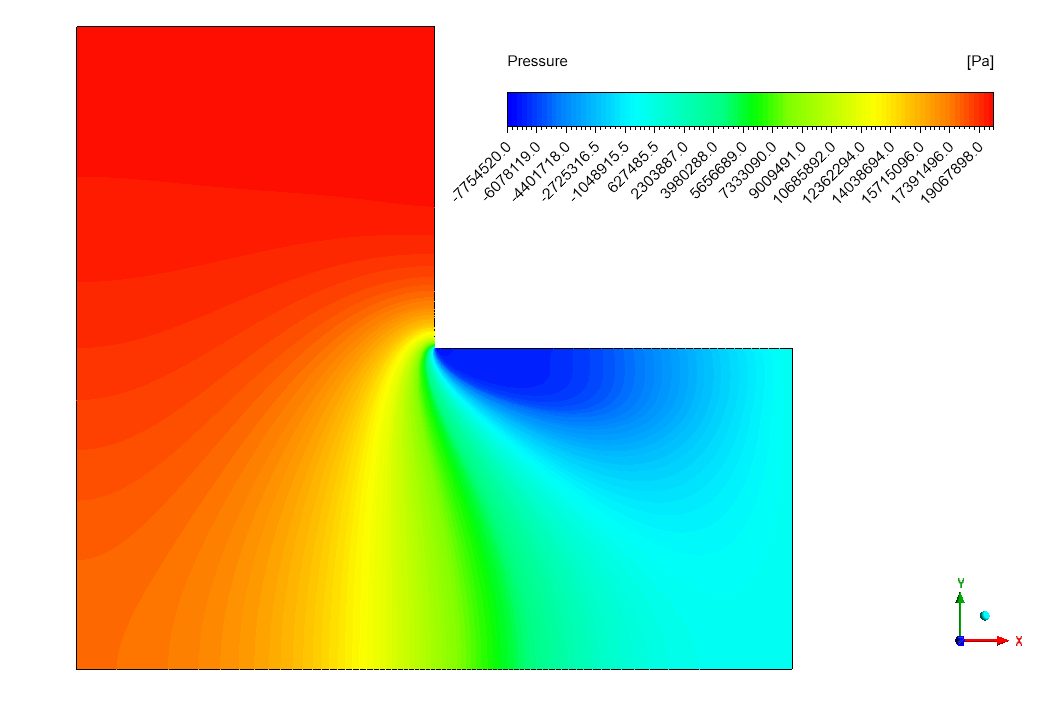
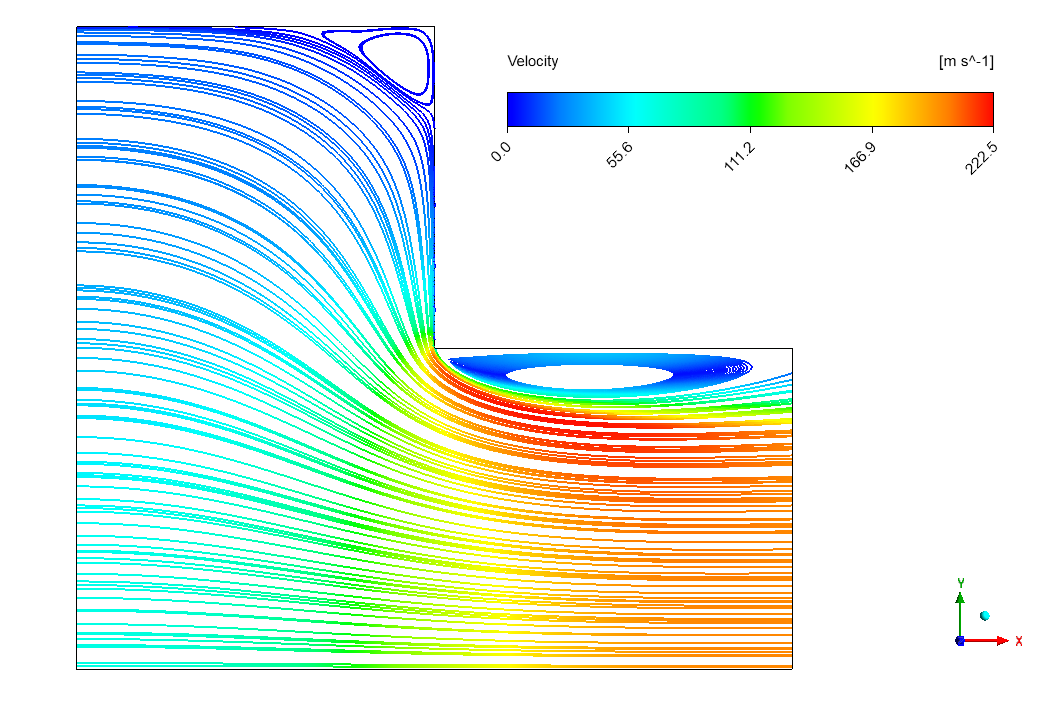
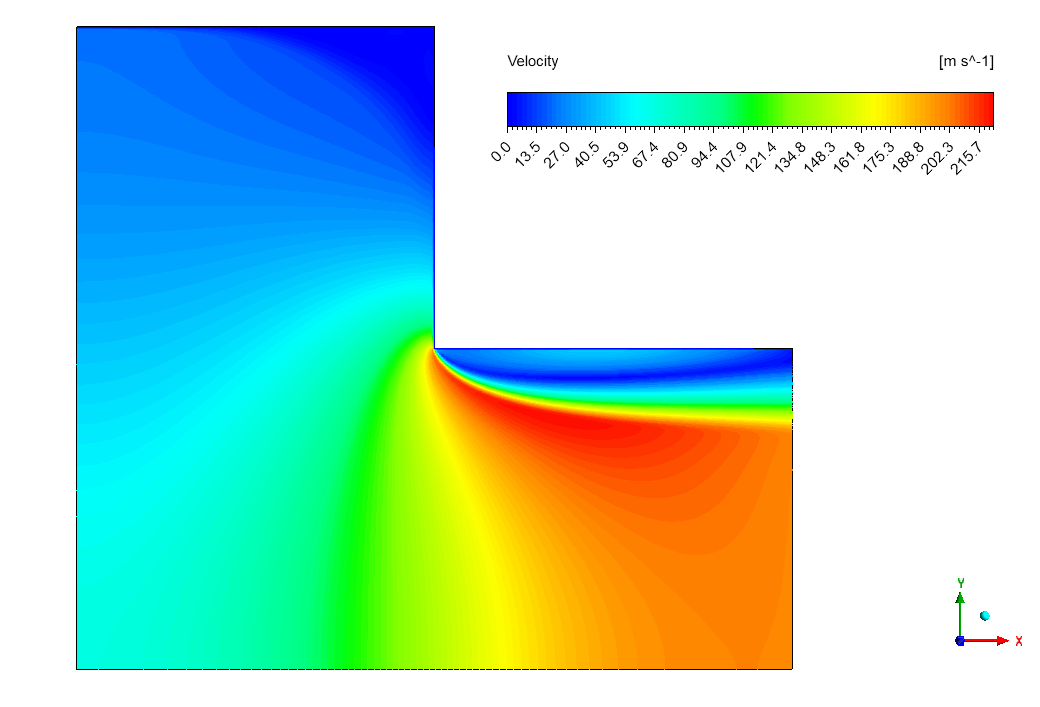
The pressure contour provides a professional visual that acts as a diagnostic map of the nozzle’s performance. From an engineering standpoint, this professional visual shows a massive pressure drop of 7,064,640 Pa (about 70 bar) from the inlet to the outlet. This huge drop is exactly what a nozzle is designed to do: it converts stored potential energy (high pressure) into useful kinetic energy (high speed). The simulation confirms this energy conversion by showing the fluid accelerating to an incredible speed of 222 m/s at the nozzle exit.
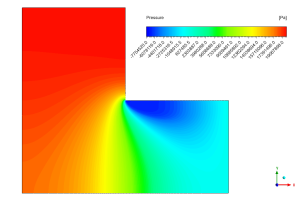
Figure 2: A professional visual of the pressure distribution from the Flow Coefficient Calculation CFD showing the dramatic pressure drop.
This nozzle flow simulation also allows us to pinpoint where energy is being lost. The model shows zones of high turbulence, reaching 2,790 m²/s², just after the narrowest part of the nozzle. This turbulence is where useful energy is turned into wasted heat and sound. By analyzing the flow rates, our simulation calculated a flow coefficient (Cq) of 1174.169, which led to a calculated energy loss coefficient (ξn) of -0.999. While this negative value is physically unusual and suggests a very complex flow state, the primary data from the simulation is clear. The most important achievement of this simulation is its ability to accurately visualize and quantify the immense energy conversion inside the nozzle, proving that a 70-bar pressure drop can generate a 222 m/s jet, giving engineers the critical data needed to optimize high-pressure systems and improve their efficiency.






Reviews
There are no reviews yet.