

Cyclone separators are very common in factories, but they have a big problem: wear and tear. The sand and dust inside them move very fast. When these particles hit the walls, they scratch the metal. Over time, this causes holes and breaks the machine. This process is called “erosion.” To stop this from happening, engineers need to know exactly where the damage will occur. Cyclone Erosion CFD simulation is the best way to predict this without building expensive test models.
This project is a Cyclone Erosion fluent simulation designed to teach you how to analyze this damage. We use ANSYS Fluent to track the particles and calculate the wear. By simulating this Cyclone Erosion ANSYS fluent case, we can see the dangerous hot spots inside the Stairmand cyclone. For more lessons on industrial equipment, please visit our Separator tutorials. This guide follows the geometry from the research by Dizajyekan et al. [1].
- Reference [1]: Dizajyekan, Sajed Naiemi, et al. “Evaluation of centrifugal force, erosion, strain rate, and wall shear in a Stairmand cyclone.” Processes5 (2022): 994.
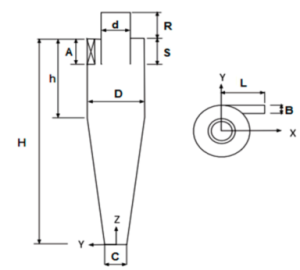
Figure 1: Schematic of the Stairmand cyclone geometry used for erosion analysis [1].
Simulation Process: RSM and DPM Erosion Model Setup
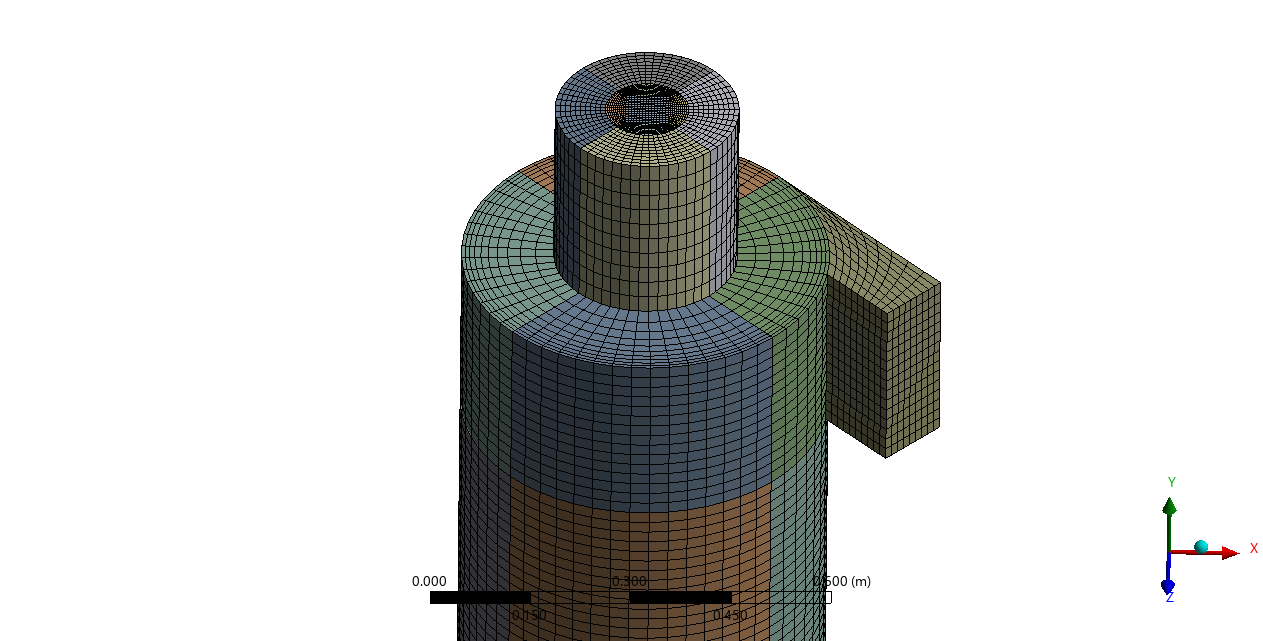
To start this Cyclone Erosion fluent tutorial, we built the 3D model of the Stairmand cyclone. The quality of the mesh is very important for erosion studies. We used a Structured Grid with 228,225 cells. Structured cells are like neat boxes. They are the best choice for this geometry because they align with the flow direction and give very accurate results near the walls where erosion happens.
In the ANSYS Fluent setup, we selected the Reynolds Stress Model (RSM). Standard turbulence models are not good enough for cyclones. The RSM model is powerful (7-equations) and is necessary to capture the strong swirling flow. For the particles, we used the Discrete Phase Model (DPM). The most critical step was turning on the “DPM Erosion Model.” This specific tool calculates how much material is removed from the wall every time a particle hits it. We ran the simulation in “Transient” mode (unsteady) to watch the erosion pattern develop over time.
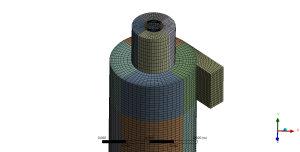
Figure 2: The structured grid with 228,225 cells used for high accuracy.
Post-processing: Deep Analysis of Flow Physics and Wear
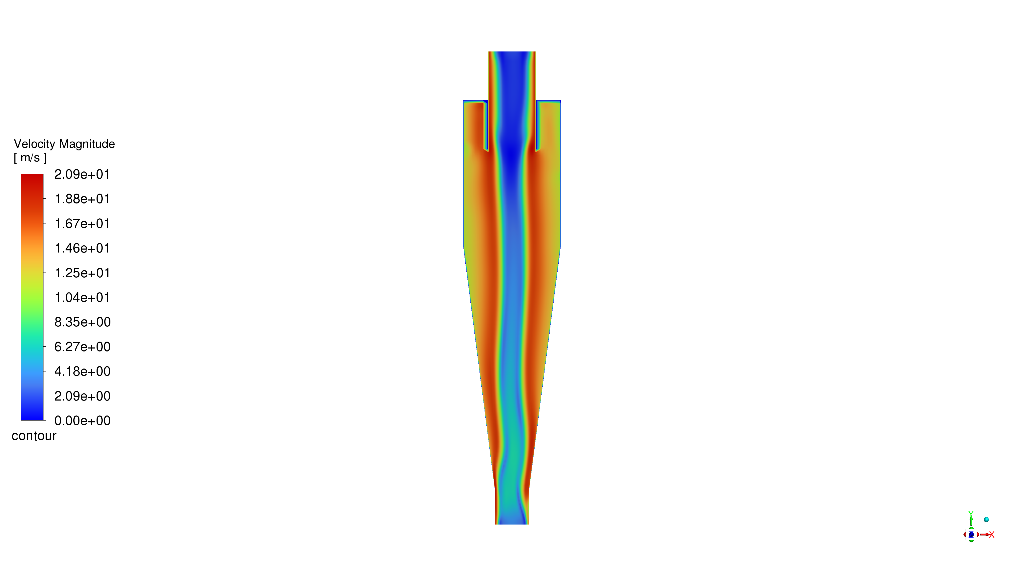
To truly understand the results of the Cyclone Erosion CFD simulation, we must look at the process as a chain of events: first the flow, then the force, and finally the damage. The story begins at the inlet. The tangential entry creates a violent spinning motion. The velocity contour (Figure 4) proves this. It shows that the gas speed near the wall reaches a massive 20.9 m/s. This is not just fast; it is also very intense. The “vorticity,” which measures how hard the air is spinning, reaches 2980 s⁻¹. This extreme energy comes at a cost, shown by the calculated pressure drop of 416.10 Pa. This high-energy vortex is the “engine” that drives the erosion process.
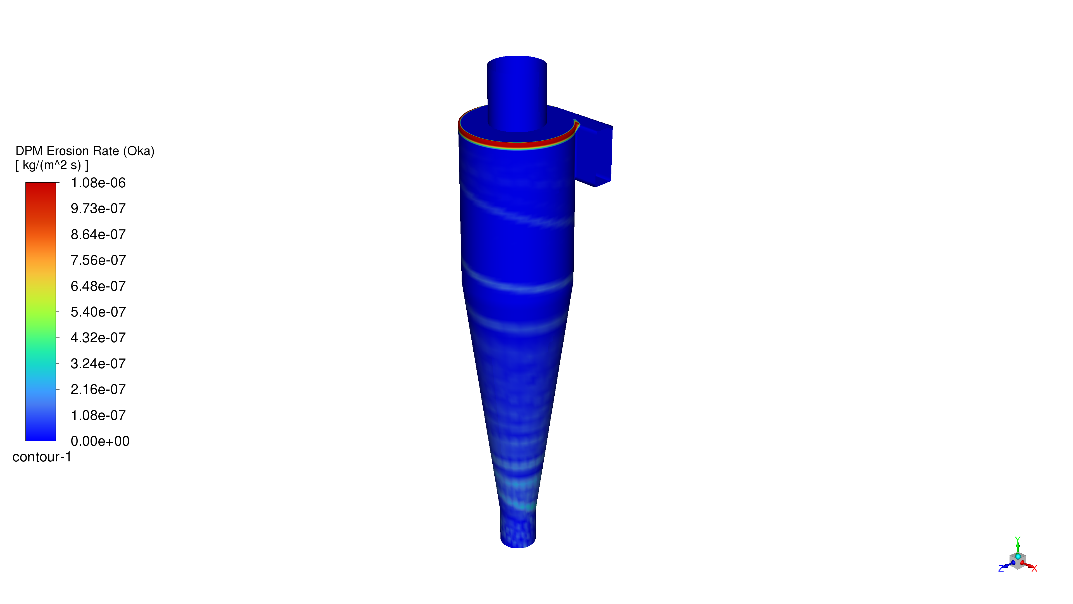
The second part of the story explains how this flow attacks the wall. The 20.9 m/s spinning wind grabs the solid particles. It creates a huge “Centrifugal Force” that throws the particles outward. They do not just float; they slam into the cyclone walls. The Erosion Rate Contour (Figure 3) reveals the final consequence of this violence. We can see two specific red zones where the damage is worst. The maximum erosion rate recorded is 1.31 kg/m²s. This is a very high number.
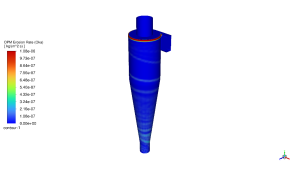
Figure 3: Erosion rate contour showing maximum wear at the cone bottom.
The location of this maximum erosion is not random; it is explained by the physics. The first major wear spot is at the bottom of the conical section. As the particles spiral down, the cone gets narrower. This forces the particles closer together and makes them scrape the wall repeatedly at high speed. The second wear spot is on the vortex finder (the exit pipe). Here, particles that did not get separated are forced to change direction suddenly to escape. They crash into the vortex finder tube, causing significant damage. This coherent analysis links the 20.9 m/s velocity directly to the 1.31e+00 kg/m²s erosion rate, proving that the geometry of the cone and the vortex finder are the most critical areas for maintenance.
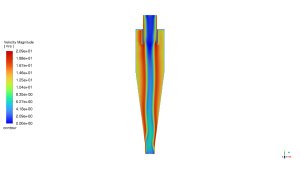
Figure 4: Velocity magnitude contour showing speeds up to 20.9 m/s.
Key Takeaways & FAQ
- Q: What causes the most erosion in a cyclone?
- A: High particle velocity and impact angle. In this Cyclone Erosion CFD simulation, the 20.9 m/s speed drives particles to hit the wall hard.
- Q: Why use the Reynolds Stress Model (RSM)?
- A: Cyclones have complex, swirling flow (anisotropic turbulence). RSM is the only model in ANSYS Fluent accurate enough to predict the velocity and vorticity (2980 s⁻¹) correctly.
- Q: Where should I reinforce the cyclone?
- A: Based on the 1.31e+00 kg/m²s erosion rate, you should use stronger materials at the bottom of the cone and on the vortex finder.



Reviews
There are no reviews yet.