

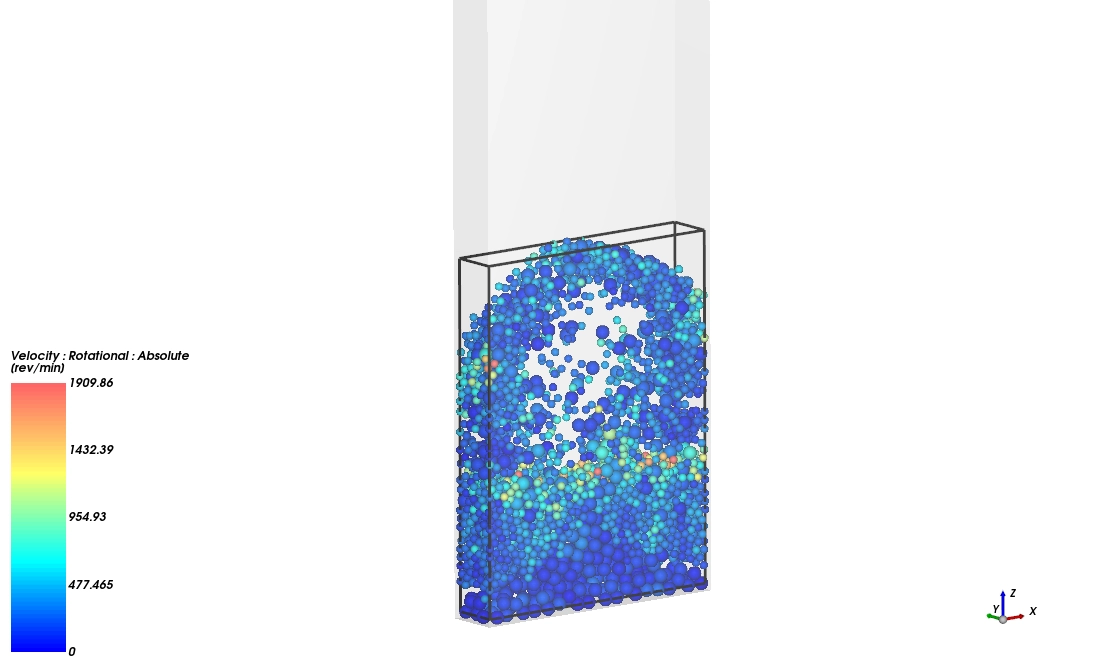
In the agricultural industry, farmers harvest millions of fresh grains like wheat, corn, and soybeans every year. However, these fresh crops naturally contain high amounts of water. If farmers store wet grains, dangerous mold will grow and destroy the food. Therefore, factories use large heating machines called fluidized bed dryers to blow hot air through the crops and evaporate the extra water. To perfectly design these heavy industrial machines, smart engineers perform a Moisture Removal By Grain Drying System DEM Rocky Simulation. This computational representation allows designers to mathematically see how the hot air heats the solid seeds. It is very important to understand the technical difference between this new project and our older DDPM-DEM CFD Simulation of Drying of Grains tutorial. In that previous try, we used only ANSYS Fluent software and solved the problem using the mathematical DDPM-DEM approach. That older method treats the particle physics mostly inside the fluid solver. However, in this advanced new project, we use a true two-way software coupling. We strictly use Rocky DEM to calculate the exact physical collisions of the grains, while ANSYS Fluent calculates the complex hot air. If you want to learn more about how software tracks thousands of moving solid pieces, please explore our comprehensive DEM simulations category. By practicing this Rocky DEM tutorial project, you will learn how to save factories energy while protecting food quality.
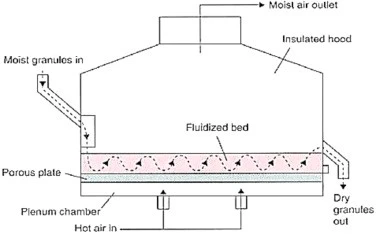
Figure 1: Fluidized bed drying of some agro products, showing the basic physical machine used to blow hot air upward through the wet agricultural grains.
Simulation Process: Eulerian Multiphase and Species Transport Setup and DEM Rocky settings
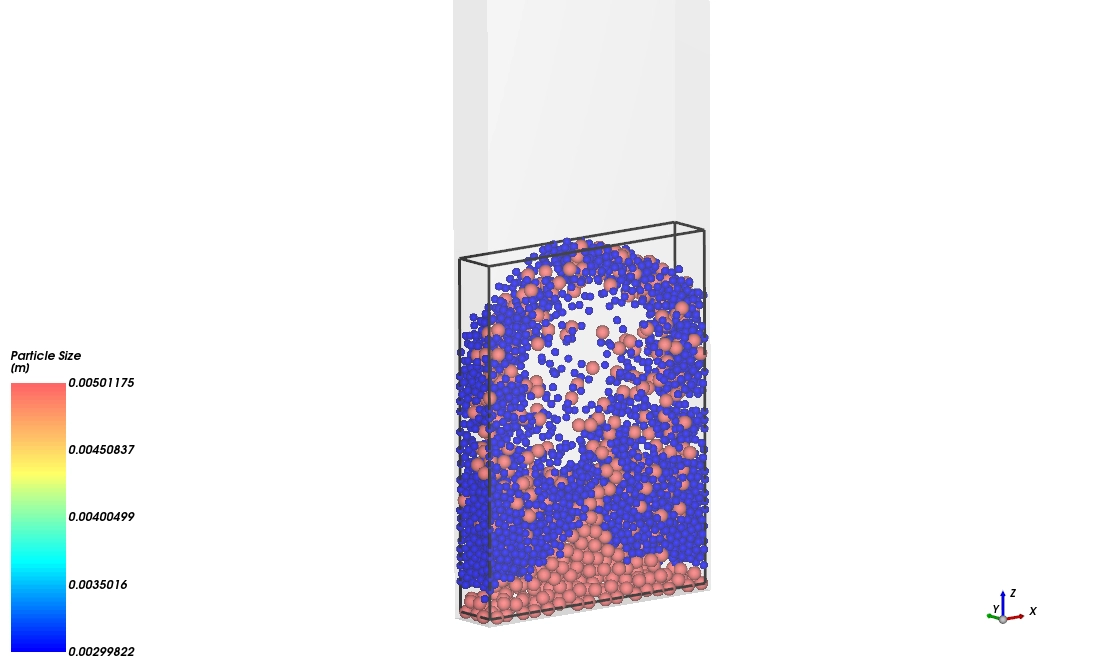
Fo To build this highly accurate agricultural simulation, we created a 3D geometry of a fluidized bed dryer. Inside the Rocky DEM software, we injected a mixture of thousands of different grains. We specifically used 3 mm and 5 mm particles to simulate a real, natural bimodal seed distribution. We set the initial moisture content of these grains to exactly 10% wet basis (0.100 moisture ratio).
Inside the ANSYS Fluent software, we activated the professional Eulerian multiphase model. This means the software mathematically separates the solid seeds from the flowing air. Next, we activated the Species Transport model to perfectly track the invisible water vapor floating in the air after it leaves the seeds. We injected hot air at the bottom inlet with a high temperature of exactly 363.15 K (90°C). During the test, the two software programs exchange physical data every fraction of a second.
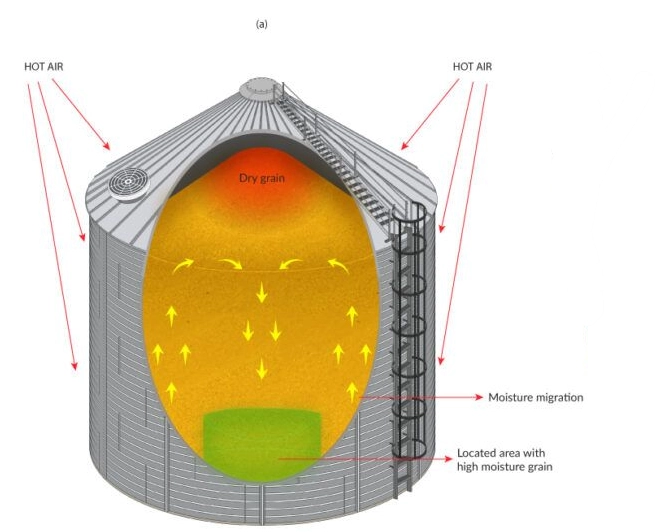
Figure 2: Moisture migration in grain storage systems, illustrating how water naturally moves inside the large storage silos during the hot summer time.
Post-processing: Analysis of Moisture Loss and Heat Transfer
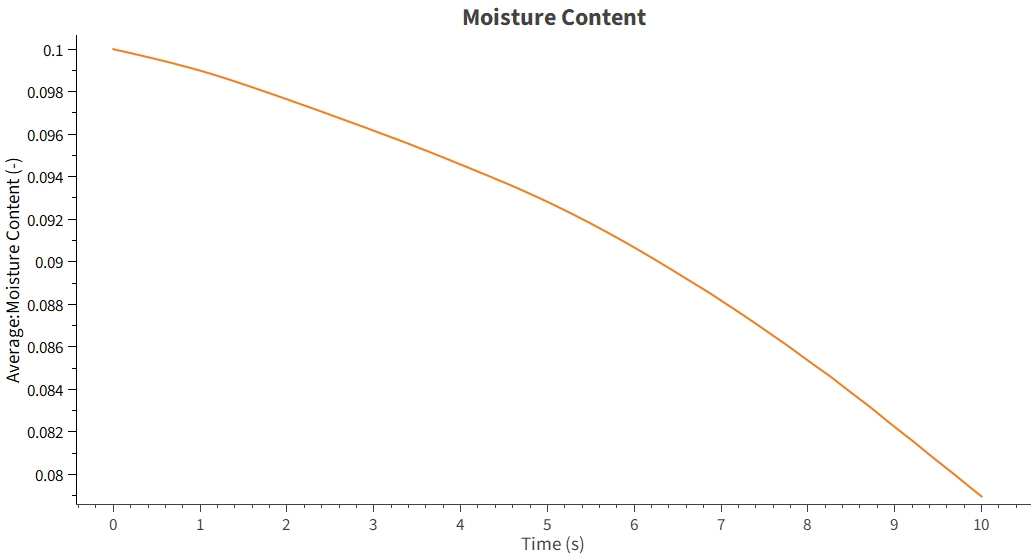
Let us carefully and deeply analyze the exact simulation graphs to understand how the grain dries over the 10-second test. First, we examine the Average Moisture Content graph. The physics start with the particles holding exactly 0.1 moisture. For the first 3 seconds, the moisture drops very fast from 0.100 to 0.096. This fast drop is called constant-rate drying. It happens because the outside surface of the seed is very wet, and the hot air easily evaporates the water. However, from 3 to 10 seconds, the drying process slows down. The moisture drops slowly from 0.096 to 0.079. This proves that the surface is now dry, and the machine must wait for the deep internal water to slowly move to the outside shell. Reaching 0.079 (7.9%) proves the machine successfully removed 2.1% of the moisture very quickly.
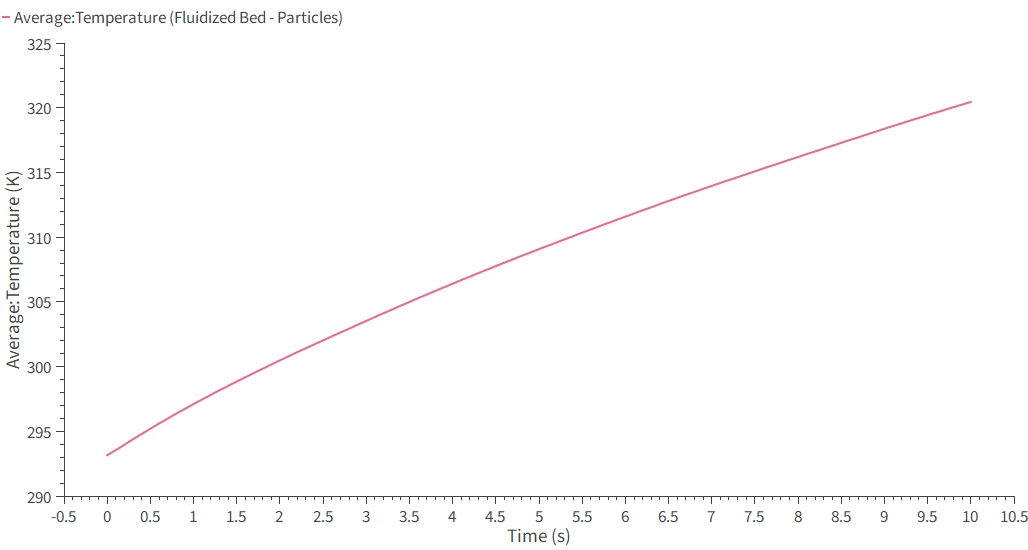
Next, we study the Average Temperature graph to see the thermal physics. The cold grains start at an initial temperature of 293.5 K (20.5°C). When the 363.15 K hot air hits them, the particles warm up very fast in the first 2 seconds, jumping to 301 K. Finally, at 10 seconds, the average grain temperature reaches exactly 320.5 K (47°C). This is a very important engineering discovery. Even though the air is very hot (90°C), the seeds only reach 47°C. This massive temperature difference happens because of evaporative cooling. When water turns into vapor, it consumes a massive amount of heat energy (latent heat). The software perfectly calculates that 65% to 75% of the hot air energy is spent evaporating water, keeping the seeds safely cool so they do not burn.
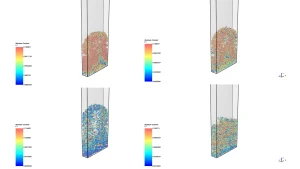
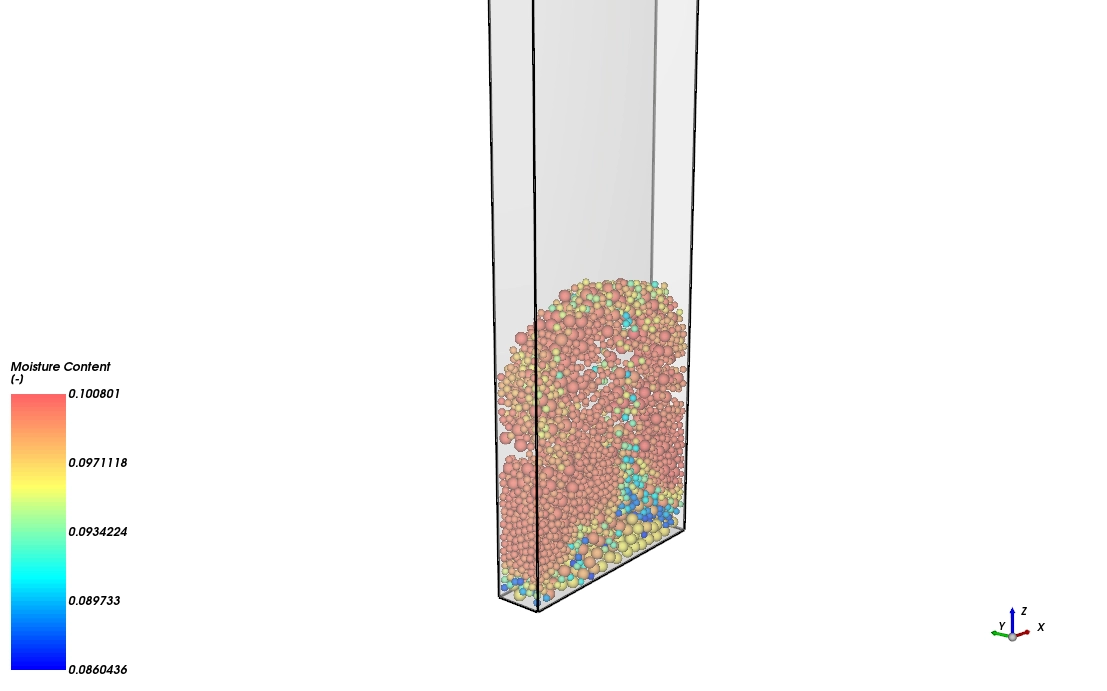
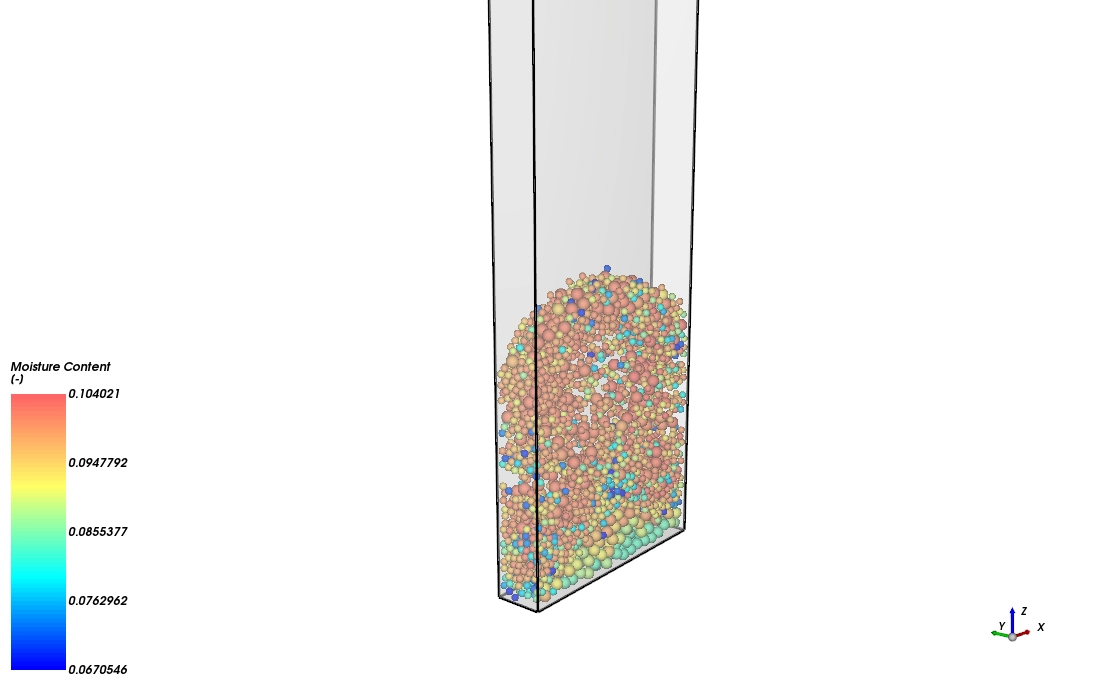
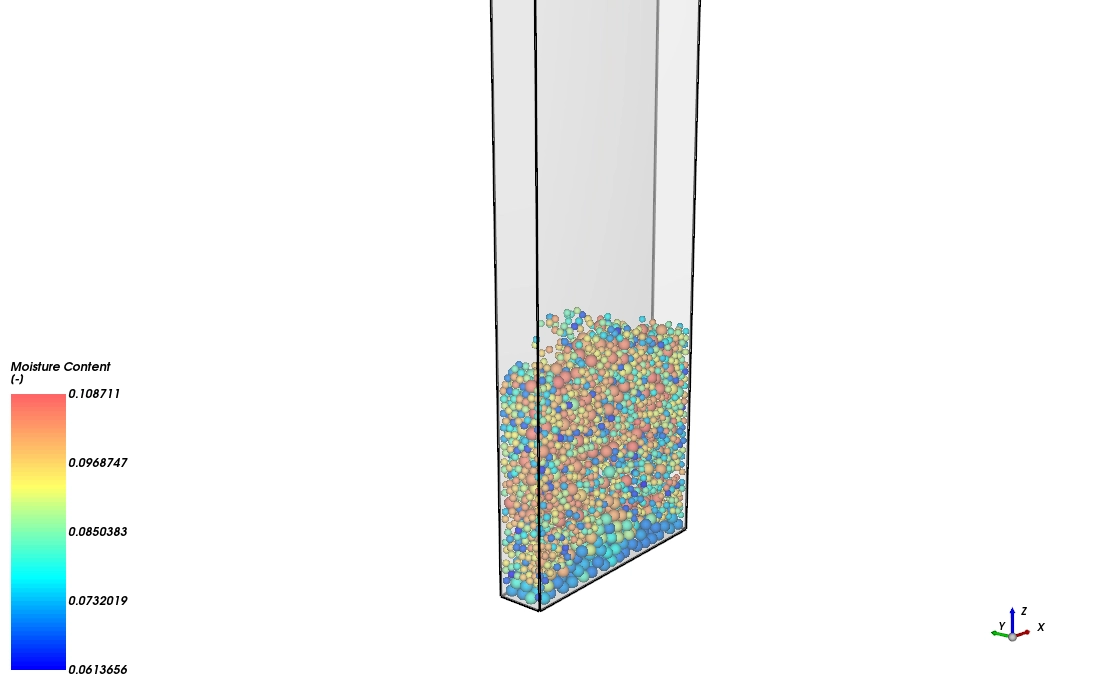
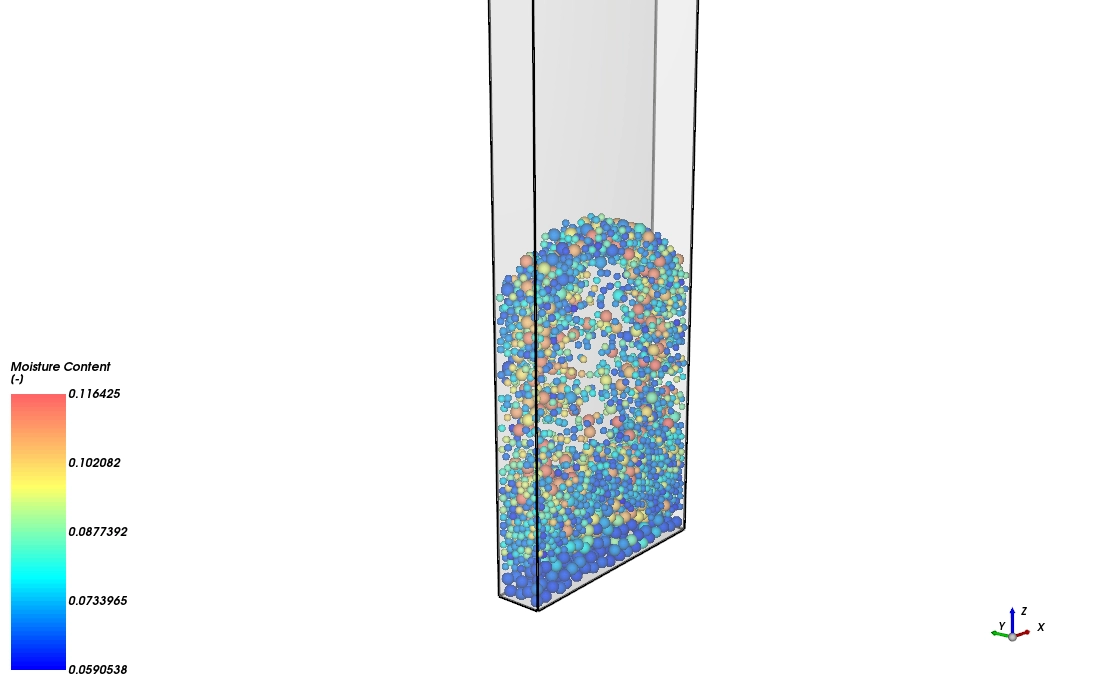
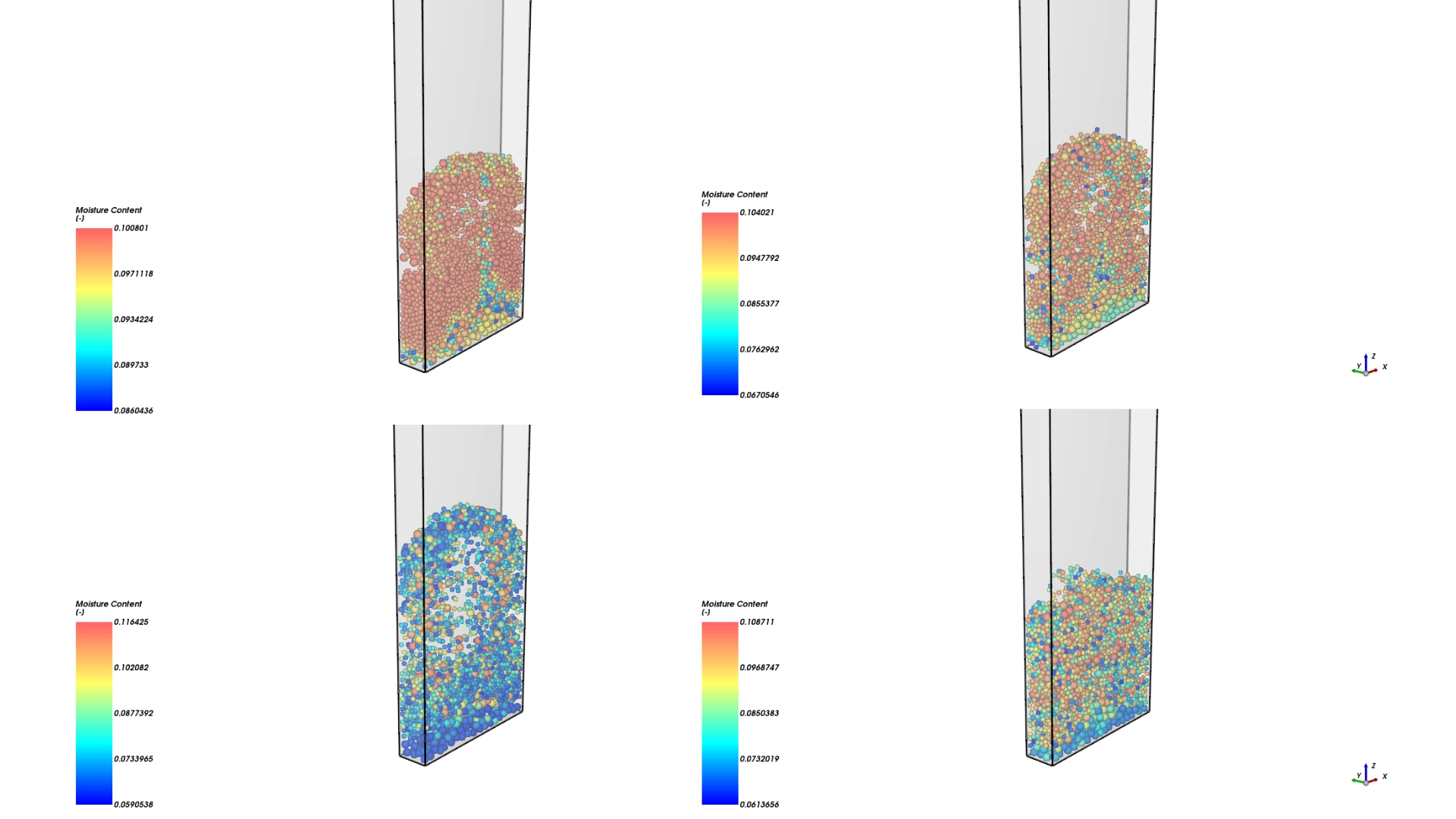
Figure 3: Moisture Content spatial distribution from Rocky DEM (0.061 to 0.114 scale), visualizing the colorful contours of the fluidized bed where cyan shows dry grains and orange shows wet grains.
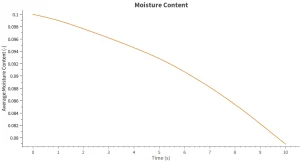
Figure 5: Average Moisture Content graph from Rocky DEM (0.100 to 0.079), proving the exponential decay and successful 2.1% moisture removal over 10 seconds.
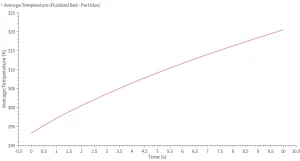
Figure 6: Average Temperature graph from CFD-DEM coupling (293.5 K to 320.5 K), illustrating the steady particle heating and the strong evaporative cooling effect.
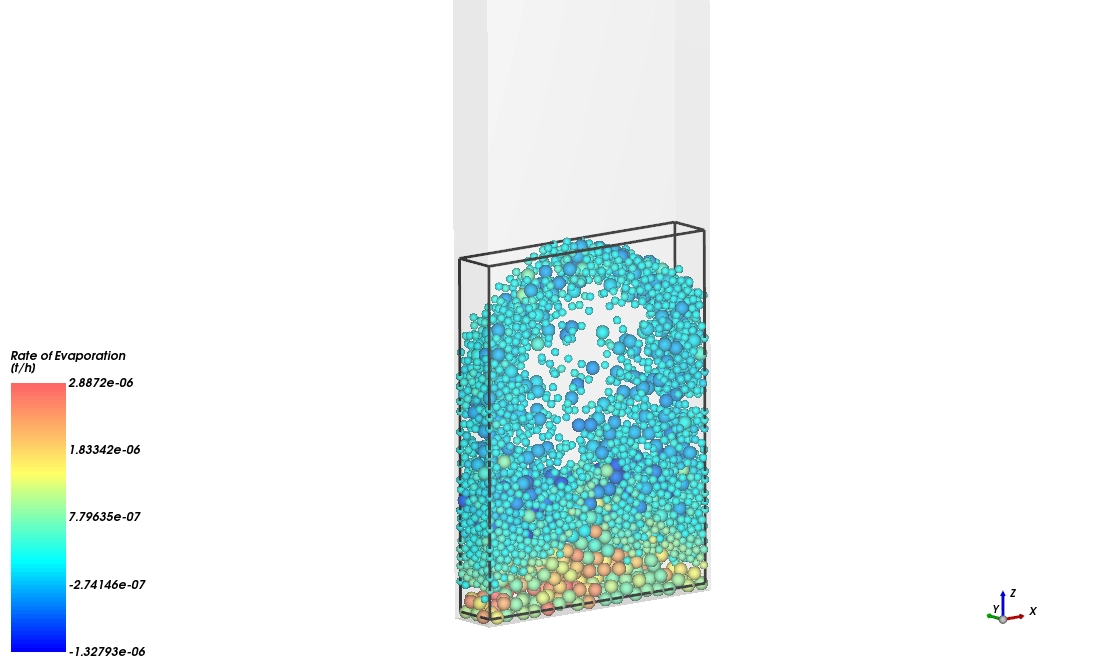
Finally, we look at the Spatial Moisture Distribution contours, which use a strict color legend from 0.061 to 0.114. This visual data evaluates the mixing quality. At the middle of the test, we clearly see green and blue particles at the bottom holding a dry moisture level of 0.073 to 0.085. However, the top of the bed shows yellow and orange particles holding a much wetter level of 0.090 to 0.100. This vertical stratification is a warning for designers. It means the hot, fresh air dries the bottom layer instantly, but the air becomes too cool and humid by the time it reaches the top.
Table 1: Fluidized Bed Thermal and Moisture Data
| Simulation Parameter | Measurement Target | Exact Calculated Value |
| Initial Particle Moisture | All Grains at 0s | 0.1 (10% wet basis) |
| Final Average Moisture | All Grains at 10s | 0.079 (7.9% wet basis) |
Frequently Asked Questions (FAQ)
- Why don’t the grain particles reach the 363.15 K air temperature?
- The particles only reach 320.5 K because of a physics rule called evaporative cooling. Turning liquid water into invisible vapor takes a massive amount of heat energy. Most of the hot air energy is used to boil the water away, which naturally keeps the solid grain cool.
- Why does the moisture drop fast at first, but slow down later?
- In the first 3 seconds, the outside skin of the seed is very wet, so the water evaporates easily. Later, the skin becomes dry. The machine must wait for the hidden water inside the center of the seed to slowly travel to the outside surface before it can evaporate.




Reviews
There are no reviews yet.