
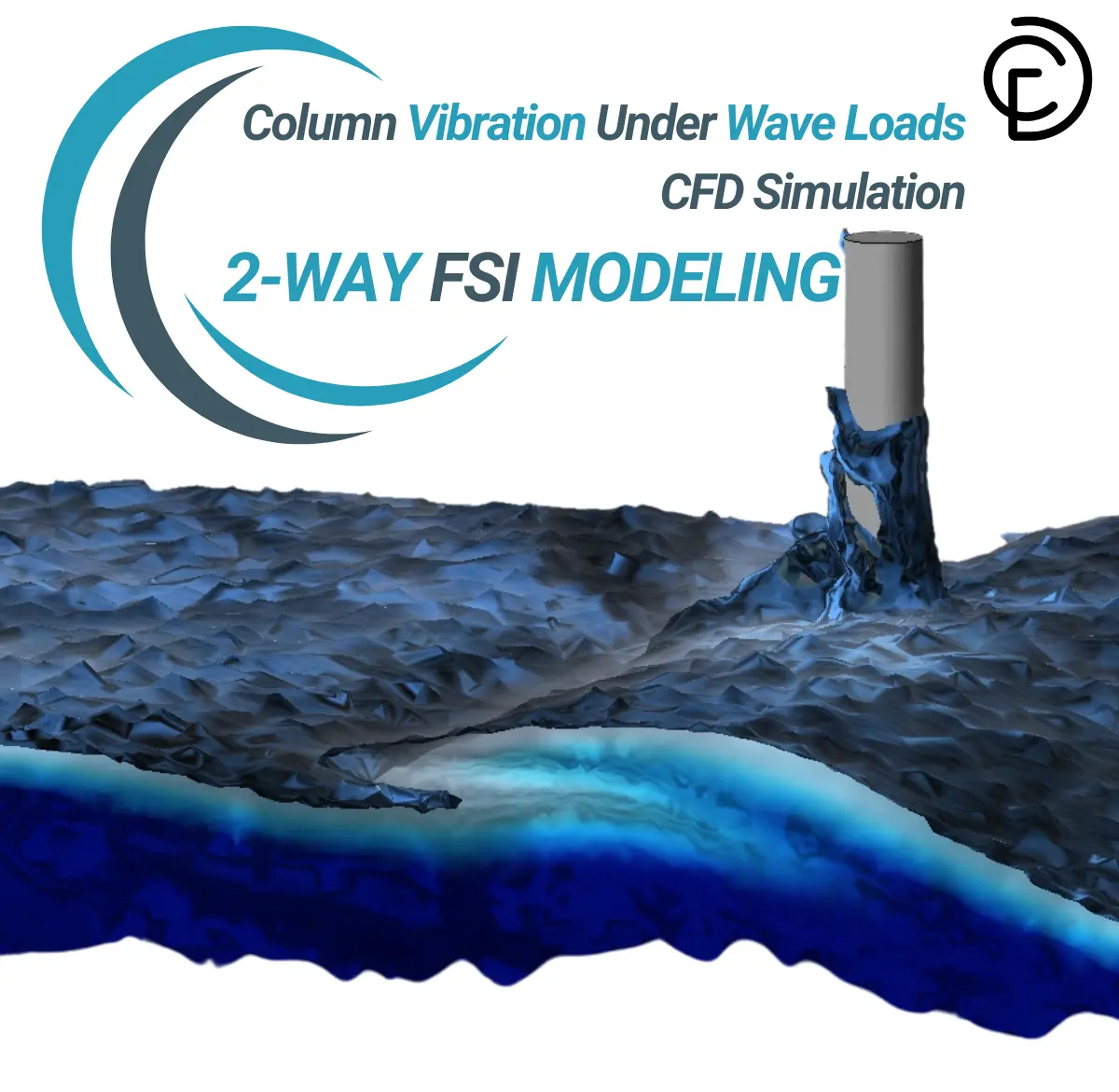
Ocean waves carry massive energy. They crash into offshore oil rigs constantly. Heavy steel columns support these structures above the sea. When heavy water hits the metal, the column bends. It shakes back and forth. This continuous vibration causes hidden fatigue damage. Over time, the steel can crack. Engineers cannot simply guess if the support columns will survive a storm. They must test the structural limits using virtual wave environments. The objective of this project is to use ANSYS Fluent and Mechanical coupling to predict offshore column vibration and calculate the structural bending during a severe wave strike. By mapping the water impact forces, builders can determine if the column requires thicker steel to withstand ocean storms safely. Besides this simulation project, you can learn to work with Fluid-structure Interaction modules in ANSYS to apply the settings on other scenarios.
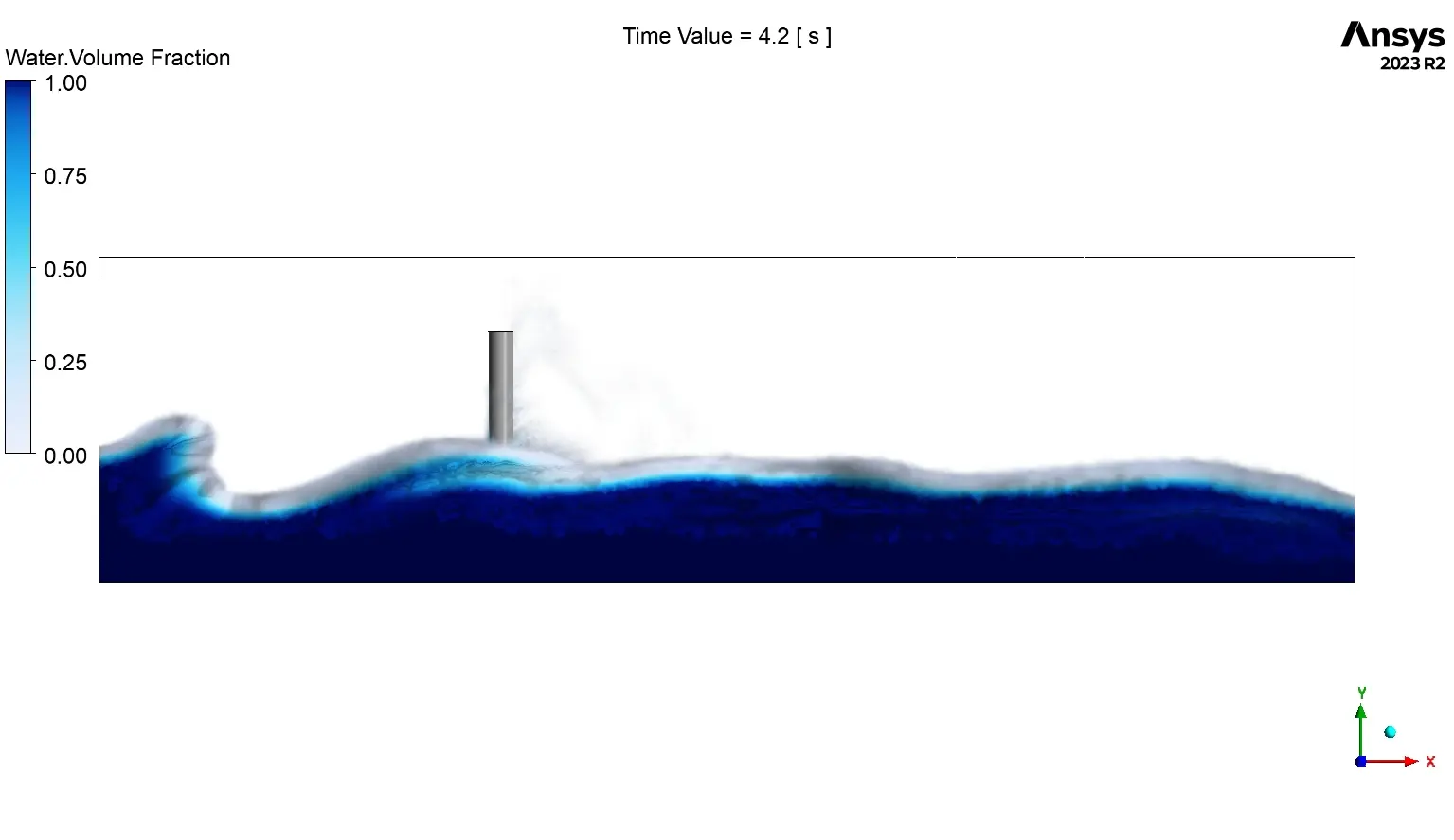
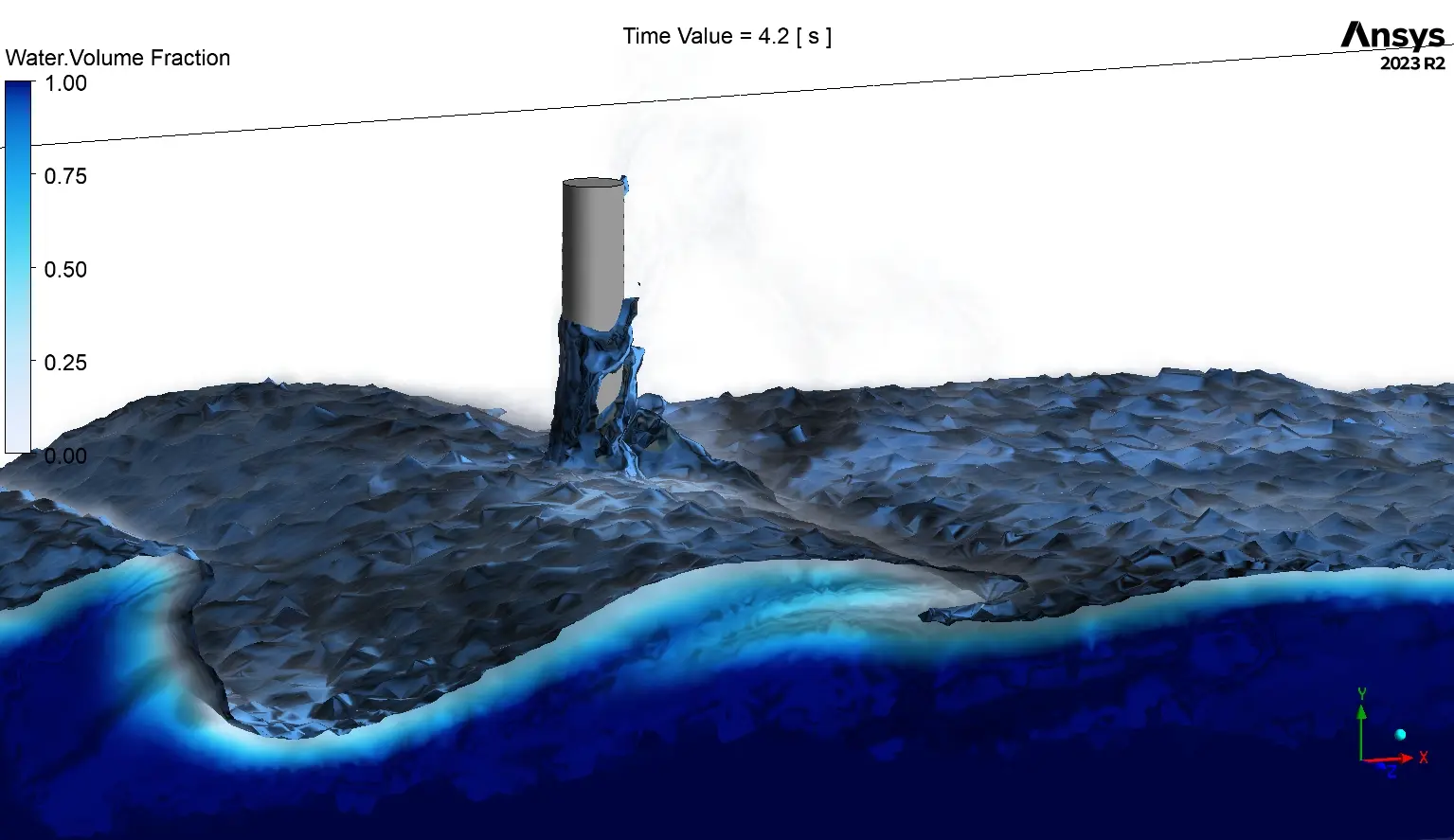
Figure 1: The VOF multiphase contour displaying a massive ocean wave impacting the solid offshore column..
Simulation Process: Multiphase VOF and 2-Way FSI Setup
We place a solid vertical column inside a virtual ocean domain. We must simulate both the air and the water accurately. We use the Volume of Fluid (VOF) model. This specific multiphase CFD simulation tool tracks the moving boundary between the sky and the sea. It generates realistic open channel waves.
These waves travel forward and crash into the solid column. The water transfers heavy momentum into the metal. Fluent calculates this fluid pressure. It sends the load data directly to the mechanical solver. The mechanical solver bends the steel column. Then, it sends the new bent shape back to the fluid solver. The dynamic mesh updates instantly. It stretches the fluid grid to match the vibrating column. The moving water changes the column, and the moving column changes the water flow. This continuous 2-way feedback loop mimics real ocean physics perfectly.
Post-processing: Wave Impact and Structural Deformation Data
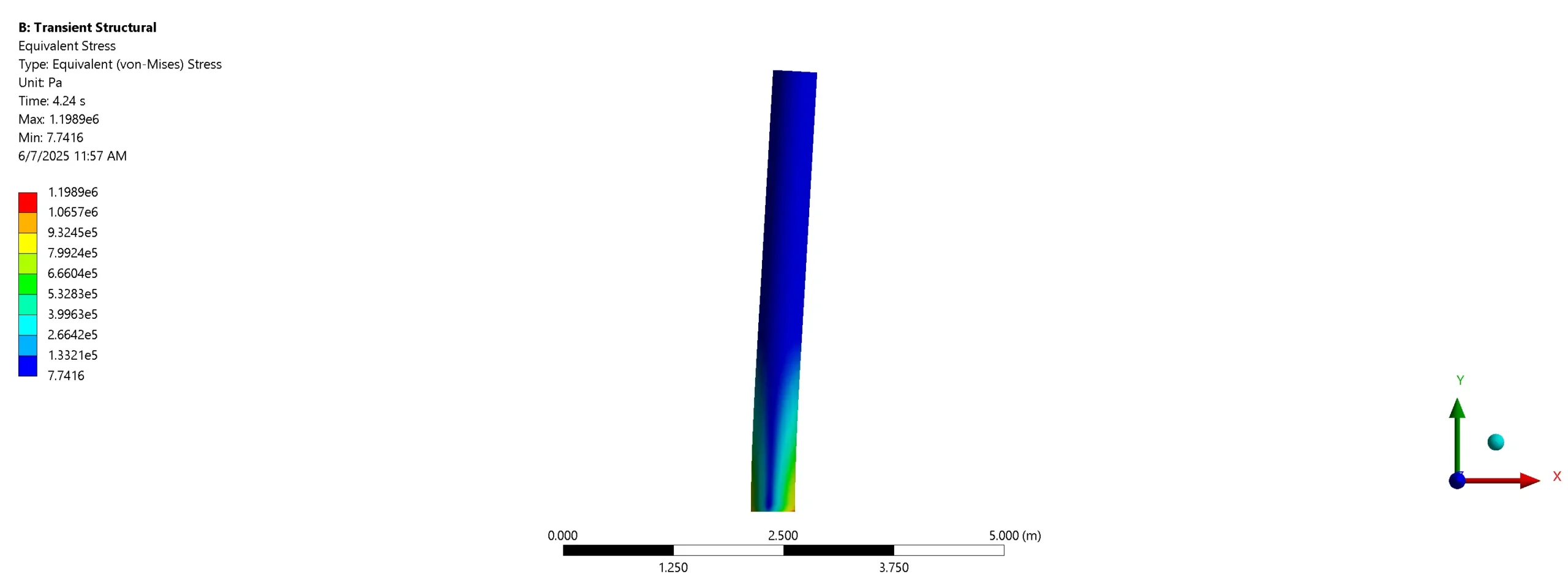
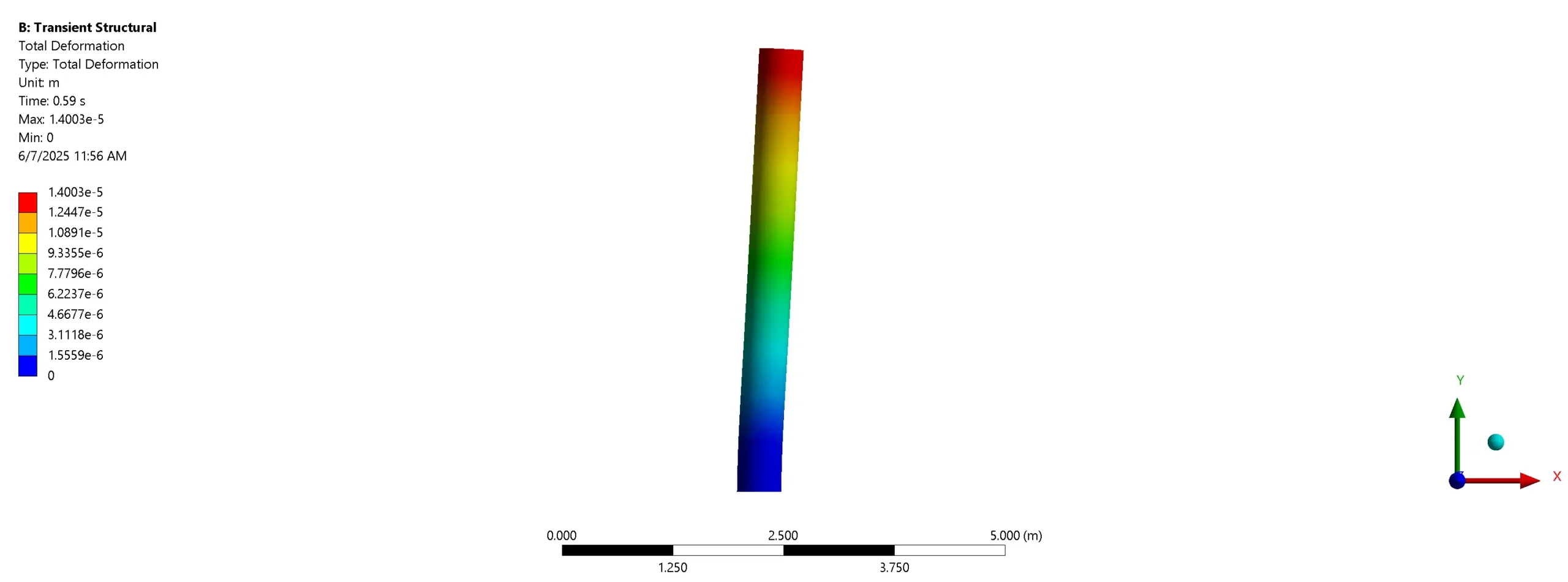
A massive wave wraps completely around the steel support. We capture this violent interaction at 4.2 s into the event. The VOF multiphase contour displays a thick blue water crest smashing into the front face of the column. The fluid surface breaks apart. Heavy water deflects violently around the sides of the solid obstacle. This fluid impact forces an immediate structural reaction. We freeze the simulation early at 0.59 s to measure the physical bending. The bottom of the column is bolted tightly to the sea floor. It remains entirely blue on the contour map, moving 0 m. The wave energy forces the free top of the steel pipe to snap backward. The red zone at the very top reveals a structural displacement of 1.4003e-5 m. The solid column behaves just like a giant, flexible spring bending under extreme pressure.
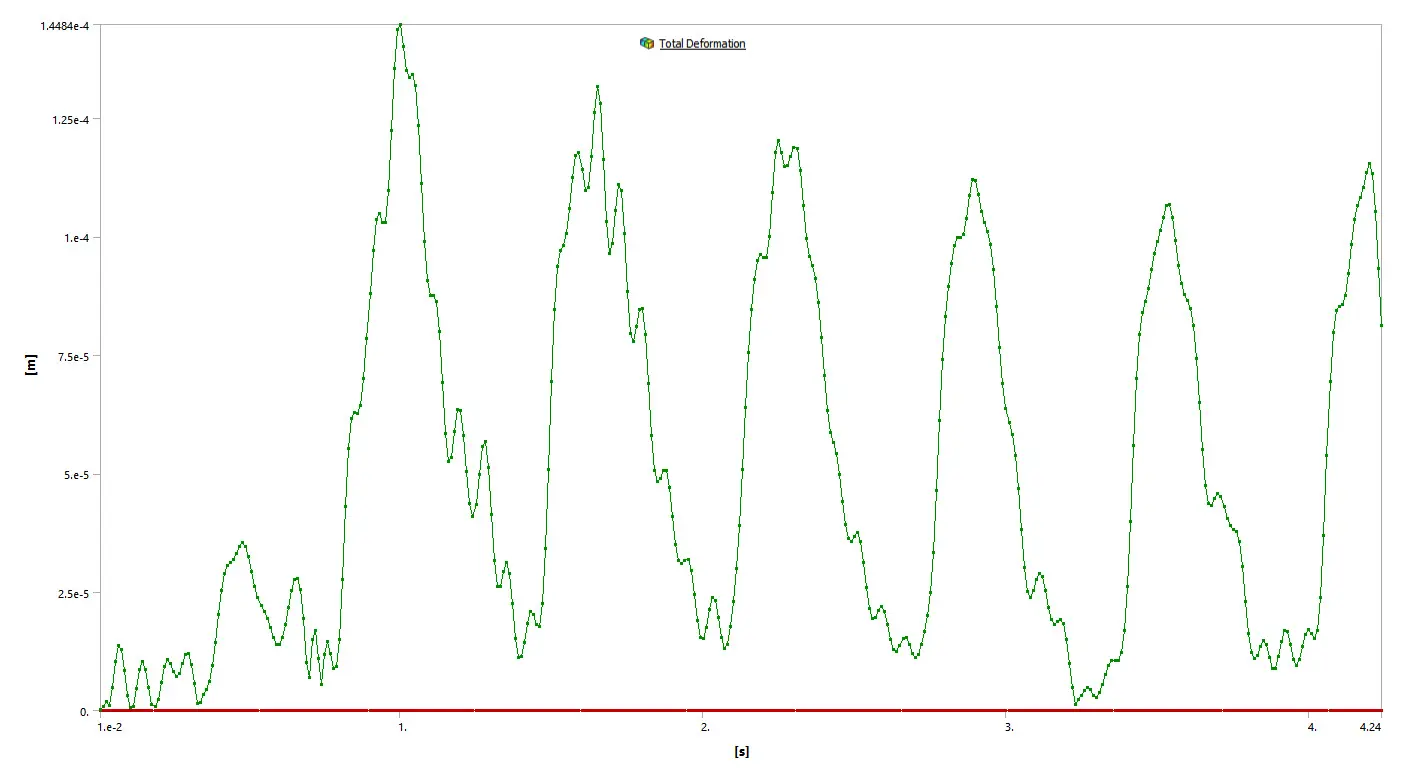
The ocean wave does not just hit once. The water level rises and falls continuously. The transient total deformation graph tracks this chaos over a full 4.24 s period. The green data line jumps up and down in a rapid, repeating pattern. The column vibrates wildly. It matches the frequency of the incoming waves. When the heaviest volume of water strikes the metal, the vibration reaches an absolute peak deformation of 1.44e-4 m. The metal survives the initial strike, but the constant cyclic shaking highlights the extreme danger of offshore fatigue failure.
Figure 2: The structural deformation map identifying the exact physical bending of the column.
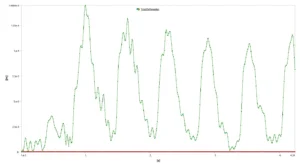
Figure 3: Time history graph of total deformation proving continuous structural oscillation over the 4.24 s period, with the wave-induced vibration peaking at an absolute maximum displacement of exactly 1.4484×10⁻⁴ m.
FAQ About Offshore Modeling and Wave Simulation
- Why do we use the VOF multiphase model for offshore design?
- The Volume of Fluid model tracks the exact surface where water and air meet. This allows us to throw a realistic, heavy ocean wave directly at the solid structure to measure the impact force.
- What causes the offshore column to vibrate?
- Heavy ocean water transfers its momentum into the steel. The column bends backward under the weight. As the wave passes, the metal snaps forward again. This continuous motion creates a dangerous vibration cycle.
- How far does the column bend during the storm?
- The transient history graph records a peak structural deformation of 1.44e-4 m. This maximum bending occurs when the largest wave crest hits the column during the 4.24 s event.





Reviews
There are no reviews yet.