

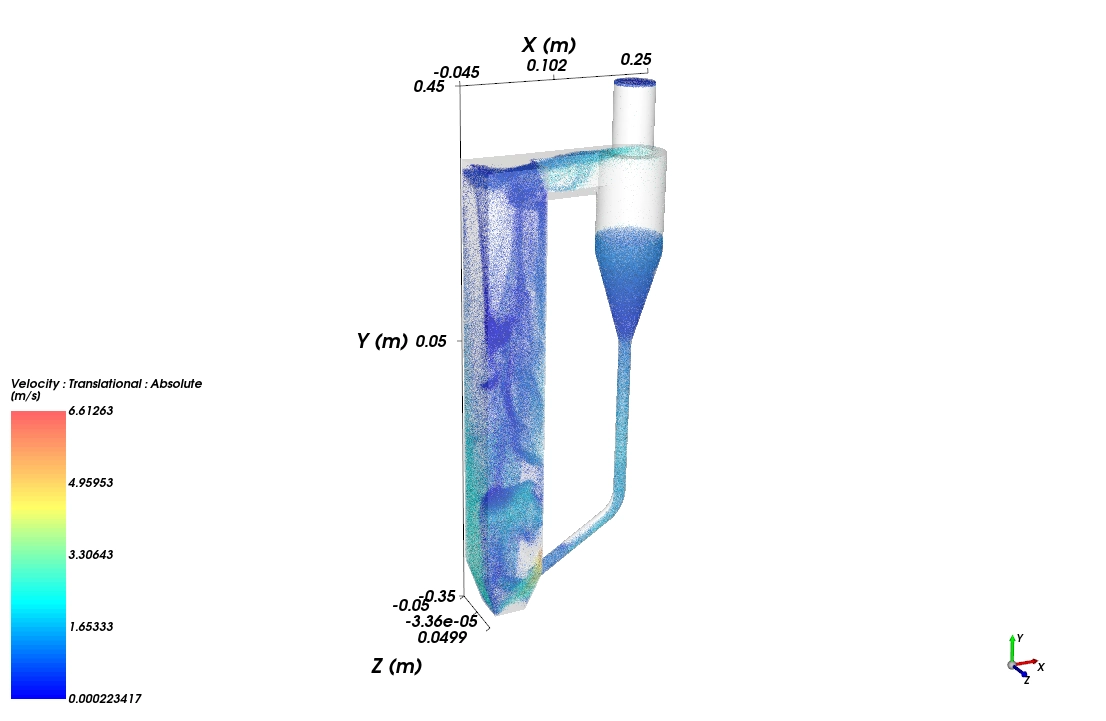
Circulating Fluidized Bed CFD-DEM Analysis A Circulating Fluidized Bed (CFB) is a very large machine used in power plants and chemical factories. Its main job is to burn coal or dry materials efficiently. Inside this tall machine, strong air blows upward from the bottom. This strong air lifts millions of small solid pieces, like sand or catalyst stones. The fast air makes the heavy stones float and mix together, acting exactly like a boiling liquid. Because millions of stones are constantly hitting each other inside the hot gas, it is highly dangerous and completely impossible to look inside a real working machine .To solve this difficult problem without breaking expensive factory equipment, smart designers use a highly accurate Circulating Fluidized Bed CFD-DEM simulation using ANSYS Fluent for CFD and Ansys Rocky for DEM. This powerful simulation allows engineers to mathematically see how the strong air pushes the stones, and how the heavy stones block the air. Because tracking so many moving pieces is very hard, engineers use special software tests. If you want to learn more about how software calculates millions of moving solids, please explore our professional DEM tutorials. By practicing this exact tutorial project, factories can safely test their machine designs and save millions of dollars in wasted energy.
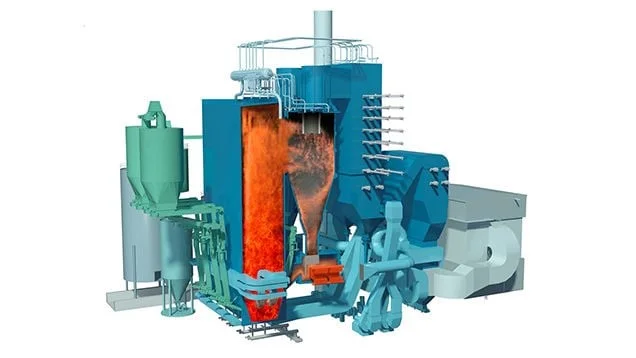
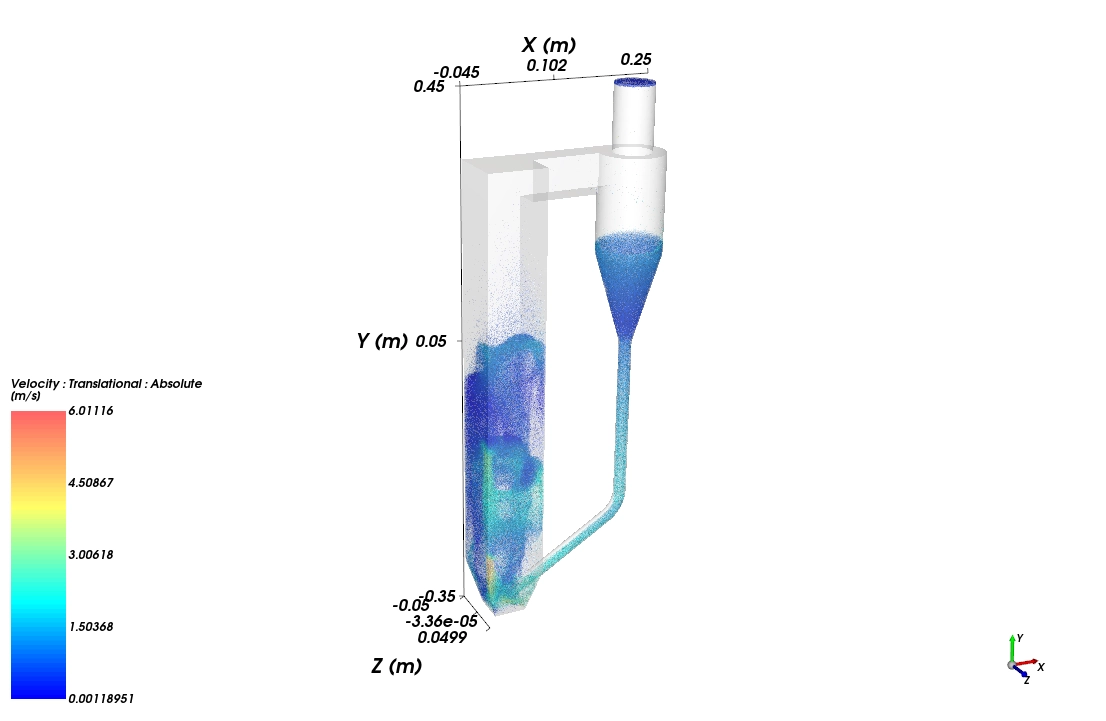
Figure 1: Schematic of CFB, showing the basic physical machine design with the tall vertical riser, the top cyclone separator, and the side return pipe.
Simulation Process: Two-Way ANSYS Fluent and GPU-Accelerated Rocky DEM Setup
For this large industrial project, we built a complete 3D geometry of the machine. This geometry includes the tall central tube, the top cyclone separator, and the side return pipe. Inside the ANSYS Fluent software, we calculated the exact pressure and speed of the upward moving gas. At the exact same time, we used the Rocky DEM software to calculate the physical movement and Hertz collision forces for every single solid stone. To make the physics perfectly real, we turned on a two-way gas-solid connection. This means the gas pushes the stones, and the stones also push back against the gas.
To test a real factory load, we injected exactly 141,609,215 solid particles into the machine. We used three different physical sizes for these stones: 0.6 mm, 0.8 mm, and 1.2 mm. Because calculating 141 million colliding pieces is a massive job, we used a powerful NVIDIA RTX 3050 GPU to speed up the math. We set the bottom inlet air speed to a steady 8 m/s to create the lifting power.
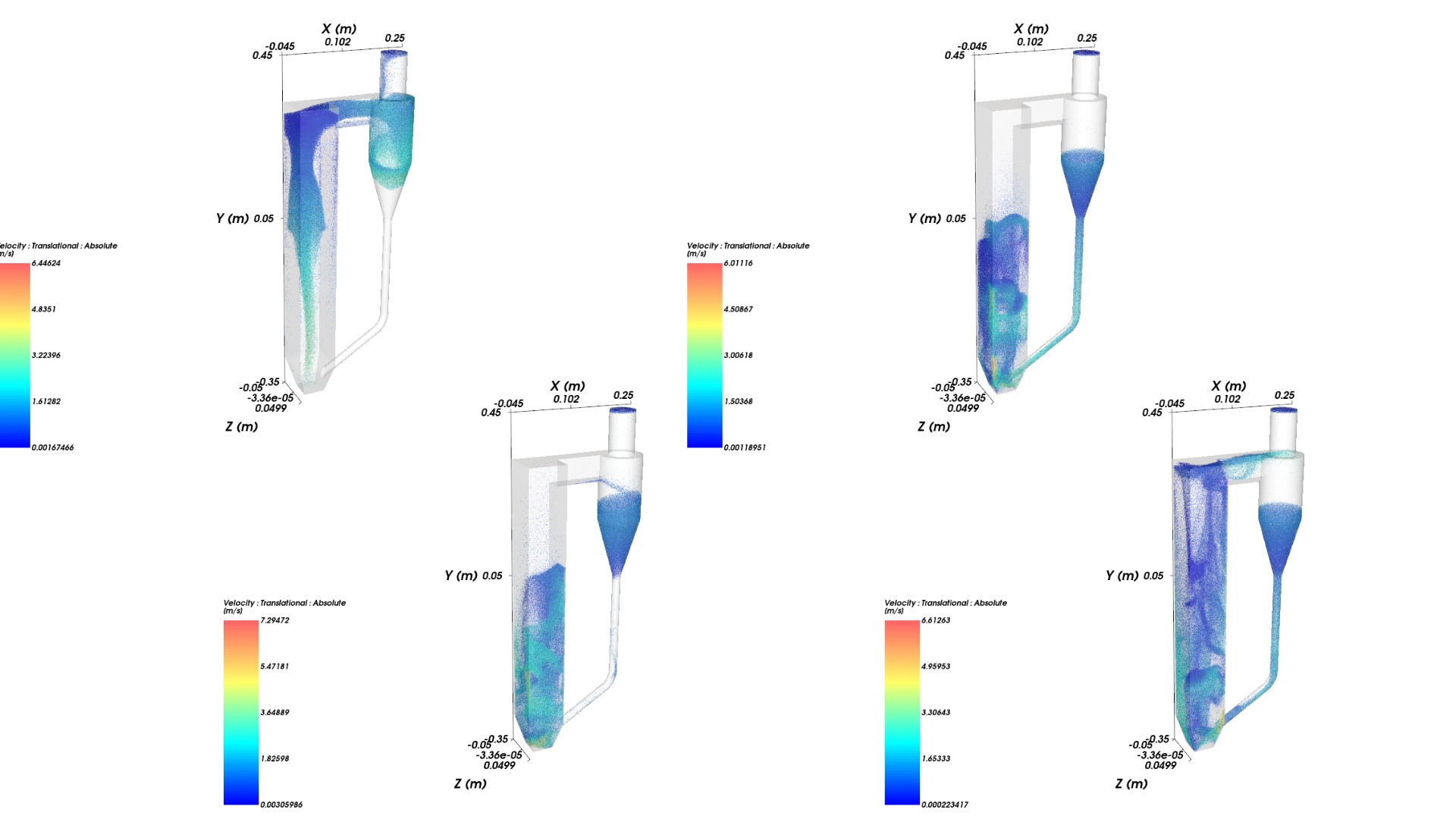
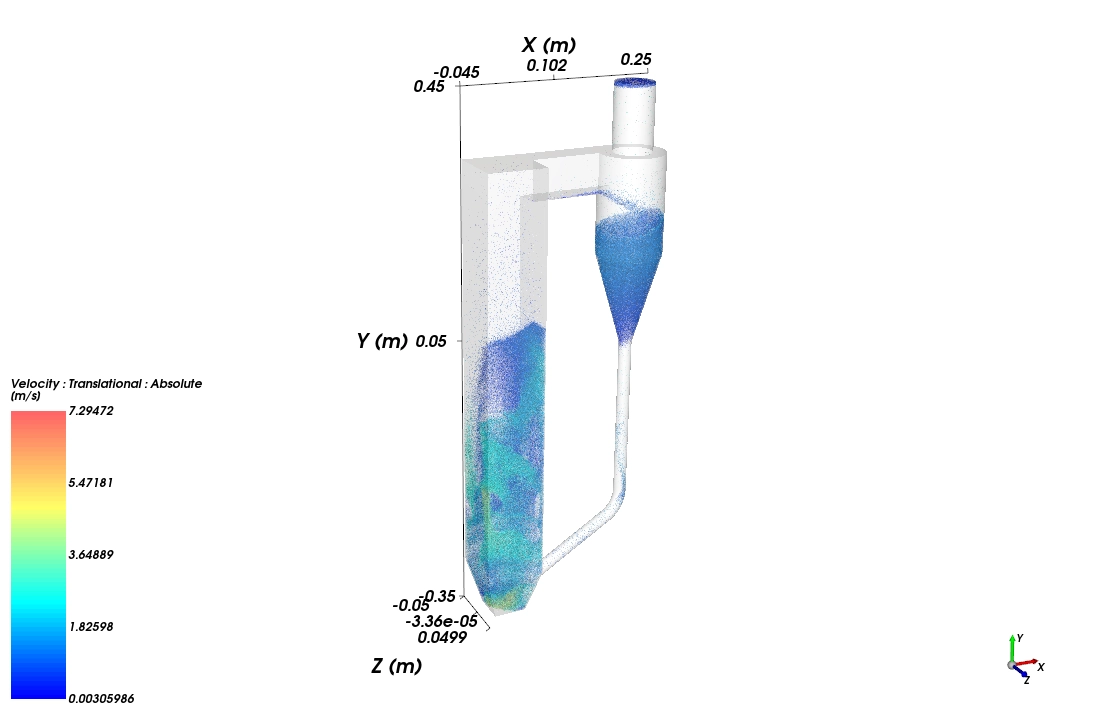
Figure 2: Dance of particles in domain, showing the visual spread of the different sized stones inside the machine.
Post-processing: Analysis of Gas Movement and Particle Mixing Physics
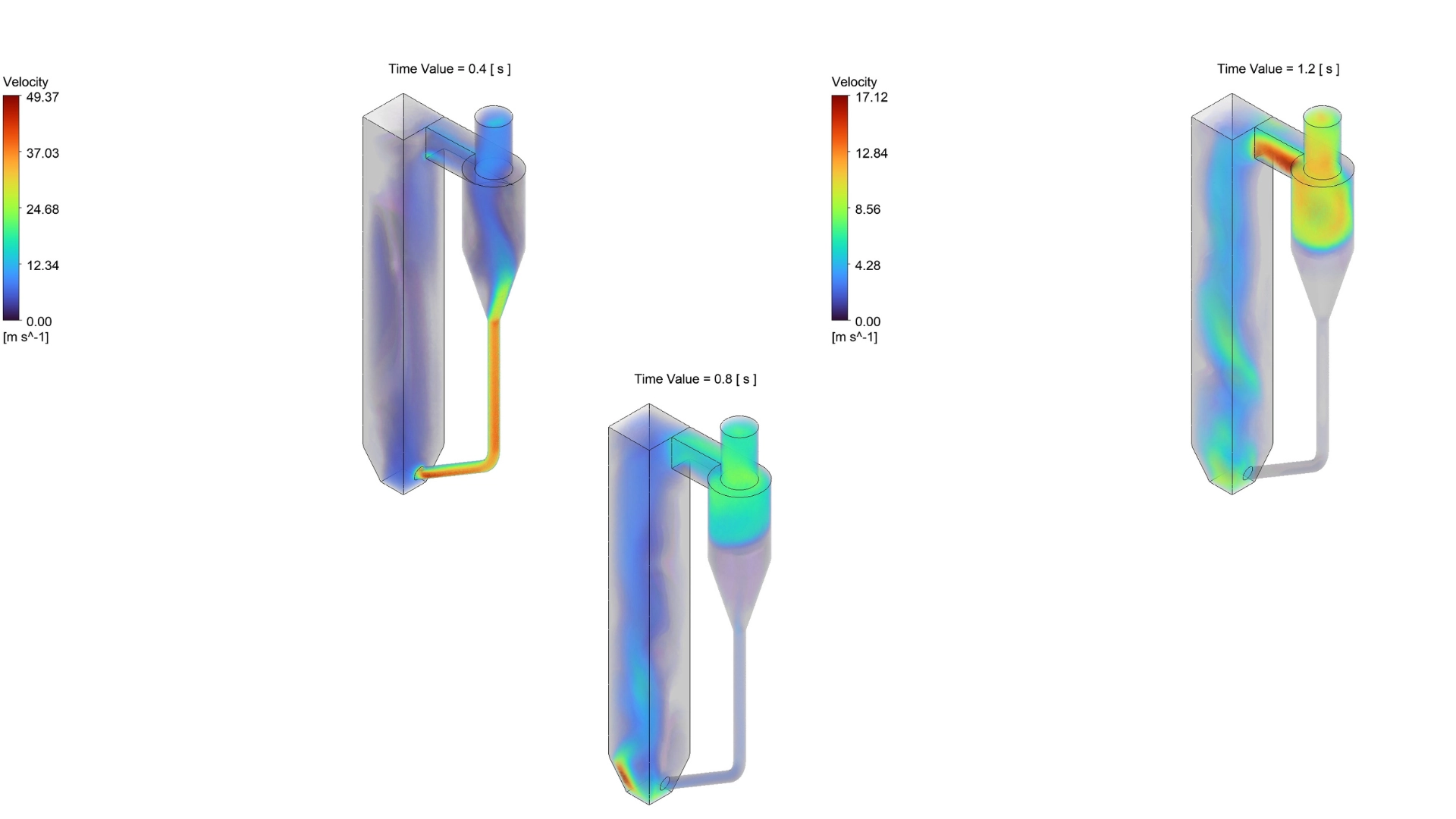
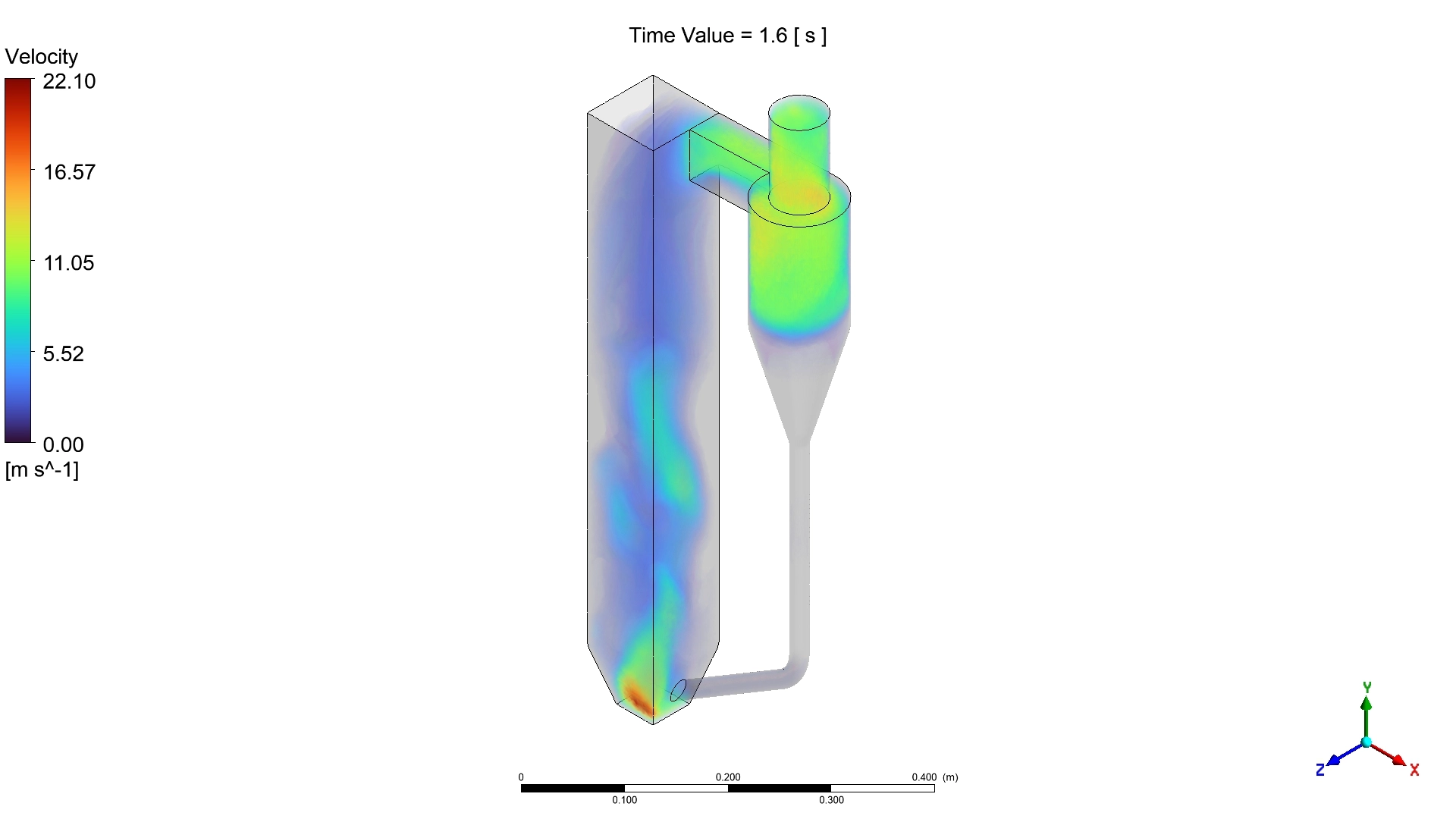
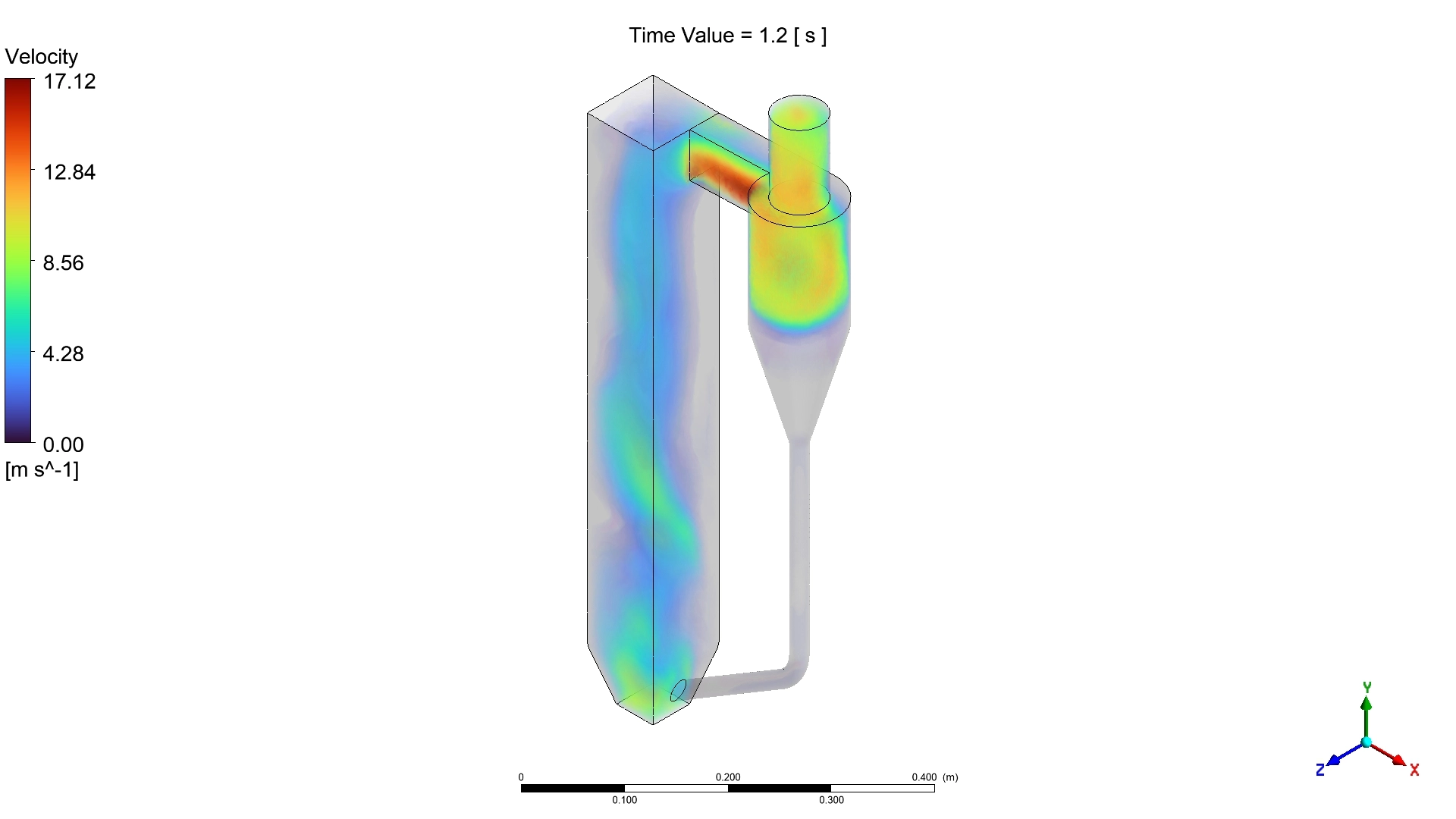
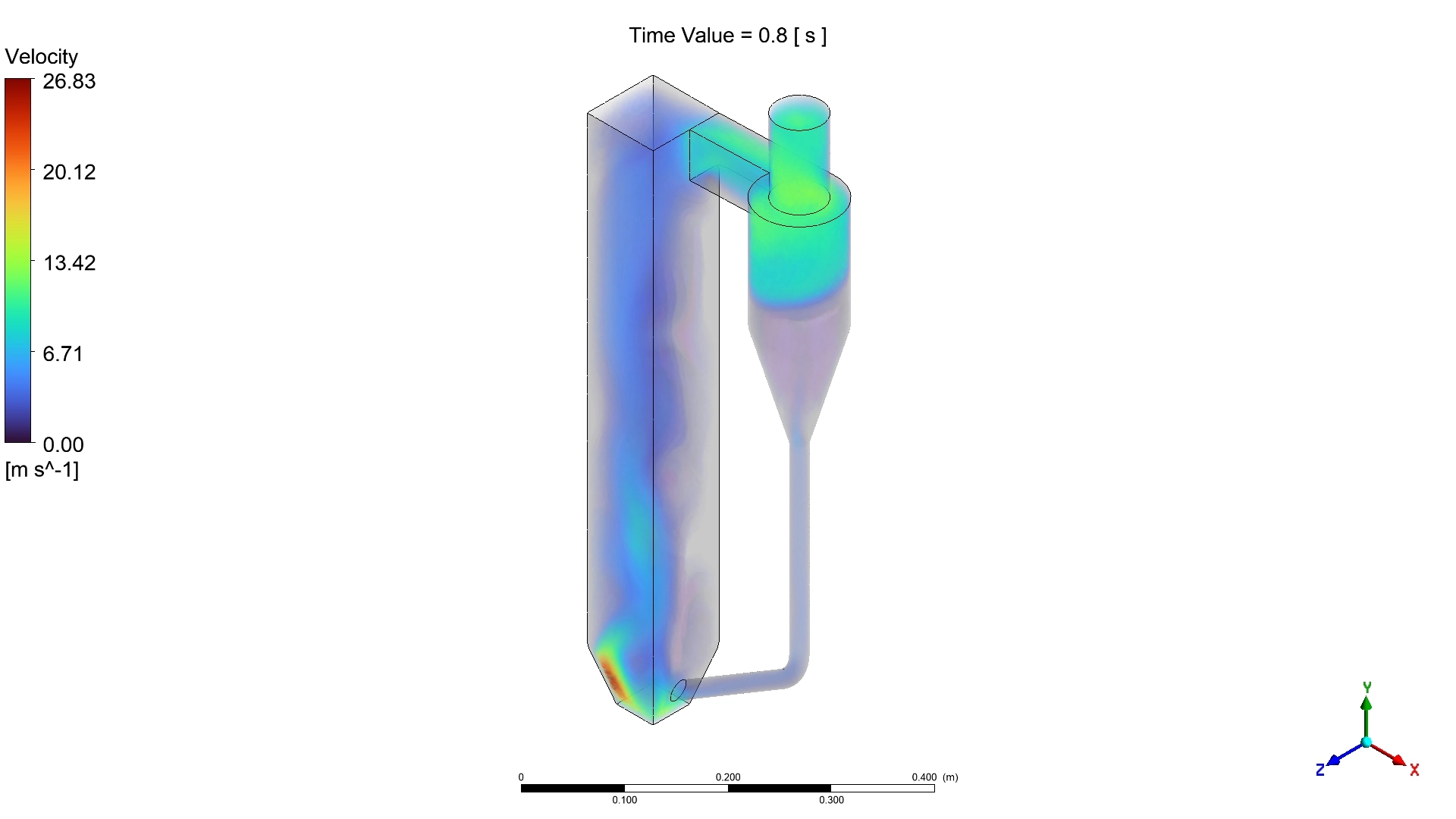
Understanding how this big machine works requires looking closely at the gas and the stones together. The air enters the bottom of the tall tube at exactly 8 m/s. However, the inside of the tube is full of blocking stones. At the 0.4s time mark, the simulation shows large empty gas bubbles forming. Because the air wants to escape quickly, it shoots through these empty bubbles at an extreme speed of 49.37 m/s. This huge speed jump is highly dangerous because it can shake the real machine and break the metal. As time passes to 0.8s and 1.2s, the stones mix much better. The dangerous empty bubbles disappear, and the highest gas speed smoothly drops down to a very safe 17.12 m/s.
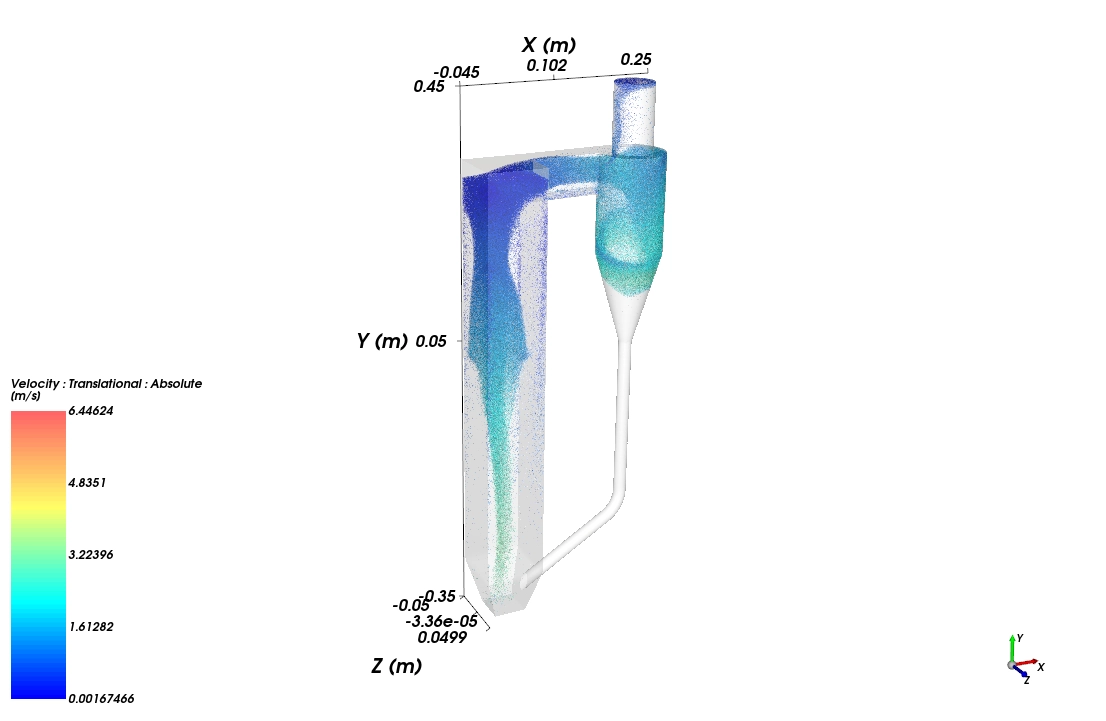
While the gas speed changes, the solid stones move in a very specific pattern. The strong upward air pushes the stones very fast up the center of the tall tube. Because the top of the tube is less crowded, the stones reach a fast speed of 4.4 to 6.4 m/s. However, near the cold outer metal walls, the stones fall slowly. At the crowded bottom of the tube, the stones constantly hit each other, which slows them down to 1.4 to 3.2 m/s. This creates a perfect mixing shape called a core-annulus flow. The stones move fast up the middle and fall slowly down the sides.
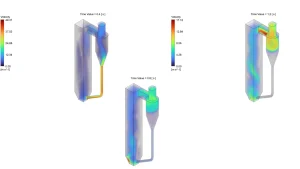
Figure 3: Transient gas velocity contours at three time steps (0.4s, 0.8s, 1.2s), visualizing how the fast air flow changes over time from an extreme 49.37 m/s down to a more stable 17.12 m/s.
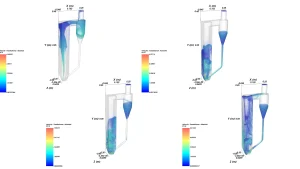
Figure 4: Particle velocity contours in four viewing angles, illustrating the fast red particles shooting up the main vertical tube and the slow blue particles falling down the return pipe.
When the fast stones reach the top of the machine, they enter the cyclone separator. This part of the machine spins the air in a circle. The spinning force throws the heavy stones against the outer wall. The stones slide safely down this outer wall at 3.2 to 4.8 m/s. The gas here spins very fast near the wall at 8 to 12 m/s, but the center core stays quiet at 0 to 4 m/s. Because the stones are pushed to the outside, the clean gas can safely escape through the top hole. Finally, the separated stones drop into the side return pipe. Because there is no strong upward air in this side pipe, gravity simply pulls the stones down slowly at 0.001 to 1.4 m/s. This proves the machine perfectly completes a full, safe loop.
Frequently Asked Questions (FAQ)
- Why did the gas speed suddenly reach 49.37 m/s?
- The air enters at 8 m/s. However, the heavy stones block the air path. At the beginning (0.4 seconds), large empty holes form between the stones. The air rushes through these empty holes very fast, hitting 49.37 m/s before the stones mix evenly.
- What is the job of the cyclone separator?
- The cyclone separator sits at the top. It spins the dirty air in a fast circle. This spinning motion throws the heavy stones to the outer metal wall, allowing the clean, empty air to safely leave the machine from the top hole.
- Why does this simulation use a GPU processor?
- Tracking exactly 141,609,215 individual moving stones is mathematically massive. A normal computer CPU would take many months to calculate the collisions. The NVIDIA RTX 3050 GPU acts like a super-calculator, finishing the exact physics very fast.





Reviews
There are no reviews yet.